
The SEO game we played a few years ago is dead. If you’re still trying to rank by just sprinkling keywords into a 1,000-word article and hoping for the best, you’re basically shouting into a void.
It’s 2026, and the “Helpful Content” era hasn’t just arrived; it has completely taken over the house.
Google’s AI Overviews or Search Generative Experience are now answering half the questions before anyone even clicks a link.
You’ve probably seen it yourself like when you search for something, and boom, a tidy little AI summary gives you the answer right there. It’s great for the user, but for us? It’s a total headache if we don’t change our strategy.
The flood of AI-generated fluff has made the internet a noisy, repetitive mess. Because of that, Google is getting incredibly picky about what it actually shows people.
It’s no longer about who has the most backlinks or who uses the most “SEO-friendly” phrases. It’s about who is actually helpful.
To rank #1 in google search engine now, you have to provide what I call “human value.” That’s something an LLM can’t just scrape and regurgitate. It’s your experience, your specific way of explaining things, and those little nuggets of wisdom you’ve picked up from actually doing the work.
If you’re looking for the best content writing tips in 2026 to rank higher on Google, this guide is for you. We aren’t just going to talk about where to put your headings; we’re going to talk about how to survive in this new search landscape.
You know what? Most of the “content kings” of the past are struggling right now because they’re too slow to move. They’re stuck in the old ways. But for a brand like Zumeirah, and for you, this is actually a massive opportunity.
While the giants are busy trying to automate their entire blog with mediocre AI scripts, we can win by being more human. We’re going to look at 21 proven tips that mix the classic stuff that always works with the high-tech shifts of 2026 and things like AEO (Answer Engine Optimization) and building a trust ecosystem that Google can’t ignore.
The 21 Best Content Writing Tips in 2026
Now I’m going to break down how to create content that doesn’t just sit on page ten, but actually gets cited by AI and clicked by real humans.

We’re talking about more traffic, obviously, but more importantly, we’re talking about better engagement and building the kind of authority that makes people search for your name specifically.
Let’s get into it and show you how to beat the algorithms at their own game.
Tip 1: Embrace AI as Your Co-Pilot, Not Your Replacement
Look, I’ll be the first to admit it, AI can be a bit of a double-edged sword. Some writers are terrified it’s going to take their jobs, while others are just lazily hitting ‘generate’ and posting whatever word-vomit ChatGPT spits out.
But here’s the thing: in 2026, the real pros aren’t running away from AI, and they definitely aren’t letting it do all the heavy lifting.
Think of it like having a really fast, slightly literal research assistant. I use tools like Claude, ChatGPT, or Gemini all the time to handle the boring stuff brainstorming outlines, digging up obscure stats, or just getting a rough first draft down so I’m not staring at a blank screen.
It’s a massive time-saver. But this is a big “but” the second you stop adding your own voice, you’ve lost the game.
Google’s algorithms are incredibly sharp now. They can spot a purely AI-written article from a mile away because it lacks ‘soul.’ It’s missing those weird little personal anecdotes, the industry-specific sarcasm, and the actual experience that makes people trust what you’re saying.
If you want your content to actually rank, you need to treat AI as your co-pilot. It handles the navigation; you keep your hands on the wheel.
For example, don’t just ask an AI to “write a blog about SEO.” That’s how you get generic garbage that looks like everyone else’s. Instead, you need to get better at talking to these machines. You know what works? Giving it a persona and very clear constraints.
Try a prompt like this:
“Act as a seasoned SEO strategist who’s tired of hearing the same old advice. Outline an article about internal linking that specifically focuses on how to help AI search engines understand site structure. Use a conversational tone, include two rhetorical questions, and avoid all corporate buzzwords.”
By being that specific, you get a draft that actually has some teeth. From there, you go in and weave in your own stories and maybe about that time a simple tweak to a navigation menu tripled a client’s organic traffic.
That’s the stuff AI can’t fake, and honestly, it’s exactly what’s going to keep you at the top of the search results while everyone else is drowning in automated fluff.
Tip 2: Master E-E-A-T to Build Google Trust
You’ve probably heard the acronym E-E-A-T tossed around in SEO circles like it’s some kind of magic spell.
It stands for Experience, Expertise, Authoritativeness, and Trustworthiness. Back in the day, it was mostly just a concept in Google’s Search Quality Rater Guidelines, but in 2026? It’s the literal backbone of how your content gets judged.
If Google doesn’t trust you, it won’t rank you. Simple as that.
Honestly, the “Experience” part and that extra ‘E’ they added a while back is where most people trip up. Google wants to see that you’ve actually done the thing you’re writing about.
If you’re giving content writing tips in 2026, don’t just parrot what everyone else is saying. Talk about that one blog post you wrote that completely flopped and what you learned from it.
Share a screenshot of your analytics (blur out the sensitive bits, of course) showing a massive spike in traffic. That firsthand knowledge is like gold for your rankings.
Let me explain something about author bios. A lot of sites just put “Written by Admin” or “Staff Writer” at the bottom of their posts. That is a huge mistake. In a world full of anonymous AI text, a real name and a face actually matter.
You should have a clear author byline that links to a dedicated bio page. Mention your years in the game, any certifications you’ve picked up, and maybe even a link to your LinkedIn. It tells Google (and your readers), “Hey, I’m a real person who knows what I’m talking about.”
You also need to back up your claims with original data. You know what? It doesn’t have to be a massive, multi-million dollar study. It can be as simple as a poll you ran on social media or a small experiment you conducted on your own site.
When you provide unique insights that can’t be found anywhere else, other sites start to cite you. Those citations build your authoritativeness, which is basically Google’s way of saying you’re a big deal in your niche.
Oh, and don’t forget about transparency. If you’re using AI to help with your research (like we talked about in Tip 1), just be honest about it.
Maybe add a little note saying, “This article was researched with the help of AI and fact-checked by our human editorial team.” It builds that “T” means Trustworthiness which is the most important part of the whole equation.
At the end of the day, people buy from people they trust, and search engines are starting to think the exact same way.
Tip 3: Deeply Understand User Intent (Search + AI Intent)
Most people think SEO is still about finding a keyword with high volume and hitting “publish.” But in 2026, that’s a one-way ticket to the second page.
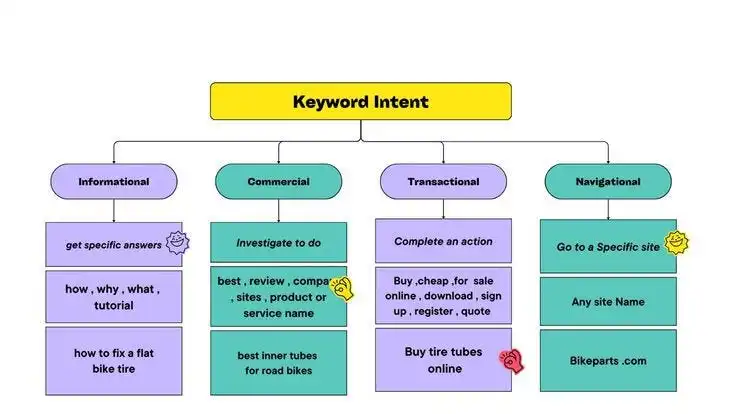
Google has moved far beyond simple word-matching; it’s now obsessed with the why behind the search. We call this User Intent, and honestly, if you don’t nail this, the rest of your content writing tips for 2026 won’t matter one bit.
Intent isn’t just “informational” or “transactional” anymore. We now have to deal with AI Intent. This is when a user asks a complex, multi-layered question that they expect an AI Overview (SGE) to synthesize for them. To rank #1, you have to be the source that the AI wants to summarize.
Let me explain. If you search for “best budget cameras for vlogging,” Google knows you’re in a “Commercial Investigation” mood. It’s going to show you lists, comparison tables, and maybe some YouTube snippets.
But if you search for “how to fix grainy video in Premiere Pro,” that’s purely “Informational.” If your article about cameras is just a giant wall of text without a clear comparison table, you’re ignoring the intent. You’re basically giving a hungry person a cookbook instead of a sandwich.
How to master intent in 2026:
- Analyze the AI Overviews: Before you write a single word, search your keyword. What is the AI showing? Is it a bulleted list of steps? A pros-and-cons table? A short definition? Whatever the AI is doing, your content needs to do it better and more clearly.
- Answer questions before they’re asked: This is the “spontaneous expert” move. If someone is looking for content writing tips, they’re probably also wondering about AI detection or how to find clients. Weave those answers into your digressions. It keeps them on the page longer.
- Zero-Click Optimization: It sounds counterintuitive, but you want to give the answer away for free right at the top. Use a “TL;DR” or a concise summary. Ironically, by helping the user not have to click, Google sees your page as more helpful and ends up ranking you higher anyway.
I once worked on a project where we couldn’t break into the top 5 for a major keyword. We had the backlinks, we had the word count but we were missing the intent.
The SERP was full of “How-to” guides, and we had written a “What-is” guide. We spent an hour reframing the headers to be action-oriented, and boom top 3 in a week. It’s not about how much you write; it’s about whether you’re actually answering the specific itch the user is trying to scratch.
Tip 4: Write for Semantic SEO and Entity Optimization
Google doesn’t just “read” your words anymore. It understands them. We’ve moved way past the era where search engines just looked for strings of letters.
Today, in 2026, Google uses something called the Knowledge Graph to connect the dots between people, places, and things which we call “entities.” If you want to rank for content writing tips in 2026, you have to stop thinking about keywords and start thinking about concepts.
I used to spend hours trying to fit “SEO services” into a sentence three times. Now? I focus on mentioning related entities like “backlinks,” “search intent,” and “Core Web Vitals.”
By including these related terms, I’m basically whispering to Google, “Hey, I actually know what I’m talking about because I’m using the vocabulary of an expert.” This is what we call Semantic SEO.
How to optimize for entities without losing your mind:
- Use Topic Clusters: Don’t just write one random post. Build a “pillar” page that covers the big picture, then link it to smaller, deeper “cluster” posts that tackle specific niches. It shows Google you have topical authority.
- Leverage LSI (Latent Semantic Indexing) Keywords: These aren’t just synonyms; they’re terms that naturally co-occur with your main topic. If you’re writing about content writing, you should probably mention “storytelling,” “readability,” and “conversion rates.” Tools like InLinks or Surfer SEO are great for spotting these gaps in 2026.
- Speak the Language of the Knowledge Graph: Use clear, declarative sentences when defining things. For example, “Semantic SEO is a strategy that focuses on meaning rather than just keywords.” This makes it incredibly easy for Google’s NLP (Natural Language Processing) to index your info.
Honestly, it’s a bit like a dinner party. If you walk in and only say “Pizza! Pizza! Pizza!” people are going to think you’re weird. But if you talk about “dough,” “mozzarella,” “wood-fired ovens,” and “Naples,” everyone knows exactly what’s on your mind.
And let’s not forget about Schema Markup. It might sound a bit technical, but it’s basically just a cheat sheet for search engines.
By adding specific code (like FAQ or Article schema) to your site, you’re literally spoon-feeding the Knowledge Graph the exact entities your content covers. It’s one of the fastest ways to get those “rich results” that stand out on the page.
Tip 5: Go Long-Form with In-Depth, Value-Packed Content
For a few years there, everyone was saying long-form was dead. They told us that human attention spans were shrinking to the size of a goldfish’s and that everything needed to be a “snackable” 500-word blurb.
Well, it’s 2026, and I’m here to tell you that those people were wrong. In fact, they were dead wrong.
While short content is great for a quick social media hit, it’s absolutely insufficient for building real authority. When you’re competing against the big dogs like Yoast or Neil Patel, you can’t just skim the surface.
You need to go deep. I’m talking about 3,000+ words but only if every single one of those words is pulling its weight. Google’s latest updates have made it clear: they don’t reward “long” for the sake of being long; they reward comprehensiveness.
There’s a psychological trigger that happens when a reader lands on a massive, well-organized guide. They think, “Okay, this person has clearly done the work.” It creates an immediate sense of trust.
But here’s the catch like nobody is going to read a 3,000-word wall of text. That’s just painful. To make long-form work in 2026, you have to master the “SGE-friendly” structure.
How to build a high-ranking pillar page:
- Modular Design: Break your content into clear, extractable sections. Each H2 should basically be its own mini-article. This makes it easy for AI engines to cite specific parts of your post.
- The “Double-Down” on Visuals: If you’re writing 3,000 words, you better have at least 5-10 high-quality visuals. I’m talking original screenshots, infographics that actually explain a process, or even a quick 30-second video walkthrough.
- Data as an Anchor: Don’t just say “content writing is important.” Say “In our 2025 Zumeirah audit, we found that long-form guides had a 40% higher conversion rate than short posts.” That specific data point is what gets you the backlinks.
Let me explain a little secret. Most of your competitors are lazy. They’ll use AI to generate a 1,000-word article and call it a day. By putting in the effort to write a definitive, 3,000-word “Master Guide,” you aren’t just writing an article; you’re building an asset.
It’s the kind of content that people bookmark, share in their Slack channels, and come back to months later.
Even though I’m telling you to go long, I want you to start the article with the answer. Don’t make people scroll for three minutes to find the “tip.” Give them a summary or a “Key Takeaways” box right at the top.
It seems counterintuitive and won’t they just leave? Surprisingly, no. In 2026, providing that instant value actually keeps people on the page longer because they know you aren’t going to waste their time.
Tip 6: Optimize for AI Overviews and Zero-Click Searches
The goal of “ranking #1” has changed. In 2026, you don’t just want to be the first blue link; you want to be the answer that Google’s AI Overview (SGE) pulls directly into its summary.

This is what we call “Position Zero,” and honestly, it’s where the real authority lives now. If you can get Google to cite you as the source for a zero-click answer, you’ve basically won the SEO lottery.
But AI engines are picky. They don’t want to dig through your life story to find the answer to a simple question. They want concise, extractable, and structured data.
How to make your content “AI-bait”:
- The “Snippet Sandwich”: At the start of every major section, include a 40–60 word summary that directly answers the heading. For example, if your heading is “What is the best word count for SEO?”, start with: “The best word count for SEO in 2026 is generally between 2,500 and 3,000 words for pillar pages, as this depth allows for better topical authority and AI citation.”
- Bold Your Key Phrases: You know what? Google literally bolds words in the search results that match the user’s intent. Do the work for them. Bold the most important parts of your answers so the algorithm can instantly see the “meat” of the content.
- Use FAQ Schema: I can’t stress this enough. Adding structured data (schema markup) to your FAQ sections is like giving Google a roadmap of your expertise. It makes it much more likely that your answers will show up in those “People Also Ask” boxes.
You might be thinking, “If they get the answer without clicking, won’t my traffic go down?” It’s a valid concern. But here’s the reality of 2026: if you don’t provide the answer, your competitor will.
Being the cited source builds massive brand trust, and users who do click are much higher intent. They aren’t just looking for a quick fact; they’re looking for the expert who provided it.
Learn: How to Create a Winning SEO Roadmap in 2026
Tip 7: Incorporate Multimedia and Interactive Elements
If your blog post is just a wall of text with a few stock photos, you’re already behind. In 2026, “content” is a multi-sensory experience.
Google’s algorithms are now sophisticated enough to understand the value of a well-placed video or an interactive tool, and they reward sites that keep users engaged for more than thirty seconds.
Honestly, people are lazy. They’d often rather watch a two-minute video than read a 2,000-word article. So, why not give them both?
The Multimedia Power-Move:
- Embed Short-Form Video: Take your main points and turn them into a 60-second “Tips” video. Embed it right at the top of the post. It keeps people on the page longer (boosting your “dwell time”), and it gives you a second chance to rank in Google’s Video search.
- Interactive Quizzes or Calculators: You know what’s better than telling someone how to write better? Giving them a “Content Quality Quiz” that scores their current draft. Interactive elements like this are backlink magnets. People love to share their results.
- Don’t Forget the Alt-Text: This is a classic SEO tip that people still mess up. Don’t just name your image “image1.jpg.” Use descriptive alt-text like “Infographic showing content writing tips for 2026.” In 2026, AI uses this alt-text to “see” your images and decide if they’re worth featuring in image-based AI results.
I remember a client who was stuck on page two for a high-competition keyword. We didn’t change a single word of the text. All we did was add a custom infographic and a three-minute explainer video. Within three weeks, they jumped to the top three. Why?
Because the “bounce rate” plummeted. People actually stayed to engage with the content. In the eyes of a search engine, that’s the ultimate signal of quality.
Tip 8: Tell Authentic Stories and Share Personal Experiences
AI is a great mimic, but it’s a terrible storyteller. It can explain the mechanics of a topic, but it has no “skin in the game.” In 2026, the best way to separate yourself from the mountain of generic content is to lean into your own humanity. Y
ou know what? People don’t just want information anymore; they want proof that you’ve actually been in the trenches.
Think about it. If you’re reading about content writing tips in 2026, would you rather hear a textbook definition or a story about how a small agency in Dubai, let’s say, Zumeirah managed to outrank a global giant just by changing their tone? I’m guessing you’d pick the story every time.
How to humanize your brand:
- Share the “Fails”: Don’t just post your wins. Talk about the time you spent forty hours on a “perfect” guide that got exactly zero clicks. Explain why it failed. Was it the intent? The timing? This kind of transparency builds an emotional connection that an AI script could never touch.
- Use Micro-Case Studies: Instead of saying “good design helps SEO,” try something like: “We recently redesigned the Halm Collective site, and by focusing on user-centric layouts rather than just keyword density, we saw their engagement jump by 30%.” * Write Like You Speak: If you’re at a coffee shop in Jumeirah explaining a concept to a friend, you wouldn’t use words like “unleash” or “proactive.” You’d use analogies. You’d use contractions. You’d maybe go on a quick tangent about how the local weather affects your productivity. Use that same energy in your writing.
Google’s “Experience” signal (the extra ‘E’ in E-E-A-T) is specifically looking for these markers of human presence. When you share real results, original photos, or unique anecdotes, you’re giving the algorithm a “human fingerprint” that it can’t find anywhere else. It’s the ultimate way to stay un-replaceable.
Tip 9: Build Trust Ecosystems with Citations and Sources
Ranking #1 isn’t just about what you say anymore. It’s about who else is saying it and how you fit into the broader web of information. In 2026, we talk about “Trust Ecosystems.” This isn’t just a fancy way of saying “backlinks”; it’s about creating a network of credibility around your content.
If you make a bold claim like “Zero-click searches now account for 60% of traffic” you better back it up. If you don’t cite your sources, why should a reader (or an AI engine) trust you?
Honestly, I see so many writers afraid to link out to other sites because they think they’re “leaking” SEO juice. Here’s the reality: linking to high-authority sources actually helps you. It tells Google that you’re part of a neighborhood of experts.
Building your credibility network:
- The Content Hub Strategy: Instead of writing random blog posts, build Interconnected Content Hubs. Think of it like a library. You have a central “Pillar Page” (like this guide) that links out to deep-dives on “Local SEO in the UAE” or “Mobile-First Design.” This structure helps search engines crawl your site more efficiently and proves you have topical depth.
- Cite the Giants: Don’t be afraid to link to Search Engine Land, Statista, or official Google documentation. When you link to a heavy hitter, you’re essentially saying, “My advice is aligned with the industry standards.”
- Community Validation: Have you been mentioned on Reddit or in a niche forum? Have you guest-posted on a respected industry blog? These “off-site” trust signals are huge in 2026. AI search engines like Perplexity or ChatGPT look at the whole web to see if you’re a real authority before they recommend you.
Let’s call it a secret between us. When you create these hubs, use internal links that are descriptive. Instead of “click here,” use “Check out our guide on performance optimization for UAE businesses.”
It’s better for the user, and it’s a massive signal for Google’s semantic understanding. At the end of the day, a website isn’t an island; it’s a node in a much larger system. The better you connect yourself to that system, the higher you’ll climb.
Tip 10: Structure Content for Machine and Human Readability
Let me explain something about the “look” of your content. In 2026, you aren’t just writing for people sitting in a cafe with their laptops; you’re writing for Large Language Models (LLMs) that are trying to “scrape” and summarize your expertise. If your formatting is a mess, the AI gets confused, and the human gets bored. Both are bad for business.
I see so many brilliant writers fail because they present their ideas in giant, suffocating blocks of text. No one and I mean no one has the patience for that. To rank #1, your content needs to be “breathable.”
The Readability Blueprint:
- The H2/H3 Hierarchy: Think of your headings as a map. A human should be able to scroll through your article and understand the entire point just by reading the subheadings. Use H2s for the big ideas and H3s for the specific steps.
- Tables are Your Best Friend: If you’re comparing two things like AI Writing vs. Human Writing don’t just describe it. Put it in a table. Google loves tables because they are easy to parse, and AI Overviews frequently pull table data directly into the search results.
- The Power of Three: Use bullet points, but keep them short. A list with three to five points is the “sweet spot” for human memory. Anything more, and people start to skim.
Honestly, clean formatting is the closest thing to a “cheat code” in SEO. If an AI can easily identify your main points because you used clear headings and bolded text, it’s much more likely to feature you as the definitive answer.
Tip 11: Create Original Research and Data-Driven Content
If I could give you only one of these content writing tips in 2026 that would move the needle the most, it’s this: stop repeating other people’s data.
We live in a world where everyone is citing the same three “industry studies” from 2022. It’s stale. Google’s latest “Information Gain” algorithm is specifically designed to reward content that brings new information to the table.
If you can provide a unique dataset or a fresh experiment, you become the primary source. Everyone else becomes a follower.
How to be the “Source”:
- The “Mini-Experiment”: You don’t need a PhD. Just try something. Spend a month testing a specific internal linking strategy on your site and report the results. “We increased our dwell time by 15% using these 3 specific formatting tweaks” that’s a headline people have to click.
- Compile a Unique Dataset: Take a look at your own niche. If you’re in the UAE, maybe you can track the most common SEO mistakes made by local businesses over six months. That’s original research that giants like Yoast simply don’t have.
- Surveys: Use your newsletter or social media to ask one simple question. “What is your biggest fear about AI content in 2026?” Present the findings with a custom chart.
Original data is the ultimate “backlink magnet.” When you have a stat that no one else has, people must link to you to reference it. It’s the most natural way to build authority without ever having to send a “please link to me” email.
Tip 12: Craft Compelling, Click-Worthy Titles and Meta Descriptions
You can write the greatest article in the world, but if your title sucks, no one is ever going to see it. It’s like having a five-star restaurant behind a door with no sign.
Your title and meta description are your “digital storefront,” and in 2026, the competition for that click is fiercer than ever.
You know what works? The “Personalization Pivot.” Instead of a dry, robotic title like “SEO Content Tips,” try something that screams human experience.
Tips for a 2026 Title that Wins:
- Use the “I” Perspective: “How I Ranked #1 in 2026 (Despite the AI Flood).” It promises a story, not just a list. It triggers curiosity.
- The Number Play: Odd numbers usually perform better than even ones. “11 Tips” feels more specific and curated than “10 Tips.”
- The Emotional Hook: Use “power words” that trigger a reaction. Instead of “Good Tips,” try “Non-Obvious Tips” or “Proven Frameworks.”
- Meta Descriptions for CTR: Your meta description shouldn’t just summarize the post; it should sell the click. Ask a question. “Are you tired of losing traffic to AI overviews? Here is exactly how we fought back.”
Let me explain a little secret about meta descriptions. While Google doesn’t use them directly as a ranking factor, they do affect your Click-Through Rate (CTR).
If more people click your link than the one above it, Google notices. They realize your result is more relevant to the user, and eventually, they’ll swap your positions. Every click is a vote for your quality.
Tip 13: Prioritize Mobile-First and Core Web Vitals
It doesn’t matter how brilliant your prose is if your website takes five seconds to load on a phone. In 2026, Google has completely moved to mobile-first indexing. If your mobile experience is clunky, you’re essentially invisible.
I see so many developers focus on making a site look “cool” on a 27-inch iMac, but they forget about the guy trying to read their blog on a crowded metro in Dubai.
We need to talk about Core Web Vitals. Google uses these metrics to measure how “stable” and “fast” your site feels to a real human.
Specifically, you need to keep an eye on INP (Interaction to Next Paint). It measures how quickly your site reacts when someone actually taps on a button. If there’s a lag, they’re gone.
The Performance Quick-Fix:
- Optimize Those Images: Stop uploading 4MB JPEGs. Seriously. Use WebP or AVIF formats. They look just as good but load in a fraction of the time.
- Kill the “Plugin Bloat”: If you’re on WordPress, be ruthless. Every extra plugin is just another piece of code slowing you down. At Zumeirah, we’re constantly auditing our sites to make sure we’re only running what’s absolutely essential.
- Remove Render-Blocking Resources: This is a fancy way of saying “don’t make the browser wait for a massive file before it shows the text.” Load your critical CSS first so people can start reading immediately.
Honestly, site speed is the ultimate “silent” google ranking factor. People only notice it when it’s bad. But when it’s good? Your bounce rate drops, your engagement goes up, and Google thinks, “Hey, people actually enjoy being on this site.” That’s how you keep that #1 spot.
Tip 14: Optimize for Voice and Conversational Search
“Hey Google, what are the best content writing tips in 2026?”
About 50% of searches are now spoken, not typed. People don’t talk to Siri or Alexa the same way they type into a search bar.
They don’t say “content writing tips.” They ask full, rambling questions. If your content is written like a dry academic paper, you’re missing out on a massive chunk of traffic.
To win at voice search, you have to write like a human. You know what? That’s actually a good rule for all writing, but for voice, it’s non-negotiable.
How to capture the “Spoken” result:
- Target Long-Tail Questions: Instead of just “SEO tips,” structure a section around “How can I rank my blog without spending a fortune on ads?”
- The Q&A Format: I love using FAQ sections at the bottom of my posts. Not only is it great for the Knowledge Graph, but it’s exactly what voice assistants pull from.
- Keep it Simple: Use short, punchy sentences. Voice assistants prefer to read out clear, direct answers that are around 40–50 words long.
When you optimize for voice, you’re essentially optimizing for Natural Language Processing (NLP). You’re making it easier for the machine to understand your intent. It’s like being the person at the party who gives a straight answer instead of the one who talks in circles.
Tip 15: Use Advanced Prompt Engineering for Better AI Assistance
We’ve already talked about AI as a co-pilot, but let’s get a bit more technical. In 2026, simply asking an AI to “write a blog” is for amateurs. If you want to stay ahead, you need to master Prompt Engineering.
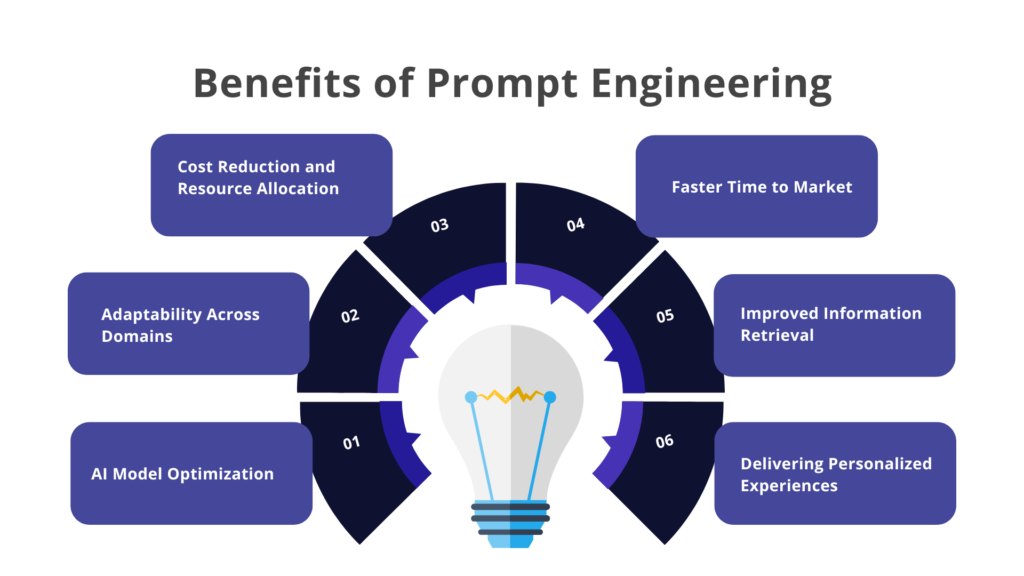
Think of it like being a director. If you give your actor a vague script, you’ll get a mediocre performance. But if you give them a detailed backstory, a specific tone, and clear goals? That’s how you get an Oscar.
The “Power User” Prompting Strategy:
- Chain-of-Thought Prompting: Don’t ask for the final article right away. Ask the AI to “think step-by-step.” First, have it analyze the top 10 competitors. Then, have it find content gaps. Only then, have it draft the outline.
- Few-Shot Prompting: Give the AI three examples of your best writing. Say, “Here is how I write. Use this same rhythm, sentence structure, and vocabulary.” This is how you avoid that generic “AI voice.”
- Combine Your Tools: I don’t just use one AI. I might use Perplexity for deep research (because it cites its sources), Claude for the creative drafting (it’s better at nuance), and Surfer SEO to make sure I’m hitting the right keyword clusters.
Most writers are worried that AI is going to replace them. But the truth is, a writer who knows how to use AI effectively will always outwork and out-rank a writer who refuses to touch it.
It’s about leveraging the tech to do the heavy lifting so you can focus on the “soul” of the content like the stories, the data, and the real-world experience that actually moves the needle.
Tip 16: Add Unique Perspective and Nuance
Most of the internet is just people copy-pasting the same three ideas. If you’re writing about content writing tips in 2026, and you’re just saying the same thing as everyone else, why would Google care? AI is the absolute king of “average.” It’s built to give the most likely, middle-of-the-road answer. If you want to beat the machines, you have to be a little spicy.
I love a good contrarian view. If every “guru” is telling you to write 5,000 words, maybe you should write a piece on why a 500-word “micro-guide” actually converted better for your UAE clients.
Share those “insider” secrets like the stuff people usually only say behind closed doors at agencies like Zumeirah. This kind of nuance is what builds a real following. It shows you aren’t just a content-generating bot; you’re a person with a pulse and an opinion.
Tip 17: Encourage Community and User-Generated Content
Remember when we used to ignore the comment section because it was just full of spam? Well, things have changed. In 2026, Google sees a lively comment section as a massive “Trust” signal.
If real humans are asking questions and you’re actually answering them, it tells the algorithm that your site is a living, breathing community, not just a static billboard.
Social proof is the ultimate currency. Embed testimonials or, better yet, collaborative elements. Let your readers contribute a tip or share their own results.
When users spend time typing a response on your page, your “dwell time” hits the roof. Plus, the natural language people use in comments often includes long-tail keywords you didn’t even think of. It’s basically free SEO work done by your audience.
Tip 18: Regularly Update and Refresh Old Content
SEO isn’t a “set it and forget it” kind of deal. You can’t just write a brilliant post in 2024 and expect it to stay at #1 through 2026. The world moves too fast for that. One of the best content writing tips in 2026 is to stop writing so many new things and start fixing your old things.
I’ve seen sites double their traffic just by going back to their top-performing posts from two years ago and swapping out old stats for fresh 2026 data. Google loves “freshness.”
When the crawler sees that you’ve updated your links, added a new video, or refined your advice to match current trends, it gives you a nice little rankings boost. It’s much easier to keep a high-ranking page at the top than it is to launch a brand-new one from scratch.
Tip 19: Maintain a Consistent Brand Voice and Personality
If your brand sounds like a generic corporate brochure, people are going to treat you like one they’ll ignore you. In a world drowning in AI-generated fluff, having a “voice” is your biggest competitive advantage.
Whether you’re snarky, super-professional, or laid-back and helpful, you need to pick a lane and stay in it.
Think about it. Why do people follow specific creators? It’s because they feel like they know them. That consistency builds loyalty. At Zumeirah, we don’t just “deliver content”; we deliver a specific perspective that our clients recognize.
When your readers can tell it’s you writing without even looking at the byline, you’ve won. That recognition keeps them coming back, and repeat visitors are a huge signal to Google that your site is an authority worth ranking.
Tip 20: Measure Performance and Iterate with Data
A lot of writers are afraid of the “math” side of content. But if you aren’t looking at Google Search Console or your analytics, you’re basically flying blind. You might think your intro is amazing, but if the data shows that 80% of people leave the page within ten seconds, you’ve got a problem.
Don’t be afraid to experiment. A/B test your headlines. Try one that’s a “How-to” and another that’s a “Why you’re failing” style. See which one gets more clicks.
Look at which sections of your long-form guides are getting the most engagement and use those insights to plan your next piece. Data doesn’t kill creativity; it gives it a target to hit.
Tip 21: Stay Ahead of Algorithm Changes and Trends
The only constant in SEO is that everything changes. By the time you’ve mastered one Google update, another one is already rolling out. To stay at #1, you have to be a bit of a student. Follow the newsletters, watch the industry reports, and actually read those long, boring Google documentation updates.
But here’s the secret: don’t chase every little “tweak.” If you focus on the core principles being helpful, being fast, and being human then you’ll survive 90% of the updates.
The people who get hit the hardest are the ones trying to “game” the system with shortcuts. Stay adaptable, keep your ear to the ground, and always be ready to pivot when the landscape shifts. That’s how you don’t just rank for a week, but stay there for years.
Final Words For Content Writing Tips in 2026
From the technical nuances of Core Web Vitals to the more “human” side of storytelling and E-E-A-T, the landscape of content writing in 2026 is definitely more complex than it used to be.
But if you take away one thing from this guide, let it be this: AI is a tool, not the destination. The writers who are winning right now are the ones who use technology to handle the data, but use their own “human soul” to handle the connection.
Recapping the heavy hitters we’ve talked about: focus on your Trust Ecosystem. Don’t just write words; build authority through original data and genuine experience.
Structure your content so that it’s a breeze for both a busy human and a curious AI to read. And for heaven’s sake, don’t be afraid to show some personality. In a world of perfectly polished, robotic text, a little bit of “unpolished” human authenticity is exactly what makes people and Google to stop and pay attention.
The truth is, 2026 is rewarding the creators who are adaptable. The “giants” like Yoast or Neil Patel are great, but they are often slow to move.
You have the advantage of being agile. You can implement these content writing tips today and see the results in your analytics much faster than a massive corporation can. Whether you’re building a brand like us or just trying to get your personal blog off the ground, the goal is the same: be the most helpful person in the room.
So, what’s your next move? Honestly, don’t try to do all 21 of these at once cuz you’ll burn out. Pick three. Maybe start with refreshing an old post or adding a video to your top-ranking page.
FAQs For Your Content Writing Tips
You probably still have a few questions rattling around your brain. I get it and the rules of the game are shifting faster than a Dubai sandstorm. Here are the things people ask me most often at Zumeirah when we’re talking about content writing tips in 2026.
What are the best content writing tips in 2026 for beginners?
Start by finding your voice. Don’t worry about “SEO secrets” until you can write a paragraph that sounds like a real person talking. Use a strong hook, keep your sentences short, and actually research your topic until you find something new to say. Oh, and get comfortable with AI tools not to do the work for you, but to help you brainstorm and organize your thoughts.
How much does AI affect content writing in 2026?
It’s everywhere, but not in the way most people think. AI hasn’t replaced writers; it has just raised the bar for what “good” looks like. Since anyone can click a button and generate a generic 800-word article, the real value has shifted to original research, personal stories, and deep-dive analysis. If you’re just writing surface-level fluff, you’re competing with a machine that can do it faster. If you’re writing with “soul,” you’re in a league of your own.
How can I improve E-E-A-T in my content?
Stop being anonymous. Add a real author bio with your photo and a link to your social profiles. Share “Experience” by using screenshots of your work, telling stories about your mistakes, and quoting actual data you’ve collected. Google wants to know that there is a human who is accountable for the information on the page.
What is the ideal word count for ranking in 2026?
I’ll give you a classic “it depends” answer. For a quick question, 300 words is fine. But for those competitive “pillar” keywords? We’re usually seeing the top spots go to articles in the 1,500 to 3,000-word range. The goal isn’t just to hit a number, though; it’s to be the most comprehensive resource on the internet for that specific topic.
How do I optimize content for AI Overviews?
Structure is key. Use clear H2 and H3 headings and follow them immediately with a concise, 40-word direct answer. Use bullet points and tables where they make sense. Essentially, you want to make it as easy as possible for Google’s AI to “clip” your answer and show it at the top of the search results.
Is long-form content still effective in 2026?
More than ever. Because the web is flooded with “snackable” AI content, people are actually craving depth. Long-form guides (like this one!) build massive authority and attract the most backlinks. Just make sure you format it well so people don’t get overwhelmed by a “wall of text.”
How often should I update my content?
At least once a year, but for fast-moving topics like SEO or Tech, every six months is better. You don’t always need a full rewrite. Sometimes just updating a few stats, checking for broken links, and adding a new “2026 update” section is enough to tell Google that your page is still the best result.
What tools should content writers use in 2026?
I’m a big fan of a “stacked” approach. Use Perplexity or ChatGPT for research, Claude for helping with the creative flow, and Surfer SEO or AIOSEO to make sure your keywords are hitting the mark. And don’t forget Grammarly or Hemingway to keep things readable. But remember: the most important tool is still the one between your ears.