
You know what? I still remember the panic.
It was early 2024, maybe late 2023, when the whispers started getting loud. SEOs were running around like the sky was falling because Google showed off this shiny new toy called Search Generative Experience (Google’s SGE). “The end of traffic!” they screamed. “The death of the click!”
Honestly, it was a bit dramatic. But here we are in late 2025, and looking back, they weren’t entirely wrong, they just missed the point.
The shift from “10 blue links” to AI-generated answers wasn’t an apocalypse; it was an evolution. A painful one, sure, but necessary.
If you’ve been banging your head against the wall wondering why your old tactics like keyword stuffing, basic backlink buying, churning out 500-word fluff pieces, aren’t moving the needle anymore, let me stop you right there. It’s not the algorithm “glitching.” It’s the game itself. It changed while you were looking the other way.
Traditional SEO tactics are failing in 2025 because Google isn’t just a library anymore. It’s a concierge. It doesn’t want to point you to a book; it wants to read the book for you and just give you the answer.
So, where does that leave us? Are we out of a job?
Hardly. We just have a new acronym to worry about: Generative Engine Optimization (GEO)
This guide isn’t about “tricking” the AI. You can’t trick a Large Language Model (LLM) that reads more content in a second than you will in a lifetime. This is about speaking its language. It’s about structuring your expertise so clearly that the AI has no choice but to cite you as the source.
We’re going to look at exactly what this machine is, how the gears turn inside, and the specific, no-nonsense strategies you need to use to get your content into those prime “AI Overview” spots.
Grab a coffee. We have a lot of ground to cover.
What is Search Generative Experience?
Let’s get the definitions out of the way, shall we? There’s a lot of jargon floating around, and half the time people use “Search Generative Experience” and “AI Overviews” interchangeably. It drives me nuts. But context is everything if you want to understand how to rank.
What is a search-generative experience or Google’s SGE?
If you want the dictionary definition to impress your boss, here it is:
Search Generative Experience (SGE) is Google’s AI-powered interface that synthesizes search results into a single, cohesive answer.
But let’s be real—what is it actually?
Think of it this way. In the old days (read: three years ago), if you asked Google, “How do I fix a leaky faucet?”, Google acted like a librarian. It pointed down the aisle and said, “Here are ten books on plumbing; good luck.” You had to click, read, hit back, click another, and piece the answer together yourself.
Google’s SGE is different. Search Generative Experience is like hiring a master plumber to stand next to you. You ask the question, and instead of handing you a list of websites, it reads them all instantly, filters out the junk, and tells you, “First, turn off the water supply. Then, grab a wrench.”
It synthesizes information. It creates a “Snapshot” at the top of the search results that answers the user’s query directly. For us content creators, this is the scary part like if the user gets the answer right there on Google, why would they click our link?
That’s the “Zero-Click” problem. But here’s the twist: the AI has to get that information from somewhere. And when it does, it links to sources. That’s where we want to be. We don’t want to be the library book collecting dust on the shelf; we want to be the reference manual the master plumber is holding.
What is Search Generative Experience in SEO?
For marketers and SEOs, Google’s SGE is basically a giant “Reset” button on our traffic expectations.
In the world of SEO, SGE represents the shift from retrieval (finding links) to generation (creating answers).
It pushes the classic organic results like the blue links we’ve fought over for decades way down the page. On mobile? Forget it. You might have to scroll two or three thumb-swipes before you see a traditional organic result.
So, “What is Google’s SGE in SEO?” It’s the new battleground.
If you’re ranking #1 organically but you aren’t featured in the AI Snapshot, you are effectively invisible to a huge chunk of users. Zero-Click content matters because if you aren’t the one providing the answer for the zero-click, your competitor is.
And even if the user doesn’t click, being cited there builds massive brand authority. It’s the new “As Seen On TV,” but for search.
Search Generative Experience vs. AI Overview
Here’s a little insider distinction that clears up a lot of confusion.
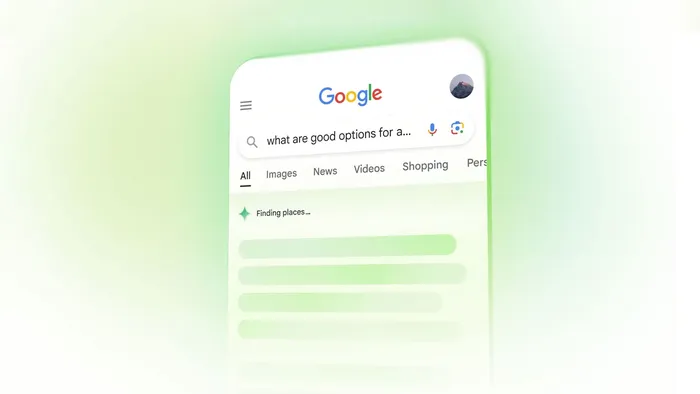
Search Generative Experience was the name of the beta experiment. Remember Google Labs? That little beaker icon? That was Google’s SGE. It was the testing ground where Google threw spaghetti at the wall to see what stuck.
AI Overviews are the live product. That’s what we see now in late 2025.
Why does this matter? Because your clients or your boss might still be asking about “SGE.” You need to gently correct them or just nod and know what they mean.
- Google’s SGE: The technology and the experimental phase.
- AI Overviews: The feature you see on the SERP (Search Engine Results Page).
The mechanics are largely the same, but “AI Overviews” are more refined. They trigger less often than SGE did in the beta. Google realized that burning a forest of GPU power to answer “what is 2+2” was a waste of money. Now, AI Overviews mostly show up for complex, multi-layered questions.
And honestly? That’s good for us. It means we don’t need to fight AI for the simple stuff. We focus on the complex stuff.
How Does Google’s SGE Work?
Understanding how the sausage is made helps us make better sausage. Or something like that. You get the idea.
We need to look under the hood. How does Google actually decide what to say? It’s not magic, and it’s not a human sitting in a room typing really fast. It’s a process.
How does Search Generative Experience work?
At its core, SGE operates on a specialized version of Google’s Gemini model. But it’s not just a chatbot like ChatGPT. If you ask ChatGPT a question, it might hallucinate and tell you that Abraham Lincoln invented the iPhone. Google can’t afford that.
So, the process looks a bit like this:
- The Query: You type something in. Let’s say, “Best hiking boots for ankle support.”
- Retrieval (The Old School Part): Google runs a traditional search in the background. It pulls up the top-ranking, most relevant pages.
- Synthesis (The AI Part): The LLM reads these top pages. It looks for patterns. If five reputable sites say “stiff soles are good for ankles” and one site says “wear flip-flops,” the AI is smart enough to discard the flip-flop advice. It synthesizes the consensus.
- Corroboration: This is critical. The model checks its generated answer against the web results. It’s fact-checking itself in real-time. If it can’t find a source to back up a claim, it usually won’t say it.
- The Snapshot: It presents the summary to you, usually with little “chips” or citation links that point back to the source.
That step #4 “Corroboration” is our golden ticket. The AI is desperate for sources to back up its claims. If you state facts clearly, you make it easy for the AI to “corroborate” with your content.
How does Google’s SGE work?
From a user perspective the journey is fluid.
You type a query. You get the AI Overview. But then, there’s Conversational Mode.
You can ask a follow-up question. “What about for wide feet?”
Google remembers context. It knows you’re still talking about hiking boots. It doesn’t start a fresh search; it refines the previous one.
For us, this means our content needs to anticipate these follow-ups. We can’t just write an article about “Hiking Boots.” We need to cover the nuances like wide feet, waterproofing, budget options because the user will ask the AI, and if your page has those answers, the AI will keep pulling from you.
It also leans heavily on “Verticals.” That’s Google-speak for specific types of data, like Shopping or Local.
If you search for products, the SGE taps into Google’s Shopping Graph which has billions of product listings. It’s not just reading blogs; it’s looking at merchant data, reviews, and specs. If you run an e-commerce site and your structured data is messy, you’re locking yourself out of this vertical.
Search Generative Experience Optimization: The 2025 Strategy
Alright, this is why you’re here. The theory is nice, but theory doesn’t pay the bills. How do we actually rank?
I’ve spent the last year testing this, breaking things, and fixing them. Here is the playbook for 2025.
Search Generative Experience SEO: The New Rules
Forget keyword density. Forget counting how many times you used the word “best.” The AI doesn’t care. It understands concepts, not just strings of text.
Strategy 1: E-E-A-T is King (Experience is the Ace)
We’ve heard about E-A-T (Expertise, Authoritativeness, Trustworthiness) for years. Then Google added the extra “E” for Experience.
In the age of AI, Experience is the only currency you have left.
Think about it. An AI can scrape the entire internet and write a technically perfect guide on “How to visit Paris.” It knows the Eiffel Tower’s height, the opening hours of the Louvre, and the average temperature in May.
But it doesn’t know what the croissant smells like at that little bakery on Rue Cler. It doesn’t know that the Metro smells funny on Tuesdays. It doesn’t know the frustration of waiting in line even when you bought a “skip-the-line” ticket.
What You Should do.
To optimize for SGE, you must inject first-hand experience into your content.
- Don’t say: “Paris is beautiful in the spring.”
- Say: “When I visited Paris last April, the rain was annoying, but the lack of crowds at the Musee d’Orsay made it worth it.”
The AI craves this. It can generate facts, but it struggles to generate perspective. When it finds a source that offers genuine, human perspective, it latches onto it to add color to its boring summary.
Strategy 2: The “Fluency” Factor
You need to write simply.
I know, I know. You want to sound smart. You want to use big words like “utilize” and “leverage.” Stop it.
LLMs work on probability. They predict the next word in a sentence. If your writing is convoluted, full of passive voice, and riddled with jargon, the AI has a harder time parsing your meaning.
If you write: “The utilization of the tool was executed by the team in order to facilitate…” The AI goes: “What? Too much work.”
If you write: “The team used the tool to help…” The AI goes: “Got it. Fact stored.”
We call this LLM Fluency. The easier your text is to read for a 9th grader, the easier it is for the AI to understand and cite.
Targeting “Zero-Click” Searches
This strategy is controversial, but it works.
You need to give away the answer immediately.
We used to bury the lead. We’d write 2,000 words of Google Ranking Factor before telling the user the answer, just to keep them on the page longer. That doesn’t fly anymore. If the AI can’t find the answer in the first few seconds of scanning your code, it moves on.
The “Answer First” Pattern: Every section of your article should start with a bold, direct answer.
Let’s say your header is H2: How long does it take to boil an egg?
- Bad Approach: “Boiling an egg is a culinary art that has been practiced for centuries. Many factors influence the time…” (Yawn. The AI skips this).
- Good Approach: “It takes 7 minutes to boil an egg for a soft center, and 10 minutes for a hard-boiled egg. The exact time depends on your altitude.”
Bam. You gave the AI exactly what it needed for the snippet. You can explain the “culinary art” stuff later in the paragraph for the humans who want to read more. But feed the bot first.
Schema Markup and Structured Data
If you aren’t using Schema in 2025, you’re bringing a knife to a gunfight.
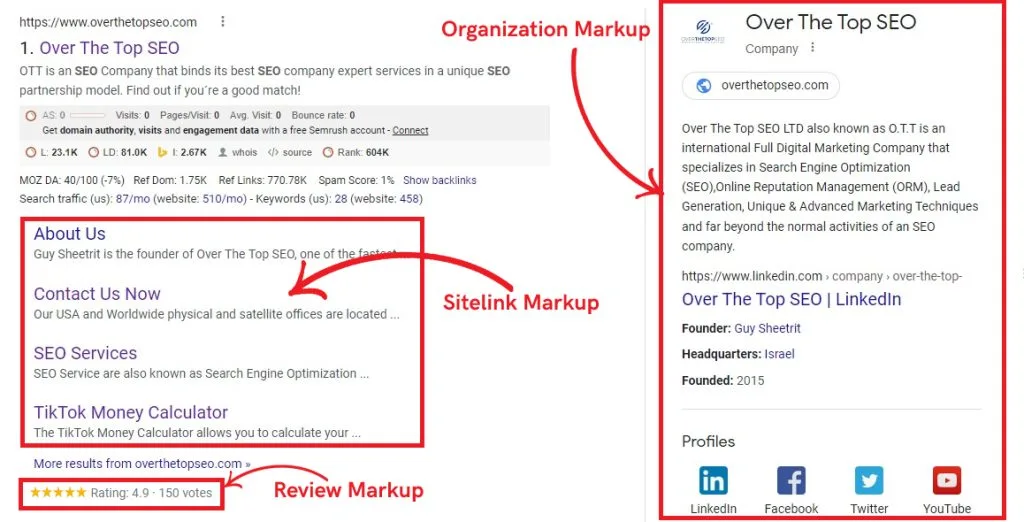
Schema is code that you put on your website to tell Google exactly what your content is. It’s like putting a label on a jar. Without it, Google has to taste the jam to know it’s strawberry. With the label, it knows instantly.
For Google’s SGE, you need to double down on these schemas:
- Article Schema: Obvious, but essential.
- FAQ Schema: This is huge. If you have an FAQ section (and you should), mark it up. It feeds directly into the “People Also Ask” and SGE Q&A modules.
- HowTo Schema: If you have steps, mark them up. The AI loves numbered lists.
- Person Schema: Remember E-E-A-T? Prove you’re a real person. Link your content to your LinkedIn, your bio, your other works. Show the AI you exist in the real world.
Search Generative Experience Examples
Let’s look at some real-world scenarios. It helps to visualize this.
Informational vs. Commercial Snapshots
Not all Search Generative Experience (Google’s SGE) results look the same. Google changes the layout based on “Intent.”
The Informational Query:
- Search: “Why is the sky blue?”
- The Result: You get a text-heavy block. It explains Rayleigh scattering. It might have a diagram.
- The Strategy: To rank here, you need clear definitions and diagrams with proper
alttext. The AI loves pulling images that have descriptive filenames likerayleigh-scattering-diagram.jpg.
The Commercial Query:
- Search: “Best noise-cancelling headphones under $200.”
- The Result: This is totally different. You get a carousel of products. You get a pros/cons list. You get star ratings.
- The Strategy: You cannot rank here with just text. You need a “Product Review” page structure. You need a clear “Pros and Cons” list (literally, use an HTML list). The AI scrapes these lists to build its own comparison table.
If you write a review and bury the pros and cons in a paragraph of text, the AI might miss them. Put them in a bulleted list. Make it spoon-fed.
Google Labs vs. Live Results
Just a quick note on this. If you’re a pro, you should be signed up for Google Labs (if it’s still active in your region) or whatever beta program they are running.
Why? Because you get to see the future.
Back in 2024, the people in Labs saw the “Circle to Search” feature before anyone else. They started optimizing their images for mobile recognition while everyone else was sleeping.
Keep an eye on what features are being tested. If Google starts testing a “Travel Planner” AI module, guess what? You better start structuring your travel blog content as itineraries, not just random stories.
Conclusion: The Future of Search Generative Experience (SGE)
Honestly, looking ahead, I don’t see this slowing down. The AI is only going to get smarter, faster, and more integrated.
We might reach a point where the concept of a “search result page” disappears entirely, replaced by a pure conversation. But we aren’t there yet.
For 2025, your strategy is simple:
- Audit your content. Go look at your top 5 pages. Do they answer the question immediately? Or do they waffle?
- Add Experience. Go through and add “I” statements. Add photos you took yourself. Add anecdotes.
- Structure everything. Use headers (H2, H3) for every sub-topic. Use lists. Use Schema.
Don’t fight the machine. Feed it.
If you provide the highest quality ingredients, the AI chef will cook with your stuff every time.
Now, go fix your website.
Frequently Asked Questions
Q: Will Google’s SGE kill Traditional SEO or Local SEO? No, but it kills lazy SEO. If your entire strategy was ranking for simple definitions like “what is a verb,” yeah, you’re toast. But for complex, nuanced, human-centric topics, Traditional or Local SEO is more alive than ever. The bar is just higher.
Q: How do I turn on Search Generative Experience? In late 2025, you largely don’t need to “turn it on” anymore like it’s the default experience for many queries in the US and other major markets. However, if you want the experimental features, check the “Labs” icon in your Google app or Chrome browser.
Q: Is Google’s SGE available in my country? Google rolled this out in stages. By now, it’s in over 120 countries, but the full “Conversational Mode” is still restricted to regions with strong language model support (mostly English, Japanese, Spanish, and Portuguese markets). If you don’t see it, you might be in a region with strict data regulations (looking at you, EU).