You know that feeling when you walk into a building and it just feels old? Maybe the lighting is too yellow, the carpet pattern screams 1990, or the layout makes no sense. You instinctively want to leave.
The internet works the exact same way.
We are moving fast. Probably faster than we realize. What looked cutting-edge just two years ago now feels a bit dusty, doesn’t it?
As we stare down the barrel of the new year, the web design trends 2026 promises are shaping up to be some of the most exciting shifts we’ve seen in a decade.
We aren’t just talking about prettier colors or bolder fonts anymore. We are talking about websites that think, spaces that feel three-dimensional, and interfaces that are so intuitive they almost feel invisible.
If you run a business, a blog, or a portfolio, you can’t really afford to ignore this. Staying updated with the future of web design isn’t just vanity, it’s survival. User attention spans are dropping, and their expectations for UI/UX design trends in 2026 are skyrocketing.
So, let’s get into it. Whether you’re a developer, a business owner, or just someone who loves good design, here is a deep look at where the web is going.
Why Web Design Trends Matter in 2026
Here’s the thing about trends like people often mistake them for fads.
A fad is a fidget spinner. A trend is the shift toward mobile browsing. See the difference?
In 2026, design is no longer just about making things look “cool.” It is the primary driver of trust. When a user lands on your site, they make a subconscious judgment in about 50 milliseconds. That’s faster than a literal blink of an eye. If your site looks neglected, they assume your business is neglected too.
But there is a technical side to this, too. Modern web design trends in 2026 are heavily influenced by the technology under the hood. We have 5G becoming standard globally, powerful chips in our phones, and browsers that can handle heavy graphics like WebGL without sweating. This opens doors that were locked tight just a few years ago.
Plus, we have to talk about Google. The search giant is doubling down on User Experience (UX). They don’t just care about your keywords anymore like they care about how your site feels.
Is it accessible? Is it stable? Does it load instantly? The latest website design trends 2026 aren’t just artistic choices; they are direct responses to search engine algorithms that demand better performance.
If you want to grow, you have to look the part.
Top 10 Website Design Trends for 2026
This list is a mix of aesthetic shifts and functional revolutions. Some of these you might have seen bubbling up in 2025, but in 2026, they are going to hit the mainstream.
Trend 1: AI-Driven Personalization and Smart Design
Let’s address the elephant in the room first which is Artificial Intelligence.
By now, you’ve probably used ChatGPT or Midjourney. But AI in web design is shifting from “generating images” to “generating experiences.” This is easily one of the most transformative web design trends has to offer.
We are moving away from static pages where every single visitor sees the exact same thing. Instead, we are entering the era of Hyper-Personalization.
What does this look like? Imagine you run an online furniture store.
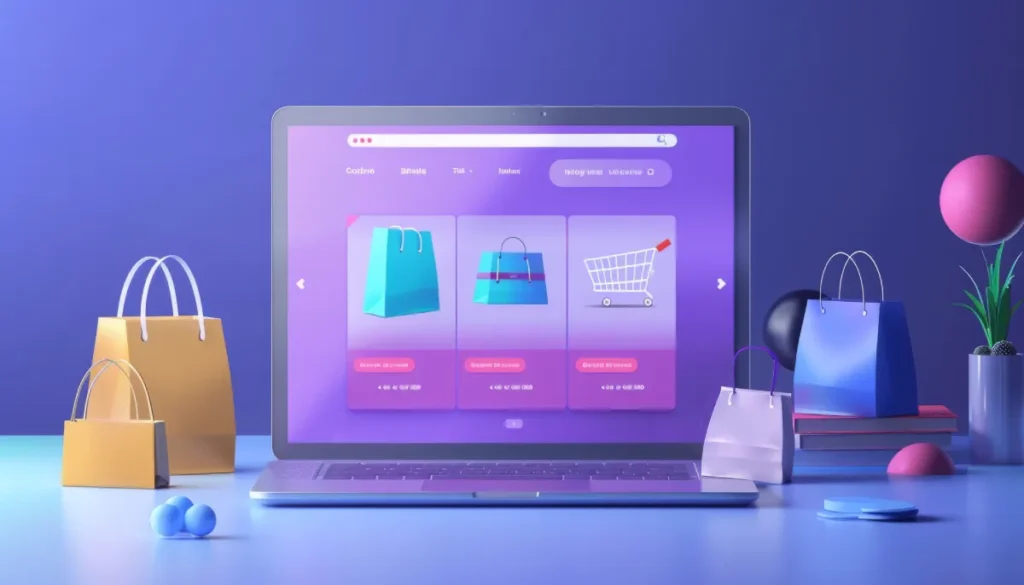
- Visitor A (a college student) lands on your site. The AI detects their browsing history or demographic data and instantly adjusts the homepage to show affordable, compact desks and modular sofas. The color scheme might even shift to be more vibrant and youthful.
- Visitor B (a luxury homeowner) lands on the same URL. But they see high-end Italian leather, elegant serif fonts, and a completely different layout.
Why it’s winning: It reduces friction. You don’t have to force users to search for what they want; you serve it to them on a silver platter before they even ask. This kind of predictive content is the future of web design. It makes the website feel less like a brochure and more like a concierge.
How to apply it: You don’t need to be Amazon to do this. Tools like Framer AI and various WordPress plugins are making dynamic content accessible. Start with the small and try showing different headlines based on where the user is clicking from (e.g., LinkedIn vs. Instagram).
Trend 2: Immersive 3D Elements and WebGL Experiences
For a long time, 3D on the web was a nightmare. It was clunky, it crashed browsers, and it took ten years to load.
Those days are gone.
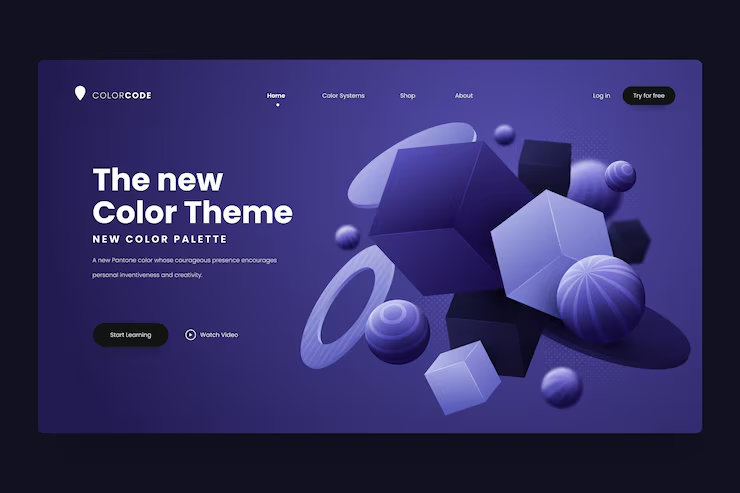
Thanks to better compression and libraries like Three.js and Spline, immersive 3D elements are taking over. This fits perfectly into the rise of the “Spatial Web.” We are seeing flat images being replaced by interactive 3D objects that you can spin, zoom, and explore.
The shift: It’s not just for gaming sites.
- E-commerce: Instead of a photo of a sneaker, you get a 3D model you can rotate to see the stitching on the heel.
- Architecture: For a site like Zumeirah, imagine a portfolio where clients can virtually “walk” through a room render directly in their browser.
Why it works: It keeps people on the page. It’s fun. It engages the brain in a way that flat text never will. It signals to the user, “We are premium. We invested in this experience.”
A word of caution: Don’t go overboard. Performance is still king. If your 3D model takes 10 seconds to load, you’ve lost the user. Use it as a centerpiece, not a background decoration.
Trend 3: Micro-Interactions and Advanced Motion UI
Have you ever liked a tweet and watched the little heart explode in a puff of confetti? That is a micro-interaction.
In 2026, these are going to be everywhere. Micro-interactions are the subtle animations that happen when a user engages with a website. It’s the button that morphs into a loading bar. It’s the way a card lifts up when you hover over it.
The Psychology: Humans crave feedback. When we push a physical door, we feel the weight. When we click a digital button, we want that same confirmation. Motion UI bridges the gap between the physical and digital worlds.
The Trend: Expect to see “Scrollytelling.” This is where the story unfolds as you scroll down. Elements fade in, text slides into place, and images expand. It turns a boring blog post into a journey.
Key benefit: It hides load times. If something is moving and entertaining the eye, the user doesn’t notice that the next section is taking 200 milliseconds to fetch data.
Trend 4: Bold and Expressive Typography
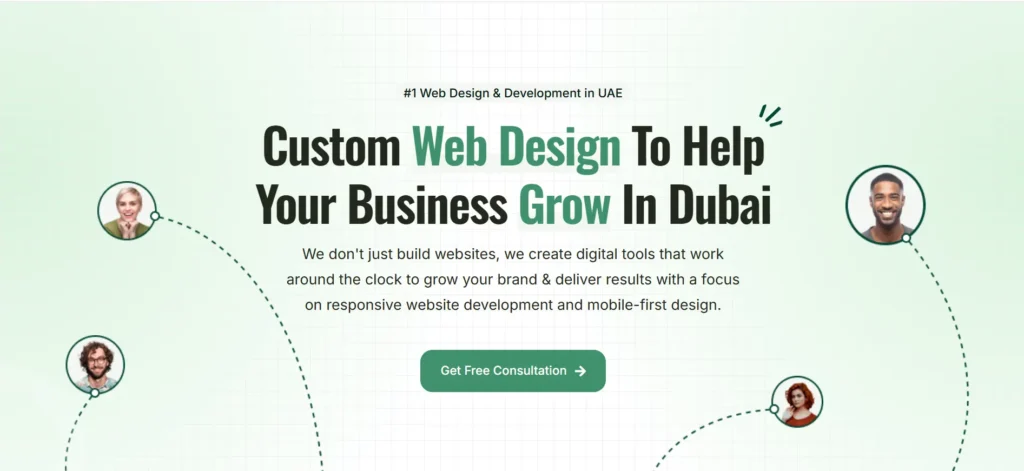
Typography is getting loud.
For years, we stuck to safe, sans-serif fonts like Roboto or Open Sans. They were clean, legible, and… honestly? A little boring. One of the latest web design trends is the return of the serif and the experimental font.
Text as Image: Designers are using text not just to convey information, but as the main visual element. We are talking about massive headlines that take up the entire screen.
Variable Fonts: This is the tech making it happen. Variable fonts allow a single font file to behave like multiple fonts. It can get thicker, thinner, wider, or slanted smoothly without loading new files. This means you can animate text and making it “breathe” or react to the mouse cursor without slowing down the site.
How to use it: If you want to look modern in 2026, pick a typeface with personality. Don’t be afraid of big sizes. Let the words do the heavy lifting so you don’t need as many stock photos.
Trend 5: Dark Mode and High-Contrast Visual Themes
Remember when Dark Mode was a cool feature you had to toggle on? In 2026, for many industries, it is becoming the default.
With the prevalence of OLED screens (which save battery by turning off black pixels), Dark Mode is practical. But aesthetically, it provides a sleek, high-end look that reduces eye strain.
High-Contrast: We are also seeing a shift toward “Neo-Brutalism” influences high contrast colors. Think neon green on deep black, or hot pink on dark blue. It pops. It grabs attention.
Industry Application:
- SaaS and Tech: Almost exclusively dark mode now to signal “high tech.”
- Luxury: Dark backgrounds make gold and silver accents look incredible.
Tip: If you implement this, ensure you test your accessibility. Dark mode doesn’t mean “hard to read.” You still need proper contrast ratios for text.
Trend 6: Minimalist Interfaces with Smart UX Layouts
Minimalism isn’t new. But Smart Minimalism is.
We used to strip things away until the site looked empty. Now, we are organizing content better. The biggest star here is the Bento Grid (or Bento UI).
What is the Bento Grid? Inspired by Japanese lunch boxes (and popularized by Apple’s marketing), this layout divides content into clear, rectangular boxes of different sizes. It’s one of the hottest web design ideas in 2026 has to offer.
Why it’s everywhere:
- It’s responsive by nature (boxes stack easily on mobile).
- It organizes chaos. You can have a video, a map, some text, and a chart, and if you put them in a Bento grid, they look cohesive.
- It’s scannable. Users can digest information in chunks rather than reading a wall of text.
The “Functional” aspect: This trend prioritizes speed. White space (negative space) is used to let the content breathe. It’s confident. It says, “We don’t need to clutter the screen to impress you.”
Trend 7: Voice-Enabled Interfaces (VUI)
“Hey Google, open Zumeirah.”
We are used to talking to Alexa and Siri. Now, users expect to talk to websites. Voice-Enabled Interfaces (VUI) are growing rapidly as hands-free browsing becomes more common.
How it changes design: It’s not visual, but it impacts UX. You need to structure your content so that voice assistants can read it easily. This means clear headings, concise answers (like the ones in this article!), and schema markup.
Voice Search: People search differently with voice. They don’t type “web design trends.” They say, “What are the top web design trends for 2026?” Your content needs to answer that question directly (again, like we are doing here). It’s a massive opportunity for SEO.
Trend 8: Accessibility and Inclusive Web Design
I’ll be honest: calling this a “trend” feels a bit wrong. It should be a standard. But the focus on it has reached a tipping point.
In 2026, having an inaccessible website is a legal liability and a brand reputation risk. Inclusive web design means ensuring your site works for everyone or people with visual impairments, motor disabilities, or cognitive differences.
The SEO Bonus: Here is a secret: Google loves accessible sites.
- Alt text for images helps screen readers and image search ranking.
- Proper keyboard navigation helps users with motor issues and helps Google bots crawl your site structure.
The Look: Inclusive design doesn’t mean ugly. It means high contrast, scalable text, and clear indicators. It’s about universal usability.
Trend 9: Futuristic and Cyber-Inspired Aesthetics
Nostalgia moves in twenty-year cycles. We’ve seen the 80s and 90s. Now, we are seeing a mashup of Y2K nostalgia and Cyberpunk futurism.
This is the “Sci-Fi” look.
- Visuals: Glitch effects, holographic gradients, neon glows, and metallic textures.
- Vibe: It feels digital-native. It acknowledges that we live in a simulation-adjacent world.
Who is this for? It’s not for a law firm. But if you are in crypto, gaming, AI, or music? This aesthetic is huge. It signals that you are on the bleeding edge of future web design innovations.
Trend 10: Asymmetrical Layouts and Experimental Design
Finally, for the rebels out there.
The grid (like the Bento box mentioned earlier) is safe. But Asymmetrical Layouts break the grid intentionally. This is often called “Anti-Design.”
What it looks like:
- Images overlapping text.
- Elements placed slightly off-center.
- Navigation bars in unexpected places (like the bottom of the screen).
Why do it? To stand out. In a sea of templates that all look the same, a site that feels a little “raw” or “broken” catches the eye. It creates a unique brand personality. It feels human, artistic, and curated.
How to Choose the Right Web Design Trends for Your Business
Okay, so we just dumped ten massive trends on you.
Please, for the love of the internet, do not try to use all of them at once. That is how you get a Frankenstein website.
You need to filter these upcoming web design trends through the lens of your brand. Ask yourself these questions:
- Who is my audience? If you are targeting corporate bankers, Trend 9 (Cyber-Aesthetics) will scare them away. Stick to Trend 6 (Minimalism) and Trend 5 (Dark Mode). If you are targeting Gen Z creatives, go wild with Trend 4 (Typography) and Trend 10 (Asymmetry).
- What is the goal? Is the goal to sell a product fast? Use Trend 1 (AI Personalization). Is the goal to build a brand portfolio? Use Trend 2 (Immersive 3D).
- What is my “Performance Budget”? Can your server handle heavy 3D graphics? If your customers are mostly on mobile data in rural areas, skip the heavy WebGL and focus on Trend 4 (Typography) it’s lightweight but impactful.
Balance is key. The best websites in 2026 will mix one or two “wow” factors (like 3D or Motion UI) with solid, foundational principles (Accessibility and Minimalism).
Frequently Asked Questions (FAQs)
We know you might have some specific questions about how web design is changing in 2025 and beyond. Let’s break them down.
What are the top web design trends for 2026?
The biggest movers are AI-driven personalization, immersive 3D/spatial web experiences, and sustainable/accessible design. We are seeing a shift from static pages to dynamic, living ecosystems that adapt to the user.
Which trend offers the best UX improvements?
AI Personalization and Micro-interactions offer the best return on investment for UX. AI ensures the user finds what they want instantly, while micro-interactions make the journey enjoyable and provide necessary system feedback.
Is dark mode important in 2026?
Absolutely. It has transitioned from a preference to an expectation. Many users have their operating systems set to dark mode permanently; if your site blasts them with bright white light, they might bounce immediately.
Does AI really help in website design?
Yes, but not by replacing designers. AI helps by automating the boring stuff like layout variations, code optimization, and asset generation allowing human designers to focus on creativity, strategy, and empathy.
How do 2026 web design trends affect SEO?
Significantly. Trends like Core Web Vitals optimization (speed), Voice Search compatibility, and Accessibility are direct ranking factors. Google favors sites that provide modern, seamless, and inclusive experiences.
Conclusion
The web in 2026 is going to be a fascinating place. It’s smarter, it’s darker, it’s deeper (literally 3D), and it’s more human.
We are leaving the era of the “digital brochure” and entering the era of the “digital experience.” Whether you adopt the rugged look of Neo-Brutalism or the clean efficiency of the Bento Grid, the goal remains the same: Connection.
You want your user to feel something. You want them to trust you.
At Zumeirah, we are obsessed with these shifts. We don’t just watch the future of web design; we help build it. If your current site feels like a relic from 2023, it might be time for a refresh.
Don’t let the future leave you on page two of Google.
Ready to elevate your digital presence? Stay updated with the latest web design and digital trends right here at Zumeirah.