I remember sitting in a local cafe in Dubai back in 2024, watching a colleague “blast” five hundred emails to random webmasters. Back then, it was a numbers game. You sent the emails, you got a 1% hit rate, and your rankings went up. But honestly? If you tried that today or worse, But in 2026 you’d probably just end up with a flagged domain and a massive headache.
The game hasn’t just changed; it’s been completely rewritten. If you’re looking to hit that #1 spot on Google, you have to stop thinking about “links” and start thinking about “citations of authority.”
Let me explain. With AI search engines like Perplexity and Google’s Search Generative Experience (SGE) taking over the top of the search results, a link isn’t just a vote of confidence anymore. It’s a data point that tells an AI whether your brand is worth mentioning in a summarized answer. If nobody is talking about you, the AI won’t either.
Why Link Building is Changing in 2026
You know what? Most people in the industry are still obsessed with Domain Authority (DA) or Domain Rating (DR). But here’s the thing: Google doesn’t use those metrics. They are third-party guesses. In 2026, the focus has shifted toward Topical Citation Authority.
From Link Quantity to “Citation Authority”
It used to be that the person with the most links won. Now? It’s the person with the most relevant links. I’d rather have one link from a specialized architectural journal if I’m an interior designer than fifty links from random lifestyle blogs.
Google’s algorithm has become incredibly smart at understanding “Entities” like the people, places, and things that make up a niche. If you get a link from a site that Google already trusts as an expert in your field, that link carries ten times the weight.
The Impact of AI Search (SGE & Gemini)
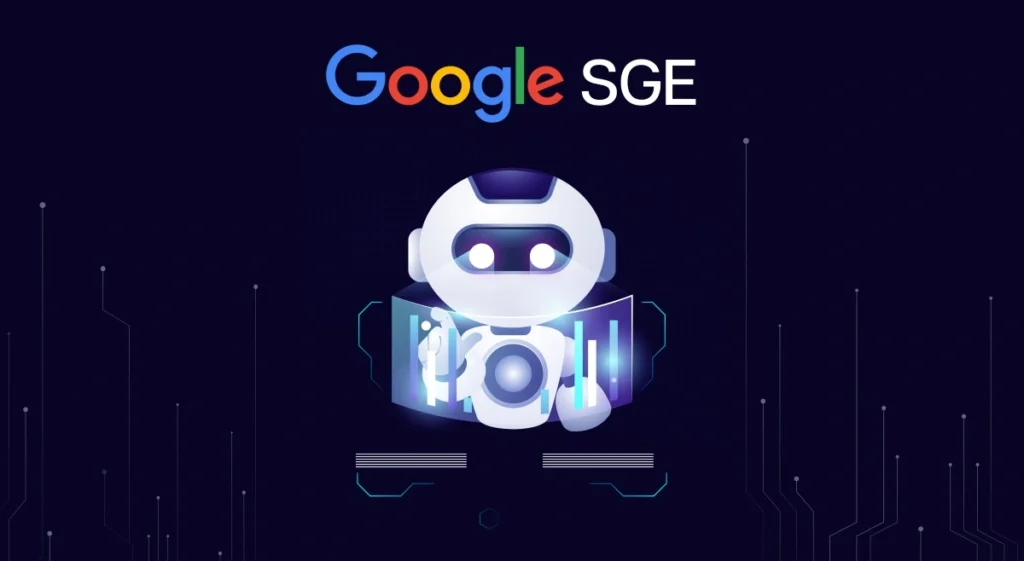
Here is a bit of a digression, but it matters. Have you noticed how Google now gives you a summary at the top of the page? That’s SGE or Search Generative Experience. For your site to be cited in that summary, you need links from sites that Google already includes in its “Knowledge Graph.” It’s a bit like a VIP club. If the current club members (high-authority sites) are talking about you, the AI assumes you’re a VIP too.
Why “Unlinked Mentions” are the new Gold
Honestly, sometimes a link isn’t even necessary. If a major news outlet mentions your brand name alongside a specific topic say, “Zumeirah for web design” So, Google’s AI connects those dots. They see that your brand is an authority on that topic even without a clickable link. It’s about building a digital footprint that screams “Expert.”
Phase 1: The Foundation — Creating “Link-Magnet” Assets
Before you even think about reaching out to people, you need something worth linking to. Let’s be real: nobody is going to link to your “Our Services” page. Why would they? It offers them zero value. You need what we call a “Link Magnet.”
The Power of Original Data
In 2026, the internet is flooded with AI-generated fluff. You’ve seen it like those long articles that say absolutely nothing new. To stand out, you need original data.
I recently saw a small agency run a survey of 400 business owners about their biggest marketing fears. They turned that into a simple report with three charts. Within a month, they had twenty high-quality backlinks from news sites.
They didn’t even ask for most of them! Journalists just needed a statistic to back up their own stories and cited the agency as the source.
Here’s a quick tip: If you can’t run a massive survey, use publicly available data but look at it through a new lens. Create a “State of the Industry” report for your specific city. People love citing local stats.
Tools & Calculators
Think about the last time you used a “Mortgage Calculator” or a “ROI Estimator.” Those pages are backlink goldmines. If you can build a simple tool that solves a recurring problem for your audience, you’ll earn links while you sleep.
And no, you don’t need to be a software engineer. There are plenty of simple tools today that let you build these in an afternoon.
The “Visual Link Building” Strategy
I’m not talking about generic stock photos. I’m talking about “Data Viz.” If you can take a complex concept like ‘how a specific tax law works’ and turn it into a simple, beautiful diagram, people will “steal” it for their own blogs. When they do, they usually give you a link as an image credit. It’s one of the oldest tricks in the book, and it still works like a charm.
Phase 2: High-Impact Link Building Strategies for 2026
Once you have your “Link Magnet,” you need to get it in front of people. But please, forget those “Guest Posting” marketplaces where you pay $50 for a link on a site that looks like it was designed in the 90s. Those are “Link Farms,” and Google is getting very good at ignoring them.
Digital PR: Getting Featured on Tier-1 News
Digital PR is basically just traditional PR but with a focus on Search Engine Optimization or SEO. Instead of just trying to get a link, you’re trying to tell a story.

Imagine you’re running a real estate firm. Instead of asking for a guest post, you create a study on “The Most Popular Neighborhoods for Expats in 2026.” You send that to business editors at major news sites. You’re giving them a story. When they write about it, you get a high-authority link that actually drives traffic and builds real trust.
The “Evolved” Skyscraper Technique
You might know the Skyscraper Technique: find a good piece of content, make it better, and ask for links. But in 2026, “better” doesn’t mean “longer.”
Nobody wants to read a 10,000-word guide anymore. They want the most helpful guide. To evolve this technique, add a unique human perspective. Use video snippets, add a downloadable checklist, or include an “Expert Take” section. Show Google that a human wrote this for other humans.
Broken Link Building 2.0
This is still a personal favorite because it’s so helpful. You find a dead link on a high-authority site, let the owner know, and suggest your (working) link as a replacement.
But here’s the 2026 twist: use AI tools to find these opportunities quickly, but write the emails yourself. Mention something specific about their site. “Hey, I was reading your article on Sustainable Design and noticed the link to the 2023 report is dead. I actually just put together a 2026 version if you want to swap it out?” It’s polite, it’s helpful, and it has a very high success rate.
Phase 3: The “Authority-First” Outreach Framework
Let’s talk about outreach. Honestly, most outreach emails are terrible. I get about fifty a day in my inbox, and 49 of them go straight to the trash.
“Dear Webmaster, I love your blog. Can I write a post for you?”
Give me a break. You don’t even know my name!
Why “Blast” Emails are Dead
In 2026, email filters are smarter than ever. If you send the same template to 500 people, you’re going to get blacklisted. High-authority editors want to know that you’ve actually read their work.
The “Relationship-First” Approach
If you want a link from a big player, you need to play the long game. Start by following them on social media. Engage with their posts. Leave thoughtful comments.
When you eventually send that email, it’s not a cold pitch; it’s a conversation. “Hey Sarah, I loved your recent post about the shift in the UAE’s tech market. I actually wrote a piece that expands on your point about AI adoption. Thought your readers might find it useful.” See the difference? It’s human.
The Perfect Pitch Template (That Doesn’t Feel Like a Template)
If you must use a structure, keep it simple:
- The Hook: Mention something they recently did or wrote.
- The Value: Why should their readers care? (Not why you want a link).
- The Ask: Keep it low-pressure. “Would you be open to a quick chat about this?”
- The Exit: Don’t be pushy.
Phase 4: Measuring Quality & Avoiding Penalties
Not all links are created equal. In fact, some links can actually hurt you. I’ve seen sites lose half their traffic overnight because they got hit by a “Manual Action” for spammy link building.
Beyond Metrics: The “Smell Test”
When I’m looking at a potential link opportunity, I ignore the numbers for a second and just look at the site.
- Does it have real comments?
- Are the articles written by real people with LinkedIn profiles?
- Does the site look like it was made for users or for search engines?
If a site has “Sponsored Content” on every other page and covers everything from “How to fix a pipe” to “Crypto trends,” stay away. That’s a link farm.
Anchor Text Diversity
In the old days, everyone wanted their link to say “Best Web Designer Dubai.” Today, if all your links say that, Google will flag you for over-optimization.
Real people link to things naturally. They use phrases like “this study,” “their website,” or even just the URL. Your link profile should look a bit messy. If it looks too perfect, it looks like you bought it.
The Future of Off-Page SEO: Beyond 2026
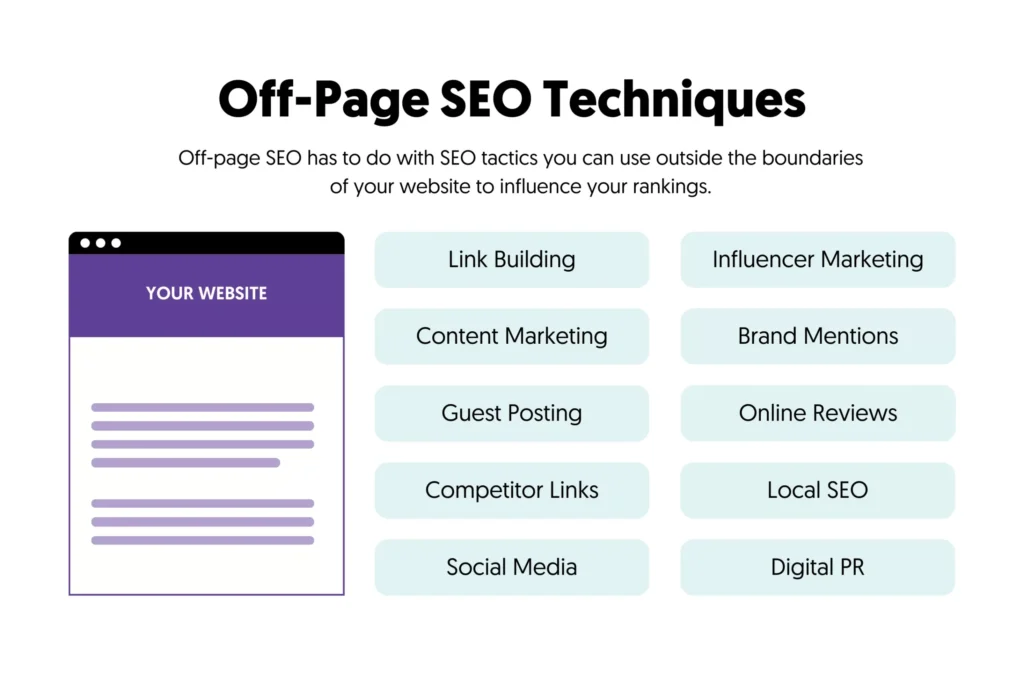
As we move forward, the concept of “Entities” will dominate. Google is trying to understand the world like a human does. It knows that “Apple” the company is different from “Apple” the fruit because of the other words around it (Steve Jobs, iPhone, California).
Entity-Based SEO
Your link building should aim to connect your brand with other established entities in your niche. If you get mentioned alongside your competitors in a “Top 10” list on a reputable site, you’re telling Google, “I belong in this group.” That is incredibly powerful for ranking.
How Social Signals Influence Link Value
You know what’s interesting? Google says social media likes don’t count as “links.” And technically, they’re right. But if a post goes viral on LinkedIn and gets 500 shares, what happens? People see it, they talk about it, and some of them like bloggers and journalists link to it. Social signals are the “smoke” that tells Google there’s a “fire” of authority happening.
Conclusion: Your 12-Month Link Building Action Plan
Look, you aren’t going to rank for a big keyword by next Tuesday. It’s a marathon, not a sprint. But if you follow this roadmap, you’ll be ahead of 99% of people who are still trying to “hack” the system.
- Month 1-2: Build your Link Magnet. Whether it’s a survey, a tool, or a massive guide, make it the best thing on the internet for that specific topic.
- Month 3-6: Start your Digital PR and Outreach. Focus on building 2-3 high-quality, relevant links per month rather than 50 low-quality ones.
- Month 7-12: Monitor your results. See which types of content are naturally attracting links and double down on those.
Here’s the thing: At the end of the day, what matters is that you’re building a brand, not just a list of links. If you focus on being truly helpful and authoritative, the rankings will follow.
Frequently Asked Questions
How many links do I need to rank #1? There’s no magic number. I’ve seen pages rank with five great links while others struggle with five hundred. It depends on who you are competing against and how good your content is. Focus on quality over quantity every single time.
Is guest posting still safe in 2026? Yes, but only if you’re doing it to share real expertise. If you’re just doing it for a link on a random site, Google will eventually figure it out. Write for sites your customers actually read.
How long does it take for a backlink to impact rankings? Usually, you’ll see a change in 3 to 10 weeks. Google needs to find the link, evaluate the site it’s on, and then update its own records. Patience is your best friend here.
Do I need a big budget for link building? Not necessarily. You need either time or money. If you have the time to create amazing data and reach out to people personally, you can do this on a tiny budget. If you want to scale fast, you might need to hire a team to help with the research and outreach.