The SEO landscape just underwent a massive seismic shift, and if you haven’t checked your analytics since New Year’s, you might be in for a surprise. The December 2025 Google Core Update wasn’t just another routine tweak; it was a full-blown statement.
While some of the “big guys” were left scratching their heads, a handful of smaller, high-trust sites suddenly found themselves sitting pretty at the top of the pile.
Why? Because Google has officially stopped playing games with E-E-A-T and AI-driven search. It’s no longer about who can churn out the most content but it’s about who has the most “reputational weight.”
What are we actually talking about with “Domain Authority”?
Before we go any further, let’s get on the same page about the terminology. When people mention Domain Authority in 2026, they’re usually talking about that famous 1-to-100 metric developed by Moz.
Think of it like a credit score for your website. It’s a predictive number that tells you how likely you are to win a fight for a top spot in the search results.
Moz calculates this by looking at your backlink profile, the quality, the sheer quantity, and even the variety of other sites pointing back to you. They factor in things like your “Spam Score” and how many unique “root domains” find your stuff worth sharing.
It’s a bit of a balancing act. If you have a high Domain Authority, Google treats you like a tenured professor; if it’s low, you’re more like the new kid in school trying to prove you know your stuff.
Does Domain Authority still matter in the age of AI?
With AI Overviews and generative search now taking up the lion’s share of the screen, some people thought traditional authority metrics would die out. They were wrong. In fact, they’ve become more vital than ever.
In 2026, when an AI agent or a Google “Answer Engine” looks for a source to cite, it doesn’t just pick the prettiest page. It looks for the most authoritative one.
High Domain Authority acts as a massive trust signal that tells these algorithms, “Hey, this brand is the real deal.” If you want to be the one the AI quotes, you need that solid foundation.
Pro Tip: Keep a close eye on your progress. We’ve found that sites focusing on the right trust signals usually see a measurable jump in their scores within 3 to 6 months.
In this guide, I’m not going to give you some fluffy “best practices” that worked three years ago. We’re going deep.
I’ve put together 10 actionable, no-nonsense strategies that will help you scale your Domain Authority in 2026. We’ll cover everything from building digital PR to optimizing for “Information Gain” the stuff that actually moves the needle today.
Are you ready to stop chasing the algorithm and start leading it? Let’s get to work.
What Factors Influence Domain Authority in 2026?
Let’s be real for a second, SEO isn’t what it used to be. If you’re still looking at Domain Authority as just a “backlink counter,” you’re missing the forest for the trees.
In 2026, Google’s brain has gotten a lot more sophisticated. It’s not just about who’s talking about you; it’s about why they’re talking about you and if they actually trust you.
Learn: Create a Winning SEO Roadmap in 2026
Think of your Domain Authority as a house. Backlinks are the foundation, but your topical authority is the framing, and your brand sentiment is the curb appeal. If any of those are weak, the whole thing feels shaky to a search engine.
Core Factors You Can’t Ignore
Even with all the AI bells and whistles, some “old school” factors still carry the most weight. But even these have evolved:
- High-Quality Backlinks (Context is Everything): In the past, a link from a big news site was the holy grail. Now? A link from a smaller, hyper-relevant niche site often carries more “trust equity.” Google wants to see that you’re being cited by people who actually play in the same sandbox as you.
- Unique Referring Domains: It’s better to have 10 different websites vouching for you than one website linking to you 100 times. Diversity signals that your influence is widespread, not just a one-off favor.
- Topical Authority: This is the big one for 2026. If your site is about “Web Design Service in Dubai” but you suddenly start writing about “Cat Food,” your authority on the design topic actually gets diluted. Google rewards sites that stay in their lane and cover a topic from every possible angle.
- Low Spam Score: If your backlink profile looks like a graveyard of “buy cheap shoes” links and shady directories, your Domain Authority will tank. Cleanliness is next to godliness in the eyes of Moz and Google alike.
Emerging Trends
There are things influencing your rankings now that didn’t even have a name a few years ago. If you want to outpace the giants, you need to master these:
- Brand Sentiment: Google’s AI now reads reviews, forum discussions, and social media chatter to see if people actually like your brand. If everyone on Reddit is complaining about your service, no amount of backlinks will save your authority.
- E-E-A-T Alignment: Experience, Expertise, Authoritativeness, and Trustworthiness. This is the North Star of 2026. Google looks for “Experience” signals like original photos of your team at work or unique case studies to prove you aren’t just an AI-generated ghost site.
- AI Search Visibility: Here’s a weird one: being cited in an AI Overview (SGE) actually feeds back into your perceived authority. It’s a loop. The more the AI trusts you to answer a question, the more authoritative you become in the eyes of the primary index.
The 2026 Authority Checklist
To make it easy for the skimmers out there, here is the breakdown of what actually moves the needle today:
- Relevance over Raw Power: A link from a niche blog > a link from a generic news site.
- Deep Content Clusters: Covering 100% of a sub-topic rather than 10% of ten topics.
- Brand Mentions: Even unlinked mentions on high-authority sites now act as “implied links.”
- Technical Health: If your site is slow or buggy, Google assumes you’re not a “top-tier” authority.
Honestly, it sounds like a lot, but it really boils down to one thing: becoming a legitimate resource that people actually want to find. Transition:
So, how do we actually do this? We aren’t just going to sit around and wait for authority to happen. We’re going to build it.
Let’s move into the 10 step-by-step strategies that will help you dominate your niche and see that Domain Authority score finally climb.
Strategy 1 – Strengthen E-E-A-T Signals Across Your Site
In the early days of SEO, you could hide behind a logo and a stock photo and still rank like a king. Those days are officially buried. Since the late 2025 updates, Google has become obsessed with one question: “Why should we trust YOU specifically?”
If you want to move the needle on your Domain Authority in 2026, you have to stop thinking like a content farm and start thinking like a verified expert.
This is where E-E-A-T (Experience, Expertise, Authoritativeness, and Trustworthiness) comes into play. It’s not just a buzzword anymore; it’s the skeletal system of your site’s reputation.
Why It Works: The “Verification” Era
Post-2025 Google doesn’t just read your words; it looks for evidence. If you’re writing about web design trends in Dubai, Google wants to see that you’ve actually opened a code editor this year.
Sites that demonstrate real-world experience saw massive visibility gains in the recent core update, while generic, faceless blogs got pushed to page five.

Actionable Steps to Build Unshakeable Trust
Here’s the thing: you can’t just say you’re an expert. You have to prove it. Let’s break down exactly how to do that.
- Ditch the “Admin” Author: Every single post on your site needs a real human name attached to it. Create a detailed author bio that doesn’t just say “Marketing Manager.” Include credentials, links to their LinkedIn, and mentions of other places they’ve been published.
- The “Experience” Injection: This is the secret sauce for 2026. Whenever you’re explaining a strategy, add a “From the Field” section. Use original photos or quick videos of your team actually doing the work. If you’re talking about increasing Domain Authority, show a screenshot of your own GSC dashboard (blurred where necessary) or a case study from a recent client. AI can’t replicate “I was there and this happened.”
- The About Page Overhaul: Most “About” pages are boring. In 2026, yours should be a trophy room. Show off your certifications, industry awards, and real testimonials with names and faces.
- Speak the Language of Machines (Schema): Honestly, this is the most underrated part. You need to use Author and Organization Schema markup. It’s basically a digital ID card that tells Google’s AI exactly who you are and what you’re an expert in.
Tools to Keep You on Track
- Google Search Console: Watch your “Experience” based queries. Are people searching for your authors by name? That’s a massive authority signal.
- Ahrefs/Semrush: Use their brand monitoring tools to track where your authors are being mentioned across the web. The more “off-site” authority they have, the higher your “on-site” DA climbs.
The Expected Payoff
Don’t expect your Domain Authority to jump to 90 overnight. Trust takes time. Usually, you’ll start seeing a steady uplift in your authority scores within 3 to 6 months as Google’s “Trust Graph” connects your content to your real-world expertise.
Strategy 2 – Produce AI-Resistant, Experience-Led Content
Let’s talk about the elephant in the room and that is AI content, It is everywhere. By now, everyone and their cousin is using LLMs to churn out 500-word blog posts in seconds.
But Google has caught on. In 2026, the “average” content that AI produces is being systematically devalued. If your article looks like a generic summary that anyone could have generated with a single prompt, why would Google rank it?
To increase your Domain Authority in 2026, you need to create content that is “AI-resistant.” This means writing pieces that rely on human experience, messy real-world data, and unique insights that a machine simply hasn’t lived through.
Why It Works: The Information Gain Factor
Google’s 2026 algorithms look for something called “Information Gain.” Basically, if your article provides new information that isn’t already in the top 10 results, you get a massive ranking boost.
AI usually just remixes what already exists. By adding your own “Experience-led” layers, you’re giving Google a reason to prioritize you over the giants.
Actionable Steps to Create “Uncopiable” Content
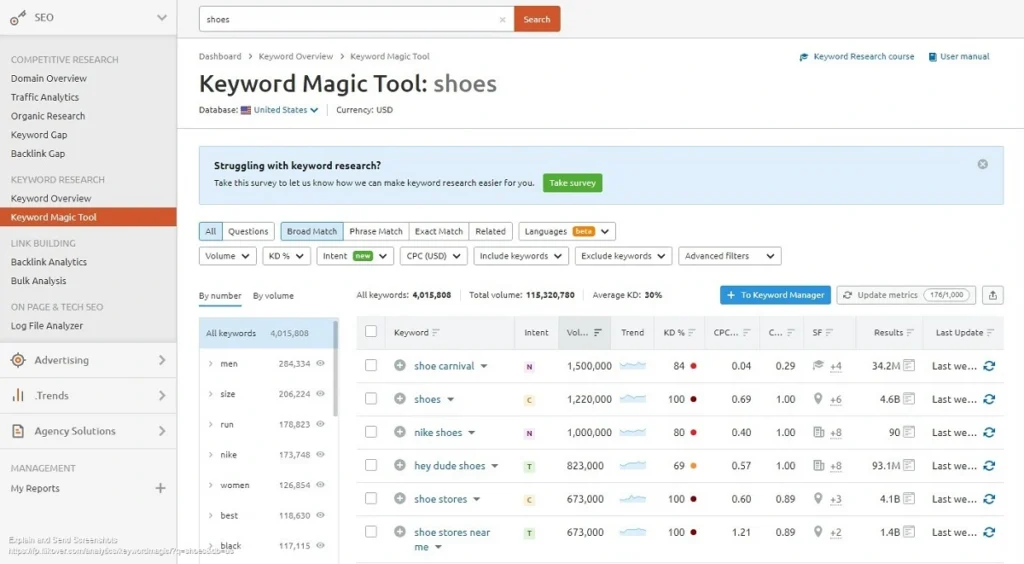
- Deep-Dive Intent Research: Don’t just target a keyword. Use the Semrush Keyword Magic Tool to find the specific questions people are asking. Look for “Commercial” and “Informational” intent overlaps. You want to answer the “How do I do X?” but with the “I did X and here is the screenshot” proof.
- The 2,000+ Word Pillar: While short-form is great for social, for DA, long-form is still king. Aim for 2,000+ words but keep it scannable. Mix in your personal anecdotes. If you’re talking about Best SEO Service Agency, mention a specific challenge you faced with a technical SEO. That’s a human detail an AI won’t know.
- Visual Proof & Original Research: Stop using stock photos. Seriously. Use original screenshots from your own workflows, custom charts, or even a quick 30-second video embed of you explaining a complex point. These “rich media” elements are huge trust signals.
- The Content Refresh: Your old content is a goldmine. Go back to posts from 2024 or 2025 and inject them with “2026 data.” Add a section on how AI search has changed that specific topic. This “freshness” signals to Google that your domain is active and authoritative.
- Multi-Platform Authority: Repurpose your best insights into a YouTube video or a podcast snippet. Google loves to see a brand that exists across the “Search Everywhere” ecosystem.
Tools for the Human Touch
- Ahrefs Content Explorer: Use this for “Content Gap” analysis. Find what your big competitors (like Neil Patel) forgot to mention and make that your central point.
- Originality.ai: Use this not just to “check for AI,” but as a benchmark. If your score is too “robotic,” it means you haven’t added enough of your own voice yet.
The Content Type Matrix for 2026
| Content Type | Why it Ranks | Human Element |
| The “How-To” Case Study | Solves a problem with proof. | “I tried this for 30 days and here are my results.” |
| The Trend Analysis | Captures “Freshness” signals. | “I’m seeing this shift in the Dubai market right now.” |
| The Expert Round-up | Builds “Entity” authority. | “I asked 5 local pros and here’s what they said.” |
| The Comparison Guide | High commercial intent. | “Side-by-side screenshots of Tool A vs Tool B.” |
Expected Impact
When you create high-value, shareable assets like this, you’ll start seeing natural backlinks within 4 to 8 weeks. People link to original research and unique insights, not generic summaries.
Strategy 3 – Earn High-Authority Backlinks Through Digital PR and Outreach
Here is the cold, hard truth: you can have the most beautiful, user-friendly site in the world, but if nobody in the “high-rent” neighborhoods of the internet is talking about you, your Domain Authority will stay flat.
In 2026, the gap between a DA 30 and a DA 60 site isn’t just more links, it’s the prestige of those links.
Digital PR is essentially the act of getting “big media” and industry leaders to vouch for you. It’s the difference between a random person telling you a restaurant is good and a Michelin-starred chef saying it’s the best in the city.
Why It Works: The “Elite” Endorsement
While Google has moved toward E-E-A-T, high-authority backlinks from established DA 60+ sites remain the most powerful catalyst for increasing your own DA. When a site like Search Engine Land or a major news outlet links to you, they aren’t just sending traffic; they are transferring a massive amount of “Trust Equity.”
Actionable Steps to Land Premium Links
- Build “Link Magnets”: Journalists don’t care about your services but they care about data. Create an original statistics report (e.g., “The State of Web Design in Dubai 2026”) or a free tool. These are assets that people have to link to when they cite your data.
- The “Expert Source” Method: Use platforms like HARO (Help A Reporter Out) or search for journalists on X (formerly Twitter) using hashtags like #JournalistRequest. If you can provide a punchy, expert quote on a trending topic, you can land a backlink from a major publication for free.
- The Broken Link Pivot: This is a classic that still works wonders in 2026. Use Ahrefs Site Explorer to find resource pages in your niche that are linking to dead, 404 pages. Reach out to the site owner, politely let them know their link is broken, and offer your high-quality, up-to-date article as a replacement. It’s a win-win.
- Value-First Outreach: Honestly, stop sending generic “Please link to me” emails. Aim for 50-100 highly personalized emails a week. Mention a specific article they wrote and explain exactly how your resource adds value to their readers.
- The Logistics: Don’t just wing it. Track everything in a Google Sheet. Keep tabs on your prospects, the date you sent the email, their response, and most importantly the live link once it’s gained.
Your Power Tools
- Ahrefs: Essential for prospecting and finding those “broken link” goldmines.
- Hunter.io: To find the direct email addresses of editors so you don’t get stuck in a “info@company.com” black hole.
- BuzzSumo: To see which topics are currently being shared the most so you can create “viral-ready” content.
The Outreach Blueprint (Template)
“Hey [Name],
I was just reading your piece on [Topic] and noticed you mentioned [Old Resource]. It’s a great point, but I noticed that link actually leads to a 404 now.
I recently published a deep-dive on [Same Topic] for 2026 with some fresh data from the Dubai market that might be a great fit for your readers if you’re looking to update that page.
No pressure at all, just wanted to help out with the dead link!
Best, [Your Name]”
Expected Impact
If you’re consistent, you can expect to land 5 to 10 quality links per month. In the world of Domain Authority in 2026, that’s enough to boost your score by 2 to 5 points relatively quickly, as these are high-impact votes of confidence.
Strategy 4 – Build Topical Authority with Content Clusters
If you’re still just “writing a blog post” every time you have an idea, you’re making your life way harder than it needs to be. In the old days, we used to throw articles at the wall and see what stuck.
But for Domain Authority in 2026, Google isn’t looking for a bunch of isolated islands of content. It wants a continent a massive, interconnected landmass that proves you own a specific subject from top to bottom.
This is what we call “Topical Authority.” It’s less about a single high-ranking page and more about the collective strength of everything you’ve written.
Why It Works: Semantic Relevance and the AI “Brain”
AI search engines like Gemini or Perplexity don’t just read your text; they try to understand the relationships between concepts.
When you build a content cluster, you’re basically providing a roadmap for these machines. You’re saying, “If you want to understand web design, I have the pillar page. If you want to understand CSS for luxury brands in Dubai, I have that too.” This semantic depth signals to Google that you aren’t just a tourist in your niche and you’re the local guide.
Actionable Steps to Build Your Authority Hubs
- Pick Your Battles (Core Topics): Don’t try to be everything to everyone. Choose 5 to 10 core topics that actually matter to your business. This might be “Local SEO for Real Estate” or “High-End UX Design.” Once you have your core, create a Pillar Page like a massive, 3,000-word comprehensive guide that acts as the mother ship for that topic.
- The “Spoke” Method: Now, for every pillar, you need 10 to 20 “cluster” articles. These are shorter, more specific pieces that dive deep into the sub-topics. Think of the pillar as the “What and Why” and the clusters as the “How-To.”
- The Internal Link Web: This is where the magic happens. Every cluster article must link back to the pillar page, and the pillar page should link out to every cluster article. Aim for 5 to 10 internal links per piece. This tells Google’s crawler, “Hey, these pages are family. They all belong together.”
- Entity Optimization: Use “Entity” thinking. Instead of just repeating your keyword, mention related terms. If you’re talking about “Domain Authority,” you should also be talking about “Backlink profiles,” “Moz,” “PageRank,” and “E-E-A-T.” Use FAQ and HowTo Schema to make it even easier for Google to categorize your data.
- Quarterly Audits: Use the Semrush Topic Research tool every three months. Things change fast and in SEO. Check if there are new questions being asked that you haven’t covered yet.
Your Authority Toolkit
- Semrush Content Cluster Tool: This is a lifesaver. It helps you group keywords into logical clusters so you don’t have to do the manual math.
- Google Keyword Planner: Still the gold standard for seeing what people are actually typing into that search bar.
The Internal Linking Blueprint
| Page Type | Goal | Linking Strategy |
| Pillar Page | Global Authority | Links to ALL cluster articles in the first few paragraphs. |
| Cluster Article | Specific Answer | Links back to the Pillar Page within the first 100 words. |
| Supporting Asset | User Experience | Links to 2-3 other related cluster articles to keep users on-site. |
Expected Impact: The Compound Effect
The beauty of this strategy is that it’s not just about one page ranking. When one article in your cluster starts to climb, it pulls the others up with it.
You’ll usually see faster indexing for new posts and a noticeable jump in your overall Domain Authority in 2026 within about three months. It’s like building a reputation once you’re known for one thing, everyone starts to trust you on the related stuff.
Strategy 5 – Optimize Technical SEO and Core Web Vitals
For sure, Nobody likes a slow website. You’ve probably clicked away from a page yourself because it took more than three seconds to load. Well, Google feels the same way.
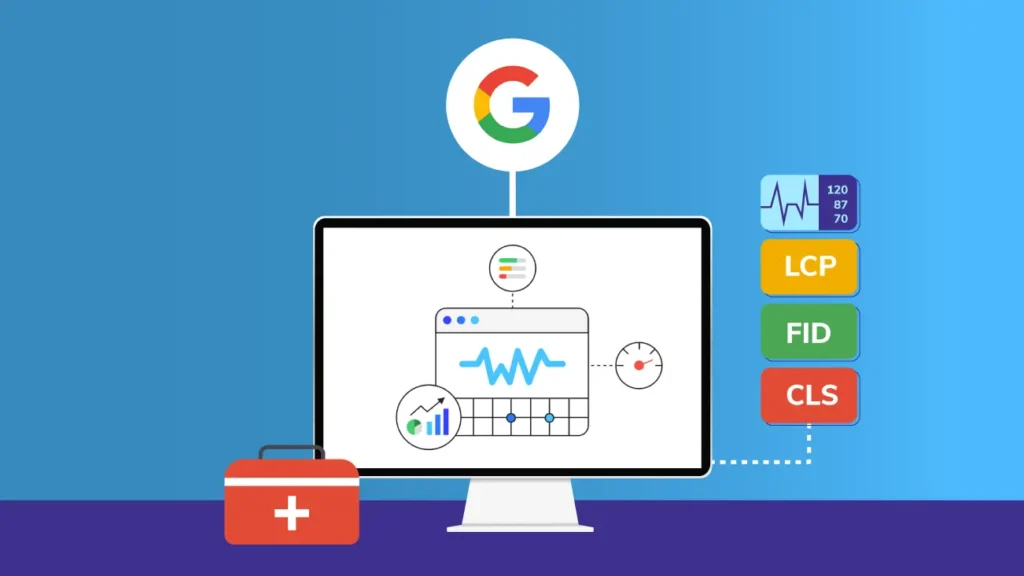
In 2026, technical SEO isn’t just a “behind-the-scenes” chore; it’s a massive trust signal. If your site is buggy, slow, or hard to navigate on a phone, Google’s AI assumes you aren’t a top-tier authority.
Learn: Mastering AI & Local Search with SEO Stratgey
Think of it this way: Technical SEO is the engine of your car. You can have the best paint job (content) in the world, but if the engine won’t start, you aren’t going anywhere.
Why It Works: The “Frictionless” Factor
Google’s 2025-2026 updates have doubled down on Core Web Vitals. They’ve realized that high-quality content only matters if people can actually access it smoothly.
Clean sites earn trust from both users and bots. When your “technical hygiene” is spotless, search engines can crawl your content faster, index it more accurately, and you guessed it boost your Domain Authority.
Actionable Steps for a High-Performance Site
- The Interaction Test (INP): The old “First Input Delay” metric is history. In 2026, it’s all about Interaction to Next Paint (INP). This measures how fast your site reacts when someone clicks a button or menu. You want this under 200 milliseconds. If it feels sluggish, you’re losing authority points.
- Modern Image Squeezing: Stop using heavy JPEGs. The standard for 2026 is AVIF. It’s about 50% smaller than WebP but looks just as sharp. Use a plugin to convert your library automatically and enable lazy loading so your site only loads images as the user scrolls.
- Mobile-First or Mobile-Only? Honestly, if your site doesn’t work perfectly on a smartphone, you’re invisible. Ensure your buttons are easy to tap and your text is readable without zooming.
- The GSC Cleanup: Jump into Google Search Console and look for “Crawl Errors.” If Google is hitting 404s or redirect loops, it’s wasting its “crawl budget” on your site. Fix these, and you’ll see your new content get indexed much faster.
- Schema Everything: Use structured data to give your site “rich results.” It’s like giving Google a cheat sheet for your content.
The 2026 Performance Benchmarks
| Metric | Target Score | Why it Matters |
| LCP (Loading) | Under 2.0s | Tells the user the page is actually useful. |
| INP (Interactivity) | Under 200ms | Makes the site feel “snappy” and responsive. |
| CLS (Stability) | Under 0.1 | Prevents elements from jumping around while reading. |
Your Technical Toolbox
- Google PageSpeed Insights: Still the gold standard for a quick health check.
- GTmetrix: Great for seeing exactly which script is slowing down your “Interaction to Next Paint.”
- Screaming Frog: Use this for a deep crawl to find every broken link and missing meta tag on your domain.
Checklist for Quick Wins:
- [ ] Upgrade to high-performance Cloud hosting (shared hosting is an SEO killer in 2026).
- [ ] Implement a Content Delivery Network (CDN) like Cloudflare.
- [ ] Minify your CSS and JavaScript files to reduce “bloat.”
- [ ] Force HTTPS for every single page, security is non-negotiable.
Expected Impact
Technical fixes are often “quick wins.” While it takes months for links to build authority, a faster site can result in an indirect DA boost almost immediately because your user signals (like bounce rate and time on page) will improve. When people stay longer, Google notices.
Strategy 6 – Encourage and Curate User-Generated Content
Honestly, you could write the most brilliant guides in the world, but if yours is the only voice on your website, it starts to feel a bit like a lecture. In the world of Domain Authority in 2026, Google isn’t just listening to what you say about your brand; it’s listening to what everyone else is saying, too.
This is where User-Generated Content (UGC) comes in. Think of it as the “digital applause” for your site. When real people leave reviews, post photos, or start discussions in your comments section, they are generating fresh, keyword-rich content that you didn’t even have to write. But more importantly, they are sending massive trust signals to search engines.
Learn: How to do Keyword Research with Google Search Console
Why It Works: The Social Proof Engine
AI can mimic expertise, but it can’t mimic a community of real humans. Post-2025 Google updates have placed a premium on authentic engagement. If a page has 50 detailed user reviews and an active Q&A section, Google views it as a “living” resource.
This kind of social proof is the ultimate E-E-A-T signal. It tells the algorithm that your domain is a trusted hub, not just a static billboard.
Actionable Steps to Get People Talking
- Build a “Feedback Loop”: Don’t just hope for reviews; ask for them. Add a dedicated review section to your service pages or create a community forum where users can troubleshoot issues or share tips. If you’re running a Dubai agency, maybe have a “Client Spotlight” forum where people discuss their growth.
- Run “Real-World” Contests: Why not run a contest asking for user stories or short videos of how your product solved a problem? “Show us your 2026 workspace setup using our design tips.” Not only do you get great content, but you also get people sharing your site link on social media, hello, natural backlinks!
- The “Hall of Fame” Strategy: Feature the best UGC prominently on your homepage or social feeds. When users see their own content being credited and celebrated, they’re 10x more likely to become brand loyalists.
- The Art of the Reply: If someone takes the time to leave a comment, you must respond. Moderate for quality to keep things professional, but show that there’s a human behind the curtain. Google notices these interaction patterns.
- Star Power (Review Schema): This is a technical must. Implement Review and AggregateRating Schema. This is what makes those golden stars appear in the search results. Not only does it boost your CTR, but it also helps Google’s “Entity” engine connect your brand to positive sentiment.
Tools to Manage the Noise
- Bazaarvoice: A heavy-hitter tool for managing and displaying reviews at scale.
- Native WordPress Plugins: If you’re on a budget, tools like WP Customer Reviews or Site Reviews work wonders for getting those schema-rich stars onto your pages.
- Google Alerts: Set an alert for your brand name. If someone mentions Zumeirah on a forum or blog, you want to be the first to know so you can join the conversation.
Expected Impact
When you turn your site from a monologue into a dialogue, you’ll see a surge in “dwell time” like how long people stay on your site. This increased engagement, combined with the steady stream of fresh content, leads to natural, unearned backlinks as your site becomes the “go-to” spot for the community. You can expect a noticeable shift in your perceived authority within a few months.
Strategy 7 – Optimize for Multi-Platform Visibility (Including Voice and AI Search)
If you’re still optimizing solely for a blue link on a desktop screen, you’re basically living in 2018. In 2026, the “search engine” has evolved into an “answer engine.”

People aren’t just typing keywords; they’re shouting questions at their kitchen speakers, asking AI chatbots for advice, and scrolling through Reddit to find out if a brand is actually legit.
To grow your Domain Authority in 2026, you need to be everywhere your audience is. When Google sees your brand being mentioned across YouTube, TikTok, and voice queries, it builds a “Knowledge Graph” around you. This makes you the undeniable authority in your space.
Why It Works: The “Search Everywhere” Ecosystem
Branded searches is where people specifically type “Zumeirah web design” or “Zumeirah SEO Services” and these are the single most powerful authority signal right now.
Why? Because it tells Google that you aren’t just a random result; you’re a destination. Furthermore, as AI Overviews (SGE) continue to dominate, being the “cited source” in a voice or AI response is the new Page.
Actionable Steps to Rule Every Screen
- The Conversational Pivot: Voice searches are longer and more “human” than typed ones. Instead of “Dubai SEO agency,” people ask, “Who is the best SEO expert for small businesses in Dubai?” You know what? You need to write content that mirrors this. Use long-tail, natural-sounding questions as your H2s.
- Seize “Position Zero” (Featured Snippets): In 2026, many voice results are pulled directly from featured snippets. To win these, provide a “Targeted Answer” right at the top of your sections. Give Google a clear, 40-50 word paragraph that answers a specific “What is” or “How to” question.
- The Reddit & Forum Footprint: Honestly, Reddit is the new “Trust Layer” of the internet. Google’s latest updates heavily favor community-driven discussions. If your brand is being recommended in subreddits related to your niche, Google treats those mentions as massive “implied links.” Get active, answer questions, and build a reputation there.
- Video Mentions: YouTube and TikTok aren’t just for entertainment; they are massive search engines. When you create video content, Google’s AI transcribes it and indexes the topics you discuss. This builds your “Entity” authority.
- Monitor Your “Brand Pulse”: Check your Google Search Console for branded search volume. If more people are searching for your name, your DA is almost guaranteed to rise because you’ve moved from “website” to “authority.”
Your Multi-Platform Toolkit
- AnswerThePublic: This is gold for finding the exact questions people are asking their voice assistants.
- AlsoAsked: Great for seeing the “People Also Ask” (PAA) clusters that Google uses to build its AI responses.
The Featured Snippet Checklist for 2026
- [ ] Question-Based Heading: Use an H2 or H3 that asks a direct question.
- [ ] The “Snippet Box” Answer: Place a concise 40-50 word answer immediately below the heading.
- [ ] Structured Lists: Use bullet points or numbered lists for “How-To” queries.
- [ ] FAQ Schema: Add FAQ markup so Google can easily parse your answers.
Expected Impact
By expanding your footprint beyond the standard search bar, you’ll see an increase in brand signals within 2 to 4 months. As your branded search volume grows and you start appearing in AI Overviews, your Domain Authority will naturally follow. It’s about being a “recognized entity” in a sea of generic content.
Strategy 8 – Leverage Video and Visual Content for Links
Reading a 3,000-word guide is great for deep learning, but sometimes people just want to see how it’s done. In 2026, the internet has become a visual-first medium. If you aren’t integrating video into your authority-building strategy, you’re basically fighting with one hand tied behind your back.
Video content isn’t just about “views” on YouTube anymore. It’s about creating high-value assets that other people want to embed on their sites.
When a blogger or a news outlet embeds your video, it counts as a powerful endorsement and often, a very high-quality backlink.
Why It Works: The “Embeddable Authority” Factor
Google’s 2026 algorithms are extremely good at recognizing “Rich Media” environments. Sites that combine text with video see significantly higher “Dwell Time” (people staying on the page longer). More importantly, videos are “link magnets.”
It is much easier to get someone to embed a helpful 2-minute explainer video than it is to get them to link to a wall of text. Each of those embeds signals to Google that your content is the definitive source on that topic.
Actionable Steps to Visual Dominance
- Script for the “Double Win”: Don’t just film a random vlog. Look at your top-performing blog posts and script educational videos that act as a companion to them. If you have an article on “Domain Authority in 2026,” make a video titled “3 Minutes to Understand 2026 DA.” 2. The YouTube-to-Site Funnel: Optimize your YouTube channel like a search engine. Use keyword-rich transcripts, add “Chapters” so Google can show your video in the “Key Moments” section of search results, and always include a link back to your specific article in the first line of the description.
- Strategic Embedding: Don’t just stick a video at the bottom of a post. Embed it “Above the Fold” or right after the introduction. Use a custom thumbnail that matches your brand’s aesthetic. This keeps users on your site longer, which is a massive trust signal for your Domain Authority in 2026.
- The Outreach “Gift” Strategy: Honestly, this is a pro move. Find other sites in your niche that are writing about the same topic but don’t have a video. Reach out and say, “Hey, I saw your great post on X. I actually just made a high-quality explainer video on this, feel free to embed it if you think your readers would find it helpful!” Most will say yes, and you’ve just earned a high-authority embed.
- Leverage “Shorts” for Virality: Use YouTube Shorts or TikTok to pull out 30-second “gold nuggets” from your long-form videos. These quick bursts of content are highly shareable and can drive massive “top-of-funnel” traffic back to your main domain.
Your Video Power Tools
- YouTube Analytics: Keep a hawk-eye on your “Audience Retention” curves. If people are dropping off after 10 seconds, your “hook” needs work.
- VidIQ: Essential for checking what video tags your competitors (like Neil Patel’s team) are using to rank in the suggested feeds.
The “Authority” Embed Code (Tip)
When you offer your video to others, provide them with a “clean” embed code that includes a small text attribution link back to your site.
Example: “Check out the full guide on [Your Website Name] for more details.”
Expected Impact
Because videos are so engaging, they tend to earn links and social shares much faster than standard articles. You can expect to see high-engagement links from embeds within weeks of a successful outreach campaign. This doesn’t just boost your DA but it builds a brand that people recognize and trust across multiple platforms.
Learn: Roadmap For Link Building to Rank #1 in Search Result
Strategy 9 – Monitor and Enhance Brand Sentiment
In 2026, Google has basically become a giant “vibe check” machine. It’s no longer enough to have a site that works; you need a brand that people actually like.
If the rest of the internet is complaining about your service on Reddit or giving you one-star reviews on Google Maps, no amount of technical SEO is going to save your Domain Authority in 2026.
This is because search engines now use advanced Natural Language Processing (NLP) to gauge “Brand Sentiment.” They look at the context of your mentions to see if you’re being praised as an industry leader or called out for poor service. Positive sentiment is the fuel that drives organic mentions and high-quality links.
Why It Works: The “Brand-Bat Signal”
Think of your brand sentiment as a “digital beacon.” When trusted sources regularly mention your name in a positive light, it creates what experts call a “Brand-Bat Signal.”
It tells Google’s Knowledge Graph that you are an active, credible, and most importantly trusted entity. In 2026, sites with high positive sentiment are 10x more likely to be cited in AI Overviews because the AI doesn’t want to recommend a “risky” or disliked brand to its users.
Actionable Steps to Master Your Reputation
- Set Up “Always-On” Monitoring: Don’t wait for a crisis to check your reputation. Use tools like Brand24 or Mention to track every time someone utters your name online. You know what? You should even track common misspellings of your brand to make sure no conversation goes unnoticed.
- The “2-Hour Rule” for Replies: Honestly, speed is a ranking factor for trust. Whether it’s a glowing five-star review or a frustrated tweet, aim to respond within two hours. Acknowledge the feedback, stay professional, and show that there is a human behind the Zumeirah logo. Google rewards “active” entities that engage with their community.
- Quarterly Sentiment Audits: Every three months, run a sentiment analysis report. Are the “neutral” mentions turning “positive”? Is there a specific recurring complaint that you need to fix at a business level? Remember: SEO can’t fix a bad product, but it can highlight a great one.
- The Power of Co-Branding: Partner with other high-authority brands in Dubai for webinars, podcasts, or joint case studies. When your brand is mentioned alongside another “trusted entity,” some of their authority rubs off on you in the eyes of Google’s AI.
- Encourage “Branded” Shares: Don’t just ask for a share; ask for a mention. Encourage users to use a specific branded hashtag (like #ZumeirahDesign) when they share your work. This helps Google cluster all those social signals around your specific brand entity.
Your Reputation Toolkit
- Brand24: Excellent for real-time alerts and seeing the “emotional weight” behind your mentions.
- Awario: Great for tracking “Share of Voice” like how much of the local Dubai conversation you own compared to your competitors.
- Google Alerts: The free, essential baseline for monitoring any news mentions of your domain.
The “Authority-Building” Response Template
For a Positive Review: > “Thanks so much for the shoutout, [Name]! We’re thrilled you loved the [Specific Service]. We’re actually diving deeper into [Related Topic] next week—hope you find it useful!”
For a Negative Review: “Honestly, we’re sorry to hear about [Issue], [Name]. This isn’t the experience we aim for. I’d love to make this right personally could you DM us or email [Email] so we can fix this immediately?”
Expected Impact
Reputation building is a marathon, not a sprint. You can expect to see natural authority growth over about 6 months as your “Trust Profile” stabilizes.
As your sentiment scores rise, you’ll find that journalists are more likely to quote you, and other sites are more willing to link to you without being asked. It’s the ultimate “passive” DA booster.
Strategy 10 – Diversify Traffic and Build Branded Authority
There’s a dangerous trap that even the smartest SEOs fall into: they put all their eggs in Google’s basket. But in 2026, relying 100% on search engine traffic is like building a house on a rented lot. If the algorithm shifts which we know it does then you’re left in the dark.
The real secret to a high Domain Authority in 2026 isn’t just getting more traffic; it’s getting the right kind of traffic.
We’re talking about “Branded Search.” This is when someone goes to their browser and specifically types in your name. When Google sees thousands of people looking for you by name, it realizes you aren’t just a website; you’re a destination. That is the ultimate authority signal.
Why It Works: The “Great Inversion”
In 2026, we’ve seen what I call the “Great Inversion.” Instead of only using SEO to find customers, smart brands are using other platforms to drive people back to search for them.
If someone hears you on a podcast or sees your work on social media and then searches “Zumeirah web design,” Google’s AI marks you as a “High-Trust Entity.”
Sites with a strong percentage of direct and branded traffic are far more resilient to core updates than those that live and die by generic keywords.
Actionable Steps to Own Your Brand
- Build a “Private Pond” (Email Marketing): Honestly, your email list is the only traffic source you actually own. Use high-value lead magnets like a “2026 Dubai Web Trends Report” or a custom project calculator to get people onto your list. When you send out a newsletter and 500 people click through to your new article, it sends a massive “Freshness” and “Authority” spike to Google.
- The Social-to-Search Loop: Don’t just post on social; build a community. When you’re active on LinkedIn or sharing design tips on Instagram, you’re planting seeds. People might not click your link today, but they’ll remember your brand name when they need a pro. That future branded search is SEO gold.
- Memorable Branding is a Ranking Factor: This sounds like marketing fluff, but it’s real. Use a consistent logo, a punchy tagline, and a unique “Brand Voice” across everything you do. If your branding is fragmented, people won’t remember your name, and you’ll miss out on those crucial branded queries.
- Offline Events & Webinars: You know what’s underrated? Being a real person. Host a local webinar or a small meetup for business owners in Dubai. Physical and virtual events generate a high volume of unlinked brand mentions and social chatter that search engines use to verify your “Entity” status.
- Audit Your Diversity in GA4: Open up your Google Analytics 4 dashboard. Look at your traffic sources. If “Organic Search” is more than 70% of your total traffic, you’re at risk. Aim to get your “Direct” and “Referral” traffic up to at least 30%.
[Image: Traffic sources pie chart showing a healthy 2026 balance of Organic, Direct, Social, and Email]
Your Brand-Building Toolbox
- Google Analytics 4: Essential for tracking where your people are actually coming from. Use the “Traffic Acquisition” report to see your direct vs. search split.
- Mailchimp or ConvertKit: Perfect for managing that “private pond” and keeping your audience engaged without relying on an algorithm.
The 2026 Branding Checklist
- [ ] Visual Consistency: Is your logo and color palette identical across your site, social, and emails?
- [ ] Branded Keywords: Are you tracking how many people search for your brand name every month in GSC?
- [ ] High-Value Lead Magnet: Do you have a reason for people to give you their email address?
- [ ] Engagement over Reach: Are you actually talking back to people on social, or just “broadcasting”?
Expected Impact
This strategy is about long-term survival and sustained authority. As your brand strengthens and your direct traffic grows, your Domain Authority will become much more stable. You won’t see the wild swings that other sites do during core updates because you’ve built a foundation of genuine human trust.
Your Path to Authority in 2026
We’ve covered a lot of ground today. From the technical “engine room” of Core Web Vitals to the high-level prestige of Digital PR and the rising tide of AI search.
If there is one thing you should take away from this guide, it’s this: Domain Authority in 2026 isn’t a vanity number you “buy” with cheap links. It’s a reflection of the trust you’ve built with your audience and the search engines alike.
The SEO world is moving fast. With the December 2025 update still fresh in our minds, it’s clear that Google has stopped rewarding “noise” and started prioritizing “signal.” To be that signal, you have to be more than just a website you have to be a verified, experienced, and helpful brand.
A Quick Recap of Your 2026 Roadmap
To make sure you don’t get lost in the details, let’s look at the core pillars we’ve built:
- Trust is the Currency: Strengthen your E-E-A-T and technical health to prove you’re the real deal.
- Content is Experience: Move beyond generic AI summaries and provide “Information Gain” that machines can’t replicate.
- Connection is Authority: Build Topical Clusters, earn high-tier Digital PR mentions, and engage your community through UGC.
- Search is Everywhere: Optimize for Voice, AI Overviews, and branded searches across social platforms.
The Future Outlook: What Lies Beyond 2026?
Honestly, the “Search Engine” as we knew it is dead. We are now in the era of the “Answer Engine.”
As AI continues to evolve, the sites that “win” won’t be the ones with the most keywords, they’ll be the ones that provide the most genuine value to a human being. Focus on being the most helpful resource in your niche, and the rankings (and the DA) will follow naturally.
Your Next Step (No More Waiting)
Don’t let this guide sit in your “read later” bookmarks. The best time to start building authority was six months ago; the second best time is right now.
Here is your 3-step action plan:
- Check Your Baseline: Head over to the Moz Domain SEO Analysis Tool and get your current score.
- Pick Your Battles: Choose 2 or 3 strategies from this list that you can implement this month. (I recommend starting with Strategy 1: E-E-A-T and Strategy 4: Content Clusters).
- Track and Pivot: Review your progress every 30 days. Use Google Search Console to see if your branded searches are growing.
Increasing your authority is a marathon, but the view from the first page of Google is worth every single step. If you’re ready to turn your domain into a powerhouse, the tools are in your hands. Now, go build something great.
FAQs to Boost Your Domain Authority in 2026
You’ve got questions, and honestly, in the middle of a major algorithm shift, everyone does. Here are the most common things people are asking about Domain Authority in 2026, answered without the corporate fluff.
1. How fast can I actually increase my Domain Authority in 2026?
It’s not an overnight process. If you’re starting a brand-new site, you’ll probably sit between a 10 and 20 for a while. With consistent effort, meaning high-quality content and a few solid links, you can expect to see a noticeable shift in about 3 to 12 months. For established sites, a 90-day sprint of heavy Digital PR can sometimes move the needle faster, but patience is your best friend here.
2. Is Domain Authority an official Google ranking factor?
Nope. Let’s clear that up once and for all. Google doesn’t use Moz’s DA score to decide where you rank. However, because Moz’s math is designed to mimic how Google views a site’s power, a high DA almost always correlates with higher rankings. Think of it as a very educated guess that helps you gauge how you stack up against the competition.
3. What is the biggest difference between Domain Authority and Topical Authority?
Think of Domain Authority as your general reputation like being a well-known celebrity. Topical Authority is more like being a specialist, like a world-class brain surgeon. You might have a lower overall DA than a giant like Wikipedia, but you can still outrank them for specific niche terms if you’ve covered that one topic more deeply than anyone else. In 2026, Google often picks the “specialist” over the “generalist.”
4. Does Domain Authority help me show up in Google’s AI Overviews?
Absolutely. When Google’s AI (like Gemini or the SGE) looks for a source to cite, it looks for “Trust Signals.” A high DA tells the AI that your site has been vetted by the rest of the web. If you want the AI to quote your data or advice, building that domain-level trust is non-negotiable.
5. Can I just buy a bunch of links to boost my score?
You could, but honestly? It’s a gamble that usually ends in a headache. In 2026, Google’s “spam-brain” is incredibly good at spotting link farms. Instead of buying a “package” of 100 links, you’re much better off paying for a Digital PR service that does manual outreach to real, high-traffic websites. One link from a real business is worth more than 1,000 links from a graveyard site.
6. Do social media “likes” and “shares” increase my DA?
Not directly. Social links are usually “no-follow,” meaning they don’t pass the “link juice” needed to raise your DA score. However, they are a massive indirect help. Viral content leads to more people searching for your brand, which leads to more journalists finding you, which eventually leads to the high-quality backlinks that do move the needle.
7. Why did my DA score drop even though I didn’t do anything wrong?
This is the part that drives people crazy. Since DA is a relative metric, your score can go down just because your competitors got better. If everyone else in your niche is building links like crazy and you’re standing still, you might see a slight dip. It doesn’t always mean you’re being penalized; it just means the “curve” has shifted.
8. What is a “good” Domain Authority score to aim for?
There is no magic number. A “good” score is simply one that is higher than your direct competitors. If you’re in a small niche where everyone is at a 25, then a 35 makes you the king of the hill. Don’t compare yourself to a giant like Search Engine Land unless you’re trying to compete globally.
9. Does technical SEO really affect my authority score?
Yes, but indirectly. If your site is a technical mess slow, full of broken links, or not mobile-friendly, other sites won’t want to link to you. More importantly, Google might struggle to crawl your content. If the links you do have can’t be traced back to your best pages, your authority gets “leaked” or lost.
10. How often should I check my DA?
Once a month is plenty. Checking it every day is just going to stress you out. SEO is a long-game, and looking at the “day-to-day” fluctuations is like watching paint dry. Focus on the quarterly trends instead.
11. Can a site with low DA outrank a site with high DA?
All the time. If the low-DA site has better “Information Gain,” more recent data, and a closer match to what the user actually wanted (Search Intent), it will win. DA gives you a head start, but it doesn’t cross the finish line for you.
12. How does “Brand Sentiment” play into all this?
Google’s AI now reads reviews and forum discussions to see if people actually trust you. If your brand is getting “paged” on Reddit for being a scam, your authority will tank even if you have great backlinks. In 2026, being a “good” brand is just as important as being a “fast” website.