
I was looking at a Gartner forecast the other day, and it honestly made me stop and think. They’re predicting that by the end of 2026, traditional search engine volume will drop by a staggering 25%. Why?
Because people are shifting toward AI-driven answers. Now, if you’re a business owner, that probably sounds a bit like a horror story. But here’s the thing and it’s actually the biggest opportunity we’ve seen in a decade.
If you’ve been treating your Google Business Profile in 2026 as just a digital yellow page listing where you occasionally update your holiday hours, you’re missing the forest for the trees. The game has changed.
We aren’t just trying to show up in a list of blue links anymore. We’re trying to become the “chosen one” that Google’s AI points to when it generates those fancy AI Overviews.
Is the “Blue Link” Era Actually Dead?
It’s a fair question, right? We’ve spent years obsessing over ranking #1 on a page. But with the rise of Search Generative Experience (SGE), the search result page looks more like a conversation than a library index.
When someone asks their phone, “Where’s the best place to get a quick espresso in Downtown Dubai right now?” Google doesn’t just want to show a website; it wants to provide a definitive answer.
And where does that answer come from? You guessed it. It comes from the data tucked inside your Google Business Profile.
In this new era of Generative Engine Optimization (GEO), your profile isn’t just a convenience for your customers but actually it’s the primary data source for the AI.
If your GBP is thin, outdated, or honestly, the worst sin of all abandoned, the AI simply won’t “know” enough about you to recommend you.
It’s like trying to get a job without a CV. You might be the best person for the role, but if the recruiter can’t see your experience, you aren’t getting the call.
Why Your GBP Is the Secret Weapon for AI Search
Traditional Local SEO in 2026 has moved beyond just “NAP” (Name, Address, Phone number). Now, it’s about “Entity Clarity.” Google’s AI is looking for signals of life. It’s looking at your recent photos, the sentiment in your reviews, and how quickly you answer questions in the Q&A section.
If you want to optimize GBP for AI search, you have to stop thinking like a librarian and start thinking like a storyteller. Every update you post and every review you respond to is a fresh “signal” that tells the algorithm, “Hey, we are active, we are trusted, and we are relevant right now.”
So, how do we actually dominate this landscape? How do we make sure that when the AI builds its snapshot, your business is front and center?
This isn’t just about survival but it’s about thriving in a space where your competitors are still stuck in 2023. We’re going to walk through exactly how to leverage every corner of your profile to crush the competition, boost your visibility, and turn those “zero-click” searches into actual foot traffic and phone calls.
Honestly, the “traditional” way of doing things is fading fast. But for those of us willing to adapt, the future of search looks incredibly bright. Ready to see how deep the rabbit hole goes?
What is Google Business Profile in 2026?
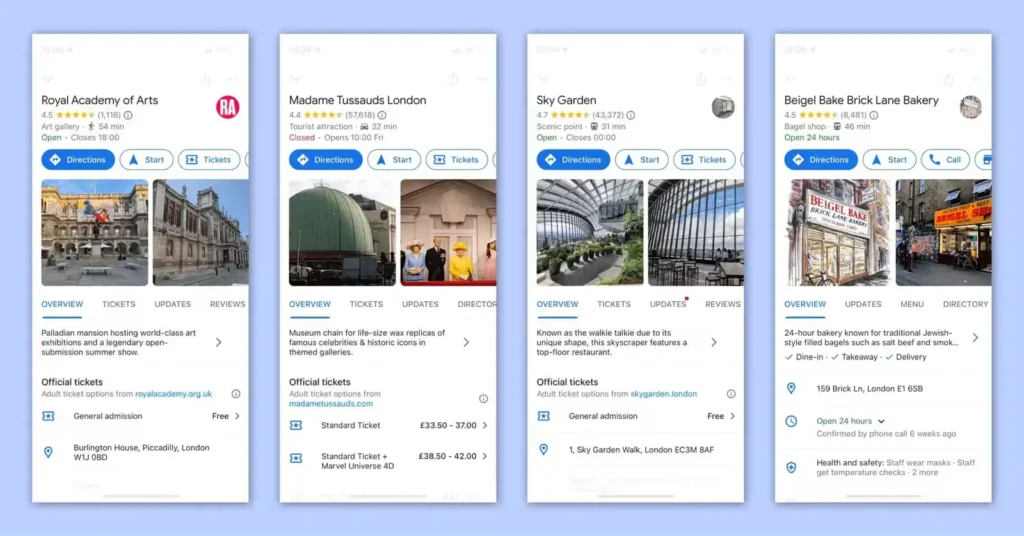
If you had asked me five years ago what a Google Business Profile was, I would have told you it was just a digital map pin. A nice-to-have. But in 2026? Honestly, it’s the literal heartbeat of your local existence.
If your website is your digital office, your GBP is your front door, your receptionist, and your most vocal salesperson all rolled into one.
So, what exactly is Google Business Profile in 2026?
At its simplest, it’s still that free tool Google gives you to manage how you show up on Search and Maps. But that’s like calling a Tesla “just a car.” Today, your profile is the primary data feed for Gemini and those ubiquitous AI Overviews (SGE).
When someone asks their AI assistant to find a “reliable plumber who handles emergency leaks in Dubai Marina,” the AI isn’t just “googling” it. It’s scanning the Entity Clarity of local profiles to see who actually fits the bill.
The 2026 Shift: From Static Listing to AI Data Source
The days of “set it and forget it” are long gone. In the past, you could fill out your address, throw up a couple of blurry photos of your office dog, and call it a day. In 2026, Google has shifted toward what we call Generative Engine Optimization (GEO).
Your profile is now a living, breathing entity that feeds real-time data into the search ecosystem. Think of it as a bridge between the physical world and the AI brain.
What’s actually different this year?
- The Gemini Handshake: Google’s AI models now use your profile as a “source of truth.” If a customer asks, “Does this place have outdoor seating and good Wi-Fi for work?” Gemini doesn’t just look for those keywords; it analyzes your Review Justifications and latest posts to verify it.
- Interaction Velocity: This is a big one. Google now tracks how quickly people interact with your profile. Do they click “Call” immediately? Do they linger on your new AR Store Tour? (Yes, 360-degree augmented reality walkthroughs are the new standard for retail and hospitality).
- Real-Time Engagement Metrics: We’re seeing metrics that didn’t exist a few years ago. We can now see “Sentiment Trends” basically, how the collective “vibe” of your reviews is shifting week-to-week and “Visual Discovery” hits from AI-generated image searches.
Why Does This Actually Matter for You?
We’re living in a zero-click search world. More than half of all searches now end without the user ever clicking through to a website. They get the address, the hours, the reviews, and the “Book Now” button right there in the search results.
If you aren’t visible in that initial AI Snapshot, you basically don’t exist to that customer.
But it goes deeper than just visibility. It’s about Trust Signals. In an era where AI can generate fake websites and fake content in seconds, a verified, active Google Business Profile is a badge of authenticity. It tells both the user and the algorithm: “This is a real business, at a real location, with real humans serving real customers.”
A Quick Digression on “Entity Authority”
I see so many people getting caught up in “keywords” like it’s 2015. “Should I put ‘Best Accountant in Dubai’ in my name?” (Please, don’t do that; it’s a one-way ticket to a suspension). To rank on the first page of the google with SEO you can do Keyword research with the help of Google Search Console.
Instead, focus on building Entity Authority. This means making sure your business is mentioned consistently across the web on social media, local directories, and industry-specific sites.
Google’s AI is smart enough to connect the dots. When it sees your brand being talked about in a positive light elsewhere, it strengthens the “trust score” of your GBP.
The “New” User Behavior
Have you noticed how you search for things lately? You don’t just type “Italian restaurant.” You type or speak something like, “Where can I get gluten-free pasta near me that’s quiet enough for a business lunch?”
In 2026, Google uses your profile’s attributes (like “Quiet atmosphere” or “Gluten-free options”) to answer these highly specific, conversational queries. If you haven’t ticked those boxes or mentioned those details in your updates, you’re leaving money on the table.
Your Google Business Profile in 2026 is the foundation of your local reputation. It’s how you win the “near me” battle and how you stay relevant when the AI starts doing the shopping for the human.
Major Updates of Google Business Profile in 2026
Look, if you think you’ve seen it all with the move from “Google My Business” to “Google Business Profile,” 2026 is about to feel like a whole new world. Honestly, the changes we’ve seen over the last few months aren’t just small tweaks; they are a total rebuilding of the platform to serve as the “brain” for AI search.
If you’re still managing your profile like it’s 2023, you’re basically running a storefront with the lights off. Let’s break down what’s actually happening in the dashboard right now.
AI Tools: The End of the Manual Grind?
You know what used to be the biggest pain? Scheduling. For years, we had to rely on third-party tools just to plan a few posts. But finally, Google has baked post scheduling and multi-location management directly into the interface.
If you’re running a franchise or even just a couple of branches across Dubai, you can now blast an offer across all locations with a single click.
But here’s the cooler part like Automated Query Responses. Google’s AI now scans your website, your past reviews, and your uploaded PDFs (like menus or service lists) to draft answers to customer questions in real-time.
You can set it to “Auto-pilot” for basic stuff like “Do you have valet parking?” or keep it on “Review-only” so you can give it the final human touch. It’s a lifesaver, but it also means your data needs to be 100% accurate, or the AI will confidently tell people things that aren’t true.
The Visual Revolution: SGE Loves 360° Tours
We’ve moved way beyond “nice photos.” In 2026, visual search is the primary way people find local gems. Google’s AI now “reads” your images to understand the vibe of your business.
Have you tried the new AR Store Tours yet? It’s a game-changer for hospitality and retail. Customers can literally virtually walk through your space from their phone before they even leave their house.
When SGE (Search Generative Experience) builds an AI Overview for a user, it’s much more likely to cite a business that has these immersive 360-degree assets. It’s all about giving the algorithm “multimodal” proof that you’re the real deal.
Fighting the Bots: New Metrics You Need to Know
Let’s talk about the elephant in the room and that is spam. Fake reviews have been a plague, but Google is fighting back with some pretty interesting (and slightly technical) metrics.
Have you heard of min_faves and min_replies? Essentially, Google is now looking at the “Social Proof” of a review itself. A review that gets “liked” by other local guides or receives a detailed, helpful reply from the business owner carries significantly more weight than a 5-star rating with no text.
A quick thought: If you’re just getting reviews but not engaging with them, you’re losing out on “Interaction Velocity.” The algorithm wants to see that your profile is a two-way street, not just a static billboard.
The Great Category Expansion
Google has quietly expanded its list of business categories to nearly 4,000 options. Honestly, picking the right one is now a science. If you’re a “Cafe,” but you also have a “Co-working Space” and “Specialty Roastery” vibe, you need to be incredibly strategic with your primary vs. secondary categories.
The trick in 2026? Don’t just pick what you are; pick what people are searching for in the AI era. Use tools like the GMBspy extension to see what your top-ranking competitors are using. Sometimes a slight shift from “Consultant” to “Business Management Consultant” can be the difference between page one and page ten.
Living in the AI Ecosystem
Finally, your GBP is no longer an island. It’s now deeply integrated with Gemini and AI Overviews. When someone asks Gemini to “Plan a day out in Al Quoz,” the AI pulls your business hours, your latest “What’s New” posts, and your review sentiment to decide if you fit the itinerary.
It’s about becoming a “trusted entity” in the Google ecosystem. If your profile is active, visual, and highly engaged, the AI agents will treat you as a “verified fact.” If not? Well, you might as well be invisible.
The Role of Google Business Profile in AI Search and SGE
You know what? There’s a lot of talk about the “death of SEO” every time a new AI update rolls out. But honestly? For local businesses, it’s the exact opposite. We aren’t seeing a funeral; we’re seeing a promotion. Your Google Business Profile in 2026 has essentially been promoted from a simple directory listing to the “primary source of truth” for the world’s most advanced AI models.

If you’ve played around with Search Generative Experience (SGE) or the latest AI Overviews, you’ve seen it. You search for something specific, and instead of a list of websites, you get a clean, synthesized summary at the top of the page.
But have you noticed where the AI gets its “facts” about which coffee shop is “best for deep work” or which mechanic “offers the fastest turnaround”? It’s not just pulling from random blogs. It’s pulling from the structured data, the attributes, and the raw sentiment tucked inside Google Business Profiles.
How AI Overviews Actually Use Your Data
Let me explain how this works under the hood. When someone asks a complex, conversational question, Google’s AI (Gemini) doesn’t just look for keywords. It looks for entities.
Think of an entity as a “known thing” with specific traits. Your business is an entity. When you optimize GBP for AI search, you are essentially feeding the AI a balanced diet of facts.
- The Citation Game: Notice those little carousel cards inside the AI Snapshot? Those are citations. If your profile is complete, the AI can confidently “cite” you as an answer.
- The “Vibe” Check: Google’s deep-learning models now perform sentiment analysis on your reviews. If dozens of people mention your “friendly staff” or “fast delivery,” the AI synthesizes that into the summary. It might say, “Business X is highly recommended for its speed and customer service,” and then link directly to your profile.
Is it just me, or is that way more powerful than a traditional blue link? You aren’t just one of ten options; you are the verified recommendation of the AI itself.
The New AI-Driven Ranking Factors
In 2026, we have to look past the old-school signals like “keyword density.” Honestly, the AI is too smart for that now. It’s looking for Real-World Authority.
- Interaction Velocity: How fast are people engaging with you? If you post an update and ten people click it within an hour, the AI sees that as a “signal of life.” It tells the algorithm that your business is relevant right now.
- Entity Clarity: Does your GBP data match your website, your social media, and your local citations? Discrepancies create “friction” for the AI. If your hours on Facebook say one thing and your GBP says another, the AI gets confused. And a confused AI will never recommend you.
- Visual Evidence: We’re seeing that AI Overviews prioritize profiles with high-quality, “uniquely identifiable” imagery. If you’re using stock photos, you’re invisible. But if you have 360-degree tours and videos of your actual team at work, the AI sees that as high-trust, authentic data.
Future Predictions: Where Is This Heading?
We are just at the beginning. If you look at the roadmap for Gemini 2.0 and beyond, Google is moving toward “Autonomous Agents.”
Imagine a world where a customer tells their phone, “Book a hair appointment for Tuesday at a salon that specializes in curly hair and is within 10 minutes of my office.” The AI won’t just “search” for a salon. It will browse profiles, check availability via your linked booking tool, read your “Curly Hair” attribute, and honestly maybe even place the booking for the human.
If your Google Business Profile in 2026 isn’t optimized for these agents, you aren’t just losing a click; you’re losing a transaction that could have happened while you were asleep.
The Impact: Winning in “AI Mode”
I’ve seen this happen with local businesses in Dubai already. A boutique gym that focused heavily on SGE optimization answering specific Q&As, tagging photos with “entity-rich” descriptions, and maintaining a high review response rate and suddenly saw a 40% jump in leads.
They didn’t rank #1 in the traditional sense. But they owned the AI Snapshot.
When people switched their search to “AI Mode,” this gym was the only one cited. Why? Because their profile provided the most “digestible” and “verifiable” proof of their services.
It’s a shift in mindset. You’re no longer just trying to rank. You’re trying to be the most helpful, most trusted answer in the AI’s database. It sounds a bit technical, doesn’t it? But at the end of the day, it’s just about being a real, active business that communicates clearly with its customers.
Step-by-Step Guide to Optimizing Your Google Business Profile for AI Search in 2026

Alright, let’s roll up our sleeves. We’ve talked about the “why” and the high-level shifts, but how do you actually sit down at your desk and make this happen? If you want to optimize Google Business Profile for SGE, you can’t just fill in the blanks and hope for the best. You need a surgical approach.
Here is the exact workflow I use when I’m setting up a client for success in the AI era.
1. Claim and Verify: The 2026 “Video Hurdle”
The days of waiting for a postcard in the mail are mostly over. In 2026, Google has pivoted almost entirely to video verification. It’s more secure, but honestly, it’s a bit of a hurdle if you aren’t prepared.
Here’s the thing: Google’s AI now reviews these videos. It’s looking for specific “Trust Signals” in a single, uninterrupted take.
- The Outside-In Approach: Start your video outside. Show your street sign, your building number, and this is crucial like your permanent business signage.
- Proof of Access: You need to film yourself actually unlocking the door or entering the office. The AI wants to see that you aren’t just standing in front of a random building.
- The Workspace: Walk inside and show your desk, your equipment, or your stockroom. If you’re a service-area business (like a plumber in Dubai), show your branded van and your tools.
Pro Tip: Don’t edit the video. Don’t use filters. Just a raw, 1-2 minute walkthrough. If the AI detects a “cut” in the footage, it will likely reject your verification instantly.
2. Complete Profile Optimization: Feed the Machine
Once you’re in, it’s time to build your Entity Foundation. Google doesn’t just want data; it wants context.
a) Business Info & Attributes: Standard NAP (Name, Address, Phone) is the bare minimum. But in 2026, the real magic is in the Attributes. These are the “tags” that tell AI if you’re “Women-led,” “Wheelchair accessible,” or if you have “Free Wi-Fi.”
- Let me explain: When someone asks Gemini, “Find me a quiet cafe in JLT with fast internet,” the AI is scanning your attributes. If you haven’t checked the “Wi-Fi” and “Good for working” boxes, you won’t show up. It’s that simple.
b) Products & Services (The AI Context Layer): Stop using one-word service titles. Instead of “Plumbing,” use “Emergency 24/7 Leak Repair and Pipe Burst Services.”
- Why? Because semantic search thrives on detail. Use natural, descriptive language that answers the “how” and “what.” When you write these descriptions, think: “If a customer asked an AI about this, would my description provide a complete answer?”
c) Photos and Videos (The Multimodal Win): Google’s AI (specifically the multimodal parts of Gemini) can now “see” what’s in your photos.
- Best Practice: Upload at least 3-5 new high-resolution photos every week.
- The SGE Edge: Include at least one 360-degree tour or a short video walkthrough. AI Overviews love citing businesses that offer “Immersive Content” because it increases user dwell time on the search page.
3. The 2026 Keyword Strategy: Semantic & Entity-Based
We’ve moved past “keyword stuffing.” Honestly, if I see one more profile with “Best Dubai Web Design Agency” crammed into the business name, I’m going to lose it.
Instead, focus on Long-Tail Conversational Queries.
- Target these: “How to…”, “Where is…”, “Best for…”.
- The Strategy: Incorporate these terms into your Google Posts and your Q&A section. If you’re a gym, don’t just target “Gym Dubai.” Target “Best gym in Dubai for strength training with personal coaches.”
- Entity-Based SEO: Use terms that relate to your industry’s “knowledge graph.” If you’re a law firm, mention your specific practice areas, your lead attorneys’ names, and the local courts you serve. This helps Google connect your business to other “known entities” in the region.
4. Engagement Boosters: Building Interaction Velocity
Here is a secret that the big blogs often gloss over: Interaction Velocity is a massive ranking factor in 2026.
Google’s AI isn’t just looking at how many reviews you have; it’s looking at how active your profile is right now.
- Reviews with “Justifications”: Encourage customers to be specific. A review that says “Great service” is okay. A review that says “The AC repair was fast and they fixed my Daikin unit in 30 minutes” is gold. That specific mention of a brand (Daikin) and a timeframe (30 minutes) gives the AI “proof points” to use in an SGE summary.
- The 48-Hour Rule: Reply to every review within 48 hours. Use the customer’s name and mention a detail from their review. It shows the AI and the public that you are a living, breathing, responsive business.
- Q&A Optimization: Don’t wait for people to ask questions. Pop in there yourself and post the top 10 questions your customers actually ask. “Do you offer free consultations?” And give answer: “Yes, we offer 15-minute Zoom consultations for all new Dubai-based clients.”
5. Advanced AI Optimization: The “Techy” Stuff
If you really want to outrank the giants, you have to go a layer deeper. This is where we talk about Generative Engine Optimization (GEO).
a) LocalBusiness Schema & Structured Data: Your website needs to talk to your GBP. Use LocalBusiness Schema on your “Contact” or “About” page. Ensure your address and phone number are marked up in a way that AI can scrape instantly.
- Pro Tip: Use the
sameAsproperty in your schema to link your GBP URL, your LinkedIn, and your Instagram. This “connects the dots” for the AI’s entity graph.
b) Integration with AI Agents: We are entering the era of the Autonomous Workflow Agent (AWA). These are AI tools that help users book appointments or buy products without ever talking to a human.
- How to stay compatible: Use the built-in “Book Now” or “Order Online” integrations in your GBP. If you’re using a third-party tool like Calendly or a local booking system, make sure it’s one that Google recognizes. If an AI agent can’t “see” your availability, it won’t recommend you to the user.
c) Monitoring Analytics (The New Insights): Stop looking at just “Views.” In 2026, look at “Profile Interactions per Impression.” * The Goal: You want a high “Click-to-Call” or “Request Directions” rate.
- Sentiment Tracking: Use the new “Sentiment” tab in your performance dashboard. If the AI detects that your “Sentiment Score” is dropping because of recent complaints about “Wait times,” you need to address that in your next Google Post.
Best Practices and Hacks for Dominating SGE with GBP
You know what? There’s a world of difference between “having” a profile and actually owning the search results. Most people treat their Google Business Profile like a digital flyer and they pin it up and hope someone walks by.
But if you want to outpace the big players, you need to start treating it like a high-performance engine. It needs tuning, it needs the right fuel, and honestly, it needs a bit of strategic “hacking” to keep it running faster than the competition.
Let’s talk about how to actually win the SGE optimization race. It’s not just about doing the basics; it’s about doing the things your competitors are too lazy or too “corporate” to try.
Content That Actually Talks Back (The Conversational Edge)
Google’s AI is getting really good at understanding intent. When you’re crafting your Google Posts, stop writing like a brochure. Write like you’re answering a friend’s question.
Instead of a post titled “Our Winter Services,” try something like, “Wondering how to keep your AC running efficiently during the Dubai winter? Here’s a quick tip.” This subtle shift toward conversational queries is exactly what AI models are looking for when they build a summary.
Pro Tip: Use the “What’s New” posts for more than just news. Turn them into a mini-FAQ.
- Question: “How long does a typical installation take?”
- Answer: “Honestly, it depends on the project, but most of our local clients are up and running in under 4 hours.”
This kind of “natural language” content is catnip for Gemini. It helps the AI cite you as a direct answer for users who ask, “How long does [Your Business] take for installation?”
The “Local Synergy” Secret
I see so many business owners who have a great website but a dead GBP, or vice versa. In 2026, these two need to be in a constant, high-speed conversation. This is what we call Local SEO Synergy.
You should be embedding your Google Reviews directly on your website. But don’t just use a generic widget. Use a tool like Whitespark or EmbedSocial to show reviews that mention specific services. If someone is on your “Web Design” service page, they should see reviews that mention “web design.”
And here’s a real hack, Hyper-local Backlinks. Stop chasing high-DA links from random blogs in the US. If you’re a business in Dubai, a link from a local neighborhood blog in Jumeirah or a mention in a local community newsletter is worth ten times more to your Google Business Profile in 2026. It anchors your “Entity” to a specific geographic coordinate in the AI’s mind.
Your 2026 Toolbelt
Honestly, trying to do all of this manually is a one-way ticket to burnout. You need the right gear.
- For Multi-location Brands: If you’re managing more than three spots, Yext or Uberall are non-negotiable. They act as your “single source of truth,” pushing updates to Google, Apple Maps, and even those niche directories you’ve probably never heard of but AI still scrapes.
- For Analytics: Google’s native insights are okay, but if you want to see the “why” behind the “what,” check out Planable or SocialPilot. They give you a much clearer picture of which posts are actually driving “Interaction Velocity.”
- For Keyword Research: Use AnswerThePublic or the “People Also Ask” section in Google. These give you the exact questions people are speaking into their phones.
The Rise of the “Voice” Assistant
More people are talking to their phones than typing into them these days. Over 70% of voice searches happen on mobile, and they almost always have “local intent.”
To win at Voice Search Optimization, you need to think in “Definition Blocks.” When you write your business description or your Q&A, aim for short, punchy answers of about 40–60 words. Why? Because that’s the perfect length for Siri or Alexa to read aloud without the user getting bored.
Example: “Zumeirah is a premier digital agency in Dubai specializing in SEO and web design. We help local brands dominate AI search results by focusing on SGE-friendly content and technical optimization. Located in the heart of the city, we’ve served over 500 clients since 2022.” Something like that.
Staying on the Right Side of the Law (Compliance & Spam)
Google has gotten incredibly strict lately. They aren’t just looking for “fake” reviews anymore; they’re looking for Misrepresentation.
- The “Doxxing” Trap: In 2026, many reviews are now “pseudonymous.” If a user changes their name to “LocalGuide123,” but you reply with, “Hi Sarah, thanks for coming in!” you’ve just “doxxed” them. Google might actually flag your response for a privacy violation. Keep your replies generic but warm.
- The Moderation Wait: Don’t panic if your reply doesn’t show up instantly. Google now moderates owner responses. It can take 10 minutes, or in some cases, up to 30 days if you’ve triggered a spam filter.
- Avoid the “Virtual Office” Shortcut: If you don’t have a physical sign and a person staffed at the location, don’t try to list it. The AI-driven video verification will catch you, and once you’re suspended for “Deceptive Practices,” getting back in is like trying to climb a mountain in flip-flops.
Common Mistakes to Avoid with Google Business Profile in 2026
I’ve seen some absolute horror stories lately. Business owners who have spent thousands on high-end web design, only to have their local presence completely tank because of a few “small” oversights on their GBP.
Honestly, in 2026, the algorithm is less like a robot and more like a very discerning, very impatient concierge. If you give it messy or incomplete information, it simply stops recommending you. It’s not personal; it’s just how the AI brain works now.
Let’s look at the pitfalls that are currently catching people out. Some of these used to be “gray areas,” but today? They are one-way tickets to the second page of search results.
The “Ghost Town” Profile: Why Incomplete Data Is Lethal
Missing data in 2026 isn’t just a minor inconvenience for your customers; it’s a massive red flag for AI Overviews. If your profile is missing its “Amenities,” “Service Areas,” or even just a few photos of your interior, the AI perceives you as a “low-confidence entity.”
When someone asks an AI agent for a specific recommendation, the model calculates a confidence score. If your profile is only 60% complete, your score is naturally lower than a competitor who has filled out every single attribute.
You might be the better business, but on paper (or in code), you look like a gamble. Don’t let a 5-minute task like updating your “Restroom accessibility” or “Payment types” be the reason you lose a high-value lead.
Ignoring the New “Signals of Life”
I’ve noticed a lot of people still focusing solely on their star rating. Don’t get me wrong, ratings matter, but they aren’t the only signal anymore. In 2026, Interaction Velocity and visual content are the real kingmakers.
If you aren’t uploading fresh photos or responding to Q&As, you’re essentially telling Google that your business is stagnant. AI models like Gemini love “Multimodal” data. They want to see videos of your team, 360-degree tours of your office, and real-time updates.
If your last “What’s New” post was from six months ago, the AI assumes you might not even be in business anymore. It’s a harsh reality, but in the fast-paced world of SGE optimization, silence is a ranking killer.
Keyword Stuffing: The 2010 Tactic That Will Get You Banned
Let me explain something about semantic seo search. Google’s AI is now incredibly good at understanding context. It knows what you do without you having to scream it in your business name.
I still see people trying to name their business something like “Best Dubai SEO Agency – Expert Web Design & Marketing Services.” Honestly? It’s painful to watch. Not only does it look desperate to human users, but it’s a massive trigger for Google’s spam filters.
In 2026, “exact match” names can actually lead to immediate suspension. The AI is looking for your legal business name. It will figure out your services by looking at your categories, your products, and most importantly what people say about you in their reviews.
The “Silent Treatment” (Neglecting Your Reviews)
We’ve all seen those profiles with dozens of 1-star reviews that have zero response from the owner. It’s a bad look, right? But it goes deeper than just PR.
Neglecting reviews both the good and the bad destroys your Entity Authority. Google wants to see that you are an active participant in your own business ecosystem. When you ignore a review, you’re missing an opportunity to feed the AI more keywords in a natural way.
Pro Tip: When you reply to a review, don’t just say “Thanks!” Mention a specific service or location. “Glad we could help with your local SEO strategy here in Dubai!” tells the AI exactly what you did and where you did it, without it feeling like spam.
The Departmental Silo Trap
This is a big one for larger organizations or medical centers. Back in the day, people would create separate profiles for “Sales,” “Service,” and “Parts.” In 2026, Google is heavily discouraging this unless the departments have separate entrances and distinct legal names.
Why? Because it confuses the Entity Graph. When you have three profiles at the same address, the AI doesn’t know which one to show for a general query. It creates “cannibalization,” where your own profiles are fighting each other for the same spot in the Map Pack.
Usually, you’re much better off having one powerhouse profile with clearly defined “Categories” and “Products” than three weak, fragmented ones.
Case Studies: Winning the AI Search Game in Real Life
Theories and checklists are great, but sometimes you just need to see how it actually looks in the “wild.” I was chatting with a friend who runs a small, high-end furniture boutique in Al Quoz, and honestly, their story is the perfect example of why SGE optimization isn’t just for the big tech companies.
The Boutique Success: 40% Growth in 90 Days
They were doing okay but ranking somewhere in the middle of the second page. But then they decided to go “all in” on their Google Business Profile in 2026.
- The Strategy: They didn’t just upload photos; they uploaded 360-degree AR Store Tours. This allowed potential customers to “walk” through their showroom from their sofa in Downtown Dubai.
- The SGE Hook: They started asking their customers to mention specific products in their reviews. Instead of “Great sofa,” they encouraged “The custom linen L-shaped sofa we got is stunning.”
- The Result: Because their profile was rich with specific product mentions and immersive visuals, Google’s AI started “citing” them as the primary answer for queries like “Where can I find custom linen furniture in Dubai?” Within three months, their lead volume jumped by 40%. It wasn’t about a massive ad budget; it was about giving the AI better data than their competitors.
The Enterprise Win: Multi-Location Consistency at Scale
Then you have the bigger players. I recently looked at a regional health clinic brand with 12 locations across the UAE. Their problem? Total chaos. Every branch had different hours, blurry photos of the reception desk, and hundreds of unanswered questions in the Q&A.
They implemented a centralized AI scheduling tool (like Yext or Uberall) to sync their data across all 12 profiles instantly.
- The Strategy: They used AI to draft “Human-in-the-loop” responses to common FAQs like insurance coverage and parking.
- The AI Overview Placement: Because their data was 100% consistent and their “Interaction Velocity” shot up, Google began featuring them in the AI Snapshot for almost every medical-related local search in their areas. They weren’t just a pin on a map anymore; they were the recommended medical entity for the entire city.
Lessons Learned: Your 2026 Cheat Sheet
So, what can you actually take away from these stories? If you’re looking for a replicable strategy, here are the three metrics that actually move the needle this year:
- Sentiment Velocity: It’s not just having 5 stars; it’s about how many recent 5-star reviews mention your core services.
- Multimodal Dwell Time: The longer someone looks at your photos or walks through your 360 tour, the more “authority” Google gives you.
- Entity Linkage: Does your GBP data match your website’s Schema? If the AI sees a “perfect match,” its confidence in recommending you skyrockets.
Honestly, at the end of the day, these case studies prove one thing: the businesses that win in 2026 are the ones that stop trying to “game” the system and start trying to be the most helpful resource for the AI to find.
Measuring Success and ROI: Are You Actually Winning, or Just Busy?
Many business owners get absolutely hypnotized by “Vanity Metrics.” They see 10,000 “Impressions” on their Google Business Profile in 2026 and think they’re the kings of the neighborhood. But honestly? If those 10,000 views didn’t lead to a single phone call, a booking, or an AI citation, they’re basically worth zero. In the era of Search Generative Experience (SGE), we have to look at data differently.
We’re moving away from just counting “clicks” and moving toward measuring Intent-Rich Engagement. Here’s how you actually track your ROI without getting lost in the weeds.
The New Metrics: Tracking the “AI Vibe”
In 2026, Google has given us some pretty sophisticated tools, but you have to know where to look.
- AI Citation Frequency: This is a big one. How often is your business being cited as a source in an AI Snapshot? Tools like BrightEdge AI or SEOTesting.io can now help you track how often your brand name appears in those synthesized summaries. If this number is going up, your GEO (Generative Engine Optimization) is working.
- Sentiment Trends: In your GBP dashboard, look at the sentiment analysis. Is the AI detecting “Positive Sentiment” around specific services? If people are raving about your “fast response” but complaining about your “parking,” the AI will synthesize that. You need to watch these trends like a hawk.
- Interaction Velocity: Track how many actions happen per 1,000 views. If your “Call-to-Action” (CTA) rate is dropping while your views are staying steady, your content (photos or posts) might be getting stale. The AI notices this “boredom” and will eventually stop showing you as often.
GA4 and the “UTM” Secret
Let me explain a quick technical hack that most people miss. You should be using UTM parameters on every link you put in your GBP whether it’s your website link, your “Book Now” button, or your “Product” links.
Example Link:
https://zumeirah.com/?utm_source=google&utm_medium=organic&utm_campaign=gbp_dubai_profile
When you pipe this data into Google Analytics 4 (GA4), you can see the entire journey. You’ll know that a customer found you on Maps, clicked your “Web Design” service, and then spent six minutes on your portfolio page before finally filling out a contact form.
That’s how you prove real ROI. You aren’t just guessing; you’re seeing exactly how many Dirhams your profile is putting in your pocket.
Conclusion: Don’t Just Exist But Dominate the Future of Search
We’ve covered a massive amount of ground today. From the technical nuances of Entity Authority to the simple human act of replying to a review. If there’s one thing I want you to take away from this, it’s that your Google Business Profile in 2026 is the most powerful marketing tool you own but only if you feed it.
The “old” SEO was about chasing links and stuffing keywords into a page. The NEW SEO is about building a presence that AI can trust.
By mastering the shifts in Search Generative Experience (SGE) and the way Google’s AI Overviews digest local data, you aren’t just ranking on a page; you’re becoming a verified fact in the Google ecosystem.
Recap: Why Your Profile Is the Key to 2026
Let’s be honest: the competition is only going to get tougher. While the “big guys” are busy updating their generic blog posts, you have the chance to be on the ground, optimizing your profile, and capturing the high-intent leads they’re missing. We’ve seen how:
- Visual Content (like 360° tours) keeps users (and AI) engaged.
- Interaction Velocity proves your business is a living, breathing entity.
- Semantic Data in your products and services feeds the AI exactly what it needs to cite you.
Your Next Move: Audit, Optimize, and Win
So, here’s my question for you: Is your profile ready for the AI snapshot tomorrow morning? Or are you still waiting for the “old” search results to come back? (Spoiler: They aren’t).
The first step is always the same: Audit your profile. Look at it through the eyes of an AI. Is your data consistent? Are your photos fresh? Is your Q&A section helping people make decisions?
If this feels like a lot to manage while you’re trying to run a business and I totally get it. That’s exactly why we’re here. At Zumeirah, we specialize in the “New SEO.” We don’t just look at blue links; we look at Generative Engine Optimization and how to make your brand the “chosen one” in AI Overviews.
Looking Beyond 2026
The road doesn’t end here. As we look past 2026, we’re going to see even deeper integration with autonomous agents and multimodal search. The strategies we’ve discussed today are the foundation, but the most successful brands will be the ones that stay adaptive.
Search is becoming a conversation. Make sure you’re the one the AI is talking about.
FAQs: Mastering Your Google Business Profile in 2026
Q: How do I actually optimize GBP for AI Search in 2026?
Honestly, it comes down to data depth and activity. To optimize GBP for AI Search, you need to go beyond the basics. Google’s AI is looking for “Entity Authority.” This means filling out every single attribute like whether you have outdoor seating or offer online appointments and keeping your Google Business Profile Manager dashboard updated with fresh photos and posts every single week.
Q: What are the main Google Business Profile ranking factors for 2026?
The game has shifted a bit. While your address still matters, the top Google Business Profile ranking factors for 2026 now include things like “Interaction Velocity” basically, how fast and how often people click your profile and your “Review Velocity”. Google wants to see that you are an active, living business, not just a static listing from five years ago.
Q: Can I really improve my Google Search Generative Experience local SEO?
Yes, and it’s easier than you might think. For Google Search Generative Experience local SEO, you need to focus on conversational content. Instead of just listing “Web Design,” describe your service as “Custom web design for small businesses in Dubai.” This natural language helps SGE understand exactly what you do so it can “cite” you in those AI summaries.
Q: How long does it take to rank in the Google Map Pack in 2026?
It’s not an overnight fix. Depending on your competition, how to rank in Google Map Pack 2026 usually involves a 3-to-6-month strategy. You need to consistently build local citations, manage your reviews, and ensure your NAP (Name, Address, Phone) data is identical across the whole web.
Q: Is SGE optimization for local business different from traditional SEO?
It definitely is. Traditional SEO was all about the “Blue Link,” but SGE optimization for local business is about being the “Final Answer.” It’s about multimodal signals like videos, 360-tours, and detailed Q&A sections that give the AI enough confidence to recommend you directly to a user without them ever needing to click through to a website.
Q: What is “GBP Interaction Velocity” and why should I care?
Think of GBP Interaction Velocity as the pulse of your business. It’s a measure of how quickly users engage with your profile after finding it. Are they calling you? Are they looking for directions? High velocity signals to Google that your business is relevant right now, which can lead to a significant boost in your Google Maps business optimization efforts.