

Honestly, if you feel like you’re shouting into a void lately, you aren’t alone. We’ve all seen it like the sudden traffic dips, the “Helpful Content” updates that feel anything but helpful, and now, the absolute takeover of AI-driven search overviews.
It’s early 2026, and the old playbook of “write a 2,000-word blog post and pray” is officially on life support.
You know what? Most of us are exhausted. Between Google’s shifting goalposts and the rise of zero-click searches, trying to scale organic traffic manually feels like trying to empty the ocean with a teaspoon.
You spend a week crafting one perfect guide, only for a Reddit thread or an AI summary to jump over you in the rankings two days later. It’s frustrating, right?
But the thing is while the “manual” way of doing things is hitting a wall, a different door has swung wide open.
Enter Programmatic SEO
If you haven’t heard the term yet, or if it sounds like some scary developer jargon, let me level with you. Programmatic SEO is essentially the art of building systems rather than just writing posts.
Instead of manually typing out every single page, you use datasets and smart templates to generate hundreds or even thousands of high-quality, ultra-targeted landing pages at once.
Why Is This the Move in 2026?
In a world where Google’s AI mode is answering broad questions for users, the real gold is now hidden in the “long-tail.”
These are the hyper-specific queries that AI summaries often gloss over the “Best vegan-friendly cafes in East London with Wi-Fi” type of searches.
Programmatic SEO allows you to capture that specific intent at a scale that was previously impossible.
It’s not about “spamming” the index; it’s about being the most relevant answer for ten thousand different specific questions instead of trying to be the number one answer for one big, competitive keyword.
If you’re looking to scale organic traffic without burning out your content team (or your bank account), you’ve come to the right place.
We’re going to walk through how to build a strategy that doesn’t just survive the 2026 algorithm shifts but actually thrives because of them.
What is Programmatic SEO?
Before we get into the nuts and bolts, we should probably clear the air. When some people hear the word “automation,” they immediately think of those weird, garbled websites from 2010 that felt like they were written by a blender.
Or they think of the recent flood of low-effort AI “slop” that’s currently clogging up the web.
But Programmatic SEO? That’s a completely different beast.
From Manual Grinding to System Thinking
In the early days, SEO was basically a craft. You’d spend hours researching one keyword, another five hours writing a post, and another three hours formatting it.
It was slow. It was artisanal. It worked until the internet got too big.
As searchers became more specific with what they wanted, the “manual” way couldn’t keep up. We moved from just targeting “Cheap Flights” to “Cheap Flights from New York to Paris on a Tuesday in March.” You can’t write all those pages by hand.
You’d lose your mind. That’s where the shift from manual SEO to automated scaling happened. It wasn’t about being lazy but it was about being comprehensive.
So, What’s the Core Definition?
If I had to boil it down, Programmatic SEO is the process of using structured data and smart templates to generate high-quality landing pages at scale.
Instead of writing one page for one keyword, you’re building a system that can create 500 pages for 500 variations of a search intent, specifically targeting those “long-tail” keywords that your competitors are too busy to touch.
Think about how TripAdvisor has a page for every single “Best Hotel in [City Name]” or how Wise (formerly TransferWise) has a page for every currency conversion pair imaginable.
They didn’t have a team of writers sitting in a room for ten years writing those. They built a “pSEO” engine.
The Elephant in the Room: Is This Just “Spam”?
Google is currently on a warpath against low-value content. If you use programmatic methods to churn out thousands of pages that offer zero value, you’re going to get hit by an algorithm update faster than you can say “index.”
It’s important to differentiate this from the “dark side” of the web:
- Traditional SEO: One-to-one (One page, one keyword). Great for high-level guides, but it doesn’t scale.
- Black-Hat Tactics: Taking other people’s content and spinning it. This is a one-way ticket to a manual penalty.
- AI-Generated Content Spam: Using a bot to write 5,000 “How-To” guides with no data. Google is getting very good at ignoring this because it’s usually just a “re-hash” of what’s already out there.
- Programmatic SEO: Using unique data to solve a specific problem. When done right, pSEO is actually more helpful than traditional content because it’s hyper-relevant to the user’s exact location or need.
The Three Pillars You Need to Know
If we’re going to do this for Zumeirah, we need to focus on the key components that make a project successful (and Google-compliant).
- Structured Data: This isn’t just Schema markup. It’s about having a clean database. If you’re building a site about the best hiking trails, your data includes the length of the trail, the difficulty, the elevation, and whether dogs are allowed. Without good data, your pages will be hollow.
- Page Templates: You know those pages that look like a wall of text? Yeah, we aren’t doing that. A programmatic template needs to be UX-focused. It needs to have maps, charts, tables, and clear “Call to Actions.” It has to feel like it was hand-crafted.
- Programmatic Generation: This is the “engine.” Whether you’re using WordPress with a plugin like WP All Import, a headless CMS, or a custom Python script, this is the part that actually stitches the data and the template together.
Google doesn’t actually care how a page was made. It only cares if the page is useful.
A programmatically generated page that gives a user the exact price of a service in their specific zip code is infinitely more “helpful” than a generic 3,000-word blog post that talks in circles.
Why Programmatic SEO Matters in 2026
The SEO world is in a bit of a panic. If you’ve been keeping an eye on the industry lately, you know that the “Helpful Content” updates of 2024 and 2025 weren’t just minor tweaks but they were a complete architectural shift.
Google essentially raised the “minimum height requirement” for the SEO roller coaster. If your content doesn’t scream E-E-A-T (Experience, Expertise, Authoritativeness, and Trustworthiness), you’re basically invisible.
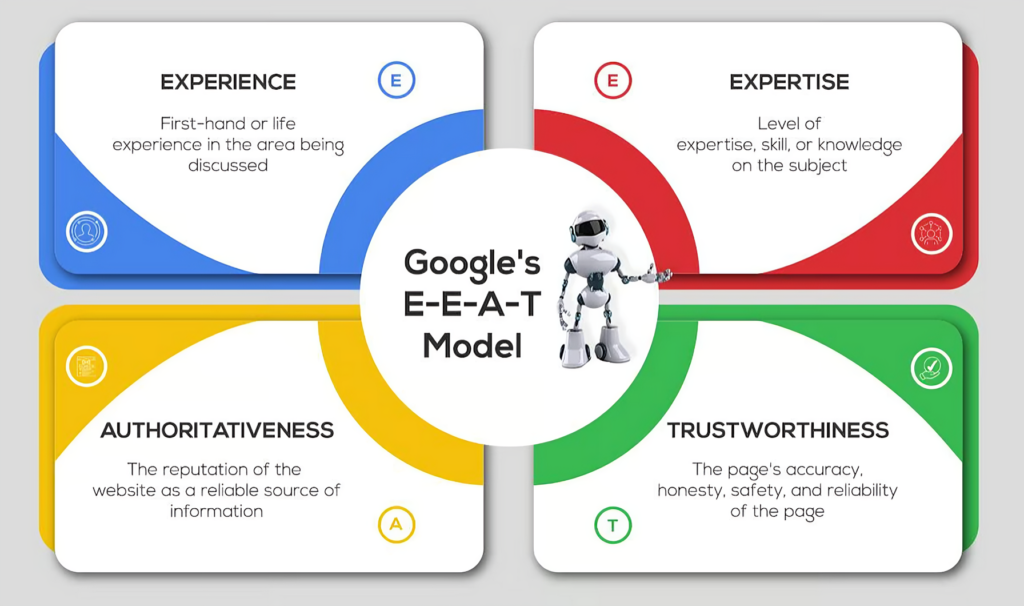
So, why are we talking about programmatic SEO now? Because it’s the only strategy that actually aligns with how people search today.
The Rise of AI and the “Zero-Click” Reality
I bet you’ve done it yourself. You search for “How to fix a leaky faucet” and instead of clicking a link, you just read the AI Overview at the top of the page.
That’s a “zero-click” search. By 2026, it’s estimated that over 58% of searches in the U.S. don’t result in a single click to a website.
This sounds like a nightmare for traffic, right? But here’s the thing: while AI Overviews tools like ChatGPT and Gemini are great at answering “What is…” questions, they struggle with “Where is the best…” or “How much does it cost in [My Specific City]…” questions.
Programmatic SEO allows you to dominate those hyper-specific queries that AI can’t summarize easily. While your competitors are fighting over the broad “head” keywords that Google’s AI is already answering, you’re quietly capturing the traffic they’re ignoring.
The Power of the “Long-Tail” (The 80% Rule)
Here’s a stat that should make you sit up: Long-tail keywords drive roughly 70-80% of all search traffic. Think about it like this. “Running shoes” is a head keyword.
It’s hard to rank for, and even if you do, the user might just be browsing. But “Best waterproof trail running shoes for wide feet under $100”? That is a long-tail keyword with massive buying intent.
Programmatic SEO isn’t about winning one big battle; it’s about winning 10,000 tiny ones. When you build a pSEO engine, you aren’t just making a page; you’re building a net that catches the 15% of daily Google searches that have never been seen before.
Voice Search and the “Conversational” Shift
“Hey Siri, find me a reliable plumber in North London who’s open right now.”
That’s how people search in 2026. Voice search is naturally long-tail and conversational. Because programmatic SEO relies on structured data, your site becomes the “source of truth” for these AI assistants.
Instead of a generic blog post about plumbing, a programmatic page specifically for “Emergency Plumber in [Zip Code]” tells the AI exactly what it needs to hear to recommend you.
The E-E-A-T Guardrail
I know what you’re thinking, I mean “Doesn’t automation hurt my E-E-A-T?” Honestly, it’s the opposite. In 2026, Google rewards Experience.
If your programmatic pages are powered by unique, first-hand data (like real-time pricing, actual user reviews, or proprietary benchmarks), Google sees that as a massive trust signal. It’s not “automated content”; it’s a data-driven resource.
In this new world, you have two choices like you can manually write 50 pages and hope for the best, or you can build an adaptive system that creates 50,000 pages that solve real problems for real people.
Benefits of Programmatic SEO for Scaling Traffic
You know what? The biggest lie in marketing is that you have to work harder to get better results. Sometimes, you just need a better lever.
Programmatic SEO is that lever. Here’s why it’s essentially a “cheat code” for you to compete with the giants.
1. Massive Scalability Without the Burnout
The most obvious benefit is the sheer scale. Imagine you wanted to create a page for every “Best Coworking Space in [City Name]” globally. If you have 1,000 cities, a traditional writer would take years to finish that project.
With pSEO, once you have your dataset and your template, generating 1,000 pages takes about the same amount of time as generating ten. You’re building a content factory, not a boutique shop.
2. Slashing Costs (The 80-90% Rule)
Let’s talk numbers. A high-quality, manually written SEO article in 2026 can easily cost you $300 to $1,000 when you factor in research, writing, and editing.
If you’re targeting 1,000 keywords, that’s a million-dollar budget. Honestly, who has that? Programmatic SEO reduces that cost by 80-90% because your “investment” is front-loaded into the data and the template, not the individual word count.
3. Dominating the “Low-Hanging Fruit”
Big sites like Search Engine Land are fighting for high-volume, high-competition terms. They don’t have the time to care about a keyword that only gets 50 searches a month.
1,000 pages targeting keywords with 50 searches a month equals 50,000 visits. And because the competition is almost zero for these specific long-tail queries, you can often hit the first page in days, not months.
4. A “Personalized” Experience for the User
Wait, how can an automated page be personalized? Let me explain. If a user searches for “Best dog-friendly hotels in Miami with a pool,” and your programmatic page gives them exactly that a list of Miami hotels, a map, pool icons, and pet policies that is a better experience than a generic “Best Hotels in Florida” blog post. You are giving them the “data-driven” answers they actually need.
5. The Compounding Interest of SEO
Unlike paid ads, which stop the moment you stop paying, programmatic pages are evergreen. They stay indexed, they build backlinks, and they keep capturing traffic while you sleep.
Over time, as your domain authority grows, these pages start to rank for even more competitive “medium-tail” terms. It’s compounding interest for your website.
The Reality Check (A Brief Word of Caution)
I wouldn’t be a world-class specialist if I didn’t tell you the risks. If you do this lazily just spinning the same three sentences across 10,000 pages and Google will smell it a mile away. This is called “Thin Content,” and it’s the fastest way to get your site de-indexed.
The goal isn’t just to make pages; it’s to make useful pages. We’ll talk about how to keep that quality high in the next sections.
How Does Programmatic SEO Work
If you want to scale to the first page in 2026, you have to think like an architect, not just a writer. Most people think pSEO is just “copy-pasting on steroids.” Honestly? That’s the fastest way to get a manual penalty.
The real architecture of a world-class programmatic site is a three-part harmony between data, design, and a bit of “coding magic” (or no-code workflows). Let me break down the skeleton of how this actually functions.
The Anatomy of a pSEO Machine
- Data Sourcing (The Brain): Everything starts with the database. In 2026, the best sites aren’t just scraping public info; they’re using APIs (like Google Maps or weather data), proprietary internal databases, or even user-generated content (UGC).
- Template Design (The Body): You build one “Master Template.” Instead of writing “The Best Pizza in Brooklyn,” you write “The Best Pizza in {City_Name}.” The template uses HTML/CSS with dynamic placeholders that act like buckets waiting to be filled.
- Automation Process (The Engine): This is the glue. You can go the “Pro” route with Python or Node.js scripts to build custom pages, or use the No-Code stack (Airtable + Webflow + Whalesync).
- Indexing and Crawling (The Megaphone): If Google doesn’t know your 5,000 pages exist, they don’t count. We use segmented XML sitemaps and strategic internal linking to ensure Googlebot doesn’t just visit but actually it stays.
How To Do Programmatic SEO
Alright, let’s get our hands dirty. Here is the exact blueprint I use to build these systems from scratch.
Step 1: Keyword Research and Opportunity Identification

You can’t just pick a random keyword. You need a Keyword Pattern.
- The Head Term: This is your broad topic (e.g., “CRM software”).
- The Modifiers: These are the variables (e.g., “for Real Estate,” “for Plumbers,” “for Freelancers”).
- The 2026 Twist: Use tools like Ahrefs or SEMrush to find “Head Terms with Modifiers” that have low individual competition but high cumulative volume. Look for “vs” patterns or “[Tool] alternatives” where the competition is thin.
Step 2: Data Collection and Structuring
Your content is only as good as your data.
- Ethical Sourcing: Don’t just “scrape and run.” Use public APIs or enrich your data by combining two different sources.
- Data Cleaning: This is the boring part, but it’s vital. You need to “normalize” your data so that “NY,” “New York,” and “NYC” all show up correctly on your pages. Honestly, a messy spreadsheet is the #1 killer of pSEO projects.
Step 3: Creating Optimized Page Templates
Don’t make these pages look like robots wrote them.
- SEO Essentials: Every template needs dynamic H1-H3 structures, meta tags that change based on the data, and Schema markup (JSON-LD).
- Multimedia is Key: In 2026, Google loves visual depth. Your template should automatically pull in relevant images, charts, or even maps to keep the user engaged.
Step 4: Automation and Page Generation
You don’t need to be a senior developer anymore.
- No-Code Path: Use Airtable as your database, Webflow as your site, and Whalesync to connect them. It’s the “modern pSEO stack.”
- Scaling Safely: Don’t hit “publish” on 10,000 pages at 2:00 AM. Scale in batches. Start with 50, see how they index, then ramp up.
Step 5: On-Page Optimization and Launch
You know what’s more important than the pages themselves? How they’re connected.
- Internal Linking: Use “Hub and Spoke” models. Your main “Best Tools” page should link to all the “Best Tools for [Niche]” pages.
- Mobile-First: Ensure your template passes Core Web Vitals. If the page is slow, it won’t rank, no matter how good the data is.
Step 6: Monitoring, Analytics, and Iteration
Launch is just the beginning.
- Google Search Console: Keep a hawkeye on your “Indexing” report. If pages aren’t getting indexed, you likely have a “Thin Content” problem.
- A/B Testing: Once you have traffic, start testing different headlines or CTA buttons across all 1,000 pages at once. That’s the beauty of programmatic so one small change scales everywhere.
Essential Tools and Technologies for Programmatic SEO in 2026
If you’re still just using a basic copy of Excel and a prayer, you’re going to get lapped by the competition. The modern pSEO stack is about connectivity.
You want your keyword research to talk to your database, and your database to talk to your CMS, all without you having to manually move a single cell.
1. Keyword Tools: Finding the “Gaps”
In 2026, we aren’t just looking for high volume. We’re looking for “AI Visibility Gaps” like places where ChatGPT or Gemini give vague answers but a dedicated page could provide a specific one.
- Ahrefs & SEMrush: Still the kings for identifying keyword patterns and analyzing competitor backlinks. I specifically use Ahrefs’ Brand Radar to see which pSEO pages are getting cited by AI search engines.
- Exploding Topics: This is my secret weapon. It helps you find “Seed Keywords” before they peak, giving your programmatic pages a massive head start on authority.
- AlsoAsked: Essential for grabbing the “People Also Ask” questions to build out your dynamic FAQ sections.
2. Data Tools: The “Brain” of Your Operation
Your data is the only thing standing between “World-Class Content” and “AI Slop.”
- Airtable: The industry standard for pSEO. It’s like Excel had a baby with a professional database. It connects natively to almost everything.
- Supabase: If you’re getting technical, Supabase is the “Pro” move. It’s a Postgres database that’s incredibly fast and can handle millions of rows if you’re building a massive global directory.
- Google Sheets: Still great for the initial “messy” phase of cleaning and formatting your data before moving it to a more robust system.
3. Automation Platforms: The “Glue”
How do you get 5,000 rows of data into 5,000 WordPress posts? You don’t do it manually, that’s for sure.
- Whalesync: Honestly, this tool changed the game. It allows for two-way sync between Airtable and Webflow or WordPress. If you change a price in your spreadsheet, it updates on your website instantly.
- Make.com (formerly Integromat): For when you need complex logic (e.g., “If the weather in this city is over 80 degrees, show the ‘Best Ice Cream’ template”).
- Zapier: The classic. Best for simple, one-off triggers like “New row added, send to CMS.”
4. CMS Options: Where the Content Lives
- WordPress with WP All Import: The most flexible path. WP All Import is the “Swiss Army Knife” for pSEO on WordPress.
- Webflow: Best for high-end design. The “No-Code” dream.
- Headless CMS (Contentful/Strapi): If you have a developer team and need lightning-fast performance for a custom-built site.
5. AI Enhancements: The “Secret Sauce”
In 2026, we don’t use AI to write the whole page. We use it to augment the data.
- Jasper: Great for creating “Brand Voice” descriptions for each of your 1,000 products so they don’t all sound the same.
- Grok & Gemini API: I use these to pull in real-time sentiment or “current events” data to make programmatic pages feel “lived-in” and fresh.
The Comparison: Free vs. Paid (2026 Edition)
Here’s the thing: you can start for $0, but you’ll hit a ceiling quickly. Here is how the landscape looks for your budget planning.
| Tool Category | Free / Budget Version | Pro / Scaled Version | Why Upgrade? |
| Keyword Research | Google Keyword Planner / Ubersuggest | Ahrefs / SEMrush ($99+) | Accuracy, competitor gaps, and AI tracking. |
| Database | Google Sheets | Airtable / Supabase ($20+) | Relational data and better automation hooks. |
| Automation | Zapier (Free Tier) | Whalesync / Make.com ($49+) | Handling high-volume syncing without breaking. |
| CMS | WordPress (Self-hosted) | Webflow / Headless ($29+) | Better site speed and “Core Web Vitals” scores. |
| AI Content | ChatGPT (Free) | Jasper / OpenAI API (Pay-as-you-go) | Batch processing and API integrations. |
Best Practices for Successful Programmatic SEO
Honestly, the biggest mistake people make is treating pSEO as a “set and forget” project. You know what? It’s actually more like a garden. If you don’t prune the “thin” sections and water the high-performers, the weeds will take over your rankings.
1. Quality Over Quantity (The “Thin Content” Filter)
In 2026, Google’s AI crawlers are ruthlessly efficient at spotting “boilerplate” content. If your pages only change one or two words, you’re in trouble.
- The Uniqueness Test: Ask yourself: “If I removed the city name from this page, would the rest of the content still be useful?” If the answer is no, you need more data points.
- Dynamic Sections: Don’t just swap a keyword. Swap the images, the FAQs, and the CTA. Use conditional logic (e.g., “If {Price} > 500, show the ‘Luxury’ template section”).
2. Hardcoding E-E-A-T into Your Templates
Google’s 2025-2026 updates have made Experience and Trust non-negotiable. Even on an automated page, you need to show there is a human behind the curtain.
- Verified Data Sources: Explicitly state where your data comes from. “Data sourced from the 2026 Global Census” adds instant authority.
- Dynamic Author Bios: Use templates to connect your authors to specific niches. (e.g., “Written by our [Niche] Specialist, [Name]”).
- User Signals: Automatically pull in real user reviews or “verified badges” to prove that other humans trust this information.
3. Mobile-First and Speed (Beyond Just “Responsive”)
By now, we all know mobile matters. But in 2026, we’re talking about instantaneous load times.
- PWAs over AMP: While AMP is still around, Progressive Web Apps (PWAs) are the winner for pSEO. They allow your massive directory to feel like a fast, native app on a user’s phone.
- Core Web Vitals: If your automated template is bloated with heavy scripts, your “Cumulative Layout Shift” (CLS) will kill your rankings. Keep the code lean.
4. Scalable Link Building
You can’t manually build links to 5,000 pages. You have to build Link Magnets.
- The “Data Study” Strategy: Use your database to create one “Master Report” (e.g., “The State of [Industry] in 2026”). Journalists will link to the report, and the authority will flow down to your programmatic “spoke” pages.
- Internal Linking Silos: Use breadcrumbs and “Related Pages” widgets. If your “Plumber in New York” page is strong, it should naturally pass its “link juice” to the “Plumber in Brooklyn” page.
5. Localization: Think Globally, Act Locally
If you’re scaling Zumeirah internationally, you can’t just use Google Translate.
- Hreflang Tags: Ensure your code tells Google exactly which language and region each page is for.
- Cultural Context: Your “Pricing” data should automatically switch currencies and units of measurement. “Affordable” in London is a very different number than “Affordable” in Mumbai.
6. The “Safety First” Compliance Checklist
Let’s be real: Google doesn’t hate automation; it hates deception.
- Disclosure: If you’re using AI to summarize your data, be honest about it. A small disclaimer like “Summarized by AI, fact-checked by our editorial team” actually builds trust in 2026.
- Sitemap Management: Don’t dump 50,000 URLs into one file. Segment them (e.g.,
sitemap-cities-1.xml,sitemap-cities-2.xml) so Google can crawl them systematically.
Common Challenges and How to Overcome Them
Scaling brings its own set of headaches. You know what? Most pSEO projects fail not because the strategy was wrong, but because they ignored these “under-the-hood” issues.
1. The “Thin Content” Risk (Quality Control)
If you create 5,000 pages that look identical except for the city name, Google’s Helpful Content Update (HCU) will flag you for “low-value content.”
- The Solution: Use an AI-human hybrid editing model. We use AI to generate “micro-variations” for each page (like a unique 100-word intro for every city) and then have a human editor “spot-check” 5% of them.
- Pro Tip: If a page doesn’t have at least 5–7 unique data points (reviews, local weather, specific pricing), don’t publish it. It’s better to have 500 great pages than 5,000 thin ones.
2. Duplicate Content & Index Bloat
Sometimes Google sees your programmatic variations as “too similar” and refuses to index them. This is what we call Index Bloat.
- The Solution: Master your Canonical Tags. If you have two pages that are 90% similar (e.g., “Best Pizza in Soho” vs “Best Pizza in Lower Manhattan”), pick one to be the “Master” or use your data to make them truly distinct.
- Unique Data: Pull in dynamic elements like real-time “Last Updated” timestamps or “User-Generated Content” to prove to Googlebot that the page is fresh and unique.
3. Managing Your “Crawl Budget”
Googlebot doesn’t have infinite time. If your site is slow or your sitemaps are a mess, Google will stop crawling before it even finds your best pages.
- The Solution: Optimize your robots.txt to block “useless” pages like internal search results or login screens.
- Segmented Sitemaps: Don’t put 50,000 URLs in one sitemap. Break them down by category (e.g.,
sitemap-cities.xml,sitemap-tools.xml). This helps you see in Google Search Console exactly which “section” of your site is having indexing issues.
4. Surviving the 2026 Algorithm Updates
Post-2025, Google’s AI doesn’t just read keywords; it understands intent.
- The Strategy: Focus on “Post-Click Satisfaction.” If a user lands on your pSEO page and immediately bounces, Google knows your page didn’t help.
- Interactive Elements: Add a calculator, a map, or a comparison toggle. These keep users on the page longer, signaling to Google that your programmatic content is actually “Helpful.”
5. Scaling Pitfalls (The Tech Debt)
A massive pSEO site can slow down your server, leading to “5xx” errors that kill your rankings.
- The Solution: Use Static Site Generation (SSG) or a high-performance Headless CMS. Instead of the server “building” the page every time someone visits, the page is pre-built and served via a CDN (Content Delivery Network).
- Maintenance: Set up “Uptime Monitoring.” Honestly, there’s nothing worse than ranking #1 and having your server crash because too many people actually showed up!
Real-World Zumeirah Case Studies and Examples
You know what? Most people think programmatic SEO is only for travel sites or flight trackers.
Honestly, it’s everywhere. If you’ve ever searched for an app integration, a resume template, or a hotel, you’ve likely landed on a pSEO page.
1. The Success Stories: Scaling to the Millions
- Zapier (The Integration Empire): Zapier is the “Gold Standard” of pSEO. They didn’t just target “Automation software.” They built pages for every possible app combination (e.g., “Connect Slack to Trello”).
- The Strategy: Over 25,000+ landing pages created using a single template that pulls in specific app icons, triggers, and “Zaps.”
- The Result: By early 2026, they pull in over 16 million organic visitors monthly. They own the “long-tail” of the software world.
- Canva (The Template Titan): Canva targets “intent” better than almost anyone. Instead of one page for “Design tool,” they have pages for “{Type} Template.”
- The Scale: Over 190,000 indexed pages for everything from “Minimalist Wedding Invitations” to “Professional Marketing Pitch Decks.”
- The Result: They maintain top-5 positions for nearly every template-related keyword globally, driving millions of free signups every year.
- TripAdvisor (Location-Based Dominance): They pioneered the “{Best X} in {City}” model. By using user-generated reviews as their primary data source, they created millions of pages that Google trusts because the data is “fresh” and “original.”
2. 2026-Specific Innovation: AI-Integrated E-commerce
In 2026, we’re seeing a new breed of pSEO: Dynamic Pricing & Contextual Pages. Imagine an e-commerce platform that doesn’t just show a product, but generates a landing page based on real-time demand.
- Dynamic Comparison Pages: “Why [Product A] is better for [User Persona] in [Season].”
- The AI Twist: These sites use LLMs to analyze competitor pricing and stock levels in real-time, updating the page copy to say, “Lowest price in the UK as of 10 minutes ago.” This signals massive “Helpfulness” and “Accuracy” to Google’s 2026 crawlers.
3. Metrics That Matter (What Success Looks Like)
If you do this right for your site, you aren’t just looking at a “traffic graph.” You’re looking at ROI.
- Traffic Growth: Typical pSEO projects see a 200-500% increase in organic traffic within the first 6 months.
- Keyword Footprint: Instead of ranking for 50 keywords, you’ll likely see your site appearing for 10,000+ specific variations.
- Conversion Rates: Because pSEO targets “Long-Tail Intent,” conversion rates are often 30-50% higher than traditional, broad blog posts.
4. Lessons Learned: Why Some Sites Fainted
I’d be lying if I said every pSEO project was a home run. We’ve seen major sites (even HubSpot had a rough 2025) lose traffic when they got lazy.
- The “HubSpot Crash” of 2025: Even giants can fall if their content becomes “interchangeable.” When AI can summarize your “What is…” guide in 2 seconds, the value of that page drops to zero.
- The “Wrecking Ball” of Index Bloat: I’ve seen audits where clients had 8 million pages discovered but only 600k indexed. The Lesson? If you generate “slop” without unique data, Googlebot will eventually just stop knocking on your door.
- Over-Automation: Sites that used pure AI to “spin” content without human oversight got hammered by the Helpful Content Updates. You can’t just be a “Content Factory”; you have to be a “Quality Factory.”
Future Trends in Programmatic SEO for 2026 and Beyond
Honestly, the “pSEO” we know today will look like a dinosaur in three years. We are moving from simple “template filling” to predictive system building.
If you want to remain a world-class player, you need to be prepared for these four major shifts.
1. AI-Driven Predictive Keyword Targeting
By late 2026, we won’t just be reacting to what people searched yesterday; we’ll be building pages for what they will search tomorrow.
- The Shift: Machine learning models are beginning to analyze social trends, news cycles, and economic shifts to predict “Search Spikes.”
- The Strategy: Imagine a programmatic engine that sees a new building regulation passed in London and automatically generates 500 pages explaining how it affects homeowners in every specific borough—before the keywords even show up in Ahrefs. That is the future of Predictive pSEO.
2. The Multi-Modal Search Explosion (Voice & Visual)
You know what? People are tired of typing. In 2026, 8.4 billion devices worldwide have built-in voice assistants, and visual search (like Google Lens) is finally hitting the mainstream.
- Visual pSEO: Your programmatic templates must be “Image-First.” This means high-res, original photos with descriptive, AI-optimized alt-text that allows Google Lens to identify your products in the real world.
- Voice-Friendly Structure: People don’t speak in keywords; they speak in questions. Your pSEO pages need to lead with Natural Language Processing (NLP) summaries that a voice assistant can read out loud in under 10 seconds.
3. Blockchain for “Zero-Trust” Verification
With the internet currently flooded with AI “slop,” how does Google know what to trust? Enter the Trust Layer.
- Data Verification: We are seeing the rise of blockchain-verified data. In highly regulated niches (like finance or medicine), using a “tamper-proof” ledger to prove your data source like a real-time interest rate or a clinical trial result—will become a massive E-E-A-T signal.
- Identity: Verified author credentials stored on-chain will prevent “AI impersonation,” ensuring that your programmatic content is tied to a real, authoritative entity.
4. Sustainability: The “Green” SEO Factor
This might sound like a “nice-to-have,” but in 2026, Sustainable IT is a core business lever. Google has already hinted at favoring “low-carbon” digital experiences.
- Eco-Friendly Hosting: Massive pSEO sites require a lot of server power. Switching to “Green Hosting” and optimizing your code to use less energy per page load is not just good for the planet and it’s becoming a ranking factor for socially conscious users.
- Carbon-Neutral Assets: Expect to see “Green Labels” in search results for websites that meet specific low-emission digital standards.
The Final Word: Google’s Evolving Stance
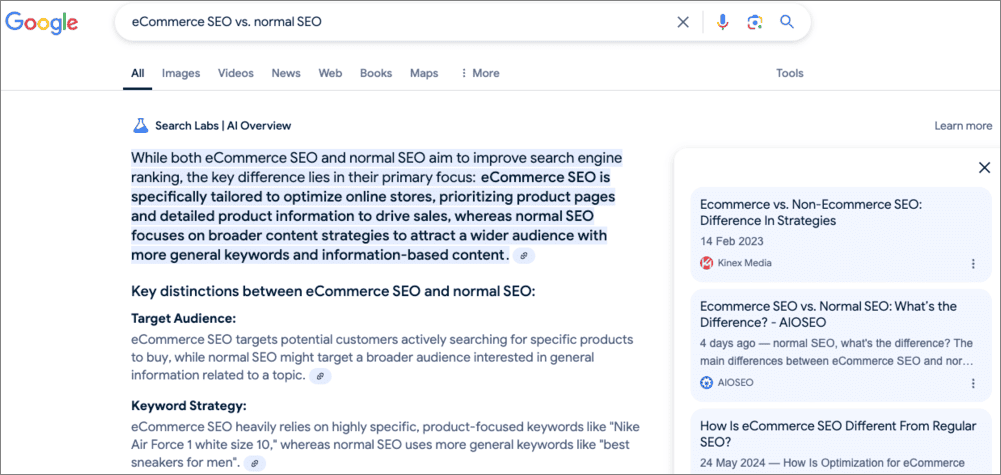
Google does not hate programmatic content. In fact, their latest “Generative Engine Optimization” guidelines suggest they prefer it provided it’s high-quality and structured for their AI to ingest.
The era of “Search Visibility” is shifting toward “Model Influence.” You don’t just want to be a blue link on a page; you want to be the primary source that ChatGPT, Gemini, and Perplexity cite when they answer a user’s question.
Conclusion: Your Path to pSEO Mastery
Building a programmatic SEO strategy isn’t just about traffic; it’s about building an asset. It’s the difference between owning a single house (a blog post) and owning a city (a programmatic ecosystem).
The giants like Neil Patel and Search Engine Land have the authority, but you have the agility.
By using the 2026 blueprint we’ve laid out like prioritizing unique data, human-centric tone, and technical precision you can capture the millions of long-tail visits they are too big to see.
Success in 2026 belongs to the “System Thinkers.”
Frequently Asked Questions (FAQ)
What is the difference between programmatic SEO and traditional SEO?
Think of Traditional SEO as “artisanal.” You’re hand-crafting every blog post, one at a time. It’s high-quality, but it’s slow and expensive to scale. Programmatic SEO is like building a factory.
You use a single high-quality “blueprint” (a template) and a dataset to produce thousands of optimized pages simultaneously.
Traditional SEO targets “head” keywords (e.g., “Running Shoes”), while pSEO targets the entire long-tail (e.g., “Best blue running shoes for flat feet under $100 in Austin”).
How much does programmatic SEO cost to implement?
It’s a bit of a “front-loaded” investment. In 2026, a DIY no-code stack (Airtable + Webflow) might cost you $150–$300 a month in software.
However, if you’re hiring an agency or developer for an “Authority Build” with custom scripts and deep data integration, expect to pay anywhere from $5,000 to $30,000+ for the initial setup.
The beauty is that once it’s built, your cost-per-page drops to almost zero.
Can programmatic SEO get my site penalized by Google?
Honestly, yes, but only if you’re lazy. Google doesn’t penalize automation; it penalizes low value. If you simply “spin” the same three sentences 10,000 times (Doorway Pages), you’ll get hit.
To stay safe in 2026, ensure at least 40% of your page content is unique data that a competitor couldn’t just scrape, and keep your “Helpful Content” signals (like user reviews and expert intros) high.
What industries benefit most from programmatic SEO?
Any industry with a massive amount of “structured data” is a goldmine. This includes:
- Real Estate: (Pages for every zip code/property type).
- E-commerce: (Comparison pages, “Alternative to X” pages).
- SaaS: (Integration pages like “Connect App A to App B”).
- Travel: (Best things to do in [City] on a [Budget]).
- Local Services: (Plumbers, lawyers, or dentists across 500 different cities).
How to measure ROI from programmatic SEO efforts?
Don’t just look at traffic; look at CAC (Customer Acquisition Cost). Because pSEO targets high-intent long-tail keywords, these visitors often convert at a 30-50% higher rate than blog readers.
The Formula: (Revenue from pSEO Pages - Infrastructure/Data Costs) / Infrastructure Costs. By 2026, most successful pSEO projects see an average ROI of 748% because the traffic compounds over time while the maintenance costs remain flat.
Building Your Organic Growth Engine
Honestly, we’ve covered a lot of ground. From the architectural “skeleton” of a pSEO project to the ethical guardrails that keep you safe from the latest Helpful Content Updates.
If there is one thing you should take away, it’s this: Programmatic SEO in 2026 is no longer a “hack” but actually it’s a sophisticated system for delivering value at scale.
A Quick Recap of the 2026 Blueprint
- Systems Over Content: Don’t just write posts; build a content factory that uses unique data to solve thousands of specific long-tail problems.
- The Intent Shift: In the age of AI search overviews, focus on the “post-click” experience. Give users the data, the charts, and the tools they can’t get from a simple text summary.
- E-E-A-T as Infrastructure: Trust isn’t a badge you add at the end; it’s baked into your data sources, author citations, and real-world transparency.
- Quality is the Only Moat: Avoid “thin content” like the plague. If a page doesn’t offer a unique perspective or a specific data point, it shouldn’t exist.
Start Small, Scale Smart
You don’t need 10,000 pages to see if this works. Here is exactly how I would start for Zumeirah today:
- Identify One Pattern: Find a keyword pattern (like “[Tool] vs [Tool] for [Niche]”) that has at least 50 variations.
- Gather a “Mini” Dataset: Build a spreadsheet with 20-50 rows of high-quality, verified data.
- Run a Pilot: Build a single, beautiful template and launch those first 50 pages.
- Listen to the Data: Wait 30 days. See which pages Google indexes and which ones users actually stay on. Then, and only then, hit the “Scale” button.
Final Thoughts: The Ethical Advantage
Here’s the thing: automation is often seen as a way to “cut corners.” But the winners in 2026 are using automation to add value where it was previously too expensive to do so.
By creating hyper-local, hyper-specific pages that respect the user’s time and intent, you aren’t just “gaming” an algorithm and you’re helping people find exactly what they need in an increasingly noisy digital world.