
The search bar we’ve all used for twenty years is changing right under our feet. You’ve probably noticed it yourself. You type a question into Google, and instead of just a list of blue links, you get this tidy, helpful summary at the very top. Or maybe you’ve stopped using Google altogether for some things and just ask ChatGPT or Gemini directly.
This isn’t just a small update to the algorithm. It’s a total shift in how information moves from a website to a human brain. We used to talk about “ranking #1,” but in 2026, the goalposts have moved. Now, it’s about becoming the source that the AI actually trusts enough to cite.
That is the heart of LLM SEO.
What are we even talking about here?
When I say “LLM SEO,” I’m talking about Large Language Models. These are the engines behind the tools we use every day, like ChatGPT, Claude, and Google’s Gemini. Traditional SEO was about teaching a crawler how to categorize your page. LLM SEO tips are different because they focus on teaching an AI how to understand your ideas.
Old SEO was like putting a label on a folder so a librarian could find it. New SEO is what some call Generative Engine Optimization and it is like being the expert the librarian actually interviews to write their report. If you want to optimize for ChatGPT or stay visible in Google AI SEO overviews, you have to change how you write.
Why this matters right now
You might be thinking, “Is it really that big of a deal?” Honestly, look at the numbers. Recent data shows that Google AI Overviews now show up in over 60% of search queries.
That is a massive chunk of the internet. Even more wild? About a third of Gen Z users are now doing their “searching” directly on AI platforms rather than traditional engines.
If you’re a content creator, a small business owner, or a marketer, this can feel a bit scary. The old playbook like the one where you just stuff some keywords into a header and hope for the best and isn’t just old; it’s becoming invisible.
If the AI doesn’t “see” you as a reliable source, you don’t exist in the summary. And if you aren’t in the summary, you’re losing a huge part of your potential audience.
Who is this for?
This guide isn’t for the robots. It’s for the people who actually make things like the writers, the founders, and the marketing teams who are tired of chasing moving targets.
Whether you’re trying to figure out how to get your brand mentioned in a ChatGPT response or you want to make sure your blog doesn’t vanish from Google, you’re in the right place.
We’re going to walk through how to future-proof your work. We’ll look at why “Information Gain” is the only metric that matters anymore and how to structure your site so that an LLM can actually parse it.
I’m not here to give you a bunch of “best practices” that will be obsolete by next month. I want to give you a framework that works because it focuses on what AI is actually looking for: clarity, authority, and genuine human insight.
What is LLM SEO and Why Does It Matter?
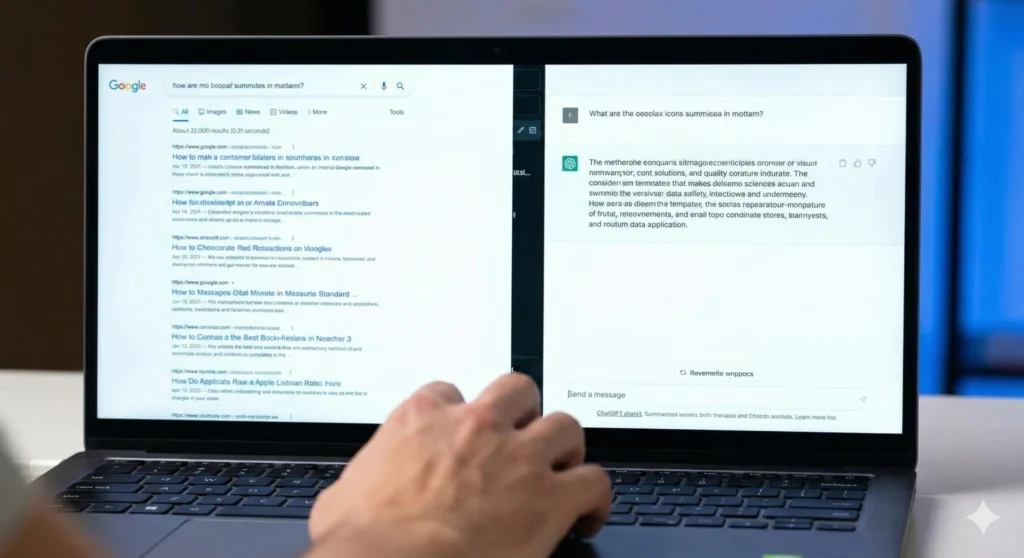
So, what actually is LLM SEO? If you ask five different experts, you’ll probably get six different acronyms like GEO (Generative Engine Optimization), AEO (Answer Engine Optimization), or my personal favorite, “Don’t Let the Robots Forget Me” SEO.
But honestly, the name doesn’t matter as much as the logic behind it.
How the “Brain” of Search has Changed
In the old days you know, like three years ago when search engines were basically giant, hyper-organized filing cabinets. You’d type in a keyword, and Google would sprint through its drawers, find the pages where that word appeared most often (and had the most links), and slap them on your screen.
LLMs like ChatGPT and Google’s Gemini don’t work like that. They aren’t just filing cabinets; they’re more like that one friend who has read every book in the library and then tries to explain the plot to you in their own words.
When you ask a question now, these models do something called semantic processing. They aren’t looking for the word “blueprints”; they’re looking for the concept of architectural planning.
They synthesize information from a dozen different places to give you one coherent answer. For us writers, that means “keyword stuffing” is officially dead. Actually, it’s worse than dead and it’s a signal to the AI that your content is low-quality fluff.
Traditional SEO vs. LLM SEO: The Great Divide
Here’s the thing: Traditional SEO was about Retrieval. LLM SEO is about Reasoning.
- Traditional: You try to rank for “best running shoes for flat feet” by putting that exact phrase in your header, your first paragraph, and your image alt text. You want a click.
- LLM SEO: You provide a deep, contextual comparison of arch support, foam density, and heel-to-toe drop. You want the AI to understand your expertise so that when a user asks, “My feet hurt when I run, what should I do?”, the AI says, “Well, [Your Brand] suggests looking at high-stability foam…”
You see the shift? We’re moving from being an “option in a list” to being the “trusted source for the answer.” It’s a move from visibility to influence.
The Perks (Why You Should Care)
I know, it sounds like more work. But the payoff is actually pretty massive.
- The “Zero-Click” Win: People talk about zero-click searches like they’re the end of the world. But if Google’s AI Overview cites your site as the primary source for a medical or technical explanation, you just gained more authority than a thousand backlinks could ever give you.
- Conversational Gold: People are searching differently. We’re moving away from “weather London” to “should I bring a heavy coat to London this weekend?” LLM SEO helps you capture that conversational traffic that traditional keyword research often misses.
- Future-Proofing: Google is already rolling out “AI Mode” as a default in many regions. If you aren’t optimized for how these models parse data, you’re basically invisible to anyone using a phone or a voice assistant.
The 2026 Reality Check
You know what’s wild? We’re seeing a trend where OpenAI (the ChatGPT folks) and Perplexity are becoming the “starting point” for research. Google knows this, which is why they’ve integrated Gemini so deeply into the search results.
Honestly, it’s a bit of a “black box” right now, but the patterns are becoming clear. The sites that are winning aren’t the ones with the most 2,000-word “Guides” filled with filler. They’re the sites that provide chunkable, high-value insights that an AI can easily digest and repeat.
10 Proven LLM SEO Tips for Success
Alright, let’s get into the actual meat of how you win this game. If the first half of our chat was about understanding the “why,” these next ten points are your field guide. We’re moving past the theory and looking at what actually moves the needle in 2026.
Tip 1: Focus on Semantic Optimization
You remember the days when we’d obsess over “keyword density”? It feels like a lifetime ago. Back then, if you wanted to rank for “best hiking boots,” you just made sure that exact phrase appeared five times in your text. But honestly, if you try that today, Google’s AI is going to look at your content and think it was written by a 1990s chatbot.
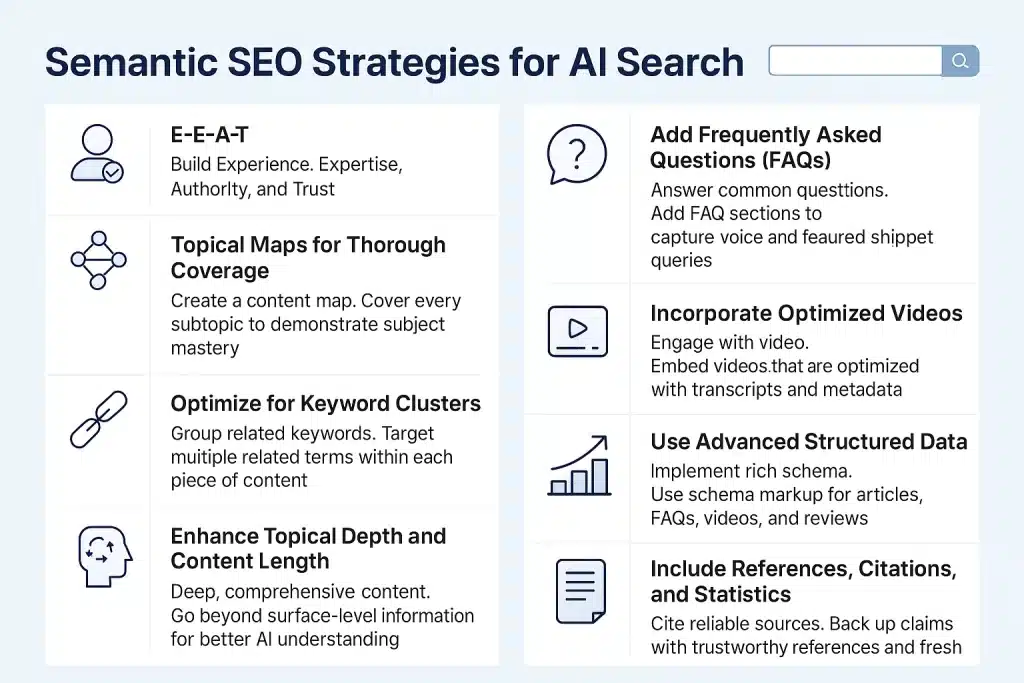
Today, it’s all about semantic search. This is a fancy way of saying that search engines finally understand context. They don’t just see words; they see entities. An entity is a “thing” or a “concept” like a person, a place, a brand, or even an idea.
When you write about hiking boots, the AI expects to see related entities like “ankle support,” “Vibram soles,” “Gore-Tex,” and “trail conditions.” If those aren’t there, the AI assumes you don’t actually know what you’re talking about.
How to actually do this without losing your mind
You don’t need a PhD in linguistics to get this right. You know what? One of the best ways to check your work is to use the tools the search engines themselves use. You can literally head over to the Google Natural Language API demo. It’s free to play with. You just paste your text in, and it will show you exactly which “entities” it recognizes.
If you’ve written an article about LLM SEO and the API doesn’t pick up “machine learning,” “content strategy,” or “search intent” as core entities, you’ve got work to do. It means your writing is too vague. You need to be specific.
Another huge piece of the puzzle is schema markup. Think of schema as a set of digital labels you put on your content so the AI doesn’t have to guess. By using “Organization” or “Person” schema, you’re telling the LLM exactly who you are and what you do. It’s like giving the AI a map instead of making it find its own way through the woods.
Let’s look at an example
Imagine you’re writing about “sustainable gardening.”
- The Old Way: You use the phrase “sustainable gardening” ten times. You hope for the best.
- The Semantic Way: You talk about composting, native plant species, rainwater harvesting, and organic pest control. You don’t just use the keyword; you build a world around it.
When you do this, you aren’t just ranking for one phrase. You’re becoming a Topical Authority. When someone asks ChatGPT, “How do I start an eco-friendly backyard?”, the AI will find your article because you covered the concept, not just the keyword.
It feels more natural, right? It’s basically just writing like a human who actually cares about the topic. But in the world of LLM SEO tips, it’s the difference between being a footnote and being the featured answer.
Tip 2: Create Conversational Content
I spent years writing for “The Crawler.” That invisible, robotic entity that lived in Google’s data centers and rewarded me if I just kept my sentences simple and my keywords bolded. But things have changed. If you’re still writing like a technical manual, you’re basically whispering in a crowded room.
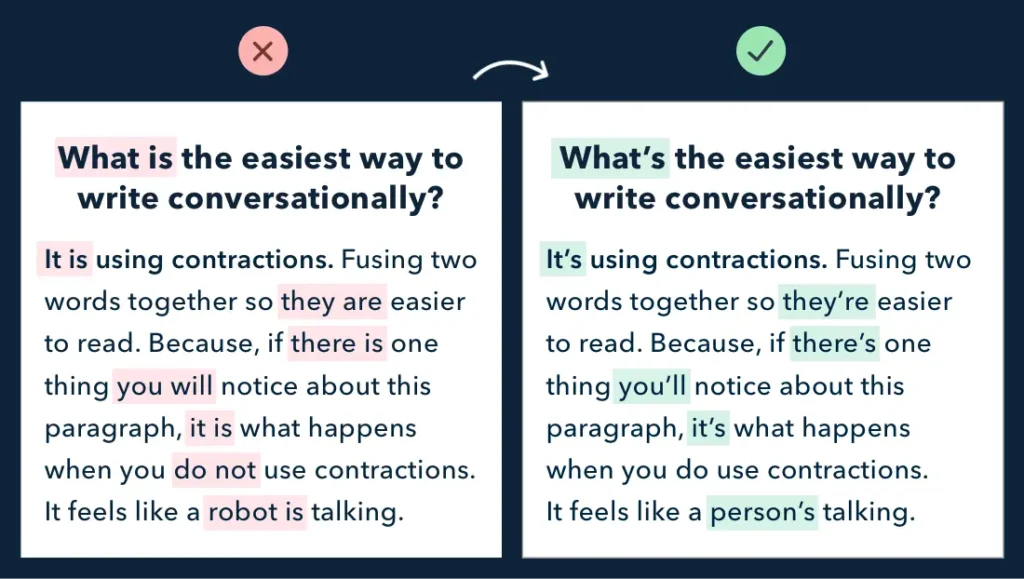
LLMs like ChatGPT and Google’s Gemini aren’t just reading your page; they’re trying to have a conversation with it. They were literally trained on how humans talk to each other.
So, when you write in a way that feels natural like we’re chatting over coffee then the AI finds it much easier to “digest” your points and repeat them to someone else.
Why conversational tone is your new best friend
When someone asks a question to an AI, they don’t usually type “running shoes reviews.” They ask, “Hey, what are some good running shoes if I have a high arch and I’m training for my first 5k?”
If your article is structured as a series of dry facts, the AI has to work hard to “translate” your content into a helpful answer.
But if you’ve already written the answer in a conversational, helpful way, the AI can practically copy-paste your genius directly into the chat. You’re doing the heavy lifting for the model, and it rewards you by citing your brand.
How to build “Question-Ready” content
One of the most effective LLM SEO tips I can give you is to stop being so formal. Use first-person language. Say “I’ve found that…” or “In my experience…” It signals to the AI and to human readers that there is a real person with real expertise behind the words.
That’s a huge signal for E-E-A-T (Experience, Expertise, Authoritativeness, and Trustworthiness).
But beyond just the “vibe,” you need a structure that mirrors how people actually ask things. I’ve started using a “Modular Q&A” approach for almost everything I write.
- Anticipate the “Yeah, but…”: Think about the follow-up questions. If you’re talking about LLM SEO, the reader is probably going to ask next, “Does this mean I should stop using keywords entirely?” (The answer is no, by the way, but we’ll get to that). By answering that follow-up right there in the text, you’re creating a “conversational loop” that LLMs love.
- The “People Also Ask” Strategy: You’ve seen that box on Google with the dropdown questions, right? Use it! It is a literal map of what people want to know. I like to take those exact questions and turn them into H3 subheadings. It’s not “gaming the system”; it’s just being helpful.
Don’t be afraid to be a little messy
Honestly, humans are a bit repetitive. We circle back to points. We use analogies. We say things like, “Let me put it another way.”
Surprisingly, LLMs actually respond well to this. It adds context. It provides multiple “entry points” for the model to understand your meaning.
If you explain a complex concept once with technical terms and then immediately follow it up with, “Basically, it’s like…”, you’ve just given the AI two different ways to categorize your content.
So, next time you’re drafting, read your work out loud. If you sound like a robot, start over. Write like you’re explaining it to a friend who is smart but doesn’t have time for your jargon. That is how you win the “Share of Model” in 2026.
Tip 3: Leverage Structured Data and Schema Markup
I’m going to let you in on a little secret. While LLMs are incredibly smart at reading plain text, they’re also a bit like high-speed scanners. They want to find the “facts” as quickly as possible. If you make them hunt for your price, your steps, or your credentials, they might just skip over you for a source that hands it to them on a silver platter.
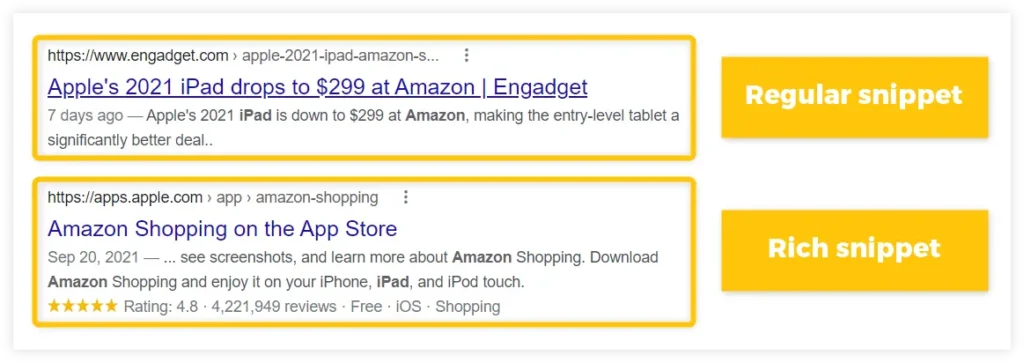
That silver platter? It’s Structured Data.
You’ve probably heard of Schema Markup before, mostly in the context of getting those little gold stars or FAQ dropdowns in Google results.
But in 2026, schema is no longer just an “extra” for your click-through rate. It has become the primary language that AI systems from ChatGPT to Google’s Gemini to use to verify that your data is actually true.
Why LLMs are obsessed with JSON-LD
When an AI is trying to answer a user’s question, it has to decide which sources are the most “trustworthy.” If your website uses JSON-LD (the code format Google loves), you’re providing a machine-readable layer that sits behind your human-friendly text.
It’s like providing a translated transcript. The human reads the beautiful prose, while the AI reads the clean, organized data points in the code.
This reduces the chance of the AI “hallucinating” or getting your facts wrong. When the AI feels “safe” with your data, it’s far more likely to cite you as the definitive source.
The “Big Three” schemas you need right now
If you’re feeling overwhelmed by the hundreds of schema types out there, don’t worry. You really only need to focus on a few heavy hitters for LLM SEO:
- FAQ Schema: This is gold. By explicitly labeling your questions and answers in your code, you’re basically telling ChatGPT, “Here is a pre-written answer you can use.”
- HowTo Schema: If you have a tutorial or a guide, this schema breaks it down into numbered steps. AI assistants love this for voice search and step-by-step summaries.
- Organization & Person Schema: This is all about E-E-A-T. Use these to link your content to a real brand and a real expert. It tells the AI, “This isn’t just a random blog post; it was written by someone with a decade of experience.”
Real-world wins: Do the stars actually align?
I know what you’re thinking. “Does this actually work, or is it just more technical fluff?”
Honestly, the data is pretty clear. I recently saw a case study from Schema App where they measured a nearly 20% increase in AI Overview visibility just by tightening up their entity linking and schema.
Even more interesting? A controlled experiment showed that out of three nearly identical pages, the only one that made it into the Google AI summary was the one with high-quality, well-implemented schema.
It’s not just about “having” the code; it’s about the quality. If your schema is messy or doesn’t match the text on the page, the AI will ignore it. But when it’s done right? It’s like turning on a lighthouse in a storm. The AI can see exactly where you are and what you’re offering.
So, if you haven’t checked your Google Search Console for “Rich Result” errors lately, now is the time. It might be the simplest technical change you make this year that has the biggest impact on your AI rankings.
Tip 4: Optimize for Long-Tail Queries and Zero-Click Searches
Let’s be honest the “Zero-Click” search used to be the nightmare of every SEO on the planet. The idea that someone could get their answer directly on the Google results page without ever clicking your link? It felt like robbery.
But in the world of Google AI SEO, you have to change your perspective. If you aren’t providing the answer for that zero-click summary, your competitor will.
Winning that top spot what we used to call “Position Zero” is now about mastering the long-tail query. People aren’t just searching for “LLM tips” anymore. They’re typing in full-blown prompts like, “How do I make my Shopify store show up in ChatGPT search results for handmade jewelry?”
These aren’t just keywords; they’re intent-rich conversations. And if you want to be the one the AI cites, you need to write content that acts as the perfect puzzle piece for those complex questions.
The “Answer-First” (BLUF) Framework
If you want to land in an AI Overview, you have to stop burying the lead. I’ve seen so many writers start an article with a three-paragraph “Introduction to the History of the Internet” before getting to the point. Stop doing that.
Use the BLUF method: Bottom Line Up Front. Right after your H2 or H3, give a direct, 40-to-60-word answer to the question. Don’t use “filler” or fluff. Just state the facts. “To optimize for ChatGPT search, you must implement a machine-readable llms.txt file and prioritize brand mentions in high-authority niche forums.”
Boom. That’s a “snackable” chunk that an LLM can easily scrape, credit to you, and move on. You’ve just made the AI’s job easier, and in return, you get the citation.
The “Search Console” Regex Hack
You know what? Most people look at their Google Search Console and just see a list of words. But there is a hidden goldmine in there if you know how to look.
I love using Regular Expressions (Regex) to find the real long-tail gems that people are actually using to find my site. If you go into your Performance report, click “New Query,” and select “Custom (Regex),” you can paste in a string like ^([^" "]*\s){7,}.
This little piece of code filters your data to show only queries that are 8 words or longer. These are the “prompts” people are actually using.
When you see a 12-word question appearing in your reports, that is a literal signal from your audience telling you exactly what content you need to write next to dominate the AI summaries.
Why “Volume” is a Trap
Don’t get discouraged if a long-tail query only has 10 searches a month. In the AI era, volume is a vanity metric. What matters is Conversion Intent.
The person searching for “LLM SEO tips for B2B SaaS companies” is 100x more valuable than the person searching for “what is SEO.” By answering those ultra-specific, long-tail questions, you aren’t just chasing traffic; you’re building a moat of topical authority that the big guys the Neil Patels of the world often ignore because the “volume” looks too small for them.
That’s where you win. You find the cracks in their strategy and fill them with better, more precise answers.
Tip 5: Enhance Content with Multimedia and Visuals
We’ve spent a lot of time talking about words, but here’s a reality check for 2026: AI has eyes now. Well, sort of. With the rise of “multimodal” search, models like GPT-4o and Google’s latest Gemini iterations aren’t just reading your text; they’re actually analyzing your images, charts, and videos to see if they help explain the topic better.
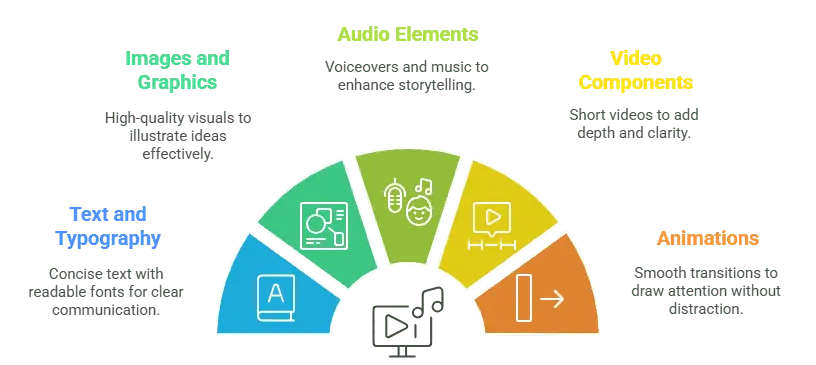
In the old days of SEO, an image was just a way to break up a wall of text. Today, it’s a core part of your LLM SEO strategy. If you have a complex data point and you don’t have a chart to back it up, the AI might decide your explanation is “incomplete” and choose a competitor who mapped it out visually.
Why Multimodal Grounding is the New Standard
You know what? When you ask an AI a “how-to” question today, it doesn’t just give you a list of steps. It often pulls in a specific diagram or a key moment from a YouTube video to show you exactly what to do. This is called multimodal grounding. The AI uses these visuals to “anchor” its response in reality.
If your blog post about LLM SEO tips includes a unique, original infographic that explains the difference between traditional search and generative search, you’ve just given the AI a massive reason to cite you.
It’s not just about the “pretty picture” like it’s about providing a different way for the model to understand and present your information.
How to Optimize Your Media for the “AI Eye”
You can’t just upload a file named image1.jpg and expect the AI to care. You have to be intentional.
- Descriptive Alt Text is Non-Negotiable: Forget the old advice of just “stuffing a keyword” into the alt text. Write it like you’re describing the image to a friend over the phone. Instead of “SEO chart,” try “Line graph showing the 300% growth of AI-driven search queries from 2024 to 2026.” This gives the AI the actual data points it needs to use your image in a summary.
- Video Transcripts are Gold: AI models like ChatGPT and Perplexity are incredibly good at “reading” video transcripts. If you embed a video, always include a full, clean transcript. This turns your video content into a searchable, indexable text asset that the AI can scrape for answers.
- Authenticity Beats Perfection: Interestingly, we’re seeing a trend in 2026 where “human-feeling” photos like real shots from an office or a hand-drawn diagram will actually perform better than polished, generic stock photos. It’s a trust signal. It tells the AI (and the reader) that this content was made by a real person with real experience.
Visuals as “Fact-Density”
Honestly, one of the easiest ways to beat a giant in your feilds is to be more helpful. If his article is a 5,000-word block of text and yours is 2,000 words but includes three custom diagrams and a 60-second “quick take” video, who do you think the AI is going to feature in a summary?
The AI wants to provide the best answer, not just the longest one. By mixing media formats, you’re creating a “high-density” environment. You’re giving the AI multiple ways to verify your facts.
So, next time you’re about to hit publish, ask yourself: “Is there a part of this that would be easier to understand if I just drew it?” If the answer is yes, get to work. That single chart might be the reason you land the top spot in Google’s next AI Overview.
Tip 6: Build Topical Authority with E-E-A-T Principles
If you’ve been around the SEO block for a while, you know about E-A-T. But recently, Google added that second “E” means Experience and honestly, in the age of AI, it might be the most important letter in the acronym.
LLMs are great at summarizing facts, but they are terrible at having a life. They can’t tell you what it felt like to run a marathon in the rain or how a specific software bug actually ruined a Tuesday morning for a dev team.
That’s where you come in. To win at LLM SEO, you have to lean into your humanity. E-E-A-T stands for Experience, Expertise, Authoritativeness, and Trustworthiness. For an AI, these aren’t just abstract concepts; they’re signals it uses to decide if you’re a “hallucination risk” or a gold-standard source.
The “Experience” Edge: Show Your Work
AI can write a perfectly fine article about “how to fix a leaky faucet.” But it can’t include a photo of a specific, rusty wrench or a tip about how the “standard” fix didn’t work on a 1920s pipe.
When you add these personal touches then real-world anecdotes, original photos, and “in the trenches” insights you’re providing something the AI literally cannot generate on its own.
This is the definition of Information Gain. By showing your firsthand experience, you’re making your content more “citation-worthy.” When a user asks an AI for advice, the model looks for the most “grounded” answer. If your post has the “I was there” factor, you’re much more likely to be the one it mentions.
How to Prove You’re the Real Deal
It’s not enough to just be an expert; you have to make it incredibly easy for the AI to verify your credentials. Think of it like a digital background check.
- Author Bios that actually matter: Don’t just put “Staff Writer.” Use a real name. Link that name to a bio page that lists their degrees, their years in the industry, and links to their LinkedIn or Twitter profiles. You want to create a “digital trail” that the AI can follow.
- Citations and Outbound Links: I see a lot of people who are afraid to link to other sites because they don’t want to “lose the juice.” But here’s the thing: linking to highly authoritative sources like a government study, a peer-reviewed paper, or a major industry report actually makes you look more trustworthy. It shows the AI that your ideas are supported by established facts.
- Transparent Sourcing: If you used AI to help brainstorm or outline your piece, just say so. Being honest about your process builds trust with both humans and the bots that evaluate quality.
Measuring Your “Share of Model”
In 2026, we’ve moved past just checking where we rank on page one. The new metric is Share of Model. This is basically checking how often an AI mentions your brand when someone asks a question in your niche.
There are some cool tools popping up for this. I’ve been playing around with things like the Semrush AI Visibility Toolkit and Siftly. They basically “crawl” the AI responses for your target keywords and tell you which brands are getting the most love.
If you see your competitors being mentioned and you aren’t, it’s a sign that your E-E-A-T signals are weak. You might need more third-party mentions, better author credentials, or more original data.
Honestly, tracking this is like looking into a crystal ball for your future search traffic. If the AI doesn’t know who you are today, the searchers won’t find you tomorrow.
Tip 7: Use Natural Language Processing (NLP) Techniques
If you’ve ever wondered why some articles seem to “magically” appear in every AI summary while others even well-written ones get left in the dust, the answer usually comes down to Natural Language Processing (NLP).
Search engines aren’t just looking for words anymore; they’re using NLP to understand the relationships between those words. It’s like the difference between a toddler pointing at a picture of a dog and a veterinarian explaining the dog’s anatomy.
Both are talking about the same thing, but the vet’s language has a depth and structure that carries more authority. To win at LLM SEO, you have to write like the expert.
The Power of Keyword Clustering
You know what? The old way of targeting one “primary keyword” per page is officially over. In 2026, we target clusters.
Instead of writing five different posts for “LLM SEO tips,” “optimizing for AI,” and “ChatGPT search tips,” you build one powerhouse page that covers the entire topic.
By using tools like Zenbrief or Surfer SEO, you can identify “semantic neighbors” like terms that the AI expects to see grouped together. If you’re talking about LLMs, you should also be talking about tokenization, generative pre-training, and context windows. When the AI sees these clusters, it checks the “Expertise” box in its brain.
Why Sentiment Analysis Matters More Than You Think
This is a weird one that most people miss. LLMs are incredibly sensitive to sentiment. If you’re writing a product review but your language is dry and purely technical, the AI might flag it as “low engagement” or “robotic.”
Modern SEO involves using NLP to ensure your sentiment matches the user’s intent. If someone is searching for a “reliable” solution, your writing should use stable, authoritative language. If they’re looking for “exciting new trends,” your sentiment should be more dynamic.
Using tools to analyze the emotional “vibe” of your top-ranking competitors can give you a roadmap for how to adjust your own tone.
The “Sweet Spot” for Readability
Here is where things get a bit counterintuitive. You might think that to sound like an expert, you need to use big words and complex sentences. Actually, the opposite is true. For AI to easily parse and repeat your content, it needs to be clear. I always aim for a Flesch Reading Ease score of around 70 to 80. That’s the “Plain English” sweet spot.
- The “Before” (AI-unfriendly): “The utilization of advanced generative paradigms facilitates a transformative shift in the alignment of search retrieval mechanisms.” (Ouch. My brain hurts just writing that).
- The “After” (LLM-optimized): “New AI models are changing how we find information. This means your content needs to be clearer and easier for machines to read.”
See the difference? The second one is punchy. It’s direct. It’s exactly the kind of “snackable” insight that a Google AI Overview loves to grab and highlight.
Let’s Reword for the “Human” Signal
Honestly, the best way to use NLP is to make your content sound less like an SEO bot. Use “stop words” naturally. Don’t worry about perfect keyword placement. Use “I” and “you.”
When you write in a way that mimics a real human conversation, you’re providing the AI with the most natural training data possible. You’re telling the model, “This is how a real person explains this.” And in the world of LLM SEO, being the most “human” source is often the fastest way to the top.
Tip 8: Monitor and Adapt to AI Algorithm Updates
If there is one thing I’ve learned in a decade of doing this, it’s that the “rules” of SEO have the shelf life of an open carton of milk. Just when you think you’ve cracked the code on how Google’s AI Overviews pick their sources, OpenAI drops a new model like GPT-5.2 or SearchGPT updates its recommendation engine, and suddenly, everyone is scrambling again.
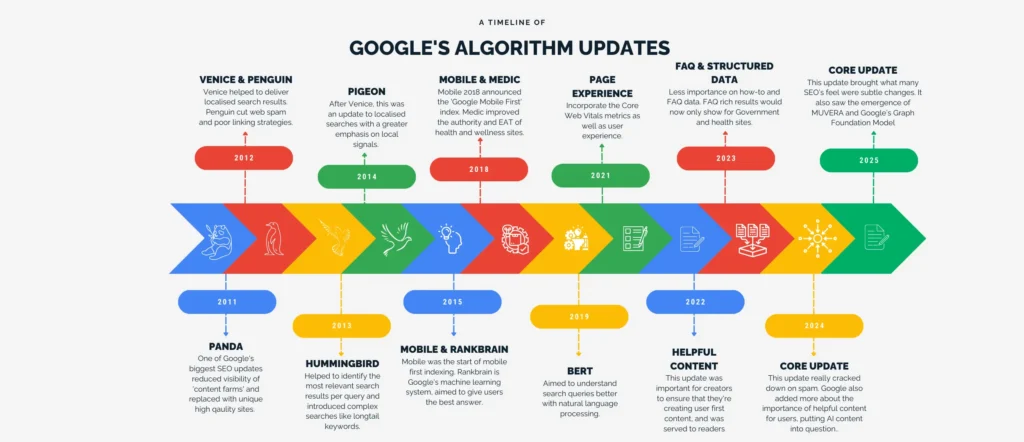
Honestly, the only way to stay ahead is to stop looking for a “static” strategy. You have to treat your LLM SEO strategy as a living, breathing thing.
Staying in the Loop Without the Noise
You know what? You don’t need to read every single “leaked” document from a Silicon Valley basement. But you do need to keep a close eye on the primary sources. I make it a habit to check the OpenAI Release Notes and the Google Search Status Dashboard at least once a week.
Why? Because sometimes a tiny update in “memory” or “instruction following” can completely change how an AI interprets your site structure.
For instance, early in 2026, we saw a shift where Google started prioritizing “real-time” interaction signals over static backlinks for certain topics. If you weren’t watching the core update logs, you might have wasted months building links that the AI was already starting to ignore.
The New A/B Testing: Prompt Engineering for SEO
We used to A/B test by changing a button color or a headline and waiting a month for the data to roll in. Now? We test by “talking” to the models.
One of my favorite LLM SEO tips is to use what I call Prompt Simulation. I take the same query and say, “best ways to optimize for Gemini search” and I run it through ChatGPT, Perplexity, and Gemini simultaneously. Then, I change a section of my content maybe I move the summary to the top or add more entity-rich data and I wait for the next crawl to see if the AI’s “opinion” of my page changes.
There are actually tools now, like Nightwatch or Ahrefs Brand Radar, that do this at scale. They track your “Share of Model” across different LLMs so you can see if an algorithm tweak is helping or hurting your visibility in real-time. It’s a lot faster than waiting for a ranking report.
Future-Proofing for the Multimodal Wave
We’re moving toward a world where the search bar is just one way people find you. By the end of 2026, mass adoption of multimodal search where people take a photo of a broken part or ask a question while pointing their camera at a landmark is going to be the norm.
If your “SEO” is only focused on text, you’re only capturing a fraction of the market. You need to be thinking about how your images and videos act as “data points” for these models.
- Text + Image: Are your charts clear enough for an AI to extract the data?
- Text + Video: Does your transcript match the visual steps shown in the video?
- Text + Voice: Is your content “speakable”? (Google actually has a schema for this now).
It sounds like a lot, but really, it’s just about being thorough. The giants like Search Engine Land are already moving in this direction. If you want to keep up, you have to stop thinking about your blog as a “reading” platform and start thinking about it as a knowledge hub that can be accessed via text, sight, or sound.
It’s a bit of a wild ride, I know. But honestly? It’s also the most exciting time to be a creator. The “gaming” of the system is getting harder, which means the people who actually provide the most helpful, clear, and multi-dimensional answers are finally starting to win.
Tip 9: Integrate User-Generated Content and Social Proof
You know what? We’ve talked a lot about what you should write on your site. But in 2026, what other people say about you might actually be more important than your own copy. It sounds a bit unfair, doesn’t it?
You spend weeks polishing your “About Us” page, and then a random thread on Reddit or a three-star review on a directory site carries more weight with an LLM.
But here’s the logic like AI models are programmed to be skeptical. They know you’re going to say your product is the “best in the world.” To verify that, they look for Digital Consensus. They want to see if the rest of the internet agrees with you.
Why LLMs are “Social Creatures”
When ChatGPT or Gemini is asked for a recommendation like “What is the best SEO tool for small businesses?” it doesn’t just look at the tool’s homepage. It crawls review sites, forum discussions, and social media mentions.
According to recent citation studies, ChatGPT pulls nearly 50% of its brand recommendations from third-party sites like Yelp, TripAdvisor, or industry-specific directories. It’s looking for social proof.
If your brand is mentioned positively across five different forums but your competitor only has a fancy blog, the AI is going to bet on you. It sees the “chatter” as a signal of real-world authority.
Tactics for Building a “UGC Moat”
So, how do you actually influence what the robots think of you through other people?
- Encourage “Specific” Reviews: A review that just says “Great service!” is fine for humans, but it’s useless for LLM SEO. You want reviews that use your keywords. When a customer says, “This tool really helped me with my semantic keyword clustering,” they are feeding the AI the exact entity connections it needs to rank you.
- The “Reddit/Quora” Effect: Honestly, if you aren’t active in niche communities, you’re missing out. LLMs love Reddit. They see it as a place where real people give real, unvarnished advice. Don’t go in there and spam; just be helpful. When you answer a question and someone else upvotes it, that becomes a “training signal” that tells the AI you know your stuff.
- Schema for UGC: Don’t let your reviews just sit there in plain text. Use Review Schema or Comment Schema. This makes it easy for the AI to parse the sentiment. It can see the rating, the author, and the date in a heartbeat.
Optimizing for “Sentiment Framing”
This is a newer concept for 2026. It’s not just about being mentioned; it’s about how you’re mentioned. If an AI sees your brand mentioned in a “top 10” list but the surrounding text says you have “clunky UI,” it learns to associate your brand with that negative trait.
I’ve started doing “Sentiment Audits.” I’ll literally ask an LLM, “What are the common complaints about [Brand]?” If the AI can answer that, it means those negative signals are strong enough to be part of its “knowledge.” Your job is to address those issues and encourage new, positive UGC to “reframe” the AI’s understanding of your brand.
It’s about building a community, not just a customer base. When real people stand up for your brand online, the LLMs notice. And in a world where everyone can generate 4,000 words of “perfect” content with a prompt, that messy, authentic human feedback is the ultimate competitive advantage.
Tip 10: Analyze Performance with AI-Specific Metrics
So, we’ve done the work. We’ve optimized the headers, we’ve seeded the forums, and we’ve polished the schema. But how do you actually know if it’s working? If you’re still looking at “blue link” rankings and organic click-through rates as your only source of truth, you’re only seeing half the picture.
In 2026, the real battle is happening inside the “black box” of the AI response.
To win here, you need to start tracking what I call AI-Specific Metrics. These are the data points that tell you whether you’re becoming part of the “AI’s brain” or just another ignored URL.
The Rise of “Share of Model” and AI Visibility
You know what? We used to obsess over “Share of Voice” in traditional search. Now, the cool kids are talking about Share of Model (SoM). This metric measures how often an LLM like ChatGPT, Gemini, or Claude mentions your brand when a user asks a high-intent question in your category.
If you ask ChatGPT, “What are the best CRM tools for nonprofits?”, and it lists five brands, each of those brands just earned a point in the SoM category.
If you aren’t on that list, your visibility score is zero for that prompt. Tools like Ahrefs Brand Radar, Semrush AI Toolkit, and newcomers like Otterly.AI or Peec AI are now essential for this.
They automatically run thousands of prompts to see where you stand. It’s like having a rank tracker that actually understands language.
Tracking the “Inclusion Rate”
Another metric you’ve got to watch is the Response Inclusion Rate. This isn’t just about being mentioned; it’s about where and how you show up.
- Primary Recommendation: Are you the first name the AI suggests?
- Citation/Source: Are you listed at the bottom as a “for more information” link?
- Sentiment Weight: Is the AI describing your brand as “the most reliable” or just “another option”?
I like to use Google Search Console in a slightly unconventional way here. Look for queries that have a high impression count but a very low CTR. Usually, this is a sign that an AI Overview is answering the question for the user.
If your site is cited in that overview, you’ll see the impressions climb even if the clicks don’t follow immediately. That citation is building your authority for the next time that user (or the AI) needs a solution.
Iterating Based on AI Output
Honestly, the best way to improve is to treat the AI like a high-maintenance client. If you see that Gemini is consistently citing a competitor for a topic you know you cover better, ask the AI why. Literally.
You can prompt it: “Why did you choose [Competitor] as the primary source for [Topic] instead of [My Site]?” The AI will often tell you! It might say, “[Competitor] provided a more detailed data table,” or “[Competitor] had more recent user reviews.” That is your roadmap. That is the AI telling you exactly what you need to add to your page to flip the script.
Don’t Forget Referral Traffic (The GA4 Hack)
Finally, keep an eye on your AI Referral Traffic. In GA4, you should set up a custom channel group that specifically tracks referrers from chat.openai.com, perplexity.ai, and gemini.google.com.
While the volume might look small compared to traditional organic search, pay attention to the Conversion Rate.
We’re finding that visitors who come from an AI recommendation often convert at a 2-3x higher rate because they’ve already been “pre-sold” by the AI’s summary. They aren’t just browsing; they’re coming to you because a trusted assistant told them you were the expert.
Common Challenges in LLM SEO and How to Overcome Them
Look, I’m not going to sugarcoat it: as exciting as LLM SEO is, it’s also a bit of a “Wild West” right now. Even if you do everything right, you’re dealing with systems that are basically hyper-intelligent pattern matchers, not fact-checkers. This leads to some unique headaches that simply didn’t exist in the old world of blue links.
If you want to stay ahead of the curve, you have to be as good at troubleshooting these challenges as you are at writing the content.
Challenge 1: Content Hallucination in AI Responses
This is the one that keeps CMOs up at night. You’ve probably seen it like you ask an AI about a brand, and it confidently tells you they were founded in 1985 (when it was 1992) or that they offer a feature that doesn’t actually exist. For an SEO, this is a nightmare because the AI is essentially “mis-selling” your brand to a potential customer.
The Fix: The “Grounding” Strategy
LLMs hallucinate because of “data noise” or “data voids.” If the AI can’t find a clear, authoritative answer, it tries to predict what a likely answer would look like.
- Create a
brand-factsdataset: One of the most effective 2026 tactics is to publish a dedicated page (often at/brand-facts) that contains your core, unchangeable data in JSON-LD Dataset format. This acts as a “ground truth” for crawlers. - The Retrieval-Augmented Generation (RAG) Edge: Modern search engines use RAG to “ground” their answers in real-time data. By making your site structure incredibly “crawlable” with a machine-readable
llms.txtfile, you’re helping the AI pull your live data instead of relying on its outdated training weights. - Fact-Check the AI: Honestly, you should be your own biggest critic. Regularly prompt the major models: “Who is the founder of [Your Brand]?” or “What are the pricing tiers for [Product]?” If it gets it wrong, don’t just complain update your schema and your About page to be even more explicit.
Challenge 2: Over-Reliance on Keywords vs. Context
I see this all the time: a site is still trying to rank for a 3-word keyword string while the rest of the world has moved on to 12-word conversational prompts. Traditional keyword tools are great for estimating volume, but in the AI era, volume is a bit of a “vanity metric.”
The challenge is that “optimizing” for a keyword often makes your content sound robotic, which actually hurts your chances of being cited by an LLM that is looking for natural, contextual explanations.
The Fix: Semantic Depth Over Density
Here’s the thing: stop counting how many times “LLM SEO tips” appears in your text. Instead, focus on Entity Density.
- Build a Topic Map: If you’re writing about AI search, the model expects to see related concepts like “tokenization,” “context windows,” “latent semantic indexing,” and “zero-shot learning.” If you omit these, the AI assumes your content is shallow “spam” written for a search engine, not a human.
- Focus on “Task Completion”: When someone uses an AI, they aren’t just looking for information; they’re trying to do something. Structure your content around the action. Instead of “What is LLM SEO?”, try “How to implement LLM SEO for a B2B SaaS company.” The more you focus on the context of the user’s problem, the more relevant you become to the AI’s recommendation engine.
The Ultimate Solution: The “Quality Audit” Framework
Honestly, the best way to overcome any of these hurdles is to move away from “set it and forget it” SEO. In 2026, we’re doing AI Visibility Audits every single month.
| Audit Step | What to Look For | The “Fix” |
| Response Accuracy | Does ChatGPT/Gemini get your brand facts right? | Update /brand-facts and JSON-LD schema. |
| Citation Share | Are you cited in the top 3 AI Overviews for your niche? | Increase “Information Gain” by adding original data/stats. |
| Semantic Clarity | Is your Flesch Reading Ease score above 70? | Simplify sentences; remove “corporate-speak” and fluff. |
| Sentiment Check | Does the AI describe you as “reliable” or “expensive”? | Seed positive UGC in Reddit/niche forums to shift consensus. |
At the end of the day, LLM SEO isn’t about “tricking” an algorithm. It’s about being so clear, so authoritative, and so consistently accurate that the AI would be “embarrassed” not to cite you. Focus on being the best possible source for a human, and the bots will eventually follow.
Conclusion: The New SEO Reality is Here
So, where does that leave us?
Honestly, if you’ve made it this far, you’re already ahead of about 90% of the people still trying to “game” the system with old-school tricks.
We’ve covered a lot of ground today. We moved from the high-level shift of LLM SEO to the nitty-gritty of semantic optimization and schema markup.
We talked about why your brand’s reputation on Reddit might matter as much as your backlink profile, and why “writing like a human” isn’t just a stylistic choice anymore like it’s a technical requirement.
A Quick Recap of the 10 LLM SEO Tips
If you’re looking for the “TL;DR” (too long; didn’t read) version to take back to your team, here it is:
- Go Semantic: Focus on entities and concepts, not just strings of keywords.
- Stay Conversational: Write for the way people talk to ChatGPT and Gemini.
- Schema Everything: Use JSON-LD to give AI a machine-readable roadmap.
- Target the Long-Tail: Be the specific answer to complex questions.
- Multimodal is Key: Optimize your images and videos because AI has “eyes” now.
- Build Real Authority: Lean into E-E-A-T and show your actual human experience.
- Master NLP: Use keyword clustering and clear readability to help AI parse your ideas.
- Adapt Fast: Stay on top of algorithm shifts from Google and OpenAI.
- Social Proof Matters: Leverage UGC to build a “digital consensus” around your brand.
- Track New Metrics: Measure your “Share of Model” and AI citation rates.
The Future is Already in Your Search Bar
We’re already seeing the impact of the January 2026 Google Update. It’s getting harder for generic, AI-generated “filler” to find a home on page one. Google is looking for personal brand signals and authentic expertise more than ever.
You know what? It’s almost like the internet is finally rewarding people for actually knowing what they’re talking about. Imagine that!
The days of SEO being a “dark art” of hidden keywords and link farms are over. In this new era, SEO is really just Knowledge Management. It’s about taking your expertise and structuring it in a way that both humans and machines can understand, trust, and share.
Now, It’s Your Turn
Don’t let this be another article you read and then forget about as soon as you close the tab. Honestly, the best way to see if this works is to pick just one tip and implement it today.
- Add some FAQ schema to your most popular post.
- Rewrite an introduction using the “Answer-First” (BLUF) method.
- Run your latest blog through a Natural Language API to see what entities it picks up.
Start small, but start now. Monitor your Search Console, keep an eye on how ChatGPT responds when you ask it about your niche, and be ready to iterate. The search landscape of 2026 is moving fast, but it’s also opening up massive opportunities for creators who are willing to be clear, authoritative, and helpful.
The future of search isn’t a list of blue links. It’s a conversation. Are you ready to be part of it?
Frequently Asked Questions (FAQs)
Still have questions? You aren’t alone. The world of LLM SEO tips is evolving fast, and even the pros are constantly recalibrating. Here are the answers to the things I get asked most often.
What are the best LLM SEO tips for beginners?
If you’re just starting, don’t get bogged down in the code. The best thing you can do is focus on Clarity and Structure. Start by rewriting your introductions to give a direct, 50-word answer to the main question of the page. Then, make sure your headings (H2s and H3s) are written as questions that people actually ask. Finally, get a basic FAQ schema plugin. You know what? Just those three things will put you ahead of half the websites on the internet that are still writing for the 2010s.
How does LLM SEO differ from traditional SEO?
Think of traditional SEO as “Discovery” and LLM SEO as “Selection.” * Traditional SEO is about showing up in a list of results so a human can find you. It’s all about the click.
- LLM SEO is about being the source the AI chooses to build its answer. Instead of just matching keywords, you’re trying to build “Topical Authority.” You want the AI to understand the meaning behind your words so it can synthesize them into a summary. It’s a move from ranking for a word to being the expert on a concept.
Can I use these tips to optimize for other AI like Bing Chat?
Absolutely. In fact, optimizing for ChatGPT is largely optimizing for Bing (since ChatGPT’s search feature uses Bing’s index). Whether it’s Bing Chat (Copilot), Perplexity, or Gemini, they all follow a similar logic: they want high-authority, crawlable, and fact-dense content. If you make your site easy for one model to parse, you’re making it easier for all of them. The “Rules of Engagement” for AI are remarkably consistent across platforms.
How do I measure success in LLM SEO?
We have to look past the “Position 1” metric. In 2026, success is measured by Share of Model (SoM) and Citation Rate. * SoM: How often does the AI mention your brand when someone asks a broad question?
- Citation Rate: How often does the AI provide a link back to your site as a source? You can track these using specialized tools or by setting up custom segments in Google Analytics (GA4) to monitor traffic coming from referrers like
chat.openai.comorperplexity.ai.
What tools are essential for implementing these LLM SEO tips?
You don’t need a massive budget, but a few tools are non-negotiable now.
- Google Search Console: Still the gold standard for seeing how Google’s bots see your site.
- Specialized AI Trackers: Tools like LLMrefs, AIclicks, or AccuLLM are built specifically to track your “AI Visibility” and mentions.
- Schema Generators: Use tools like Merkle’s Schema Generator or SEO Grove to ensure your JSON-LD is perfect.
- Content Optimizers: Tools like Surfer SEO or Clearscope help you find the “semantic clusters” you need to cover a topic deeply.