
If you’re still checking your Google rankings every morning like it’s 2022, you’re essentially watching a replay of a game that’s already over.
I was chatting with a founder in Jumeirah last week who was frustrated because his “Position 1” ranking wasn’t bringing in the leads it used to.
Actually Ranking first doesn’t mean much if a massive AI summary at the top of the page answers the question before the user even sees your link. Welcome to 2026.
The numbers are honestly staggering. AI referral traffic has exploded by 527% recently. We’ve officially crossed the mark where over one billion people are using AI agents and answer engines as their primary way to find information.
We aren’t just in a “zero-click” era; we are in a “zero-navigation” era. People want the answer, they want it now, and they want it from someone the AI trusts.
So, what is LLM Citation Optimization in 2026 exactly?
In the old days, you optimized for a bot that scanned for keywords. Today, you are optimizing for a brain, I mean, a Large Language Model (LLM) like Gemini, ChatGPT, or Perplexity.
LLM Citation Optimization in 2026 is the deliberate process of structuring your brand’s data and content so these AI models don’t just know you exist, but actually retrieve your info and cite you as the trusted source in their answers.
It’s the difference between being a ghost in the machine and being the expert the AI name-drops.
The Great Shift: From SEO to AEO
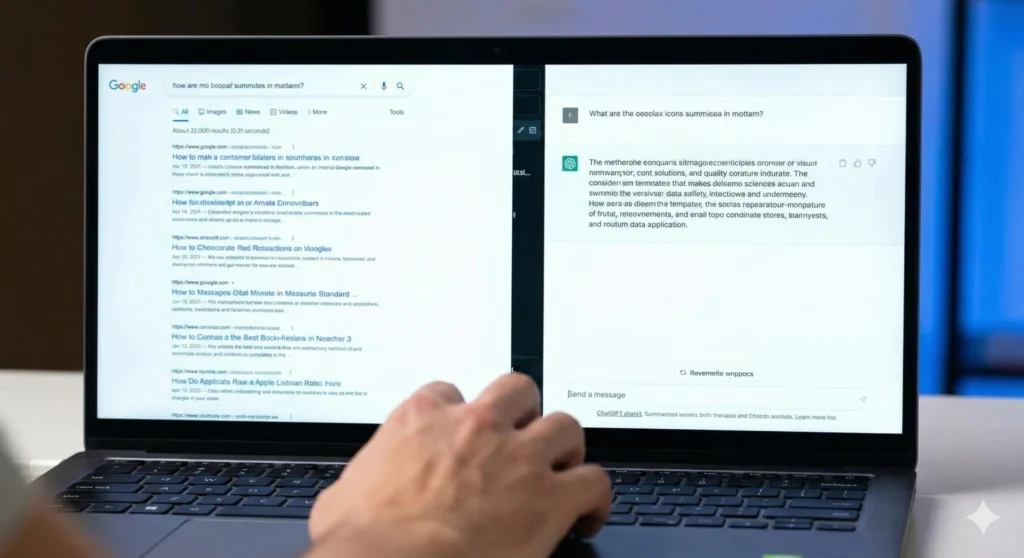
We are witnessing a massive pivot from traditional SEO to what we call Answer Engine Optimization (AEO) or Generative Engine Optimization (GEO).
- Traditional SEO: Focuses on “blue links” and getting someone to click.
- AEO/GEO: Focuses on becoming the “brain food” for the AI.
In 2026, citations are the new backlinks. If an AI Overview mentions your business as the best web design agency in Dubai but doesn’t link to you, you’ve gained brand authority. If it cites your article as the proof for its answer, you’ve gained a high-intent lead.
Honestly, it’s a total revolution in how we think about visibility. You aren’t just fighting for a spot on a list anymore; you’re fighting to be the consensus.
In 2026, if you can master the trifecta of retrieval, citation, and trust, you aren’t just “improving your SEO.” You are looking at a potential 30% to 41% boost in AI visibility based on recent performance data.
For a Dubai startup or a growing business, that isn’t just a marginal gain, actually it’s the difference between staying relevant and becoming a digital relic. Let’s break down exactly how you can win this AI search revolution.
The AI Search Landscape in 2026: Why Citations Matter Now
The old “blue link” world isn’t just dying like for many of us, it’s already a ghost. If you’re running a startup in Dubai, you’ve probably noticed your traffic numbers doing some strange things lately.
You might still rank in the top three for a big keyword, but your actual clicks? They’re vanishing.
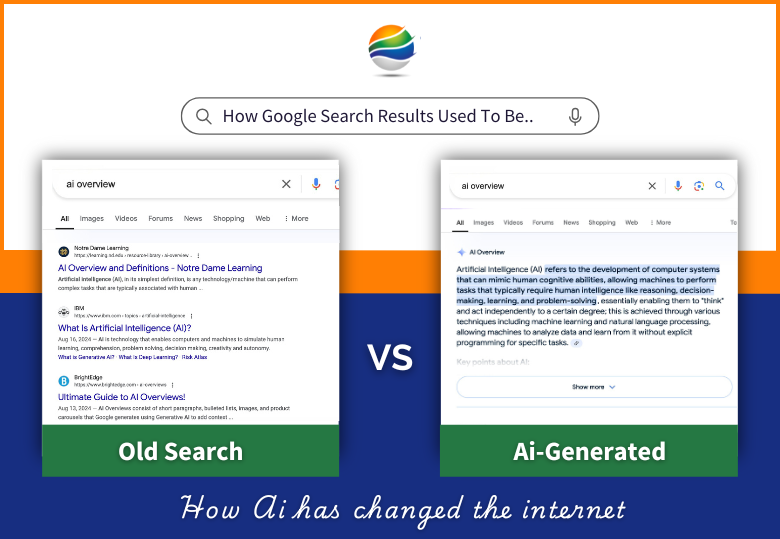
Because the landscape has fractured. We aren’t just “Googling” anymore. We’re asking. And when we ask, the major AI platforms respond in totally different ways.
- Google AI Overviews (AIO): These are the big summaries at the top of your search results. They are basically the gatekeepers now. Data shows that about 76% to 85% of the links they cite come from pages that already rank in the traditional top 10. If you aren’t in that summary, you’re essentially invisible to anyone who just wants a quick answer.
- ChatGPT: This one is a bit more social. It loves “co-occurrence.” If your brand name is constantly mentioned alongside words like “best web design Dubai” or “top SEO agency” across the web then even if there isn’t a link like ChatGPT starts to associate you with that “entity.” It’s less about your meta tags and more about your digital reputation.
- Perplexity: This is the researcher’s favorite. Perplexity has a massive crush on freshness. If you haven’t updated your content in the last six months, Perplexity will likely ignore you in favor of a newer, “fresher” source. Honestly, it’s like trying to stay relevant in a fast-moving WhatsApp group so if you don’t speak up with something new, you’re forgotten.
The Real Talk on Traffic
I know what you’re thinking: “Is this actually sending me customers, or is it just vanity?” Currently, AI referrals average about 1% to 2% of total sessions for most industries.
That might sound small, but here is the catch like that traffic is incredibly high-intent. These aren’t just “window shoppers” but these are people who have already been convinced by an AI that you are the answer to their problem.
And let’s look at the flip side, I mean the risk of doing nothing. For queries where an AI Overview appears, organic click-through rates (CTR) have plummeted by a brutal 61%. But, and this is a big “but” if your brand is actually cited within that AI summary, your CTR is likely to be 35% higher than it would be otherwise.
The “Zero-Click” Trap
We’ve reached a tipping point where over 80% of searches that trigger an AI summary now end without a single click. People get what they need and leave.
If you aren’t the one providing that answer and getting the citation credit for it then you’re losing that brand touchpoint entirely. You’re letting your competitors talk to your customers while you’re stuck waiting for a click that’s never coming.
So, how do these “brains” actually decide who to pick? Why do they choose a small Dubai blog over a massive international site sometimes?
It isn’t magic, and it isn’t just about who has the most backlinks. It’s about how they “retrieve” and “score” your information. Let’s get into the mechanics of how these models actually select their sources.
How LLMs Decide What to Cite
If you’ve ever wondered why an AI mentions your competitor instead of you, it isn’t because the AI “likes” them more. It’s because their content successfully navigated a very specific three-stage pipeline.
In 2026, the AI doesn’t just “search” actually it retrieves, filters, and then validates.
Think of it like a high-stakes job interview. Hundreds of candidates (web pages) apply, a handful make it to the shortlist, and only one or two get the actual offer (the citation).
Here is how the “AI brain” actually processes your website in three distinct stages:
1. The Retrieval Stage (The Application)
First, the AI has to actually find you. When a user asks a question, the system pulls a “candidate pool” of potentially relevant chunks of information.
- The “Crawl” is dead, long live the “Fetch”: Traditional bots used to take weeks to index your site. In 2026, tools like Perplexity and SearchGPT are fetching data in near real-time. If your technical SEO is messy, slow load times, broken metadata, or heavy JavaScript that hides your text then you’re disqualified before the race even starts.
- Metadata is the new Resume: The AI uses your headers ($H2$, $H3$) and schema markup to quickly understand if you have the answer. Honestly, if you aren’t using FAQ Schema or Article Schema correctly, you’re making the AI work too hard. And trust me, AI is lazy that it will always pick the path of least resistance.
2. The Citation Selection (The Shortlist)
Once the AI has a pool of information, it has to decide which specific parts to use in its response. This is where the competition gets brutal.
- The “Rule of Three”: While some AI summaries might list a dozen links in a “sources” footer, the actual inline citations like the ones people actually notice are usually limited to just 3 to 4 key sources.
- The Freshness Tax: This is the big one for 2026. Data shows that citation likelihood peaks for content that is less than 3 months old. In fast-moving industries like tech or Dubai’s real estate market, if your article is six months old, the AI treats it like a history book rather than a source of truth.
3. The Trust & Verification Stage (The Background Check)
The final stage is all about Trust. The AI needs to be sure that if it cites you, it won’t be called out for “hallucinating” or spreading misinformation.
- Co-occurrence & Mentions: The AI looks at the “neighborhood” of your brand. If you’re a Dubai startup, does the rest of the web talk about you alongside terms like “trusted” or “industry leader”? Even unlinked mentions on sites like Reddit or local business directories act as a “background check” for the AI.
- E-E-A-T is Human Proof: The AI looks for signals of real human expertise. An author byline with a link to a LinkedIn profile or a “provenance” signal that shows the content was written by an actual specialist (like you!) carries more weight than a generic, anonymous blog post.
The “Citation Hook” Secret
Here’s a quick tip like AI models love modular content. If you write in short, punchy paragraphs (about 40–60 words) that answer a specific question directly, you’re creating “citation hooks.” It’s much easier for an LLM to “clip” a perfect 50-word answer and cite it than to try and summarize a 2,000-word wall of text.
Key 2026 Stat: Pages that lead with a “Direct Answer” section (usually right under the $H2$) see a 27% higher citation rate than those that hide the answer in the middle of the text.
Honestly, it’s about making the AI’s job as easy as possible. You want to be the “easiest” expert to cite.
Core Principles of LLM Citation Optimization in 2026
If you’re looking for a “shortcut” to dominate AI search, I’ll give it to you straight, there isn’t one.
The “trick” is actually just doing the work that most people are too lazy to do. In 2026, the bots have become incredibly good at sniffing out thin, low-effort content. To win the citation game, you have to build your strategy on three non-negotiable pillars.
Think of these as the “Dubai building codes” for your digital presence. You wouldn’t try to build a skyscraper on sand; don’t try to build an AI strategy without these.
E-E-A-T as the Foundation
You’ve probably heard of E-E-A-T (Experience, Expertise, Authoritativeness, and Trustworthiness) a million times. But in 2026, it’s no longer just a “recommendation” in a PDF guide and it’s an invisible filter.
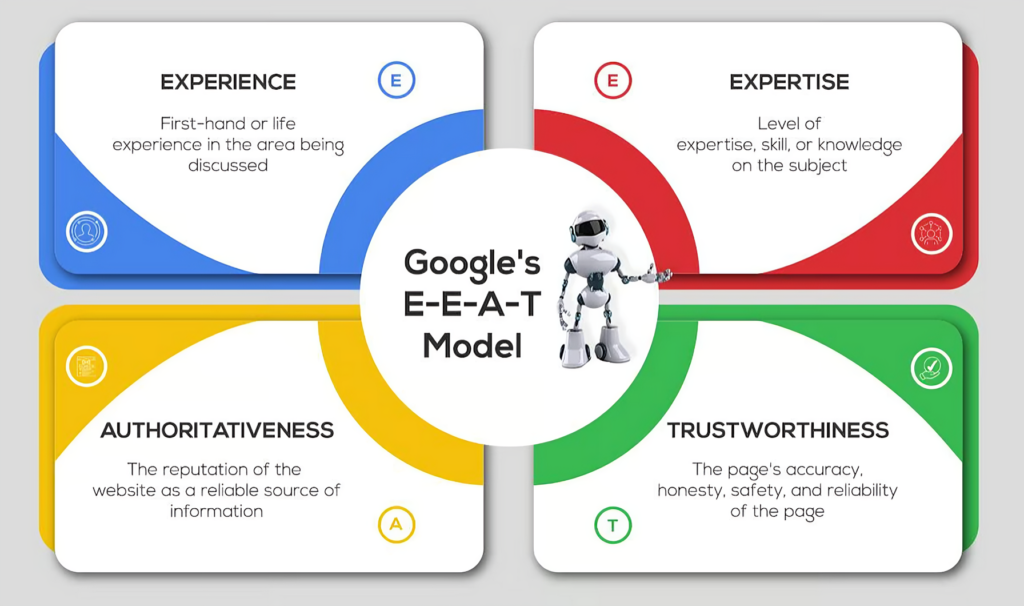
Data from recent audits shows that a staggering 96% of AI Overview citations come from sources that demonstrate high E-E-A-T.
AI models are essentially programmed to be skeptical. If you’re writing about how to scale a startup in Dubai, the LLM looks for proof that you’ve actually done it.
- Experience is the new king: Use “I” and “we.” Mention the specific meeting you had in Business Bay or the exact struggle you faced with a local payment gateway. This “lived experience” is something an AI can’t fake, and it’s a massive signal that you are a primary source worth citing.
- Author Bios aren’t optional: Every article needs a real person attached to it. Not “Admin,” and not “The Zumeirah Team.” A real human with a LinkedIn profile and a history of talking about this topic.
Honestly, the days of being a faceless brand are over. AI wants to know who is behind the words before it risks its reputation by citing you.
Content Freshness and Recency
Content updated within the last 30 days is 3.2x more likely to be cited for timely or industry-specific queries. And we had written whole article on content writing tips to rank on the first page of google, so you can also checkout that article.
In the search world of 2026, information has a shelf life shorter than a loaf of bread from a JLT bakery. If you wrote a great guide in 2024 and haven’t touched it since, Perplexity and Gemini will look right past you. They want the “now.”
Why? Because LLMs are constantly being “re-indexed” with live web data. If your page shows a “Last Updated” date from three weeks ago and includes a fresh statistic about the 2026 market, you are the prime candidate for a citation.
Pro Tip: You don’t always need to rewrite the whole thing. A “Freshness Audit” where you update the stats, check the links, and add a new paragraph about a current trend is often enough to trigger a re-evaluation by the AI bots.
Topical Depth and the Authority Flywheel
One-off articles are dead. If you want to be the “go-to” for a topic, you have to create an Authority Flywheel. This means instead of writing one 4,000-word article and calling it a day, you build a cluster of 10 or 15 interconnected pieces that cover every possible angle of a topic.
When you do this, something magical happens. The AI starts to see your brand as an “Entity” rather than just a website. It realizes that if someone asks about LLM Citation, Zumeirah doesn’t just have one answer but actually it has the entire library.
Third-party mentions. Research indicates that 85% of high-intent citations actually stem from external sources. What does that mean? It means the AI is more likely to cite you if other people are talking about you.
- If a Dubai tech blog mentions your “AI Brand Radar” tool…
- If a Reddit thread in r/Dubai discusses your SEO roadmap…
- If an industry news site quotes your founder…
The AI connects these dots. It sees these “unlinked mentions” as a vote of confidence. It’s like being the person everyone is talking about at a networking event at the Burj Khalifa eventually, the “host” (the AI) has to introduce you.
10 Actionable Strategies to Get Cited by LLMs
Now that we understand how the pipeline works, let’s get tactical. If you want to jump from being just another link to becoming a cited authority that ChatGPT, Gemini, and Perplexity trust, you need to follow these ten strategies.
These aren’t just theories actually they are the 2026 standards for winning the AI search revolution.
1. Start with a “TL;DR” (The Answer Box Strategy)
Place a concise summary or a direct answer in the first 60 words of your article, right under the H1.
This creates a “citation-ready” block for the AI.
Research shows this simple move can provide a 35% citation boost in AI Overviews because it makes the AI’s job of extracting a snippet incredibly easy.
2. Hard-Code Your Authority (The Author Credential Factor)
Use detailed author bios with links to social profiles and industry-specific certifications. LLMs search for “person entities” to verify the human behind the content.
Having clear credentials attached to your content can increase citation probability by 40%, as the AI views the source as significantly more reliable than an anonymous blog.
3. Become the “Data Source” (The Stat Magnet)
Include unique statistics, original data, or case studies and explicitly cite your sources. AI models love hard facts that they can use to ground their answers.
Content with original data sees a 41% higher citation rate because the LLM uses your specific number as a “grounding truth” for its response, giving you the credit in the process.
4. Leverage Expert “Soundbites” (The Quote Method)
Embed one or two direct quotes from industry experts or internal specialists in every section.
Quotes are easily parsed by models as “expert testimony,” making the LLM more likely to reference your page as a primary reference for a particular viewpoint or insight.
5. Structure for “Semantic Chunking” (The H2 → H3 Flow)
Use a strict hierarchy of H2s and H3s followed immediately by bulleted lists or tables.
AI processes content in “chunks” rather than reading line-by-line like a human might.
This structure makes it 40% easier for a retriever to find the specific answer it needs without having to struggle through a long, unstructured paragraph.
6. Deploy “Advanced Schema” (The AI Cheat Sheet)
Go beyond basic tags and implement Article, FAQPage, Person, and HowTo schema on every pillar page.
Schema is the direct language of AI, acting as a structured map of your data. It removes all guesswork, telling the LLM exactly who wrote the piece, what question it answers, and what the key takeaways are.
7. Optimize for “Natural Language” Queries
Frame your subheadings as the actual questions your customers ask, such as “How much does SEO cost in Dubai?”
This aligns perfectly with the conversational way people interact with tools like ChatGPT and Perplexity.
By mirroring the user’s intent, you make your content the most relevant “semantic match” for the AI to retrieve.
8. Provide “Multimodal” Signals (The Visual Edge)
Add original charts, labeled diagrams, or infographics with descriptive Alt-Text.
In 2026, AI is fully multimodal, meaning it “sees” images as well as it reads text.
A well-labeled chart acts as a visual proof that reinforces the text, helping you rank in both text-based summaries and visual AI results.
9. Build a “Webutation” (The PR/UGC Strategy)
Get mentioned on third-party sites like Reddit, niche forums, or local Dubai news outlets, even if there isn’t a direct link back to your site.
LLMs look for a digital consensus. If multiple sites talk about Zumeirah as a leader, the AI “learns” that you are a trusted entity worth citing based on your broader reputation across the web.
10. Enable “Agentic” Crawlability (The LLMs.txt Standard)
Add an llms.txt file to your root directory to give AI agents a markdown-friendly map of your best content and ensure your Time to First Byte (TTFB) is <200ms.
If an AI agent can’t read your site fast, it will move on to a faster competitor. An llms.txt file acts like a VIP pass for AI crawlers, ensuring your best work is prioritized.
Traditional SEO vs. LLM Citation Optimization
To truly win in 2026, you need to understand that the “rules of engagement” have shifted. Here is how the two approaches stack up:
| Feature | Traditional SEO (Google 2022) | LLM Citation Optimization (2026) |
| Primary Goal | Rank #1 for specific keywords | Become the “Cited Source” in AI answers |
| Success Metric | Clicks and Organic Traffic | Citations, Mentions, and Share of Voice |
| Content Style | Long-form “Everything” Guides | Modular, Answer-First, Data-Rich |
| Trust Signal | Backlink Quantity & Domain Authority | E-E-A-T, Person Entities, & Mentions |
| Freshness | Updated annually or bi-annually | Updated every 30-90 days (Recency) |
| Format | Text-heavy pages | Tables, Lists, Schema, & llms.txt |
Honestly, if you look at that table, it’s clear: Traditional SEO gets you to the party, but LLM Optimization is what gets you a seat at the table. For a Dubai business, where the market moves at light speed, you can’t afford to be just another blue link.
Platform-Specific Optimization Tactics
If you think every AI search engine works the same way, you’re essentially trying to use a master key for ten different locks.
In 2026, the “AI Search Revolution” is fractured. What makes you a star on Perplexity might make you invisible to Gemini.
For a Dubai business looking to scale, you need a multi-platform strategy that speaks the specific language of each bot.
Google AI Overviews: The High-Stakes Gateway
Google is still the heavyweight, but its AI Overviews (AIO) are incredibly selective. To win here, you generally need to already be a “top-10” player in traditional search.
Research shows that roughly 85% of AIO citations come from the existing first page of results. But ranking isn’t enough; you must demonstrate “Semantic Completeness.“
Google’s AI looks for the most thorough answer that covers the query from every angle. If you’re a web developer in Dubai, don’t just say you’re the best but you should provide a full breakdown of the local market, pricing trends, and tech stacks.
Use advanced Schema markup (specifically FAQPage and Article) to act as a “cheat sheet” for the bot, ensuring it can extract your data without any friction.
ChatGPT (OpenAI): The Reputation Engine
ChatGPT doesn’t just crawl; it “reasons” based on what the rest of the web says about you. Its primary ranking signal is Co-occurrence.
If your brand, “Zumeirah,” is frequently mentioned alongside terms like “SEO expert” or “Dubai digital marketing” on third-party sites then even without a link ChatGPT starts to map you as a trusted entity.
It prioritizes content that is neutral, structured, and deep. It loves the “Inverted Pyramid” style: lead with the big answer, then provide the technical depth.
To win here, your “webutation” matters more than your metadata. You need to be the brand people talk about in DIFC boardrooms and Reddit threads alike.
Perplexity & Claude: The Precision Researchers
Perplexity and Claude are the darlings of the research-heavy crowd. For these platforms, Freshness and Primary Sources are the only currencies that matter. Perplexity is notoriously biased toward the “now.”
If your content is more than 30 days old, your citation probability drops by nearly 40%. It values “Hard Facts” and data over marketing fluff.
If you want Claude to cite you, adopt an “Analyst Tone.” Avoid salesy adjectives like “world-class” or “transformative” (which we’ve already binned).
Instead, use precise numbers and proprietary data. Claude prefers “chunked” content like short, logical sections that it can easily summarize into a chat window.
Gemini: The Ecosystem Powerhouse
Gemini is the “insider” of the group. Because it’s natively integrated into the Google ecosystem, it has a massive preference for Cross-Platform Signals.
It doesn’t just look at your blog but it looks at your Google Business Profile, your YouTube transcripts, and your mentions in Google Docs or Gmail (where permitted).
For a local Dubai startup, this means your Local SEO is actually your “AI SEO.” Having a 5-star rating and active updates on your Google Business Profile is a massive trust signal for Gemini.
It also leans heavily into Multimodal Search, so if you have an annotated diagram or a short video explaining your process, Gemini is far more likely to feature you in its “AI Mode” responses.
Tools and Monitoring for LLM Citation Success
You can’t fix what you can’t see. In the old days of SEO, we had it easy like you just plugged a keyword into a tracker and watched a little number go up or down.
But in 2026, the data is messier. You’re no longer just tracking a rank; you’re tracking a conversation. You need to know if an AI is mentioned you, how it’s describing you, and whether it’s actually giving you the credit you deserve.
I’ve seen plenty of founders try to do this manually by just typing prompts into ChatGPT all day. Honestly, that’s a waste of your time. You need a stack that handles the heavy lifting so you can focus on the SEO strategy for local search.
The Heavy Hitters: Top Tools for 2026
Visalytica (by Authoritas) If you are running a business with an international footprint then maybe you’re based in Dubai but targeting the US or Europe.
Visalytica is a beast. It’s particularly good at showing “Hidden Rankings” within AI Overviews. It covers over 50 international markets and gives you a clear look at your “Share of Search.”
It’s built for the person who loves deep data and wants to see exactly how their visibility compares across different languages and regions.
Profound AI This is the enterprise “God-view” of the AI search world. Profound doesn’t just track if you’re mentioned; it analyzes over 100 million prompts to show you the actual “Demand” for conversations in your industry.
It’s perfect for larger agencies or startups that need to see the “why” behind the citations. It tracks everything from ChatGPT to Grok and even includes a “Conversation Explorer” that reveals what people are actually asking the bots about your brand.
Semrush AI Visibility Toolkit For most of us who are already comfortable with the Semrush ecosystem, this toolkit is a no-brainer. It’s essentially a bridge between the traditional search world and the new AI reality.
It gives you an “AI Visibility Score” and tracks your brand performance across the big four: ChatGPT, Gemini, Perplexity, and AI Overviews.
The “Prompt Research” feature is especially useful like it’s like keyword research, but for the questions that actually trigger AI responses.
Dedicated GEO Trackers Aside from the big names, we’ve seen the rise of specialized “Generative Engine Optimization” (GEO) trackers like Geoptie or Rankscale.
These are usually punchier and more focused. They often include an “AI Readiness Score” for your website, which audits your technical health specifically for AI crawlers.
If you’re just starting out and want something lean that tells you exactly where you stand on Claude or Perplexity, these are great entry points.
The Metrics that Actually Move the Needle
Forget about “Domain Authority” for a second. That’s a legacy metric. In 2026, there are three main numbers you should be obsessed with if you want to win the AI search revolution.
Citation Volume and Frequency This is your most basic “health check.” How many times in a week is your brand actually being linked or named in an AI response? You want to see a steady upward trend here.
If your citations drop but your traditional rankings stay the same, it’s a sign that your content is becoming “stale” in the eyes of the LLMs.
Platform Coverage Are you a “one-hit wonder”? I’ve seen sites that dominate Google AI Overviews but are completely ignored by ChatGPT. True authority in 2026 means having high coverage across multiple models.
If you’re missing from a specific platform, it usually points to a specific problem like a lack of “freshness” for Perplexity or a lack of “reputation” for ChatGPT.
Citation Position and Sentiment Not all citations are created equal. Being the “first” source mentioned in a ChatGPT answer is worth infinitely more than being the fifth link in a “Sources” footer.
You also need to watch the sentiment. If an AI is citing you but calling your pricing “expensive” or your service “slow,” you have a reputation management problem, not a visibility problem.
Your Step-by-Step Monitoring Workflow
Here is how I recommend you handle your monitoring without losing your mind.
- Set Your Baseline: Pick your top 20 “money prompts” and the questions that actually drive business. Run them through your tracker of choice to see where you and your competitors currently stand.
- Audit the “Gaps”: Look for the prompts where your competitors are getting cited and you aren’t. Honestly, this is where the “gold” is. Those are your next content topics.
- Check the Sentiment: Once a month, read through the actual responses the AI is giving. Does the “narrative” match your brand? If the AI is hallucinating facts about your Dubai office or your services, you need to update your “About” page and schema immediately.
- Monitor Crawler Health: Use your tools to check if the “AI Bots” are actually visiting your site. If your
llms.txtfile isn’t being hit, or if your server is blocking certain agents, all your optimization work is for nothing.
Common Mistakes to Avoid in 2026
If I had a Dirham for every time I saw a brilliant Dubai founder sabotage their own digital presence with “old school” tricks, I’d probably be retired on a yacht in the Marina by now.
The thing about 2026 is that the AI isn’t just smarter; it’s more cynical. It has seen all the “hacks” and it isn’t impressed.
If you want to stay in the AI’s good graces and keep those citations flowing, you need to steer clear of these four common traps. Honestly, these are the fastest ways to get your brand blacklisted from the answer engines.
- Date Manipulation Without Real Updates We’ve all seen it: a blog post from 2022 that suddenly says “Updated February 2026” but hasn’t changed a single word of the actual text. In the old days, you might have fooled a basic crawler. Today? Not a chance. AI models like Perplexity and SearchGPT cross-reference your “new” data against their historical training sets. If the content is identical but the timestamp is new, the AI flags it as a low-trust signal. If you’re going to change the date, you better actually change the data. Add a new case study, update your stats, or at least rewrite a section to reflect the current market in Dubai.
- Ignoring the Human Element (E-E-A-T) I see so many businesses moving toward “faceless” content—pumping out thousands of AI-generated pages with no author byline. This is a massive mistake. In 2026, the “E” in E-E-A-T (Experience) is the single most important signal for a citation. If an LLM can’t find a real person with real credentials attached to the advice, it won’t risk citing it. It’s better to have five deep, expert-led articles written by a named specialist than 500 generic posts by “Admin.” Don’t hide your team; they are your biggest SEO asset.
- Blocking the Future (Accidental Crawler Bans) This one is almost tragic because it’s usually an accident. Many developers, in an attempt to “save server costs” or “protect data,” accidentally block the very agents that drive AI citations. If your
robots.txtis too restrictive or if you haven’t properly configured yourllms.txtfile, you are essentially closing your shop doors while people are trying to walk in. You need to make sure you are explicitly allowing agents like GPTBot, OAI-SearchBot, and PerplexityBot to access your high-value pillar pages. If they can’t see you, they can’t cite you. - Producing “Shallow” or Derivative Content If your article is just a “summary of a summary” that already exists on ten other sites, why would an AI cite you? We call this “Thin Content 2.0.” In 2026, the AI Search Revolution rewards original thought and primary sources. If you aren’t adding a new perspective, a unique Dubai-based insight, or proprietary data, you’re just background noise. The LLM will always go back to the “Original Source” (the high-authority site you probably copied from). To beat them, you have to be more specific, more tactical, and more “human” than they are.
The Future of LLM Citation Optimization Beyond 2026
If 2026 is the year we finally put on our “hard hats” and started building the infrastructure for AI search, the years that follow will be about who can actually keep those systems running. We are moving from a world where we “ask an AI for a link” to a world where “AI agents live our lives for us.”
For a Dubai business, this isn’t just science fiction but it’s the next logical step in your growth roadmap.
Here is what the horizon looks like and how you can make sure your brand doesn’t get left behind.
Multimodal Citations: Beyond the Text Box
We’ve spent most of this article talking about text, but by 2027, the “Answer Engine” will be fully multimodal. This means the AI won’t just cite your blog post; it will cite a specific 10-second clip from your YouTube video or a single chart from your PDF whitepaper.
Honestly, if your content doesn’t have a visual or audio component, you’re only competing in half the market. AI models like Gemini and GPT-5 are already being trained to “watch” and “listen” to the web.
To stay ahead, you need to start treating your images and videos as primary data sources. Use high-resolution, original visuals and ensure your video transcripts are clean and keyword-rich.
The Rise of Agentic Search
This is the big one. We are shifting from “Assistants” (who answer questions) to “Agents” (who perform tasks). Instead of a user asking, “Who is the best web designer in Dubai?”, their AI agent will simply be told, “Find the best web designer for my budget and book a discovery call.”
When this happens, citations become “credentials.” The agent won’t just look for a link; it will look for an API endpoint or a structured data layer that allows it to execute a task.
This is why things like your llms.txt file and your Schema markup are so critical like they aren’t just for “ranking” anymore; they are the instruction manuals for the agents that will be doing the shopping for your customers.
Proprietary Data: Your Only Real Moat
In a world where AI can summarize any public website in seconds, “general information” has zero value. If your blog is just a recap of things people can find on Wikipedia or Neil Patel’s site, you have no moat.
The only way to guarantee a citation in 2027 and beyond is to own Proprietary Data.
- Run your own surveys of Dubai startups.
- Publish your own case studies with real, raw numbers.
- Build your own tools that generate unique insights.
When you own the data, the AI has to cite you because you are the only source of truth. You aren’t just another voice in the crowd; you’re the person who owns the microphone.
Summary: The 2026 Win-List
If you want to beat the giants like Yoast and Search Engine Land, remember these three things:
- Be the First Answer: Use that TL;DR and start your articles with a 60-word punch.
- Be the Human Expert: Lean into your “lived experience” and don’t hide behind a brand name.
- Stay Fresh or Die: If you aren’t updating your core pillars every 30 to 90 days, you’re giving your citations away to the competition.
The AI Search Revolution isn’t coming and it’s here. And for the brands that act now, the rewards are going to be massive. Honestly, it’s a pretty exciting time to be building in Dubai, don’t you think?
We’ve covered a lot of ground today, but if you take only one thing away from this, let it be this: the “Search” we grew up with is gone, but the opportunity to lead the conversation has never been bigger.
Honestly, the shift from chasing clicks to earning citations is the most significant change in digital marketing since the invention of the smartphone.
Winning this revolution isn’t about out-spending the giants like Neil Patel or Yoast. It’s about being more human, more structured, and faster on your feet.
We talked about the Retrieval → Citation → Trust pipeline, and that needs to be your new mantra. If the AI can’t find you (Retrieval), it can’t use you (Citation), and if it doesn’t believe you (Trust), it will never send a customer your way.
Your Immediate Action Plan
I’m not just here to give you a history lesson on 2026. I want to see your brand cited by every major LLM. So, here is what I want you to do today:
- Audit Your Pillars: Take your top five articles and add that 60-word “TL;DR” summary right at the top.
- Fix Your Bio: Make sure a real person with real credentials is named as the author.
- Update Your Data: If your stats are from last year, they are old news. Refresh them now.
- Track the Conversation: Get a tool that actually monitors your AI visibility so you aren’t flying blind.
It’s easy to feel overwhelmed by how fast things are moving in Dubai right now. I get it. But remember, every time the “rules” change, the deck gets reshuffled.
This is your chance to jump the queue. The big, slow, corporate sites are still trying to figure out how to use AI to write more boring content. You? You’re going to use AI-centric optimization to become the authority they have to cite.
The AI revolution isn’t something to fear and it’s the tool that’s going to put your expertise in front of more people than ever before. Let’s make sure when someone asks a bot for the best in the business, the answer they get is your name.