
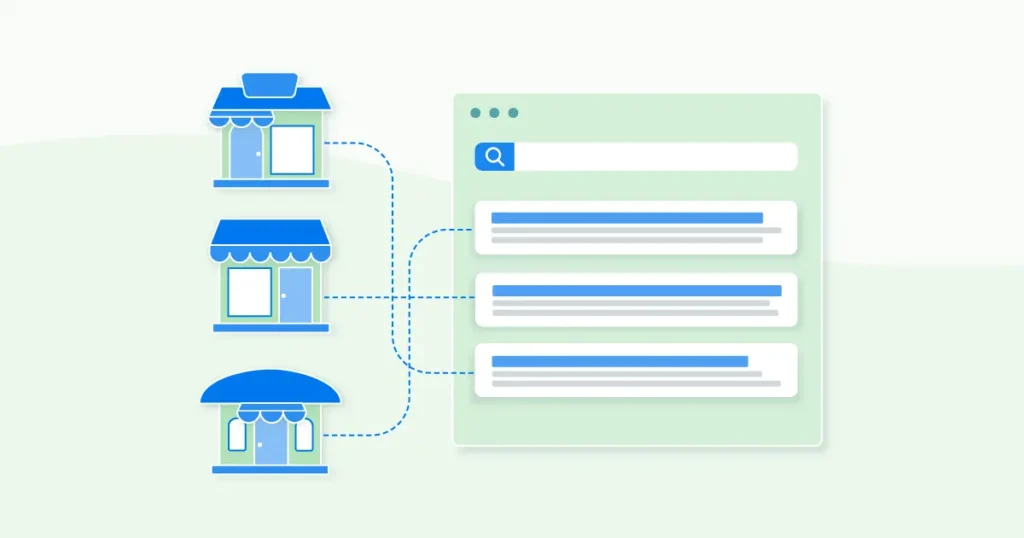
The search landscape has shifted so fast that it feels like the ground is moving under our feet. With the February 2026 Google Core Update and the total integration of AI Overviews (formerly SGE), the old “blue link” world is fading into the background.
It’s a digital-first world now, but not in the way we expected. It’s no longer about just showing up and also it’s about being understood by the machines that now sit between you and your customers.
You can have the most beautiful shop in Dubai or the best service in the country, but if Google’s AI can’t verify who you are, where you are, and what you do with absolute certainty, you’re basically invisible.
This is where Local Business Schema Markup comes into play. It isn’t just “some code” your developer should handle but it’s the primary language you use to talk to the algorithm.
Think of it as a VIP pass that lets you skip the line and speak directly to the systems that decide who gets cited in an AI summary and who stays buried on page three.
What Are We Even Talking About?
Local Business Schema Markup is a specific type of structured data that tells search engines exactly what they’re looking at.
While we see a website with photos, text, and a phone number, Google sees a mess of pixels and strings unless we give it a map.
By implementing this markup, you’re providing a standardized “cheat sheet” that identifies your Name, Address, and Phone number (the classic NAP), but also your hours, your service area, and even the specific types of payments you accept.
In 2026, this role has expanded. It’s not just about getting a nice-looking result in the traditional search; it’s about feeding Google’s Knowledge Graph.
When someone asks their phone, “Where’s the best web design agency near me?” or “Who’s open right now for a coffee?”, the AI doesn’t just guess. It looks for verified, structured entities.
If your competitors like Yoast or Neil Patel are ranking higher, it’s often because they’ve mastered the art of being a “verified entity” through meticulous schema implementation.
Why It Changes Everything for Your Rankings
You know what? Most people think SEO is just about keywords. But we know better. Implementing Local Business Schema Markup is one of the most effective ways to boost local search rankings because it builds trust.
Google hates uncertainty. If your website says one thing, your Facebook says another, and your schema is missing, the algorithm gets “confused.” And a confused algorithm doesn’t rank you at the top of the Local 3-Pack.
By using structured data, you’re providing the clarity that leads to rich snippets like those eye-catching results with star ratings and photos and, more importantly, inclusion in AI-driven answers.
In this guide, we aren’t just going to cover the basics. We’re going to walk through the advanced strategies that matter right now, in 2026, to make sure Zumeirah (or your own brand) doesn’t just compete, but dominates.
From the nuances of JSON-LD to the “secret” properties that most SEOs miss, we’re going to build a blueprint that keeps you relevant long after the next algorithm shake-up. Let’s get to work.
What Is Local Business Schema Markup?
I’ve spent years talking to business owners who think “Schema” is just some technical jargon their web guy threw into a proposal to justify a higher invoice.
Honestly? I get it. The word itself sounds like something out of a physics textbook. But if we strip away the fluff, Local Business Schema Markup is basically a high-definition translator.
When a human lands on the Zumeirah homepage, they see colors, a sleek logo, and a phone number in the corner. Their brain instantly puts the pieces together:
“Okay, this is a web design agency based in Dubai.” But Google? Google is a machine. A very smart machine, sure, but it’s still looking at a soup of HTML, CSS, and JavaScript.
How Schema.org and JSON-LD Power Local Search
To bridge that gap, we use the Schema.org vocabulary. This is a shared language created by the big search engines like Google, Bing, and Yahoo so they don’t have to guess what’s on your page.
Within that language, we almost always use a format called JSON-LD (JavaScript Object Notation for Linked Data).
You know what’s great about JSON-LD? It lives in a neat little script block in the header of your site. It doesn’t mess with your design, and it’s Google’s absolute favorite way to digest data. It’s like giving the algorithm a clean, typed-out transcript of your business details instead of making it listen to a muffled voicemail.
Evolution of LocalBusiness Schema: Key Changes Through 2025–2026
If we look back to when this all started in 2011, schema was pretty basic. It was mostly about getting those “star ratings” to show up under your name. But fast forward to 2026, and the game has changed entirely.
We’ve moved past simple “indexing” and into the era of Entity-Based SEO. In the early days, you just wanted to rank for “web design Dubai.” Now, you want Google to recognize your business as a distinct, verified entity in its Knowledge Graph.
The updates we’ve seen in early 2026, including the February Core Update, have made it clear: if the AI can’t verify your facts across multiple sources, it won’t recommend you in an AI Overview. Schema has evolved from a “nice-to-have” boost into the very foundation of your digital identity.
Difference Between LocalBusiness and Organization Schema
What goes into this digital handshake? Most people stop at the basics the NAP (Name, Address, Phone number). And yeah, that’s the starting line. But to actually beat the heavy hitters, you need to go deeper.
- The “Digital GPS” (Geo-coordinates): You can’t just give a street address anymore. You need to provide exact Latitude and Longitude. Why? Because in 2026, search isn’t just on a screen. It’s in the car, on the watch, and through AR glasses. If your “pin” is even slightly off, the AI might send a customer to the back alley instead of your front door.
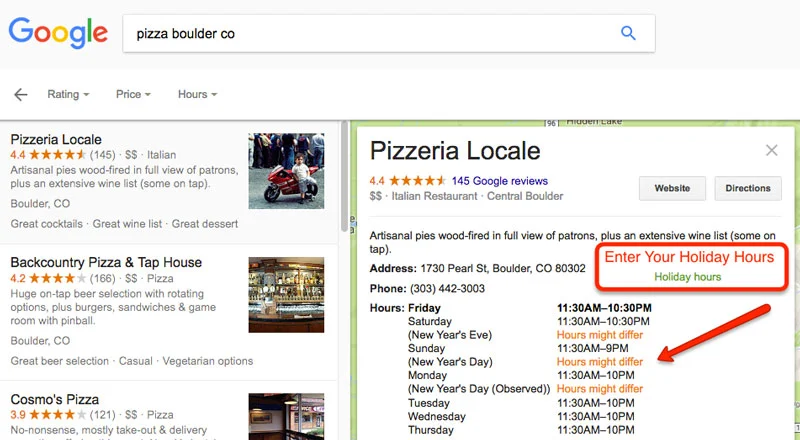
- Opening Hours (The Trust Signal): Nothing kills a lead faster than someone driving to your office only to find it closed because your schema said you were open 24/7. Modern schema allows for
openingHoursSpecification, which lets you account for public holidays in the UAE or seasonal shifts. - Reviews and Aggregate Ratings: This is your social proof. It’s what triggers those eye-catching stars in the Local 3-Pack. It tells the AI, “Hey, people actually like this place.”
- The “SameAs” Property: This is a hidden gem. It lets you link your website to your social profiles or Wikipedia pages. It’s how you tell Google, “This Instagram account and this website are the same entity.”
Why This Matters for 2026 (The Big Picture)
Why are we obsessing over this right now? Because search has become conversational.
When someone asks their voice assistant, “Where’s the nearest SEO expert who’s open until 8 PM?”, the assistant isn’t scrolling through blog posts. It’s querying a database. If your data isn’t structured, you aren’t in the database. Period.
We’re also seeing a massive rise in AR (Augmented Reality) maps. Imagine someone walking down a street in Dubai, looking through their phone or glasses, and seeing digital “tags” over businesses.
Those tags are fueled by schema. If you haven’t implemented your geo-coordinates and business type correctly, you’re literally a ghost in the physical world.
Honestly, it’s about reducing friction. Google wants to give the “safest” answer like the one it is 100% sure is accurate. By mastering Local Business Schema, you aren’t just trying to rank but you’re making it impossible for Google to ignore you.
Key Benefits of Implementing Local Business Schema Markup
You know what? I’ve seen countless local businesses in Dubai and everywhere else, honestly pour thousands into gorgeous web design and high-end photography, only to wonder why the “big guys” are still eating their lunch in the search results.
It’s frustrating. You’re working twice as hard, but Google keeps handing the spotlight to the chains or the established blogs like Search Engine Land.
They aren’t necessarily better than you. They’re just more “readable” to the machines. Implementing Local Business Schema Markup isn’t just a tech task; it’s the most direct way to reclaim your territory. Let’s look at what actually happens when you stop being a “mystery” to Google and start being a “verified entity.”
Higher Visibility in Google Local Pack & Maps
You’re driving, you’re hungry or you need a service right now, and you search for something “near me.” You don’t scroll past the map. You look at those top three results, the Local 3-Pack.
In 2026, getting into that pack is harder than ever because of the February Core Update’s focus on entity verification. Google doesn’t just want to know you exist; it wants to be 100% sure of your location and your legitimacy.
When you use schema to define your geo-coordinates and business category, you’re basically handing Google a verified ID card. It’s the single best way to climb the rankings in Google Maps and secure one of those three coveted spots.
Rich Results: Stars, Hours, Directions & More
Have you ever noticed how some search results look… better? They have the gold stars, the price ranges, the “Open Now” badges, and even direct links to get directions. Those are Enhanced Rich Snippets.
Without schema, your search result is a title and a snippet of text. Boring. With it, you’re showing off your AggregateRating (those trust-building stars) and your priceRange. It makes your listing physically larger on the screen, pushing your competitors down and drawing the eye naturally toward you.
Improved Click-Through Rates and Traffic
You aren’t doing this for “visibility”; you’re doing it for clicks. Recent studies from early 2026 have confirmed what we’ve suspected for a while: listings with rich snippets see a 20-30% increase in Click-Through Rate (CTR) compared to plain text results.
Here’s the thing: A study by Digital Upgrowth found that rich results capture 58% of all clicks in certain local niches, while non-rich results struggle to hit 41%. Honestly, it makes sense. If you see two plumbers and one has a 4.9-star rating visible right there in the search result, who are you clicking on? Exactly.
Better Support for Voice Search and AI Overviews
In 2026, search isn’t just a box on a screen. It’s conversational. It’s voice assistants like Alexa or Gemini Live, and it’s AR maps on your windshield or glasses.
About 58% of consumers are now using voice search to find local business info like hours, phone numbers, and addresses.
These assistants don’t “browse” your site; they query structured data. If your schema is solid, you become the “featured answer” that the assistant reads out loud. If not? You’re just a line of code they ignore.
Competitive Advantage for Small & Multi-Location Businesses
This is my favorite part. Big national chains have massive budgets, but they’re often slow. Their websites are huge, clunky, and their local data is often generic or outdated.
As a smaller or more focused business like Zumeirah, you can be hyper-local. You can use schema to highlight specific neighborhoods in Dubai, mention local landmarks, and provide real-time updates that the big guys miss.
In 2026’s hyper-local market, Google is prioritizing neighborhood-level relevance. Structured data is the bridge that lets you prove you’re the most relevant choice for someone standing three blocks away.
Types of Local Business Schema Markup
Honestly, one of the biggest mistakes I see people make is just slapping a generic “LocalBusiness” tag on everything and calling it a day.
While that’s better than nothing, it’s a bit like wearing a generic “human” costume to a masquerade ball like you’re technically participating, but nobody really knows who you are.
In 2026, Google’s AI doesn’t just want to know you’re a business; it wants to know if you’re a dentist, a bakery, or a digital marketing agency. The more specific you are, the more likely you are to show up when someone asks a highly specific question. Let’s break down the layers of this digital wardrobe.
Core LocalBusiness Schema (Most Common Use Cases)
Every local entity starts here. This is where you house your core identity: your official name, your physical address, your phone number, and your logo.
If you’re just starting out at Zumeirah, this is your “digital birth certificate.” It ensures that when someone searches for your brand name, the Knowledge Panel on the right side of the screen is accurate and professional.
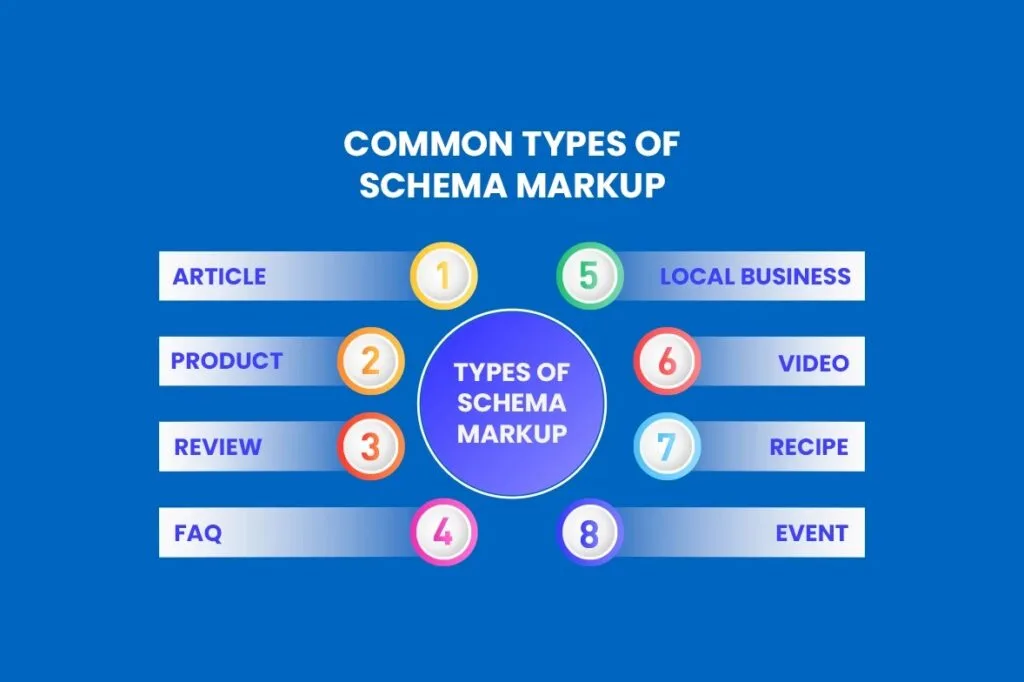
Industry-Specific Subtypes (Restaurant, Store, Attorney, MedicalBusiness & More)
This is where the magic happens. Schema.org has hundreds of subtypes, and you should use the most specific one that fits.
- Restaurants: You aren’t just a business; you’re a
Restaurant. This opens up properties formenu,servesCuisine, and evenacceptsReservations. Imagine someone searching for “Italian food open now”—if you have theservesCuisineproperty set to “Italian,” you’ve just given Google a reason to put you at the top. - Retail: Use the
Storeschema. This allows you to highlight things likecurrenciesAcceptedor specific departments within the shop. - Services: If you’re a lawyer, a plumber, or a web designer, you’ll likely fall under
ProfessionalService. This tells the AI that you provide expertise rather than physical goods.
Combining with AggregateRating, Review, and Offer Schemas
If you want to truly stand out in the SERPs, you need to use what I call “trust-boosters.”
- AggregateRating: This is how you get those gold stars. It summarizes your reviews into a single score. You know what? Even a 4.5-star rating with 100 reviews often looks more “real” and clickable than a perfect 5.0 with only two reviews.
- Offers: Running a promotion? Use the
Offerschema to display a price or a discount directly in the search results. It’s a massive CTR magnet. - Events: If your business hosts workshops, sales, or local gatherings, the
Eventschema can make those dates show up right under your main listing.
Multi-Location & Department Schema Setup
Managing a chain or a business with multiple branches in Dubai can be a nightmare for SEO. The trick is to use a “hub and spoke” model.
You should have a main Organization schema on your homepage, but then each individual location page needs its own unique LocalBusiness (or more specific) markup.
Use the department property if you’re a large store with a pharmacy or a cafe inside. This prevents “keyword cannibalization” where your own branches compete against each other for the same search term.
You want to give each location its own unique PostalAddress and GeoCoordinates so Google knows exactly which “pin” belongs to which neighborhood.
Emerging 2026 Schema Variations (Sustainability, Virtual Services)
Search is becoming more conscious. We’re seeing two major shifts this year:
- Sustainability Claims: With new regulations in the EU and UK, search engines are starting to look for structured data regarding a business’s environmental impact. Emerging properties like
sustainabilityPolicyor “Eco-labels” are becoming crucial for brands that want to attract the growing demographic of “green” consumers. - Virtual & Hybrid Services: Not every “local” business has a front door you can walk through anymore. In 2026, we’re seeing better support for VirtualLocation. If you’re a consultant who meets exclusively via video call but serves the Dubai area, you can now mark that up so you still show up in local intent searches without needing a physical shop-front.
Step-by-Step Implementation Guide for Local Business Schema
There’s a lot of old advice floating around out there. If you’re following a guide from 2022, you’re basically trying to fix a Tesla with a handbook for a 1990 Camry.
To rank on the first page in 2026 and stay there then you need a process that’s clean, fast, and, most importantly, validated. Here is the exact workflow I use to get businesses like Zumeirah into the Local 3-Pack and AI Overviews.
Step 1: Audit Your Existing Structured Data & NAP Consistency
Before you add anything new, you need to see what’s already breaking. Most sites have “ghost schema” like old, half-baked code left over from a previous theme or a forgotten plugin.
Use the Schema Markup Validator (the successor to the old Google Structured Data Testing Tool) to crawl your URL. You know what you’re looking for? Red flags. If you see errors like “missing ‘,'” or “invalid property,” fix those first. You can’t build a skyscraper on a cracked foundation.
Step 2: Choose the Best Format – Why JSON-LD Wins in 2026
Listen, you might hear some “old school” SEOs talk about Microdata or RDFa. Honestly? Ignore them.
In 2026, JSON-LD is the only format you should be using. Google has made it very clear: it’s their preferred method. It’s easier to maintain because the code lives in one block in your <head> or <footer>, rather than being tangled up in your actual HTML content. It’s cleaner for the bots and easier for you.
Step 3: Select or Generate Your Schema Code
You don’t need to be a developer to write this stuff. I recommend using high-end generators like the TechnicalSEO Schema Generator or even Google’s own Structured Data Markup Helper.
When you’re filling out the fields, don’t just do the bare minimum. Add your:
- Exact Geo-coordinates: Use a tool to find your latitude and longitude.
- Social Profiles: Use the
sameAsfield to link your Instagram, LinkedIn, and Facebook. - Price Range: Use symbols like
$$or$$$to help the AI categorize you.
Step 4: Add Schema Markup to Your Website (Head Section Placement)
This is usually where people get nervous, but it’s actually the easiest part.
- WordPress: If you’re using Yoast SEO or Rank Math, they have built-in “Local SEO” modules. You just fill in the blanks in the settings, and they inject the JSON-LD for you. If you want more control, you can use a “Custom HTML” block in your footer or a “Header and Footer” plugin.
- Shopify: You’ll usually find this under
theme.liquid. You can paste your JSON-LD block right before the closing</head>tag. - Wix: They’ve actually caught up! Go to SEO Settings > Advanced SEO and you’ll see a “Structured Data Markup” section where you can just paste your code.
Step 5: Test, Validate & Submit to Google Search Console
Once the code is live, you aren’t done. You need to verify that Google actually sees it the way you intended.
Head over to the Rich Results Test. Paste your URL and hit “Run Test.” If it says “Page is eligible for rich results,” you’ve won. If not, it will give you a specific line of code that’s causing the issue.
Pro Tip: Don’t forget to check Google Search Console a few days later. Look under the “Enhancements” tab. It will track your “Local Business” schema over time and tell you if any new errors pop up as you update your site.
Best Practices for Local Business Schema Markup in 2026
So, you’ve got the JSON-LD script ready. You’re feeling good. But honestly? That’s only half the battle. If your schema says one thing and your website (or the rest of the internet) says another, Google is going to treat your site like a suspicious character in a noir film.
To beat the “big dogs” like Search Engine Land or Yoast, you need to master the art of consistency and performance. In 2026, the February Core Update has made “Entity Trust” the most important signal in local search. Here is how you protect that trust.
Ensure 100% NAP Consistency Across the Web
Your Name, Address, and Phone number (NAP) must be identical everywhere. If your schema says “Zumeirah Web Design,” but your Google Business Profile says “Zumeirah SEO & Web,” and a random directory says “Zumeirah Agency,” you’re creating friction.
Search engines use this data to verify your legitimacy. In 2026, even small discrepancies like using “St.” on your site and “Street” in your schema can lead to a “demerit” in your ranking signals. Honestly, it’s just table stakes for the local search game. Keep it uniform, or don’t bother.
Optimize for Mobile-First Indexing and Core Web Vitals
We’ve all seen those websites that take forever to load on a 4G connection in the middle of Dubai Mall. You know what? Most of that bloat comes from messy code and unoptimized scripts.
While schema is “just text,” it still adds weight. To keep your load times under that crucial three-second mark:
- Minify everything: Use tools to strip out unnecessary spaces in your JSON-LD.
- Deferred Loading: Make sure your schema doesn’t block the rendering of your main content.
- Mobile-First Design: Since over 60% of local searches happen on phones, ensure your schema correctly identifies mobile-friendly features like “click-to-call” numbers.
Integrate Reviews & Aggregate Ratings Properly
Review schema is the ultimate CTR magnet, but Google is getting incredibly strict about “self-serving” reviews. You can’t just mark up a testimonial you wrote yourself and expect gold stars.
In 2026, you must use third-party, unbiased reviews. The author property needs to point to a real person or organization, and the content must be visible on the page to the user. If you try to hide the text and only show the schema, you’re asking for a manual action penalty. Trust starts with transparency.
Avoid Common Validation Errors & Penalties
This is the “new” stuff for 2026. With the latest updates to GDPR and new regional AI data laws, how you handle business data matters.
Ensure your schema doesn’t inadvertently expose sensitive employee data (like personal mobile numbers in the contactPoint property). Use your official business lines. Also, make sure your site uses HTTPS. Google won’t even look at your rich snippets if your site is flagged as “Not Secure.” It’s 2026 SSL is no longer optional.
Use @id for Entity Linking & Multi-Page Consistency
Google doesn’t just rank pages anymore; it ranks “ecosystems.” Your schema shouldn’t exist in a vacuum.
If you have a schema block for a specific service, link it internally to a Local Landing Page dedicated to that service.
Use descriptive, keyword-rich anchor text. This tells the algorithm, “Not only do I have the data (Schema), but I also have the deep-dive content to back it up.” This is how a smaller agency like Zumeirah out-ranks a giant by being more relevant to a specific “topic cluster” than the generalists.
Essential Tools & Resources
There are thousands of “SEO tools” out there, and 90% of them are just shiny distractions. If you’re trying to scale Zumeirah or manage a few local clients, you don’t need a massive enterprise stack.
You need a few reliable “workhorses” that help you audit, generate, and monitor your data without making your head spin.
The landscape has shifted a bit lately. Since the January 2026 updates, Google has actually started deprecating some niche schema types (like “Practice Problems”) to simplify things.
The focus now is on minimalism and quality. You want your code to be lean, accurate, and optimized for both traditional search and the new AI Overviews.
Free Google Tools (Rich Results Test, Structured Data Testing)
You should never pay for something that the search engines provide for free. These are the tools I use every single day to verify my work:
- Schema Markup Validator: This is the industry standard. It’s the successor to the old testing tool and it’s the most “honest” look you’ll get at your code. It doesn’t care about rankings; it only cares if your syntax is perfect.
- Google Rich Results Test: This is the “final exam.” While the validator checks the code, this tool tells you if Google actually intends to show a rich snippet for your page. If this tool gives you the green light, you’re in business.
- Google Search Console (GSC): Honestly, if you aren’t checking your GSC “Enhancements” report once a week, you’re flying blind. It tracks your local schema across your whole site and flags errors the moment they happen.
SEO Platforms for Auditing Schema (SEMrush, Ahrefs, Schema App)
Once you’re ready to take down the big competitors like Neil Patel’s blog, you’ll want more data. In 2026, the two “titans” have gone in very different directions:
- Semrush (The AI All-Rounder): Semrush has leaned hard into AI. Their new AI Visibility Analytics is a game-changer. It doesn’t just track keywords; it tracks how often your brand is cited in ChatGPT, Gemini, and Perplexity. For a local business, knowing you’re being cited as the “best web designer” in an AI summary is the new gold standard.
- Ahrefs (The Authority King): Ahrefs is still the go-to for backlink data, but their 2026 Brand Radar is what I love for local SEO. It monitors brand mentions across the web, helping you identify where your NAP (Name, Address, Phone) might be inconsistent on other sites.
WordPress & CMS Plugins Comparison
Since we’re talking about Zumeirah, you’re likely looking for a way to automate this.
- Rank Math (The 2026 Powerhouse): Honestly, Rank Math has pulled ahead of the pack this year. Their AI-driven schema generator supports over 840 schema types and automatically detects videos for video schema. It’s the best choice if you want “set it and forget it” automation.
- Yoast SEO (The Reliable Veteran): If you value stability and simplicity, Yoast is still the safe bet. It might not have 800+ schema types, but it is battle-tested. It’s great for beginners who just want to ensure their basic local info is handled correctly.
- Schema Pro: If you have a custom-built site or use a lot of custom fields, this is the specialized tool you need. It’s more of a scalpel than a hammer very precise.
Official Documentation & 2026 Updates to Watch
SEO moves too fast for books. By the time a book is printed, the algorithm has changed three times. You know what? The best way to stay ahead is to hang out where the experts are.
- r/SEO on Reddit: A bit chaotic? Yes. But it’s the fastest place to hear about “unconfirmed” updates.
- Schema.org Documentation: It looks boring, but it’s the source of truth. If you want to know if a new property like
sustainabilityPolicyis officially supported, check here first.
The “New School”: 2026 AI Innovation
We’re seeing the rise of “GEO” (Generative Engine Optimization) tools. Tools like Search Atlas or Otterly AI are now helping businesses specifically optimize their structured data to feed AI models.
And let’s not forget automation. You can now use Zapier Copilot to build workflows that automatically update your schema opening hours across your website, Google Business Profile, and Facebook the moment you change them in a simple Google Sheet.
It’s 2026 and if you’re doing this manually for ten different locations, you’re working too hard!
Common Mistakes & How to Fix Them
You know what’s worse than having no schema at all? Having broken or “spammy” schema. In 2026, Google has become incredibly sensitive to what it calls “Structured Data Manipulation.”
If the algorithm thinks you’re trying to trick it, it won’t just ignore your markup; it might suppress your entire listing from the Local Pack.
After auditing dozens of sites for Zumeirah, I’ve seen the same five mistakes happen over and over. If you want to keep your first-page ranking, you need to avoid these like the plague.
Inaccurate or Outdated Business Information
We used to just talk about NAP (Name, Address, Phone). But in 2026, we talk about NAPW like adding your Website and Working Hours into that core identity.
The biggest mistake is having a phone number in your schema that doesn’t match your Facebook page, or listing “Street” in your markup while your Google Business Profile says “St.”
Honestly, it seems minor, but to an AI model, these are “conflicting signals.” If the AI loses confidence in your data, it simply won’t cite you in an AI Overview. Consistency isn’t just a best practice; it’s your shield.
Overusing or Stuffing Schema Properties
I get it like you want to rank. But adding properties that don’t apply to you is a one-way ticket to a manual action. Don’t add JobPosting schema if you aren’t hiring, and definitely don’t use Product schema to list your basic services just to get a price to show up.
In 2026, Google’s “spammy structured data” filters are sharper than ever. They look for a match between the visible content on the page and the hidden code in the schema. If you mark up a 5-star rating but there are no actual reviews visible to a human visitor, you’re asking for trouble.
Duplicate or Conflicting Markup Blocks
This usually happens when you have multiple SEO plugins active at once. You might have Yoast generating basic info, while a “Rich Snippets” plugin is trying to add reviews, and then your theme is injecting its own outdated microdata.
Google sees three different versions of your business and gets “confused.” When the bots are confused, they revert to the safest option: showing nothing. Use the Rich Results Test to check for “Duplicate field” errors. If you see two LocalBusiness entities on one page, you need to pick one and disable the others.
Ignoring Mobile Rendering & AMP Issues
Google crawls your site using a mobile bot first. If your schema is tied to a widget that doesn’t load on mobile, or if your JSON-LD script is so heavy it gets “timed out” by a slow mobile connection, it’s effectively invisible.
Always test your URLs using the URL Inspection Tool in Google Search Console. Look at the “View Crawled Page” tab. If your schema isn’t in the HTML that Googlebot saw, it doesn’t exist.
Failing to Validate After Site Updates
When you see a red error in Search Console, don’t panic. Most of them fall into two categories:
- “Unparsable structured data”: This is usually a typo. A missing comma, a stray quotation mark, or a curly bracket that didn’t get closed. Use a JSON validator to find the “broken” line.
- “Missing field ‘priceRange’ (optional)”: Notice the word optional. Warnings (yellow) won’t stop you from ranking, but Errors (red) will. Fix the red ones first to ensure you’re eligible for rich snippets.
Pro Tip: In 2026, pay close attention to the @id property. This is your “unique identifier.” Use the same
@id(usually your homepage URL followed by#organization) across all your pages to link them together as one single, powerful entity.
Conclusion
Now you’re already ahead of about 90% of your competitors who are still trying to “hack” the algorithm with old-school tricks. Honestly, SEO in 2026 isn’t about outsmarting a bot; it’s about becoming the most trustworthy, most readable, and most verified entity in your niche.
We’ve covered a lot of ground. From the technical nuances of JSON-LD to the strategic importance of feeding Google’s Knowledge Graph, the message is clear: Local Business Schema Markup is no longer just an “extra” feature.
It is the very foundation of how you show up whether that’s in a traditional search result, a Google Maps 3-Pack, or a conversational response from a Gemini-powered AI Overview.
Key Takeaways & Action Checklist
If you’re sitting at your desk in Dubai right now wondering where to start, here are the three big takeaways:
- Trust is the New Currency: After the February 2026 Core Update, Google is prioritizing “verified entities.” Schema is your digital ID card that proves you are who you say you are.
- Be Specific or Be Invisible: Don’t just settle for
LocalBusiness. Use industry-specific types likeProfessionalServiceorRestaurantto help AI agents categorize you accurately. - Consistency is Non-Negotiable: Your NAPW (Name, Address, Phone, Website) must be identical across your site, your schema, and your Google Business Profile. Even a small discrepancy can tank your authority.
Next Steps: Implement & Monitor Your Schema Today
- Audit: Use the Schema.org Validator to clear out any “ghost code” from old plugins.
- Generate: Create a fresh JSON-LD block including your exact GeoCoordinates and
sameAslinks to your social profiles. - Validate: Run your URL through the Rich Results Test to ensure you’re eligible for those gold stars and “Open Now” badges.
- Monitor: Check Google Search Console every Tuesday to catch any new errors before they affect your traffic.
How to Stay Ahead of the Curve
Search moves fast. By the time you finish your morning coffee, there’s probably a new “beta” feature being tested in the Search Central documentation. To make sure Zumeirah stays on the first page, I recommend keeping these three resources in your bookmarks:
- Google Search Central Blog: This is the “horse’s mouth.” If there’s a major shift in how they handle structured data, you’ll hear it here first.
- SEOFOMO Newsletter: Aleyda Solis does an incredible job of breaking down complex changes into actionable tips every week.
- Search Engine Roundtable: Barry Schwartz is the king of spotting algorithm shifts before they’re even officially announced.
Honestly, the “secret sauce” to ranking in 2026 isn’t a secret at all. It’s about being helpful, being accurate, and being easy for the machines to understand.
If you take the time to implement this markup correctly, you aren’t just building a website; you’re building a brand that Google and your customers can finally trust.