
Have you noticed how your own habits have changed lately? Think about the last time you needed a complex answer. Did you scroll through ten blue links on a Google results page, or did you just ask your phone and let the AI summarize the best answer for you?
Honestly, if you’re like most people in 2026, the “search” bar is starting to feel a bit like a digital relic. Statistics now suggest that over 60% of informational queries are being resolved directly by AI agents before a user ever clicks a single website link.
It’s a bit of a wake-up call, isn’t it?
This is where Keyword Research for AEO (Answer Engine Optimization) steps into the light. For years, we focused on “ranking.” We wanted that #1 spot in google search results because it meant clicks.
But in the current landscape, ranking #1 doesn’t matter if an AI overview has already answered the user’s question using your competitor’s data.
Keyword Research for AEO isn’t just about finding words with high search volume, actually it’s about identifying the specific, natural language “nodes” that AI models like Gemini, Perplexity, and Search GPT use to build their responses.
It’s the art of becoming the primary source for the machines that talk to your customers.
If your digital marketing strategy is still stuck in 2023, you’re basically whispering in a crowded room while everyone else has a megaphone.
By mastering AEO keyword strategies that prioritize intent and semantic depth over old-school “exact match” volume, you can actually see a massive surge in organic traffic.
Why? Because when you become the cited authority for an AI, you aren’t just one of many links; you are the answer.
In this guide, we’re going to tear down the old playbook. We’ll start by defining exactly what AEO is (and why it’s not just “Search Engine Optimization with a new hat”), move into a tactical, step-by-step method for uncovering high-value AI queries, and look at the tools that actually work in this new era.
By the time we’re done, you’ll have a future-proof strategy that ensures your site remains visible long after the traditional search engine as we knew it has evolved. Ready to look under the hood?
What is AEO and Why It Matters in 2026
You know what? For the longest time, we treated search engines like a giant library catalog. You typed in a word, and it gave you a list of books.
But in 2026, the library has changed. Now, when you walk in, there’s an assistant standing at the front who has already read every book in the building.
Instead of giving you the shelf number, they just tell you the answer. That’s the simplest way to think about Answer Engine Optimization (AEO).
Defining Answer Engine Optimization (AEO)
AEO is the strategic process of preparing your content so that these “AI librarians” systems like Gemini, ChatGPT, Perplexity, and Google’s AI Overviews can easily extract, trust, and cite your information.
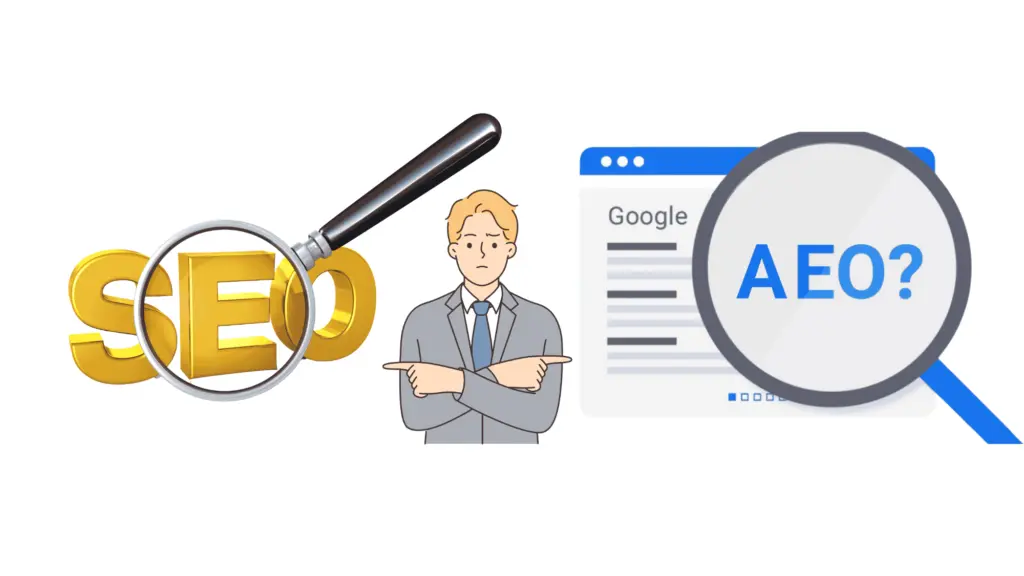
If we look at the old way vs. the new way, the contrast is pretty stark. Traditional SEO was all about “The Click.” You optimized your page to rank in the top three blue links so people would visit your site.
AEO, on the other hand, is about “The Answer.” It’s a shift toward intent-based content that satisfies a query directly within the AI’s interface, often before the user even considers clicking through.
While SEO provides the technical scaffolding and making sure your site is fast and crawlable while AEO optimization techniques focus on the synthesis of that information.
Think of it this way like SEO gets the AI to your front door; AEO makes sure the AI finds exactly what it needs inside your house to tell the neighbors.
The Shift from Keywords to Answers
Honestly, the days of stuffing a page with a specific phrase to trick an algorithm are long gone. Search engines in 2026 have become remarkably “human” in how they reason through a topic. They don’t just match words; they analyze intent, context, and credibility.
When someone asks a question today, they aren’t using rigid fragments like “best SEO agency Dubai.” They’re asking, “Who is the most reliable partner for web design and SEO Services in Dubai that understands AI growth?”
Because of this, AEO in 2026 prioritizes conversational, direct responses over long-form fluff. If you can’t answer the user’s core problem in the first two paragraphs, the AI will likely skip you for someone who can.
Impact on Site Traffic: The Zero-Click Reality
Here’s the part that keeps some marketers up at night: Zero-click searches. Current data shows that over 60% of searches now end without a single click to a website.
Why? Because the AI Overview answered it already.
Now, you might think, “If people aren’t clicking, why bother?” But here is the secret: visibility drives brand authority. Even if a user doesn’t visit your site immediately, seeing Zumeirah cited as the expert source for a complex AI query builds a massive amount of trust.
- Higher Awareness: Your brand becomes the “source of truth” in the AI’s response.
- Better Lead Quality: When people do click through from an AI citation, they are often 4.4 times more valuable than traditional organic visitors because they’ve already been “pre-sold” on your expertise.
- Indirect Traffic: Frequent citations lead to more branded searches (“Who is Zumeirah?”) which are much easier to convert.
Implementing smart Keyword Research for AEO ensures that even when clicks are scarce, your brand remains the loudest voice in the conversation.
The Importance of Keyword Research in AEO
The core of Keyword Research for AEO is a fundamental shift in how we perceive the “query.” In the old days, we chased volume like it was the only metric that mattered.
But in 2026, volume without intent is a ghost town. Honestly, if you’re still trying to rank for broad, one-word terms, you’re essentially trying to sell a map to someone who already has a GPS.
Let’s break down why your research process needs an overhaul if you want to keep the Zumeirah traffic numbers climbing.
How Does Keyword Research Evolve for AEO?
For two decades, we prioritized short-tail “trophy” keywords. You know the ones terms like “web design” or “SEO agency.” But those days are winding down. In an AEO environment, the AI isn’t just looking for a match but it’s looking for a solution.
This means our focus has shifted toward long-tail, question-based, and semantic clusters. Instead of targeting “Dubai SEO,” we are now targeting “how to optimize a service business for AI overviews in Dubai.”
Why? Because conversational AI models thrive on context. They don’t just want to know what you do but they want to know how you solve a specific, multi-layered problem.
By focusing on these semantic “nodes,” you provide the detailed data points that LLMs need to synthesize a trustworthy answer.
Why is Keyword Research Crucial for AEO Success?
You might be wondering, “Is the effort really worth the payoff?” The short answer? Absolutely. Current projections for 2026 show a massive divide between those who adapt and those who don’t.
Recent industry studies suggest that sites implementing aggressive AEO optimization techniques are seeing a 20% to 50% increase in traffic from AI-dominated search environments compared to those sticking to traditional SEO alone.
This isn’t just a fluke. When an AI agent like Gemini or Perplexity chooses you as its primary llm citation, you aren’t just one of many links and you become the definitive authority for that user’s session. This “halo effect” doesn’t just drive clicks but actually it drives a level of brand trust that traditional ads simply can’t buy.
What are the Common Mistakes to Avoid in AEO Research?
Let me give you a bit of a reality check here. I’ve seen countless “experts” fall into the same traps when they try to pivot to AEO. If you want to stay ahead, you have to avoid these two major pitfalls:
- Chasing the Volume Ghost: Honestly, a keyword with a search volume of 10,000 is useless if it doesn’t align with what the AI actually needs to answer. If you ignore user intent, you’re just creating noise.
- Neglecting the “Entity”: AI models think in entities (brands, people, places, and concepts). If your keyword research doesn’t account for how your brand relates to other industry-leading entities, the AI won’t see you as a credible source.
Traditional SEO was about the words. AEO is about the meaning behind them. If you don’t understand the “why” behind the search, you’ll never be the “what” in the answer.
Step-by-Step Guide to Keyword Research for AEO
Now we’re getting into the real “meat and potatoes” of the strategy. Honestly, if you’ve ever tried to follow a standard SEO tutorial from five years ago, you’re probably used to opening a tool, exported a CSV, and calling it a day. But for Keyword Research for AEO, that’s just the warm-up.
In 2026, we have to think like the machines that are reading our sites. Here is your tactical, step-by-step roadmap to finding the terms that actually turn into AI citations.
Step 1: Understand User Intent and Queries
People don’t type like robots anymore. Because of voice assistants and the conversational nature of ChatGPT or Gemini, search queries have become incredibly “natural.” Step one is about getting inside the head of your user and figuring out the real question they are trying to answer.
How to Master Intent Analysis:
- The “People Also Ask” Goldmine: Scroll down on any Google search. Those PAA boxes are literally Google telling you what the “follow-up” questions are.
- Voice Search Patterns: People use more words when they talk. Instead of “Dubai web design,” they say “Who is the most reliable web designer in Dubai for a small business?”
- Conversational Query Fan-Outs: Use an AI tool to ask, “What are 10 things someone would ask after they learn what AEO is?”
Step 1 Checklist:
- Identify 10 core questions from “People Also Ask” related to your topic.
- Transform 5 short-tail keywords into conversational, spoken-word queries.
- Map each query to a specific stage of the buyer’s journey (Awareness vs. Decision).
Step 2: Identify Semantic and Long-Tail Keywords
AI models don’t just look for your primary keyword; they look for the “neighborhood” of words that surround it. This is what we call semantic clusters.
If you’re writing about Keyword Research for AEO, the AI also expects to see terms like “Natural Language Processing,” “Information Retrieval,” and “Entity Relationship.”
Techniques for Semantic Depth:
- Topic Clusters: Instead of one page for one keyword, build a “pillar” page and link it to several “cluster” articles that handle the nuances.
- Entity-Based Research: Use tools like Google’s NLP API or even a simple ChatGPT prompt to ask: “What are the key entities associated with [Main Topic]?”
- LSI (Latent Semantic Indexing): Find related terms that naturally appear in high-quality articles on the same subject.
Step 2 Checklist:
- List 5 “related entities” (people, brands, or concepts) to mention in your article.
- Identify 3 “topic clusters” that can support your main pillar.
- Ensure your long-tail keywords are specific (e.g., “AEO keyword research for local SEO in Dubai”).
Step 3: Analyze Competitor AEO Strategies
I’ve always said that the best way to win is to see where the other guy is failing. In the AEO world, this means looking at who is currently “winning” the AI Overview or the Featured Snippet and reverse-engineering why.
How to “Hack” the Competition:
- Snippet Analysis: Look at the current featured snippet for your target question. Is it a list? A table? A 50-word definition? That is the “format” the AI prefers.
- The “Gap” Search: Search for a topic where the AI Overview is currently messy or non-existent. That’s your biggest opportunity to step in and be the “first-to-answer.”
- Citation Tracking: See which domains the AI agents are citing most often. Are they citing news sites, blogs, or official whitepapers?
Step 3 Checklist:
- Search your top 5 target questions and record who owns the “AI Overview.”
- Identify the format of the winning answer (List, Paragraph, or Table).
- Note one specific “missing detail” in the competitor’s answer that you can provide.
Step 4: Prioritize Keywords Based on AEO Metrics
In 2026, we have to stop looking at just “Monthly Search Volume.” Honestly, it’s a vanity metric. Instead, we should be looking at AEO Metrics things like “Answer Relevance” and “Citation Potential.”
New Metrics to Watch:
- Answer Relevance: How likely is this keyword to trigger a direct answer?
- Zero-Click Potential: Is this a query that users want an answer to immediately without clicking? (Great for brand awareness).
- Business Impact: A keyword with 50 searches that leads to a high-ticket client is worth 100x more than a “how-to” keyword with 5,000 searches.
Step 4 Checklist:
- Rank your keyword list by “Business Value” first, volume second.
- Assign a “Format Type” to each keyword (e.g., “This needs a table,” “This needs a list”).
- Estimate the “Zero-Click” likelihood based on current SERP features.
Step 5: Validate and Refine Keywords
You can’t just “set it and forget it” anymore. AEO is a living system. You need to test your keywords in “AI Simulations” to see if the machines actually understand what you’re trying to say.
How to Test and Refine:
- A/B Testing Snippets: Try two different ways of answering a question in your “TL;DR” section and see which one gets picked up by Google’s AI.
- LLM “Reality Checks”: Paste your section into Gemini or ChatGPT and ask: “Based on this text, what is the most important takeaway?” If it gets it wrong, your keyword placement is off.
- Search Console Monitoring: Look for queries where you have high impressions but low clicks and this often means you’re appearing in the AI results, which is a huge win for brand authority.
Step 5 Checklist:
- Run a “takeaway test” with an LLM for your primary sections.
- Monitor your Google Search Console for “Question-style” query impressions.
- Schedule a quarterly review to refresh your answers with “fresher” data.
Essential Tools for Keyword Research in AEO
Honestly, trying to do Keyword Research for AEO without the right tools is like trying to build a skyscraper with a plastic hammer. You might get a few bricks in place, but you’ll never reach the clouds.
In 2026, the toolset has split into three distinct camps. You’ve got your free “scouts” that help you see the land, your heavy-duty paid “drills” for the deep data, and a new breed of AI-powered “navigators” that predict where the machines are going.
The “No-Cost” Scouts: Free Tools for AEO Inspiration
If you’re just starting to pivot the Zumeirah strategy, you don’t need to drop thousands of dollars immediately. Some of the best insights for AEO in 2026 are hidden in plain sight.
- Google’s AI Overviews & Search Console: This is the ultimate “cheat sheet.” By looking at existing AI Overviews, you can see exactly which questions Google thinks are important enough to summarize. Search Console now even shows you “AI Visibility” impressions, which is a goldmine for seeing which conversational queries are already working.
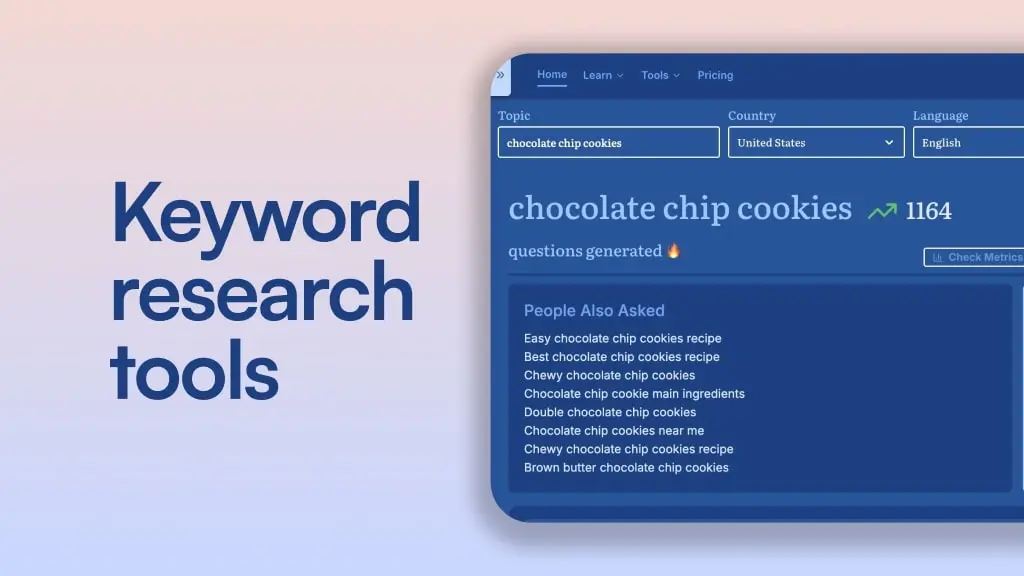
- AnswerThePublic: This tool has stayed relevant because it maps out the “who, what, where, and why” of any topic. For AEO, AnswerThePublic is your primary source for those long-tail, question-based headings we talked about earlier.
- Google Keyword Planner (2026 Edition): It’s not just for ads anymore. The latest version of keyword planner includes “Organic Competition Metrics” that help you see how hard it is to get cited in an AI summary, not just how much a click costs.
The Heavy Drills: Professional Paid Platforms
When you’re ready to get serious about ranking on that first page, you need the heavy hitters. These tools have evolved to track not just links, but “Brand Mentions” across the LLM landscape.
- SEMrush (AI Visibility Toolkit): SEMrush is currently the leader in this space. Their new toolkit tracks how often your brand is mentioned in ChatGPT or Gemini responses. It’s like a traditional rank tracker, but for the “mind” of the AI.
- Ahrefs (Brand Radar): Ahrefs added a feature called “Brand Radar” that monitors your presence in AI-generated content. It’s perfect for seeing which of your pages are being used as “seed data” for AI answers.
- Surfer SEO: If you want to know exactly how many times to mention a specific entity to get an “A+” grade from an AI auditor, Surfer SEO is your best friend. Their real-time scoring is tailored for both traditional Google algorithms and modern AEO requirements.
The 2026 Navigators: Emerging AI-First Tools
These are the tools that didn’t even exist a few years ago. They are built specifically for the “Search Generative Engine” era.
- Perplexity AI (Predictive Insights): You can actually use Perplexity to ask, “What are the trending questions in the [Niche] space that don’t have a clear source yet?” It’s a brilliant way to find “content gaps” before your competitors do.
- Spotlight & Relixir: These are niche tools that simulate “buyer questions” to see how different AI models (Claude, GPT-4, Gemini) respond to your brand. They even give you an “AI Sentiment Score” so you know if the machines like you or not.
Comparing the Best Tools for Keyword Research for AEO
| Tool | Primary Feature | AEO-Specific Benefit | Pricing (Est. 2026) |
| Google Search Console | Performance Tracking | Tracks AI Overview Impressions | Free |
| AnswerThePublic | Question Discovery | Maps “Conversational Intent” | Free / Paid Tiers |
| SEMrush | AI Visibility Toolkit | Tracks brand citations in LLMs | $$$ (Professional) |
| Surfer SEO | Content Editor | NLP & Entity-based scoring | $$ (Mid-Range) |
| Spotlight | Brand Radar | Sentiment analysis across 6+ AIs | $$$ (Specialist) |
Honestly, my expert advice? Start with the free tools to map out your questions, then use a tool like Surfer or SEMrush to refine the actual content. You don’t need every tool on this list but you just need the ones that help you answer the user’s question faster than anyone else.
Best Practices for Implementing AEO Keyword Research
Honestly, finding the keywords is only half the battle. If you don’t package them in a way that an AI model can “digest” in milliseconds, you’re just left with a list of good ideas that never see the light of day.
In 2026, implementing your research requires a specific kind of digital architecture like one that balances human readability with machine-ready structure.
Content Creation Tips: Writing for the “Lift”
AI engines read structure before they even look at substance. If your page is a wall of text, the AI will likely ignore it. To stay visible, we need to use what I call “Answer-First Design.”
- Front-Load Your Answers: Lead with a concise, direct answer (40–60 words) right under your heading. Think of this as the “snippet bait” that an LLM can easily lift and cite.
- The Power of FAQs: Dedicated Optimized FAQ sections at the bottom of your articles are a goldmine. They mirror the exact question-answer format that voice assistants and AI search tools crave.
- Concise Paragraphs: Keep your paragraphs tight, means ideally 2 to 4 sentences. Shorter chunks are easier for AI agents to process without losing context.
On-Page Optimization: The Machine-Readable Map
If your content is the fuel, on-page optimization is the engine. For Zumeirah to dominate, we have to treat every element as a signpost for the AI.
- Logical Heading Hierarchy: Use your H2s and H3s as the actual questions you found during your research. This creates a machine-readable map of the page’s intent.
- Schema Markup 2.0: This is non-negotiable. Using FAQPage, HowTo, and Article schema explicitly tells the AI: “Here is a fact, and here is how it’s structured.” It removes the guesswork for the crawler.
- Entity-Based Internal Linking: Link your new AEO content to other relevant “nodes” on your site. This builds a web of authority that tells the AI you aren’t just an expert on one topic, but on the entire subject matter.
Measuring Success: New KPIs for the AI Era
Traditional rankings are becoming “vanity metrics.” In 2026, success is measured by visibility and influence, not just clicks.
- AI Citation Share: Track how often your brand or URL is cited as the source in responses from Gemini, ChatGPT, and Perplexity.
- Branded Search Lift: If your AEO Schema strategy is working, people will start searching for “Zumeirah” directly after seeing you cited in an AI Overview.
- Conversion Rate from AI Referrals: Early 2026 data shows that visitors referred by AI answers convert 4.4x better than traditional search traffic because the AI has already “pre-sold” them on your answer.
Integrating with Voice and Mobile
AEO doesn’t live in a vacuum. It’s the backbone of Voice Search and Mobile Optimization. Most voice queries are question-based, so your AEO research effectively doubles as your Voice SEO strategy.
By keeping your site fast and your answers punchy, you ensure that whether a user is scrolling on a phone in Dubai or asking Siri while driving, Zumeirah is the first (and only) voice they hear.
Case Studies: Successful AEO Keyword Research in Action
Honestly, talk is cheap. You can have the best “AEO strategy” on paper, but until you see how it actually moves the needle for a real business, it’s all just theory. In 2026, the brands that win aren’t just “ranking” but they are being recommended by the machines.
Let’s look at two distinct scenarios where shifting from traditional keywords to AEO-optimized semantic clusters changed everything.
Case Study 1: The E-commerce Pivot (Context Over Clicks)
A mid-sized specialized equipment retailer was struggling to compete with giants like Amazon for broad terms. They decided to stop fighting for “water drainage equipment” and started focusing on intent-based AEO queries.
- The Strategy: They added a “Use Cases” section to every product page, answering questions like “How do I install lightning protection on a sloped roof?” or “What are the operating conditions for this drainage pump in high-salinity areas?” They backed this up with heavy Product and FAQ schema.
- The 2025-2026 Result: Within six months, 90% of their AI-driven traffic was landing directly on these optimized product pages.
- The “Kicker”: While their traditional organic traffic stayed flat, their AI visitors had a 5% conversion rate (compared to 4% for standard search). Why? Because the AI had already answered their technical questions, so the user clicked through ready to buy.
Case Study 2: Content Site Transformation (Winning the Snippet War)
A B2B SaaS platform for credit decisioning software was invisible in the AI landscape. They appeared in Google’s blue links, but ChatGPT and Perplexity never mentioned them.
- The Strategy: We helped them move away from “top-of-funnel” listicles and toward Question-Based Keyword Research. We restructured their core guides to lead with a “TL;DR” definition and a clear, 50-word answer to the most common industry questions.
- The “Before and After” Metrics:
- Before: 0 citations in ChatGPT/Perplexity; 8% visibility in Featured Snippets.
- After: 36% improvement in AI visibility and a 214% increase in Featured Snippet appearances.
- The Impact: They began generating roughly two high-quality inbound leads per month specifically from Perplexity citations alone. For a high-ticket SaaS brand, that’s a massive ROI.
What These Cases Tell Us
You don’t need a million-dollar budget to win at AEO. You just need to be more helpful and better structured than the next guy.
Whether you are an e-commerce store in Dubai or a global content platform, the AI models are looking for the same thing: factual, scannable, and trustable answers.
Looking Ahead: The 2026 Horizon and Beyond
Honestly, if you blinked in 2024, you probably missed the first three waves of the AI revolution. By now, in early 2026, we aren’t just talking about “search engines” anymore and we’re talking about Discovery Engines.
The roadmap for Zumeirah has to extend past simple text-based queries because the way people interact with the digital world has become incredibly fluid.
The Rise of Multimodal and Hyper-Personalized Search
Have you noticed how often you just point your camera at something and ask your phone, “Where can I buy this?” or “How do I fix this part?” That’s multimodal search in action, and it’s officially mainstream.
In 2026, Keyword Research for AEO includes optimizing for images, video snippets, and even the context of what’s on a user’s screen.
The AI isn’t just reading your blog post but it’s watching your 30-second explainer video and scanning your high-res diagrams to see if they provide a better “answer” than a paragraph of text.
At the same time, queries are becoming hyper-personalized. An AI assistant like Gemini knows if a user is in a rush in Downtown Dubai or lounging at home, and it will tailor the “answer” based on their immediate physical context and past preferences.
Preparing Your Site: Zero-Party Data and Ethical AI
With the final death of third-party cookies, the “wild west” of tracking is over. To keep your edge, you need to start focusing on zero-party data. This is information your customers voluntarily share with you like their preferences or specific challenges in exchange for a better experience.
For Zumeirah, this might mean interactive audits or AI-driven tools that provide value while helping us understand our audience better.
Moreover, Ethical AI practices have become a major ranking factor not because of a specific “rule,” but because of trust. If users feel like an AI is being used to manipulate them or serve up biased, low-quality “slop,” they’ll bounce.
Transparency in how you use AI to generate your research or content is now a badge of honor that both humans and algorithms respect.
Navigating the Challenges: The “Black Box” and Algorithm Shifts
The next couple of years won’t be without hurdles. Gartner famously predicted that traditional search volume would drop by 25% by the end of 2026. While that sounds scary, it’s actually a massive opportunity for those who master AEO early.
The real challenge is the “Black Box” problem. Sometimes, an AI will decide to stop citing you for a week, and it won’t give you a reason why.
This is why we focus on “pattern consensus” ensuring your brand’s “truth” is consistent across every platform, from LinkedIn to your own schema markup. When the AI sees the same expert facts everywhere it looks, it has no choice but to trust you.
Final Thoughts: From Ranking to Recommending
As we wrap up this first step of Phase 3, remember this: the goal of Keyword Research for AEO isn’t just to get a high position on a page. It’s to become the cited recommendation of the world’s most powerful AI models.
We’ve moved from a world of “Search” to a world of “Answers.” By focusing on the questions, the data, and the human intent behind every query, Zumeirah isn’t just staying relevant but we’re becoming the authority that the future is built upon.
Conclusion: Seizing the AEO Opportunity
You know what? We’ve covered a lot of today. From the technical “pipes” of schema architecture to the psychological art of AI mapping user intent and it’s clear that the digital landscape in 2026 is no longer a game of matching words but it’s a game of providing the most trusted, accessible, and authoritative answer.
Keyword Research for AEO is the single most important pivot you can make for your traffic growth this year.
Traditional SEO still matters for the “foundation,” but AEO is the “intellect” that gets you cited by Gemini, Perplexity, and ChatGPT. If you aren’t the answer, you’re invisible. It’s as simple (and as brutal) as that.
Your Next Steps: Don’t Just Read, Execute
Honestly, knowledge without action is just trivia. I encourage you to take the Zumeirah roadmap we’ve laid out and start implementing it one step at a time.
Start with those “People Also Ask” deep dives, refine your semantic clusters, and for heaven’s sake, get your schema in order. Monitor your results not just by “rank,” but by AI citation share and branded search lift.
The AEO landscape is evolving faster than anything we’ve seen in the last 20 years of SEO. Adaptability isn’t just a “nice-to-have” anymore and it’s your survival strategy.
Stay curious, keep testing, and always always focus on being the most helpful voice in the room.
Frequently Asked Questions About AEO
How does AEO differ from traditional SEO?
SEO is about making your site “findable” for search engines so they can link to you. AEO is about making your content “digestible” so AI agents can summarize and cite you directly. While SEO focuses on clicks and rankings, AEO focuses on citations and authority within generative responses.
Will AEO replace traditional SEO in 2026?
Not exactly. They are two sides of the same coin. You still need a fast, secure, and well-structured site (the SEO part) for the AI models to crawl and trust your data. However, the way you write content must shift toward the AEO framework to ensure you aren’t just a link at the bottom of the page, but the answer at the top.
What is the most important metric for AEO success?
In 2026, we’ve moved past simple organic traffic. The “North Star” metric for AEO is AI Visibility Share. This tracks how often your brand is mentioned or your content is used as a source in AI-generated overviews. If the machines trust you, the humans will follow.
Can small businesses compete with giants in AEO?
Actually, yes! This is the most exciting part. AI models value Topical Authority and Specific Expertise over just having a massive backlink profile. If a local Dubai business provides a better, more concise answer to a niche question than a global giant, the AI is more likely to cite that specific, relevant source.
How often should I update my AEO-optimized content?
AI models crave freshness. Because the 2026 search landscape moves so quickly, I recommend a “rolling update” strategy. Re-verify your core “Golden Sentences” and factual data every quarter to ensure you remain the most accurate source available.
Do I need a separate tool for AEO keyword research?
While traditional tools like SEMrush and Ahrefs have added AEO features, you’ll get the best results by using a “hybrid” approach. Use LLMs like Gemini or Claude to help find the natural language nuances that traditional database-driven tools might miss.