
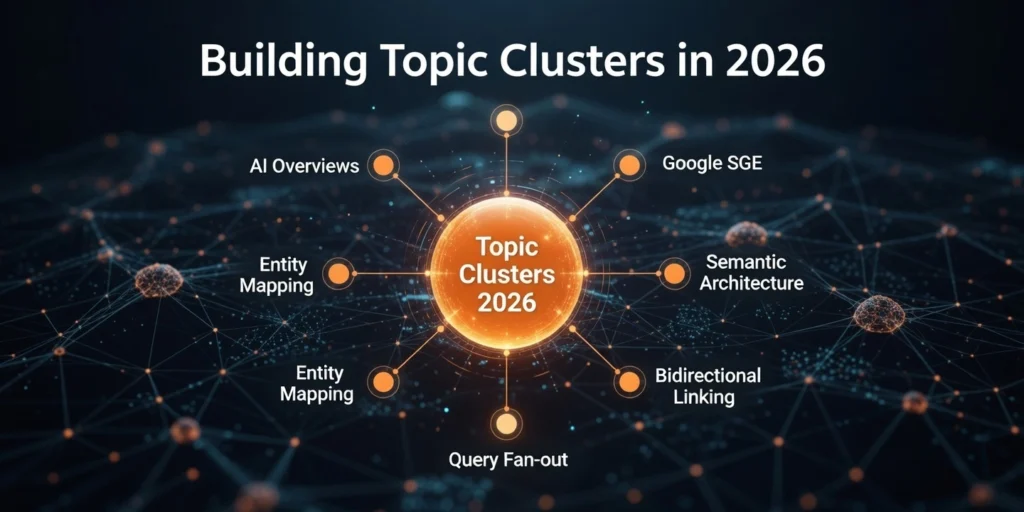
Building topic clusters in 2026 means creating one comprehensive pillar page on a core topic plus 5–12 intent-focused cluster pages connected by bidirectional contextual links. This structure signals topical authority to Google’s AI Overviews (formerly SGE), boosts AI citation rates by up to 3.2×, reduces content cannibalization, and drives 30–85% more organic traffic across the entire cluster even as AI summaries cut traditional clicks.
If you’ve been in this game as long as I have then we’re talking back when people were still arguing about meta keywords like you know the “rules” of SEO change every few years.
But 2026? This is different. We aren’t just fighting for a blue link anymore. We’re fighting for a spot in that sleek AI Overview box at the top of the page.
You know what? Most of the “SEO Gurus” you see on LinkedIn are still teaching the same old pillar-and-spoke model from 2019. It’s a bit frustrating, honestly. They’ll tell you to just write more content.
But in a world where Google’s AI is summarizing everything for the user before they even scroll, “more” content is just noise. You need architected content.
The 2026 Reality Check
Recent data shows that AI Overviews now appear in roughly 15% to 40% of all searches, depending on the niche. That sounds scary, right? Like search is dying?
Not exactly. It’s just evolving. I’ve seen sites lose 40% of their “top of funnel” clicks but double their actual conversions because the people who do click through are the ones looking for deep, expert-level authority not just a quick answer.
Wait, did I mention citations? This is the new gold. Studies are already showing that clusters built with bidirectional linking (meaning the pillar links to the subtopic, and the subtopic links back with specific anchor text) get cited in AI summaries 2.7× more often than standalone articles.
It’s about giving the AI a map. If you don’t provide the map, Google will just guess and usually, it’ll guess your competitor’s site instead.
Why the Old “Keyword-First” Mentality is Dead
In the past, we’d find a keyword, check the volume, and write a post. Done. But in 2026, Google has moved toward something called passage-level retrieval and query fan-out.
Basically, the AI doesn’t just look for your keyword; it looks at how well you cover the entire topic. It’s trying to figure out: “Is this site a genuine authority, or are they just trying to rank for a phrase?”
When you build a proper topic cluster, you’re essentially saying to the algorithm, “I have no blind spots here.” You’re answering the primary question on the pillar page, then branching out into every “what if” and “how to” on your cluster pages.
This behavioral validation is how long someone stays on your cluster and how many internal links they click has actually become more important than your backlink profile in many sectors.
What Are Topic Clusters in 2026?
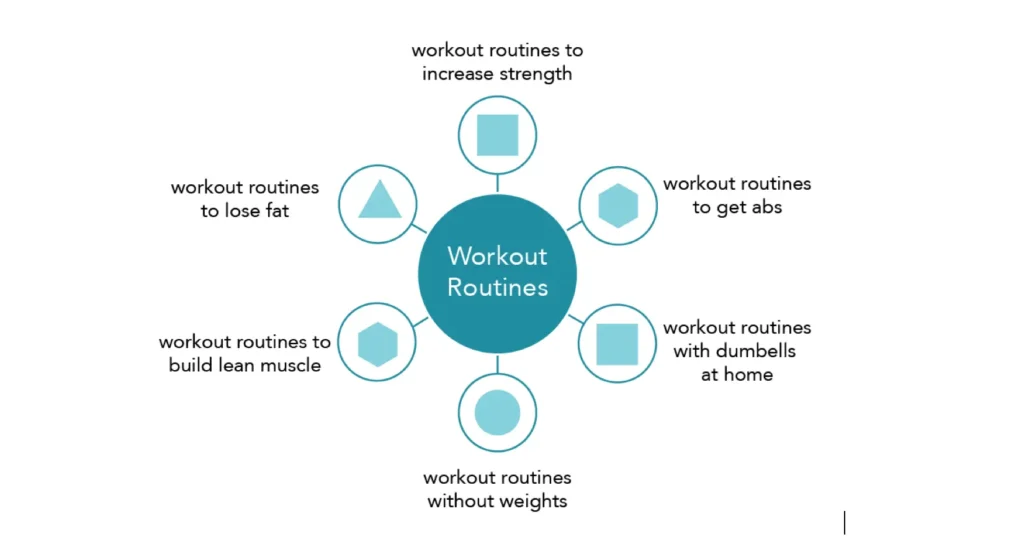
If you’ve been hanging around the SEO water cooler lately, you’ve probably heard people still talking about “hub-and-spoke” models.
Honestly? That term is starting to feel a bit like calling a smartphone a “mobile telephone.” It’s technically correct, but it misses the entire point of how the technology actually lives and breathes today.
In 2026, a topic cluster isn’t just a collection of links pointing at a big page. It’s a Semantic Knowledge Ecosystem.
Think of it this way: back in 2010, we built “keyword silos.” You’d have a folder for “shoes,” a page for “running shoes,” and maybe a page for “blue running shoes.” It was rigid. It was boring.
And frankly, it was easy to game. But Google’s AI is way past that now. Today, the algorithm is looking for contextual breadth. It wants to see that you understand the relationship between “running shoe durability,” “marathon training schedules,” and “plantar fasciitis prevention.”
The Anatomy of a Modern Cluster
To make this work, you need three specific gears grinding together. If one is missing, the whole machine just makes a loud clanking noise and stays stuck on page four.
Here’s how we break down the components for a high-authority site in 2026:
| Element | Purpose in the AI Era | Typical Word Count | The “Zumeirah” Example |
| Pillar Page | The “North Star.” It provides a broad mental model and covers the high-level “what” and “why.” | 2,500–4,000+ | The Complete Guide to Modern SEO Strategy in 2026 |
| Cluster Pages | The “Specialists.” These tackle specific user intents, “how-to” questions, and long-tail queries. | 800–1,500 | How to Optimize for Google AI Overviews (SGE) |
| Internal Links | The “Connective Tissue.” These must be bidirectional and use descriptive, contextual anchor text. | — | A link from the Cluster back to the Pillar using “2026 SEO framework.” |
From Silos to Ecosystems: The Evolution
You know what’s funny? I remember when we used to think that just having a “Related Posts” plugin at the bottom of an article was enough. Narrator voice: It wasn’t. The shift from 2010-style silos to 2026 ecosystems is all about AI validation.
When Gemini or Search Generative Experience (SGE) crawls your site, it isn’t just counting keywords. It’s performing something called “Entity Mapping.”
It’s looking to see if your pillar page on Topic A is supported by enough high-quality cluster pages to prove you aren’t just summarizing someone else’s content.
In the old days, you could rank a single “mega-guide” by throwing enough backlinks at it. Today? If that mega-guide doesn’t have “spokes” that answer the granular, nitty-gritty questions users are asking AI assistants, Google will likely pass you over for a site that has a complete, interconnected web of information.
Let me explain why this matters for your traffic. When you have a cluster, you aren’t just trying to rank for one big term. You’re catching users at every stage of their journey.
Maybe they start by asking an AI, “How do I organize my website content?” (Cluster page). After reading your expert answer, they realize they need a full strategy, so they click through to your “Master Guide” (Pillar page).
That’s the beauty of it. You’re building a trap but a helpful one that keeps users within your ecosystem. And you know what Google loves more than anything? Users who find exactly what they need without clicking the “back” button.
Why Topic Clusters Matter More Than Ever in 2026
Honestly, if you’re still chasing individual keywords like it’s 2018, you’re basically bringing a knife to a laser-tag fight. In 2026, Google’s AI Overviews and systems like Gemini don’t just “read” your pages and they analyze your site’s entire knowledge graph.
You know what? I’ve seen sites with half the backlinks of their competitors outrank them simply because their content architecture was tighter. It’s about being the “source of truth,” not just a collection of blog posts.
The New Search Reality: Query Fan-Out & Passage Retrieval
Here’s the thing that most people miss, when a user types a single question into Google today, the AI doesn’t just run one search. It performs something called Query Fan-Out.
It takes that one prompt and expands it into 12 to 15 “synthetic” sub-queries in the background. It’s looking for the “how,” the “why,” the “cost,” and the “comparisons” all at once.
If your content only answers the main question but ignores the sub-queries, you won’t get cited in the AI Overview. You might rank #1 in the blue links, but you’ll be invisible in the summary at the top. This is where Passage Retrieval comes in.
AI models are now scraping specific “chunks” or passages of text from different pages to build an answer. A topic cluster ensures you have a high-quality “passage” for every single sub-query the AI generates.
By the Numbers: Why Architecture Wins
I’m not a huge fan of stats for stats’ sake, but these 2025/2026 figures from places like Yext and HireGrowth are hard to ignore. They really drive home why we’re doing this:
- 3.2× More AI Citations: Sites that structure their content into clear, entity-aligned clusters are getting cited in AI Overviews three times more often than those with “flat” content structures.
- The Power of the Link: Implementing bidirectional links where the sub-topic links back to the pillar and vice-versa leads to a 2.7× boost in AI citations and roughly a 30% lift in organic traffic across the board.
- Behavioral Validation: This is a big one. Google is watching how users move through your site. A cluster naturally encourages longer “internal journeys.” When someone lands on a cluster page and clicks through to your pillar, it tells Google, “Hey, this user is actually learning here.” That’s the ultimate E-E-A-T signal.
Comparing the “Old” vs. the “2026” Way
Let’s look at how the strategy has shifted. Honestly, it’s a night-and-day difference.
| Feature | Keyword-First SEO (The Old Way) | 2026 Topic Clusters (The New Way) |
| Primary Goal | Rank for a specific high-volume term. | Own the entire “Entity” or subject matter. |
| Content Structure | Isolated, standalone blog posts. | Interconnected “Knowledge Ecosystems.” |
| Internal Linking | Random or “Related Posts” widgets. | Strategic, bidirectional, and contextual anchors. |
| AI Visibility | Likely to be skipped for lack of depth. | Optimized for “Passage Extraction” and citations. |
| User Flow | Single page view → Bounce. | Multi-page “Educational Journeys.” |
At the end of the day, building clusters is about reducing pogo-sticking (where a user hits the back button because you didn’t answer their follow-up questions) and eliminating content cannibalization. You aren’t competing with yourself for the same keyword anymore but you’re building a unified front.
How Google AI Overviews (SGE) Changed Topic Cluster Strategy
Remember when we used to worry about “Position Zero”? That feels like a lifetime ago. Back in the day, getting a featured snippet was the ultimate win. Now, we’re dealing with a fully rolled-out AI Overview system that doesn’t just give an answer but it builds one.
The transition from the experimental Search Generative Experience (SGE) to the permanent AI Overviews we see today in 2026 has completely flipped the script on how we think about clusters. It’s no longer enough to just have a “main page” and some “side pages.”
The AI Doesn’t Just Read; It Reasons
When someone searches for something complex, Google’s Gemini-powered engine does a “Query Fan-Out.” It takes that one user prompt and creates maybe 12 or 15 tiny sub-searches in a millisecond. It’s looking for the definition, the pros and cons, the cost, the “how-to,” and even the common mistakes.
If your topic cluster is missing any of those pieces, you’re out. The AI will literally skip your site to find a competitor who covered that specific “fan-out” sub-query.
Honestly, it’s a bit ruthless. But if you own the entire journey? That’s when you see your brand cited four or five times in a single AI summary.
What the AI is Rewarding Right Now
I’ve been looking at a lot of data lately, and the trend is clear: Google is bored with “commodity” content. If you’re just repeating what everyone else said in 2024, you’re invisible.
To stay in the game, your clusters need a few specific traits:
- Original Structure: Don’t just follow the same H2/H3 layout as the top three results. AI models look for “Information Gain.” They want to see a new way of explaining the topic or a unique data point that isn’t everywhere else.
- Deep Intent Coverage: You have to anticipate the follow-up questions. If your pillar is about “Topic Clusters,” your cluster pages better cover the weird, niche stuff like how to use them for voice search or local SEO in Dubai.
- The Freshness Factor: This is huge. If your content hasn’t been touched in over a year, you’re basically a ghost to the AI. It prefers sources that feel “alive.”
The Shift: From “Covering Keywords” to “Owning Journeys”
Nobody cares about your keyword density anymore. What matters is if you can guide a user from “I have a problem” to “I have a solution” without them needing to look anywhere else.
In the past, we tried to rank for “Topic Clusters.” In 2026, we’re trying to be the sole reason the AI Overview exists. You want the AI to look at your site and think, “This is the only place with enough depth to build a complete answer.”
It’s a shift from being a publisher to being a library. You aren’t just putting out articles but actually you’re building a map of knowledge. And honestly? It’s a lot more work, but the results are incredible when the AI starts treating your site as the ultimate authority.
Step-by-Step Guide: How to Build Topic Clusters in 2026
Alright, let’s roll up our sleeves. You know the “why” and you know the “what,” but how do you actually sit down on a Tuesday morning and build this thing? I’ve spent the last seven years refining this, and I’ll tell you right now: the process is more about logic than it is about software.
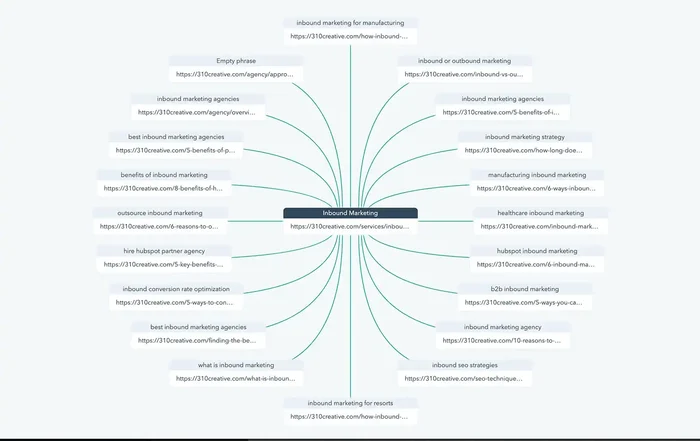
You know what? I’ve seen people spend $500 a month on tools and still get beat by a guy with a whiteboard and a deep understanding of his customers. Here is the exact blueprint for 2026.
1. Choose 3–5 Core Pillar Topics
Don’t try to be everything to everyone. You want to pick topics that are “business-aligned.” If you’re a web designer in Dubai, your pillar shouldn’t just be “Graphic Design.” That’s too broad. It should be “Modern Web Design for E-commerce.”
Ask yourself:
- Is this topic broad enough to have at least 10 sub-topics?
- Does it actually lead to a conversion?
- Can I talk about this for 3,000 words without getting bored?
2. Map Subtopics by Intent (Forget “Volume” for a Second)
In 2026, we look at Query Fan-Out. Take your pillar topic and plug it into Google. Look at the “People Also Ask” (PAA) section. Look at the related searches. But more importantly, think about the journey.
If the pillar is “Topic Clusters,” a subtopic isn’t just “cluster examples.” It’s “How to measure cluster ROI in SGE.” See the difference? One is a keyword; the other is a user intent. You want to map out the gaps where your competitors are being lazy.
3. Validate with Data & AI Tools
Okay, now you can open the tools. Use things like Semrush, Ahrefs, or even Gemini itself to classify intent. You’re looking for a mix:
- Informational: “What is…”
- Investigational: “Best tools for…”
- Transactional: “Hire an SEO expert for clusters.”
Pro-tip: If a keyword has a massive volume but zero “AI Overview” presence, it might be a “Navigational” query that isn’t worth building a cluster around.
4. Audit & Repurpose (Don’t Start from Zero!)
Honestly, this is where most people waste time. You probably already have half a cluster sitting in your “Archives.”
Go through your old blog posts. Can that 500-word post from 2023 be updated and turned into a cluster page? Can those three small articles be merged into a Pillar? Use what you have. Google loves to see old content get a “freshness” injection.
5. Create the Pillar Page
This is your “Authority Anchor.” It needs a Table of Contents (TOC) that actually works and clear, descriptive headings.
Think of this as the “Wikipedia Page” for your topic. It should give a 10,000-foot view of everything. You don’t need to go deep into every detail that’s what the cluster pages are for but you need to mention them all and link out to them.
6. Build the Cluster Pages
Each of these pages should solve one specific problem.
If your cluster page is about “Internal Linking for Clusters,” don’t start talking about “Backlink Building.” Stay on track. Provide original insights, maybe a case study or a quick video. The AI needs to see that this page is the “Definitive Answer” to that specific sub-query.
7. Implement Bidirectional Internal Linking
This is the “Secret Sauce.” It’s not just “SEO plumbing” but it’s UX.
- The Pillar links to every Cluster page (usually in the body text or a “Deep Dive” section).
- Every Cluster page links back to the Pillar (using anchor text that reinforces the main topic).
- Cluster pages link to each other where it actually makes sense for the reader.
Let me explain: If I’m reading about “Schema for Clusters,” it makes total sense to link to “AI Overviews,” because they are cousins. It feels natural.
8. Publish, Optimize, and Iterate
Don’t just hit “Publish” and walk away. In 2026, the “Freshness Cadence” matters.
I usually suggest a “Rolling Launch.” Publish the Pillar and the first 3 clusters. Then, add a new cluster page every week for a month. This tells Google your site is active and growing. Then, every six months, go back and update the stats. If you aren’t iterating, you’re decaying.
Advanced 2026 Optimizations for AI Overviews Visibility
Alright, let’s get into the “black belt” stuff. If you’ve followed the steps so far, you’ve built a solid house. But in 2026, everyone is building solid houses. To get that prime real estate in the AI Overview box, you need to optimize for the machine’s “eyes” as much as the human’s.
Honestly, I’ve seen sites with perfect content get ignored by Gemini simply because their code was a mess or their answers were buried under 300 words of “fluff.”
Here’s how you future-proof your cluster for the AEO (Answer Engine Optimization) era.
1. Structured Data: The Machine’s Cheat Sheet
You know what? AI models are essentially very advanced pattern matchers. If you give them the pattern in a language they already speak (JSON-LD schema), you’re making their job ten times easier.
Don’t just stick to the basic “Article” schema. For every page in your cluster, you should be layering:
- FAQ Schema: This is the big one. If your cluster page answers a question like “How much does SEO cost in Dubai?”, use FAQ schema to label the question and the answer. It’s like highlighting the answer for Google.
- HowTo Schema: If you’re explaining a process, this schema helps AI extract those nice numbered steps you see in summaries.
- Entity Linking: Use
sameAsproperties in your schema to link your topics to authoritative sources like Wikipedia or official brand pages. It tells the AI, “When I say ‘SEO,’ I mean this specific concept.”
2. The “Golden Answer” Formatting
Here’s a trick I’ve been using lately that works like a charm. We call it the Golden Answer.
Immediately after your H2 or H3 question-based heading, write a 40–60 word “quotable passage.” No jargon, no “In today’s world,” just the facts.
The Goal: Make it so perfect that an AI can copy-paste it directly into an overview.
Think of it like a soundbite for a news report. If you can’t summarize the point in two sentences, you haven’t mastered the topic yet.
3. Multimodal Content (Show, Don’t Just Tell)
In 2026, “content” isn’t just text. AI Overviews are increasingly pulling in images, specific timestamps from videos, and even data from tables.
- Tables are Gold: If you’re comparing two things, use a real HTML table. AIs love tables because the data is already structured.
- Video Snippets: Host your videos on YouTube and use “Chapters.” Google’s AI will often cite a specific 30-second clip from your video as the answer to a sub-query.
- Original Imagery: Stop using that generic stock photo of people shaking hands. Use a custom diagram of your cluster architecture.
4. Entity Optimization & Semantic Cocooning
This sounds technical, but it’s actually quite poetic. Semantic Cocooning is the art of wrapping your “Money Page” (the one that makes you a profit) in a protective layer of highly relevant, supportive content.
You aren’t just linking pages; you’re creating a “neighborhood” of meaning. If you’re writing about “Search Engine Optimization,” the AI expects to see terms like crawling, indexing, entities, and search intent nearby.
If those words are missing, your “cocoon” is weak. We use these “LSI” terms naturally to prove to the AI that we are actually experts, not just AI-generating “slop.”
5. The Freshness Strategy (The Quarterly Pulse)
Let me be blunt: a topic cluster is never “done.” In the old days, you could rank a post and leave it for three years. In 2026? If your stats are from 2024, you’re dead in the water.
I recommend a Quarterly Refresh. Every three months, go through your cluster:
- Update any dates (change “2025” to “2026”).
- Swap out an old statistic for a newer one.
- Add a new “People Also Ask” question that has popped up.
- Check your internal links.
It’s about showing the AI that your heart is still beating. A site that updates its cluster four times a year will almost always outrank a giant site that hasn’t touched its “definitive guide” in eighteen months.
Best AI Tools for Topic Clustering in 2026
If you’re still trying to group five thousand keywords manually in a spreadsheet, you’re essentially trying to dig a swimming pool with a teaspoon. You’ve got better things to do with your time like actually running your business or, you know, having a life.
By 2026, the tool landscape has shifted. We aren’t just looking for “keyword research for AEO” tools anymore. We’re looking for Architectural AI. We need platforms that don’t just give us a list of words, but actually understand the “intent-overlap” and the “entity relationships” that Google’s AI is looking for.
And most people use these SEO tools wrong. They just click “generate” and export. But if you want to outrank the giants, you need to use these tools to find the gaps they’re too big to notice.
The 2026 “Knowledge Architect” Toolkit
Here is my curated list of the tools that are actually moving the needle this year. I’ve tested dozens, and these are the ones that actually earn their keep.
How to Automate 70% of the Clustering Process
You know what? Automation isn’t about replacing your brain but it’s about freeing it up for the creative stuff. Here is the workflow I use to build a massive cluster in an afternoon instead of a month:
- The Seed Dump: I start by taking my core topic and running it through Topical Map AI. This gives me the broad “landscape” of what I need to cover.
- Intent Grouping: I take that list and put it into Keyword Insights. I let it do the heavy lifting of grouping keywords based on SERP overlap. If two keywords show 8 out of 10 of the same URLs on page one, they belong in the same cluster. Period.
- The Competitor Sitemap Hack: This is my favorite trick. I take the sitemap of a giant competitor (sorry, Neil Patel!) and run it through Frase. It identifies every topic they haven’t updated in the last year. That’s my “Entry Point.”
- Drafting with Context: I feed the cluster map into my writing tool (like Eesel or Jasper) along with my specific brand voice guidelines.
- The Human Final 30%: This is where you come in. You add the personal anecdotes, the regional references (like mentioning the Dubai tech scene), and the specific “insider” knowledge that an AI can’t possibly know.
Honestly, the goal here is to let the AI do the “math” so you can do the “magic.” If you try to do the math yourself, you’ll burn out. If you let the AI do the magic, you’ll sound like a robot. You need both.
7 Common Topic Cluster Mistakes to Avoid in 2026 (And How to Fix Them)
Even the best-laid plans can go south if you’re following an outdated playbook. I’ve seen some absolute horror stories lately like sites with incredible content that are essentially invisible because of one or two “silent killers” in their architecture.
If you’re wondering why your cluster isn’t getting cited in AI Overviews, or why your organic traffic is flatlining despite all that content writing, you might be falling into one of these traps. Here’s the 2026 “Red List” of what not to do and how to pivot before you lose more ground.
- Mistake 1: The “Pillar Overload” (Too Many Chiefs, Not Enough Indians)
- The Problem: Trying to make every single high-volume keyword a Pillar Page. If you have five “Ultimate Guides” that all touch on the same core topic, you’re just confusing Google’s AI.
- The Fix: Be ruthless. Consolidate. You should have one clear “Source of Truth” (the Pillar) for each broad entity. Everything else? It’s a supporting Cluster Page.
- Mistake 2: Weak or “Ghost” Internal Linking
- The Problem: You link from the Pillar to the Cluster, but the Cluster never links back. Or worse, you use “click here” as your anchor text.
- The Fix: Implement bidirectional, contextual links. Use descriptive anchor text that tells the AI exactly what the relationship is. (e.g., instead of “Read more,” use “Why topic clusters drive AEO citations”).
- Mistake 3: Mixing Search Intents Like a Bad Smoothie
- The Problem: Trying to answer a “What is…” question and a “How much does it cost…” question on the same page. In 2026, AI models are intent-specific.
- The Fix: One page, one primary intent. If the user wants a definition, give them a definition. If they want a comparison, give them a table. Don’t make the AI “work” to find the answer.
- Mistake 4: Ignoring Behavioral Validation (The “Ghost Town” Effect)
- The Problem: Building a cluster that people click on but immediately leave. Google sees this “pogo-sticking” and assumes your cluster is low-quality, regardless of how many keywords you used.
- The Fix: Focus on dwell time and internal journeys. Add “What’s Next?” sections or interactive elements that keep people moving through the cluster. If they stay on your site, Google stays on your side.
- Mistake 5: The “Set It and Forget It” Mentality (Static Clusters)
- The Problem: Thinking a cluster is “done” once it’s published. In the age of AI, information decays faster than ever.
- The Fix: Adopt a Freshness Cadence. Update your stats, swap out old screenshots, and add new “People Also Ask” answers every quarter. A cluster that hasn’t been touched in a year is a ghost to the AI.
- Mistake 6: Forgetting the “Answer-First” Structure
- The Problem: Burying the lead under 500 words of “introductory fluff.” If the AI can’t find a clear, quotable passage in the first two scrolls, you won’t get the citation.
- The Fix: Use the Golden Answer technique. Place a 40–60 word summary directly under your main H2 headings. Make it easy for the AI to “scrape” you.
- Mistake 7: Creating Content for Robots, Not Humans
- The Problem: Using too many AI-generated phrases (unlock, unleash, intricate) and dry, academic language.
- The Fix: Add Information Gain. Share a personal story, a regional insight (like the specific SEO challenges in Dubai), or a unique data point. If your content sounds like a machine wrote it, why would a human or an AI trust it as an “authoritative” source?
Honestly, the biggest mistake is just being lazy. In 2026, the “middle ground” of content is gone. You’re either the authority or you’re invisible. Choose to be the authority.
Measuring Success & Maintaining Topic Clusters Long-Term
I’ve seen it a thousand times a founder spends three months building the “perfect” cluster, hits publish, and then never looks at it again. In the 2026 search landscape, that’s essentially like building a high-end restaurant and never cleaning the kitchen. Within six months, you’ll be invisible.
Success in the age of AI Overviews isn’t just about “ranking.” Honestly, you can be rank #1 and still lose traffic if the AI is answering the question for you. You have to measure inclusion, not just position.
The Cluster-Level KPIs That Actually Matter
Forget looking at individual page stats in isolation. That’s old-school thinking. You need to look at how the entire “neighborhood” of content is performing. Here are the five metrics my team and I track every single week:
- AI Overview (AIO) Inclusion Rate: This is the big one. What percentage of your target queries in the cluster trigger an AI summary where your domain is cited? If you’re at 0%, your content structure is likely too “fluffy” for the AI to extract.
- Citation Frequency: How often does the AI link to you as a primary source? In 2026, a citation is the new “click.” Even if they don’t visit your site immediately, that brand impression in the AI box builds massive trust.
- Internal Click-Through Rate (ICTR): Are people moving from your “spoke” pages back to your Pillar? If your internal clicks are low, your “connective tissue” is weak.
- Dwell Time by Cluster: If people are landing on your cluster and staying for 4+ minutes across multiple pages, you’ve won. Google’s behavioral signals are incredibly sensitive to this now.
- Entity Visibility Score: Are you being associated with the right “concepts”? You can track this in tools like Ahrefs or Semrush to see if your brand is appearing in “Knowledge Panel” style results.
Your 2026 Measurement Toolkit
You don’t need a massive enterprise budget to track this. Honestly, some of the best data is right under your nose in the free tools.
- Google Search Console (The Regex Hack): Want to see your AI-driven impressions? Go to your Performance report and filter for queries with 6 words or more. These “long-tail” questions are almost always what trigger AI Overviews.
- Ahrefs Brand Radar: This is brilliant for tracking “Share of Voice” within AI summaries. It’ll tell you which of your competitors are getting cited where you aren’t.
- GA4 (Custom Channel Grouping): You must set up a specific channel in Google Analytics for “Generative AI” traffic. This separates your regular search traffic from people coming in via Gemini, Perplexity, or ChatGPT Search.
The Quarterly “Authority Audit” Checklist
Every three months, I sit down with my clusters and run through this list. If you do this, you’ll stay ahead of the “giants” who are too slow to update their old guides.
- Freshness Injection: Update at least three major statistics or dates. AI models have a “recency bias.”
- The PAA Expansion: Look at the “People Also Ask” questions appearing for your pillar today. If there’s a new one that didn’t exist three months ago, write a 300-word cluster page for it immediately.
- The Link Health Check: Use a tool like Screaming Frog to make sure your bidirectional links aren’t broken. If you’ve deleted an old post, make sure that link in the Pillar is updated.
- Golden Answer Review: Read your H2 “Summary Blocks” out loud. Do they still sound authoritative? If they feel a bit dated, rewrite them to be punchier.
The Future of Topic Clusters Beyond 2026
If you’ve made it this far, you’re already ahead of 90% of the market. But as someone who’s seen the “next big thing” come and go for two decades, I can tell you that the finish line is always moving.
In the late 2020s, topic clusters won’t just be about organizing text. They’re evolving into Multimodal Knowledge Graphs.
Honestly, the distinction between “SEO” and “AI Training” is blurring. We’re moving into an era where your cluster isn’t just a guide for humans; it’s a grounding source for the AI agents that humans use to make decisions.
1. Multimodal Clusters (Text is Only the Beginning)
By 2027, a cluster that only contains text will be considered “thin.” Google Lens and Large Language Models (like Gemini 2.0) are already treating images, video snippets, and audio files as “entities” with the same weight as a paragraph.
- The Shift: Your pillar page will likely be a “hub” for a 10-minute masterclass video, an interactive data tool, and a voice-optimized FAQ.
- The Prediction: AI will “watch” your video spokes to verify the claims in your text pillar. If the visual evidence doesn’t match the textual claim, your authority score will take a hit.
2. Behavioral Authority: The Ultimate Ranking Signal
You know what? Backlinks are becoming “noisy.” In the future, the primary signal won’t be who links to you, but how users interact with your cluster across multiple sessions. We call this Behavioral Breadth.
If a user asks an AI agent a question, lands on your cluster page, and then returns to your site three days later to finish the journey on your pillar, that “Return Value” is a massive signal of authority.
Google is looking for sites that solve the problem so well that the user stops searching.
3. Agentic SEO: Optimizing for the Bots
Here’s a wild thought: by 2028, most of your “traffic” might not even be human. It’ll be AI Agents (like AutoGPT or custom corporate bots) doing the research for their owners.
These agents don’t “browse” but they extract. They’re looking for:
- API-ready data: Clusters that offer raw data tables or “clean” summaries.
- Logical Consistency: If your cluster page on “Step 1” contradicts your pillar page’s conclusion, an AI agent will flag your site as “unreliable” and move on.
4. Personalization at Scale
We’re heading toward “Dynamic Clusters.” Imagine a pillar page that reorders its spokes based on the user’s specific history. If you’re a CEO, the “Strategic” spokes move to the top; if you’re a developer, the “Technical” ones do. This level of UX will be the new standard for “Topical Authority.”
Conclusion: Your 2026 Authority Starts Here
So, where does that leave us? Honestly, at a bit of a crossroads. You can keep playing the old game of chasing single keywords and hoping Google’s “blue links” keep sending you crumbs—or you can start building an architecture that the AI actually respects.
Let’s recap the “Golden Rule” for 2026 one more time:
Building topic clusters means creating one master pillar page supported by 5 to 12 intent-specific cluster pages, all tied together with bidirectional links.
This isn’t just a “nice to have” anymore; it’s the only way to ensure your site gets cited in AI Overviews and Google SGE. By providing a clear, semantic map of your expertise, you’re essentially giving the AI a reason to trust you over the giants who are still relying on legacy authority.
You know what? I’ve seen a lot of trends come and go in twenty years, but this shift toward “Entity Authority” is different. It’s fundamentally more human. It rewards depth. It rewards clarity. And most importantly, it rewards people who actually know what they’re talking about.
Why This is Your “Recession-Proof” SEO Strategy
If we talk about SEO Strategy then I get asked a lot if SEO is “dead” because of AI. My answer is always the same means Generic content is dead. Authority is just getting started. A well-built topic cluster is recession-proof because it doesn’t rely on a single algorithm quirk.
It relies on being the most helpful resource on the internet for a specific person with a specific problem. Even if the way people access information changes whether it’s through a screen, a voice assistant, or an AI agent, the source of that information still needs to be an expert. That’s you.
Your Next Move
Don’t let this be another article you read and forget. The biggest mistake people make is trying to boil the ocean. You don’t need to restructure your whole site by Friday.
Start with one pillar this week. Just one. Pick your most important business topic, map out five sub-questions, and start building that “web of relevance.” Honestly, once you see the first few AI citations roll in, you’ll never go back to the old way of writing.
The search landscape is changing fast, but the view from the top is still incredible. Let’s get you there.
Frequently Asked Questions
I’ve seen a lot of confusion lately about how these “old school” concepts fit into the high-tech reality of 2026. Let’s clear the air. If you’re looking for the exact snippets Google’s AI likes to scrape, these are the answers you need.
Are topic clusters still relevant with Google AI Overviews in 2026?
Honestly, they are more relevant now than they were five years ago. AI models like Gemini and SGE don’t just “rank” pages but they look for Topical Depth. A cluster tells the AI that you aren’t just guessing and you have a comprehensive map of the subject. So without a cluster, you’re just a single voice in a crowded room with one, you’re the library.
How many cluster pages should I have per pillar in 2026?
There’s no “magic number,” but the 2026 benchmark is usually 8 to 15 subtopic posts. You want to cover every major “Query Fan-Out” that an AI might generate. If you only have two or three spokes, the AI will likely find a more “complete” source to cite in its overview.
What’s the difference between topic clusters and content clusters?
In 2026, we use the terms almost interchangeably, but there’s a subtle nuance. A Topic Cluster is the strategic architecture (the blueprint), while a Content Cluster is the actual execution of those pages. Think of the topic as the “meaning” and the content as the “media” (articles, videos, and tables) used to explain it.
How long until I see results from topic clusters?
SEO is a marathon, not a sprint. Typically, you’ll start seeing “crawling spikes” within 2-3 weeks, but significant traffic lift and AI citations usually take 3 to 6 months. The AI needs time to validate your “behavioral authority” as users move through your links.
Can I turn my old blog posts into a cluster?
You absolutely should! This is actually my favorite “quick win.” Take your high-performing old posts, update them with 2026 stats, and link them to a new, comprehensive Pillar Page. It’s like giving your old content a second life and a massive authority boost.
Do cluster pages need to be long-form content?
Not necessarily. In 2026, Intent Purity beats word count. A 600-word “spoke” that perfectly answers a specific, granular question (like “How to link SCSS in React”) is much more valuable to an AI Overview than a 2,000-word “fluff” piece. If you answer the question clearly, you win.
Why did my traffic drop after I built a cluster?
Don’t panic! This is often just “Search Volatility” or a temporary re-indexing phase. However, if it stays down, check for Content Cannibalization. Make sure your cluster pages aren’t trying to rank for the exact same primary keyword as your Pillar. They should be supportive, not competitive.
What is “Bidirectional Linking” and why does it matter?
It sounds fancy, but it just means the Pillar links to the Cluster, and the Cluster links back to the Pillar. In 2026, this “Two-Way Street” is a massive signal to AI models that the pages are semantically related. It helps the algorithm map your “Knowledge Graph” much faster.