I was looking at some fresh data from early 2026 the other morning, and it honestly made me stop and rethink everything. We’ve all been talking about the “AI revolution” for a while now, but we’ve finally hit a tipping point where the numbers are just impossible to ignore.
Right now, over 80% of consumers are using AI summaries for nearly half of their daily searches. Think about that for a second. That isn’t just a trend and it’s a complete rewrite of how people find what they need.
Even wilder? About 35% of shoppers are now pulling the trigger on purchases based entirely on what an AI Overview or a chatbot tells them.
We’re seeing some AI platforms reporting a 1,300% surge in referral traffic in just a few months. Discovery isn’t happening on page one anymore but it’s happening inside a conversation.
The Problem: When AI Doesn’t Know You Exist
Here’s the thing that should keep every business owner awake at night: traditional SEO is losing its grip. In the old days, you could rank for a keyword and call it a day.
But in 2026, if an LLM like Gemini, ChatGPT, or Claude hasn’t “vetted” your brand, you are essentially a ghost.
I’ve seen it happen dozens of times lately. A great brand with decent rankings gets ignored by an AI summary because the model isn’t “sure” about their authority. Worse, these models sometimes hallucinate and recommend a competitor just because that competitor has cleaner data.
It’s a bit of a mess, honestly. If the machine doesn’t have a clear, verified “file” on you in its knowledge graph, it won’t risk its reputation by recommending you to a user.
Enter Brand Entity SEO
This is where Brand Entity SEO comes in. It’s the practice of turning your brand from a collection of web pages into a well-defined, trusted “thing” that AI models can actually understand. It’s about moving past keywords and focusing on identity.
In 2026, the brands that win aren’t just the ones with the most backlinks. They’re the ones that have built unbreakable trust with the LLMs.
When you optimize your entity, you are essentially teaching the AI exactly who you are, what you do, and why you are the safest choice to recommend. You want to be the brand that the AI cites with absolute confidence.
The New Playbook for Visibility
In this guide, I’m going to share the exact 10-step playbook we’re using at Zumeirah to build that trust. We’ll look at why this matters more than ever, the real-world results you can expect, and the common mistakes that are killing brand visibility right now.
Believe me, the gap between the “known entities” and the “unknown websites” is growing every day. If you want to stay relevant in an era where AI powers over 40% of all discovery queries, you have to start playing the new game.
Ready to turn your brand into a trusted authority? Let’s build some unbreakable LLM trust.
What Is Brand Entity SEO?
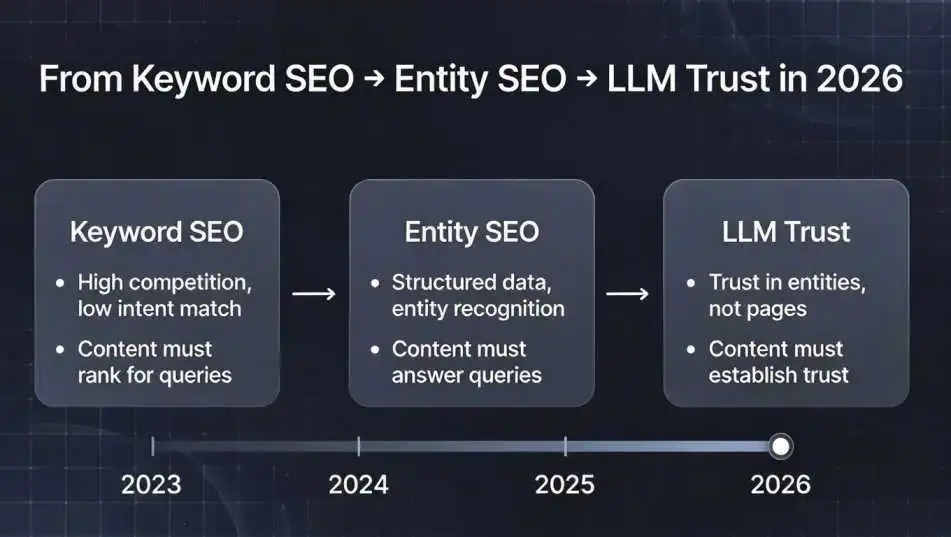
If you’ve been in this game as long as I have, you probably remember the days when we obsessed over “strings” like literal strings of characters we called keywords. If you wanted to rank for “leather boots,” you just made sure those exact letters appeared enough times. But that’s not how the brain works, and it’s definitely not how Google or Gemini works anymore.
Brand Entity SEO is the shift from “strings” to “things.” It’s about making sure your brand is recognized as a distinct, three-dimensional “node” in a massive digital map called a Knowledge Graph.
Instead of just a URL with some text, the machine sees you as an entity like a company with founders, a physical location, specific services, and a reputation.
In 2026, you aren’t just trying to rank a page but also you are trying to become a fact in the AI’s memory.
A Quick Trip Down Memory Lane
Honestly, this didn’t happen overnight. It’s been building since 2012 when Google first said they wanted “things, not strings” with the launch of the Knowledge Graph.
We went through the BERT and MUM eras, where the algorithms started getting better at understanding context and complex human questions.
Then came the SGE (Search Generative Experience) rollout, which eventually became the AI Overviews we see today. Now, in 2026, we’ve entered the full-blown LLM era.
These models don’t just “search” but they synthesize. They take everything they’ve learned about you from your site, your LinkedIn, and your industry mentions, and they build a profile. If that profile is blurry, you’re invisible.
How the Game Has Changed
You might be wondering how this differs from what you’ve been doing for years. Here’s a quick breakdown of how the landscape has shifted:
| Feature | Traditional SEO | Brand Entity SEO | LLM Optimization |
| Primary Goal | Rank #1 for a keyword. | Establish a verified identity. | Get cited as the “Source of Truth.” |
| How it Works | Matching text to queries. | Connecting nodes in a graph. | Providing context for synthesis. |
| Key Metric | Organic Clicks. | Knowledge Panel presence. | AI Visibility Score. |
| Main Asset | Individual Blog Posts. | The Semantic Footprint. | Extractable, verified facts. |
The Signals That Actually Move the Needle
So, how does an AI decide if you’re a real authority or just another website? It looks for a few specific signals.
First is Consistency. If your site says one thing and your social profiles say another, the AI gets confused. And believe me, confusion is the death of rankings. Then there’s Corroboration. Does the rest of the internet agree with who you say you are?
Wait, here’s a term you should know: Authority Co-occurrence. That’s just a fancy way of saying “who are you hanging out with?” If your brand name is constantly mentioned alongside other trusted entities in your niche, the AI starts to trust you by association.
It’s like being invited to the right table at a conference. When you add Structured Data (that hidden code like Schema) on top of that, you’re basically handing the AI a cheat sheet to your entire business.
Why Brand Entity SEO Is Critical for LLMs in 2026
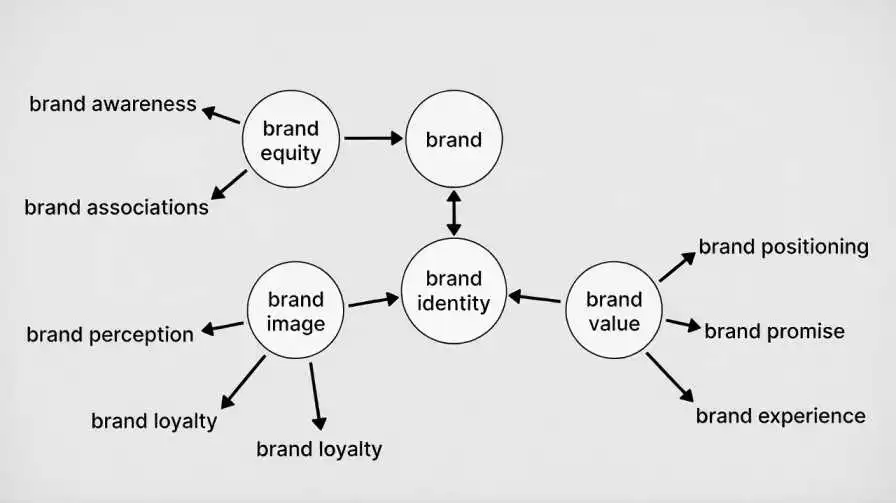
You know what? I was talking to a client the other day who was panicking because their organic traffic had dipped by 20% in a single month. They thought they’d been hit by a penalty. But when we looked closer, their rankings hadn’t moved an inch. What had changed was the SERP landscape.
In early 2026, we’ve reached a point where AI Overviews are appearing on nearly 50% of all searches. For informational queries, that number is even higher.
Users aren’t scrolling down to the “blue links” anymore because the LLM optimized sites is giving them the answer right at the top. This shift has pushed zero-click searches to nearly 60% of all Google activity.
LLMs Reward the “Safest” Bet
Large Language Models are built to avoid one thing above all else and being wrong. We call it “hallucination,” and for an AI, it’s a PR nightmare. Because of this, LLMs like Gemini and ChatGPT have a massive bias toward trusted entities.
When an AI is synthesizing an answer, it doesn’t just look for the “best” content but it looks for the most verifiable content.
If the machine can’t find a clear, consistent “file” on your brand in its knowledge graph then it won’t risk citing you.
But if you’ve nailed your Brand Entity SEO? You become the “friend” in the recommendation. You get cited more often, you appear in the footnotes, and the AI presents your brand with a much higher level of confidence.
The Real Business Impact of “Being an Entity”
I’ve seen some incredible data lately from brands that made the switch from keyword-targeting to entity-building. On average, brands that are recognized as trusted entities see 41% more organic traffic than those that aren’t.
Why? Because even if the total number of clicks is down across the web, the clicks that do happen are going to the sources cited by the AI.
Wait, let me explain the “Defensive Moat” aspect of this.
In the old days, a competitor with a bigger budget could just outspend you on backlinks and take your #1 spot. In 2026, they can’t easily “buy” their way into being a trusted entity. It takes time, consistency, and real-world corroboration to build a Knowledge Panel.
Once you’re in, it’s incredibly hard for a newcomer to dislodge you. You’ve essentially built a wall around your brand’s authority.
The Authority Flywheel Effect
When you get Brand Entity SEO right, it creates what I like to call the Authority Flywheel. It looks something like this:
- Entity SEO: You define your brand clearly using structured data.
- AEO (Answer Engine Optimization): You provide clear, citable answers that LLMs love.
- Third-Party Links: Other sites cite your original research or data.
- Compounding Visibility: The LLM sees the links and the structured data, increases its “Trust Score” for your brand, and starts citing you even more.
Honestly, it’s a compounding effect. The more the AI trusts you, the more it cites you, and the more it cites you, the more users search for your brand specifically.
The Risks of Staying “Invisible”
If you ignore this, the risks are pretty blunt. You won’t just “rank lower” also you will become invisible. Or worse, the AI will misrepresent you.
I’ve seen cases where a brand’s outdated information was pulled from a random directory because the brand hadn’t bothered to define themselves clearly. The AI recommended a service the company hadn’t offered in two years.
In 2026, your brand isn’t what you say it is; it’s what the LLMs can prove it is. If you aren’t managing that narrative, you’re leaving your reputation in the hands of a machine that is just trying its best to guess.
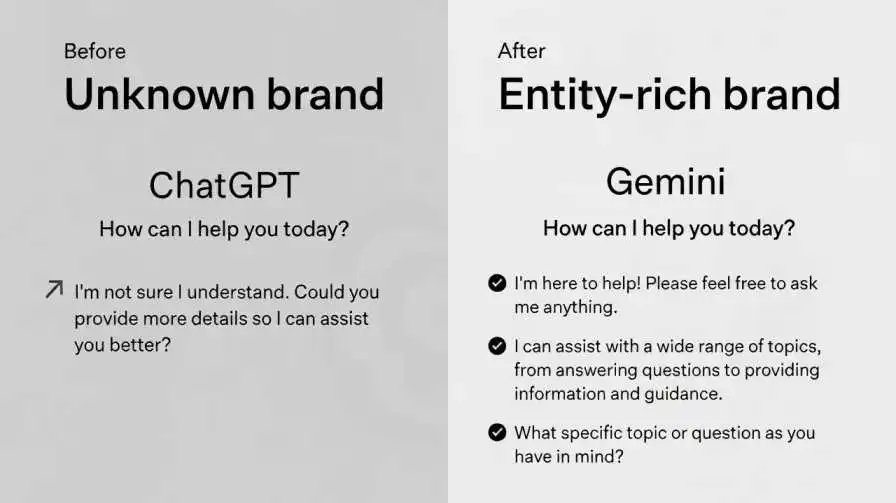
How LLMs Evaluate and Trust Brand Entities
I’ve spent the last seven years watching Google go from a basic index to a reasoning engine, but what’s happening in 2026 is on a whole different level.
When an LLM like Gemini or Claude looks at your brand then it isn’t “reading” your site the way a human does. It’s performing a massive, high-speed audit of Canonical Facts.
Think of it like a digital background check. The AI is looking for “Semantic Triples” like the atomic units of knowledge. This is where your SEO strategy meets data science.
Basically, a triple is a Subject → Predicate → Object statement.
For example: [Zumeirah] → [provides] → [Web Design Services].
If the AI can find this exact relationship repeated across your site, your LinkedIn, and third-party directories, it checks a box. If it finds conflicting data? That’s where the trouble starts.
The Pillars of AI Trust
So, what are these models actually grading you on? Beyond the basics, they’re obsessed with a few core factors:
- Multi-Surface Corroboration: Honestly, your own website is the least trustworthy source in the eyes of an AI. It wants to see the same “facts” about your brand corroborated on independent surfaces like news sites, industry databases, and social platforms.
- E-E-A-T Signals (The 2026 Version): Experience and Expertise aren’t just words anymore but they’re verifiable events. Did your founder speak at a conference? Is there a case study with measurable data? LLMs hunt for these “proof points” to calculate your authority.
- Freshness: You know what? If your entity data hasn’t been updated in twelve months, the AI assumes you’ve gone out of business or lost your edge. In a world moving this fast, “old” equals “unreliable.”
The Silent Killer: Entity Fragmentation
Here’s the thing that trips up even the biggest brands: Entity Fragmentation. This happens when your brand’s digital identity is split into a dozen different “mini-identities.”
Maybe your Facebook page uses an old address, your LinkedIn uses a slightly different company name, and your website doesn’t have clear Organization Schema.
To an LLM, these look like three separate, weak entities instead of one powerful brand.
When an AI encounters this kind of ambiguity, it doesn’t try to solve the puzzle but it just moves on to a competitor with a cleaner structure.
If the AI has to guess who you are, you’ve already lost. Brand Entity SEO is about removing that guesswork and becoming the “Source of Truth” that the machine can bet its reputation on.
Step-by-Step Guide: Build Brand Entity SEO That LLMs Trust
Look, I’ve seen enough “how-to” guides in my life to know that most of them are just fluff. You don’t need more theory but you need a blueprint. If you want to move from being a “ghost” to a “Source of Truth” in the eyes of an LLM, you have to follow a specific, technical handshake.
In 2026, building an entity is less about “writing content” and more about architecting data. Here is the 10-step process we use to build unbreakable trust with the AI.
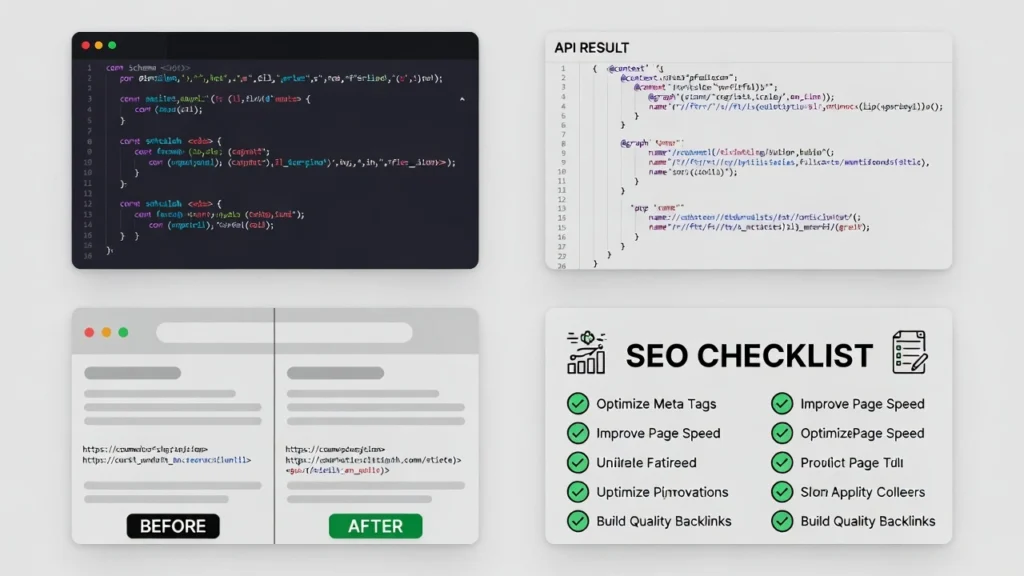
Step 1: Audit Your Current Brand Entity Status
Before you build, you have to know what the machines already “think” about you. Honestly, most brands are shocked when they see how fragmented their digital identity is.
- The Direct Prompt Test: Go to ChatGPT, Claude, and Gemini. Ask them: “Tell me about [Your Brand Name].” Are they accurate? Do they hallucinate? Do they know your founder? If they say “I don’t have enough information,” you have an Entity Absence problem.
- The Knowledge Graph API: Use the Google Knowledge Graph Search API or a tool like Kalicube Explorer. It will tell you if you have a unique Entity ID (it usually starts with
/g/or/m/). If you don’t have an ID, you aren’t an entity yet; you’re just a keyword. - Sentiment Audit: Use a Natural Language API (like Google’s NLP demo) to analyze your top 10 search results. Is the sentiment “Neutral” or “Positive”? LLMs are highly sensitive to sentiment like if the “vibe” of your mentions is negative, the AI will hesitate to recommend you.
Step 2: Define Your Canonical Brand Entity Bio
You know what? LLMs are obsessed with consistency. If your “About” page says you were founded in 2015, but your LinkedIn says 2014, you’ve just created “ambiguity.” And ambiguity is the death of trust.
- The Semantic Triple: Write your brand’s core identity in Subject → Predicate → Object format. [Zumeirah] → [is an] → [SEO & Web Design Agency].
- The “Source of Truth” Bio: Write a definitive, 500-word biography that includes your USP, key people, history, and awards. This bio must be the exact same (word-for-word) on your website, your social profiles, and every directory you touch.
Step 3: Claim and Optimize Core Entity Properties
Think of this as “staking your claim” on the digital map. The AI looks at these high-authority surfaces to verify your existence.
- The “Big Three”: Secure your Google Business Profile, Crunchbase, and LinkedIn Company Page. Even if you aren’t a “startup,” Crunchbase is a massive signal for LLMs because of its structured data.
- Wikipedia & Wikidata: I’ll be blunt: getting a Wikipedia page in 2026 is hard. But Wikidata is the “backdoor.” It’s a structured database that feeds the Knowledge Graph. If you can get a verifiable Wikidata entry, you are 70% of the way to a Knowledge Panel.
- Secure Your Panel: If a Knowledge Panel appears when you search your brand, click “Claim this knowledge panel.” This gives you direct feedback to Google to correct errors.
Step 4: Deploy Comprehensive Organization Schema Markup
This is where the magic happens. You are essentially handing the AI a “cheat sheet” to your business in a language it speaks fluently: JSON-LD.
- The “Organization” Schema: Don’t just use the basic fields. You need to include:
sameAs: Link to your 30+ social and directory profiles.founder: Connect your brand to your own personal entity.awards: List every verifiable industry win.knowsAbout: Explicitly list your topical pillars.
- Validation: Use the Schema Markup Validator. If there’s even one red error, the AI might discard the whole block.
Step 5: Build a Consistent Digital Footprint
Here’s a term I use with my clients: Multi-Surface Corroboration. The AI doesn’t trust you just because you say you’re great. It trusts you because the internet agrees.
- The 30-Touchpoint Rule: Your Name, Address, and Phone (NAP) must be identical across at least 30 high-authority sites (Yelp, Clutch, Trustpilot, etc.).
- Visual Consistency: Use the same logo file and brand colors. LLMs are multimodal now because they “see” your brand across the web.
Step 6: Create Citation-Friendly, LLM-Optimized Content
In 2026, we don’t just write for readers; we write for extractability.
- The “Golden Answer” Format: Start your key sections with a 40–60 word summary. No fluff. Just the facts.
- Proprietary Data: You know what? LLMs are tired of the same old tips. If you publish original research or a unique dataset, the AI has to cite you because you are the only source for that specific fact. This is the fastest way to earn “Source Authority.”
Step 7: Earn Authoritative Mentions & Digital PR
A link is a vote, but a mention is a verification. In the LLM era, being mentioned in a trusted publication without a link is often just as powerful as a backlink.
- The “Power Domains”: Focus on getting featured in sites that LLMs already trust like Forbes, TechCrunch, or niche-leading journals.
- Co-Citation: Try to get mentioned in “Listicles” alongside your biggest competitors. If an AI sees “[Competitor A], [Competitor B], and [Zumeirah],” it assumes you are in the same tier of authority.
Step 8: Forge Entity Relationships & Topical Authority
You are the company you keep. If your brand entity is “linked” to other high-authority entities, your own trust score rises.
- Partnerships & Events: List your official partners in your schema. If you speak at a major event, make sure the event site links to your entity profile.
- Internal Entity Linking: Don’t just link to “Blog Post A.” Link to your “Service Entity” page. Use anchor text that reinforces the relationship (e.g., “Our [Web Design Services] in Dubai”).
Step 9: Optimize for Generative Engine Optimization (GEO)
This is the new frontier. Generative Engine Optimization is about making sure your content is the easiest for an AI to synthesize into an answer.
- Lead with Definitions: Use “What is…” and “How to…” headers followed immediately by the answer.
- The “llms.txt” File: Just like
robots.txttells crawlers where to go, allms.txtfile (a new 2026 standard) tells AI models exactly which parts of your site are the most authoritative for training.
Step 10: Monitor, Measure & Iterate
Honestly, an entity is never “finished.” It’s a living thing that decays if you don’t feed it.
- Citation Share-of-Voice: Use tools like Semrush AIO or Surfgeo to see how often you are cited compared to your competitors.
- Weekly KG API Checks: Watch your “Confidence Score” in the Knowledge Graph. If it drops, it means an inconsistency has popped up somewhere on the web that you need to squash.
Advanced 2026 Tactics to Accelerate LLM Trust
Most people stop at the basics like they fix their Schem for AEO, update their LinkedIn, and think they’re done.
But in 2026, the real pros are playing a different game. If you want to move from “recognized” to “unshakable,” you have to push into the territory that most brands are too lazy to touch.
The Founder-Entity Synergy
Here’s a secret I’ve learned. LLMs find it much easier to trust a human than a faceless corporation. In 2026, your Personal Brand is the secret sauce for your company’s SEO.
When you connect your founder’s entity to the company’s entity via founder and knowsAbout schema, you’re creating a “Trust Bridge.”
If the AI sees that Mohammad Safwan is a verified expert with a history of speaking at events and writing authoritative papers, it naturally boosts the trust score of Zumeirah. Honestly, if your founder is a “ghost” online, your company is fighting with one hand tied behind its back.
Proprietary Research as Citation Magnets
I can’t stress this enough like LLMs are tired of the same recycled tips. They are programmed to prioritize Information Gain.
If you publish an original study say, a 2026 report on “AI Search Trends in the UAE” then you aren’t just writing a blog post. You are creating a unique fact.
Because you are the only source of that data, every LLM that wants to provide an accurate answer must cite you. This is the ultimate “cheat code” for earning high-authority citations without begging for backlinks.
Video and Podcast Transcript Optimization
Wait, let’s talk about “invisible” content. Most people think AI only reads text. Wrong. In 2026, the multimodal nature of models like Gemini means they are “listening” to your videos and podcasts.
But you have to make it easy for them. Don’t just upload a video actually upload a structured transcript that includes timestamps and H2 headers.
Use VideoObject schema to define the “entities” discussed in the clip. When a user asks an AI a question, it might not just give them a text answer also it might play a specific 30-second clip of you answering that exact question.
The Multi-LLM Refinement Loop
Here’s a tactic I use with my high-end clients: we don’t just optimize for Google. We run a testing loop across ChatGPT, Claude, and Gemini every week.
We use custom prompts to ask the AI:
“Which brands are the top authorities in [Niche] and why?” If we aren’t in that list, we ask the AI: “What information is missing for [Our Brand] to be considered a leader?” The AI will literally tell you its own gaps. It might say, “I haven’t seen recent third-party corroboration of their expertise.”
Boom, there’s your to-do list for next week.
Defending Against Negative Entity Drift
Finally, let’s talk about the “Defensive Moat.” Sometimes, the AI starts associating your brand with the wrong things maybe an old controversy or a competitor’s product. We call this Negative Entity Drift.
To fight this, you need a “Semantic Shield.” This means flooding the Knowledge Graph with positive, high-authority associations.
If you see the AI start to drift, you need to launch a Digital PR campaign that specifically targets the keywords and entities you want to be associated with.
In 2026, you can’t just ignore a “bad vibe” in the AI’s memory but you have to actively reprogram it.
Essential Tools & Resources for Brand Entity SEO
I’ve seen people spend thousands on tools that do nothing but spit out pretty graphs that don’t actually help you rank.
In 2026, your toolkit needs to be lean, technical, and most importantly capable of seeing the web the way an LLM does.
If your software is still just tracking keyword positions on a grid, you’re essentially bringing a knife to a drone fight.
The “Must-Have” Free Essentials
Before you go breaking the bank, there are a few resources that are absolute non-negotiables for any serious entity strategy.
- Google Knowledge Graph Search API: Honestly, this is the first thing I check. It’s the direct line to Google’s “brain.” You can use it to see if your brand has a unique Entity ID and what “types” the machine associates with you.
- Schema Markup Generator & Rich Results Test: Don’t guess with your JSON-LD. Use a generator to build your Organization Schema and then run it through the Rich Results Test to ensure there are no “crawl blockers” for the AI bots.
- Google Search Console (Insights 2.0): The 2026 version of GSC now includes a dedicated “AI Citations” tab. It’s the only place where you can see exactly which queries are leading to your site being used as a source in an AI summary.
The Professional “Discovery Stack”
When you’re ready to scale, you need the heavy hitters. These are the tools that help us at Zumeirah manage complex entity footprints for our clients.
- Kalicube Pro: This is the gold standard for managing the “Algorithmic Trinity.” It’s designed specifically to help you build and maintain Knowledge Panels while squashing entity fragmentation.
- Semrush AIO & AI Visibility Toolkit: This is a game-changer. It allows you to monitor your “Share of Voice” across platforms like ChatGPT and Gemini. You can literally see which prompts are triggering your brand mentions and where you’re losing out to competitors.
- Ahrefs Brand Radar: Ahrefs has moved way beyond just backlinks. Their new radar tool tracks “Mention Velocity,” which is a key signal for how much the web is talking about you as an authority.
- Brand24 / Mention: You need real-time monitoring for sentiment. If a negative thread starts gaining traction on a niche forum, these tools alert you before the AI has a chance to bake that negativity into your permanent entity file.
Wait, here’s a pro tip: if you’re on a budget, start with the Google KG API and a solid Schema strategy. You’d be surprised how much of the “heavy lifting” you can do for free just by being more precise with your data than the next guy.
7 Common Brand Entity SEO Mistakes That Kill LLM Trust
I’ve seen a lot of good people waste months of effort because they were still playing by the 2018 rulebook. In 2026, LLMs aren’t just “reading” your site but they are judging your reliability.
If you make these common blunders then the AI will simply decide that you aren’t worth the risk of a citation.
The Trust-Killers You Need to Avoid:
- Inconsistent Naming (The “Identity Crisis”): Honestly, this is the most frequent mistake. If you’re “Zumeirah Agency” on LinkedIn and “Zumeirah Web Design” on your website, you’ve just created a split entity. The AI won’t guess which one is “real”; it will just lower your confidence score.
- Weak or “Template” Schema: Just checking the box for “Organization Schema” isn’t enough. If you aren’t using
sameAsto connect your 30+ profiles or defining yourfounders, you’re leaving the AI to do the detective work. And believe me, AI is lazy when it doesn’t have clear data. - Ignoring Offsite Signals: You know what? Your own website is the most biased source of information. If no one else is talking about you on Reddit, niche forums, or news sites then the AI won’t trust your self-proclaimed authority.
- Short-Term “Campaign” Thinking: Entity SEO isn’t a one-and-done project. It’s a permanent state of brand maintenance. If you stop updating your “Freshness” signals, your entity will start to “decay” in the Knowledge Graph.
- Keyword-Only Tunnel Vision: If you’re still obsessing over getting “SEO in Dubai” into every H2 but neglecting to define your services as Semantic Triples, you’re optimizing for a version of Google that doesn’t exist anymore.
- Neglecting Real-World E-E-A-T: You can’t just “write” expertise. You have to prove it. Missing case studies, lack of founder bios, and zero mentions of real-world impact make you look like a “thin” AI-generated entity.
- Flying Blind (No Monitoring): If you aren’t checking the Knowledge Graph API or prompting LLMs weekly to see how they perceive you then you’re just hoping for the best. In 2026, “hope” isn’t a strategy.
If you’ve already made some of these mistakes, don’t panic. The Knowledge Graph is dynamic. Start fixing your Canonical Bio today, and you’ll see the AI’s perception of your brand start to shift within a few weeks.
How to Measure Success & ROI in 2026
You know what? I’ve sat in too many boardrooms where people are still bragging about “keyword rankings” that don’t actually move the needle.
In 2026, the scoreboard has changed. If you’re still measuring ROI based on where you sit for a generic term, you’re missing the forest for the trees.
To truly see if your Brand Entity SEO is working, you need to track how “integrated” you are into the AI’s decision-making process.
The New KPIs for the Entity Era
So, what are we actually looking for? It’s not just about clicks anymore but it’s about Influence.
- Knowledge Panel Appearance: This is your digital “badge of honor.” Does your brand have a verified panel when people search for you? If yes, your entity is officially recognized.
- LLM Citation Rate: How often is ChatGPT, Gemini, or Claude actually naming your brand when answering a niche query? We track this as “Share of Model” (SoM).
- AI Overview (AIO) Inclusion: Are you the “source” being pulled into those big blocks at the top of Google? This is the new #1 spot.
- AI Referral Traffic: Honestly, this is the most satisfying metric. When you see a spike in traffic coming directly from
chatgpt.comorgemini.google.com, you know you’ve become a trusted recommendation. - Entity Strength Score: Using tools like the Google KG API, we monitor your “Result Score.” If that number is trending up, it means the machine’s confidence in your brand is growing.
Wait, let me explain why Branded Search Growth is the ultimate ROI signal. When your Entity SEO is firing on all cylinders, people stop searching for “SEO agency” and start searching for “Zumeirah.”
That’s when you’ve moved from being a commodity to being a destination. That is how you win in 2026.
The Future of Brand Entity SEO Beyond 2026
I’ve been doing this for over seven years, and if there is one thing I’m certain of then it’s that the “finish line” keeps moving. As we look past 2026, we’re heading into the era of Agentic AI. We are moving away from bots that just “answer” and toward agents that “act.”
In the near future, your brand entity won’t just be a source of information but it will be a participant in a transaction. Imagine an AI agent booking a service or hiring an agency on behalf of a user.
In that world, if your Entity Trust Score isn’t impeccable, the agent will simply bypass you for a “safer” verified option. It’s going to be a “Zero-Friction” economy where the machines do the vetting for the humans.
We’re also seeing a massive shift toward Multimodal Entities. Your brand won’t just be defined by text and schema but it will be defined by the “vibe” of your videos, the tone of your founder’s voice in podcasts, and the visual consistency of your work across the metaverse. Everything is becoming a data point.
Honestly? The biggest change will be Real-Time Entity Updates. We are moving away from the “crawl and index” cycle that takes days or weeks.
In the next few years, your digital footprint will be updated in the knowledge graph almost instantly. A single high-authority mention could boost your visibility in seconds but a single inconsistency could drop you just as fast.
The game is getting faster, and the stakes are getting higher. Are you ready for it?
Conclusion
You know what? We’ve covered a lot of ground today, but if there is one thing I want you to take away from this, it’s that the era of “gaming the system” is officially over. In 2026, Brand Entity SEO isn’t just another item on your marketing checklist but it is the absolute foundation of your digital existence.
Honestly, the math is simple: Brand Entity SEO equals LLM Trust, and that trust is the only currency that buys you sustainable visibility in a world dominated by AI Overviews and generative answers.
If the machines don’t know who you are, the humans will never find you. It’s a bit of a “adapt or disappear” moment for all of us.
Let me tell you something I’ve learned after seven years in the trenches: the best time to build a moat was yesterday. The second best time is right now. Don’t wait until your competitors have locked down their Knowledge Panels and cornered the AI citations in your niche.
You have the playbook, you have the tools, and you know exactly what’s at stake.
Start with Step 1 today. Run SEO audit, prompt the LLMs, and see where you stand. Once you bridge that gap between being a “string” and being a “thing,” you’ll realize that the AI revolution isn’t a threat and it’s the biggest opportunity your brand has ever had.
FAQ: Everything You Need to Know About Brand Entity SEO
I’ve been answering these exact questions in coffee shops and boardrooms all across Dubai lately, so I figured I’d just lay them out here for you.
If you’re trying to wrap your head around how 2026 search actually works, these are the “golden answers” you’re looking for.
What is the difference between Brand Entity SEO and traditional SEO?
Traditional SEO focuses on ranking web pages for specific keywords (strings). Brand Entity SEO focuses on establishing your business as a verified, unique identity (things) in the Knowledge Graph. It’s the difference between ranking for a term and being recognized as an authority.
How long does it take to build a strong brand entity?
Expect a 3 to 6-month timeline for initial recognition. While technical signals like Schema show up quickly, building the deep “trust” required for an LLM to cite you as a primary recommendation usually takes a year of consistent, cross-platform corroboration.
Do I need a Wikipedia page for Brand Entity SEO?
No. While helpful, it’s not a barrier. In 2026, AI models use “multi-surface corroboration.” Having a verified Wikidata entry, a robust Crunchbase profile, and consistent mentions in niche-leading publications is just as effective for establishing authority.
How can small businesses compete in LLM recommendations?
Precision beats scale. By defining a narrow topical authority and using “Zero-Ambiguity” definitions, a small brand can become the AI’s #1 choice for specific niche queries, even outperforming global giants who have a more diluted entity profile.
What schema markup is best for brand entities?
The Organization schema type via JSON-LD is your foundation. For maximum trust, you must populate the sameAs (linking your social/directory profiles), founder, and knowsAbout fields. This maps your entity’s relationships directly for the AI.
How do I check if LLMs already trust my brand?
Prompt ChatGPT, Gemini, or Claude directly: “What is [Brand Name] and what is their USP?” If the AI provides a factual summary with citations, you have a solid entity. If it’s vague or “doesn’t know,” you have an Entity Absence problem.
What if an AI is hallucinating about my brand?
Hallucinations usually stem from Entity Fragmentation and conflicting data across the web. To fix it, you must “flood the graph” by syncing your bio, address, and services across every major platform (LinkedIn, GMB, etc.) until the AI sees a single, consistent truth.