

I was looking at some fresh search data the other morning, and it honestly made me stop and rethink everything we’ve been doing lately. We’ve reached a point where the traditional “ten blue links” are basically a relic of the past.
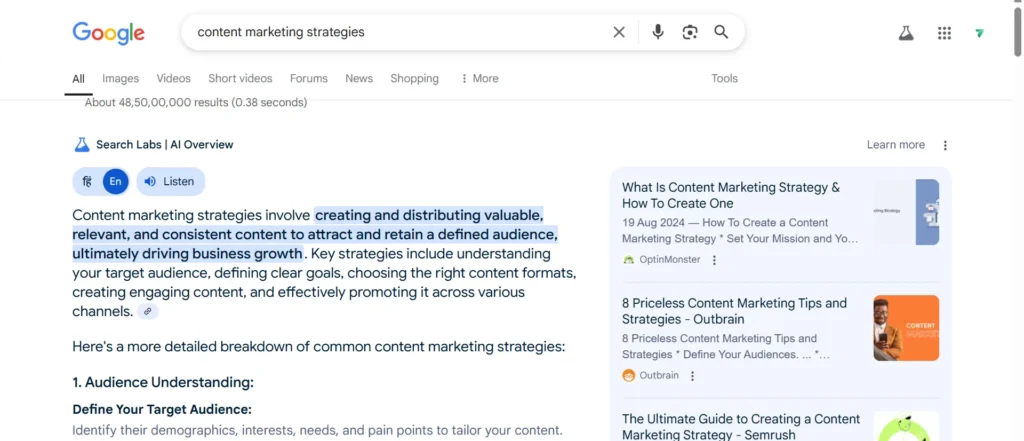
Right now, Google’s AI Overviews have scaled to reach over 2 billion monthly users, appearing in anywhere from 18% to 30% of all searches. That isn’t just a minor update but it is a total overhaul of the digital landscape.
Here is the part that really stings like when one of those AI summaries triggers at the top of a page, the organic click-through rate for the top results can plummet by as much as 61%.
It’s brutal. But this is the silver lining like if your brand is actually cited as a source within that summary, we see a 35% jump in trust and referral intent.
So, the game hasn’t ended; the field has just moved.
What are we actually talking about?
Let me explain what Multimodal SEO Strategy really is without the fluff actually it’s the practice of optimizing your brand’s presence so that AI models can seamlessly connect the dots between your text, images, videos, and structured data to verify you as the ultimate authority.
In 2026, the shift is undeniable. Search is no longer a “text-first” world. We’ve moved into a reality where Gemini-powered engines are processing multiple “modes” of information at once.
They aren’t just reading your blog post actually they are “watching” your video transcripts, “analyzing” your charts, and “listening” to the context of your brand mentions all at the same time. If you’re still just chasing keyword density in a Word doc, you’re essentially invisible to the modern machine.
The 2026 Roadmap
Honestly, I’ve seen too many marketers panicking because their old tactics have stopped working. They see the “zero-click” trend and think SEO is dying.
It’s not. It’s just becoming more sophisticated. This complete 2026 Multimodal SEO Strategy roadmap gives you the exact phased plan to audit, create, optimize, and eventually dominate those AI Overviews.
We’re going to look at how to stop being just another “website” and start being a multi-dimensional authority that the AI has to cite.
The brands that win this year won’t be the ones with the most backlinks, but the ones that provide the most “extractable” value across every medium.
What Is Multimodal SEO Strategy?
If you’ve been in this game as long as I have, you probably remember when Search Engine Optimization was just about making sure your keyword appeared in the right places, I mean the H1, the first paragraph, and maybe a few times in the footer for good measure.
But honestly, that’s like trying to explain a movie by only showing someone the script. It’s missing the texture, the sound, and the visual impact.
Multimodal SEO Strategy is the 2026 evolution of that process. Simply put, it’s the art and science of optimizing your brand’s content across multiple modalities like text, images, video, audio, and interactive elements so that AI systems like Google’s AI Overviews, Gemini, Perplexity, and ChatGPT Search can truly “understand” you.
We aren’t just trying to get a page indexed anymore but we are trying to get our entire brand synthesized and cited as a coherent authority.
The Shift from Keywords to Contextual Synthesis
In the old days, Google was a librarian looking for a specific book title. Today, the AI is a research assistant that reads the book, watches the documentary, listens to the podcast, and then summarizes the “truth” for the user.
If your information is only living in one of those formats then the AI’s summary of you will be incomplete.
Here is how the landscape has fundamentally shifted:
| Aspect | Traditional SEO (Pre-2024) | Multimodal SEO (2026) |
| Primary Unit | The Keyword (String) | The Entity & Concept (Thing) |
| Content Focus | Long-form articles and blogs | Integrated hubs (Video + Text + Data) |
| AI Processing | Text-based NLP (Natural Language) | RAG + Multimodal Model Synthesis |
| User Interaction | Typing into a search bar | Voice, Lens, and Conversational Probing |
| Success Metric | Page 1 Rank for “Term X” | Citation Rate in AI Overviews |
How AI Overviews Actually “Eat” Your Content
Most people think the AI just reads their blog and moves on. But in 2026, the tech is much cooler (and more complex) than that. These LLM Models use a process called Retrieval-Augmented Generation (RAG) combined with multimodal understanding.
When a user asks a question, the AI scans its “index” not just for words, but for visual and auditory proof.
It might pull a specific “chunk” of text from your guide, but it will pair it with a chart from your PDF and a 10-second clip from your YouTube video because it “knows” that combination provides the most helpful answer.
If those elements aren’t technically aligned then the AI can’t connect the dots, and you lose the citation.
Why 2026 Is the Tipping Point
So, why are we talking about this now? Honestly, because the hardware has finally caught up with the software. We’ve hit a point where Google Lens is processing nearly 20 billion visual searches every single month.
People aren’t just typing “how to fix a sink” but they’re pointing their cameras at the sink and asking their AI glasses or phones to “identify this part.”
We are seeing a massive convergence of voice and image search. In Dubai, I’m seeing more people use their voice to search while walking through the mall than I see people typing.
If your brand doesn’t have a “voice” or a “visual identity” that the AI can recognize and verify then you’re basically a ghost in the machine.
It’s time to move past the text-only world and start building for the way humans and machines actually communicate today.
Why Multimodal SEO Is Non-Negotiable for Ranking in AI Overviews in 2026
I was chatting with a fellow SEO strategist in Dubai last week, and we both agreed: we’ve officially entered the “show, don’t just tell” era of the web.
If you’re still relying on a 2,000-word block of text to do all the heavy lifting, you’re essentially bringing a typewriter to a space race.
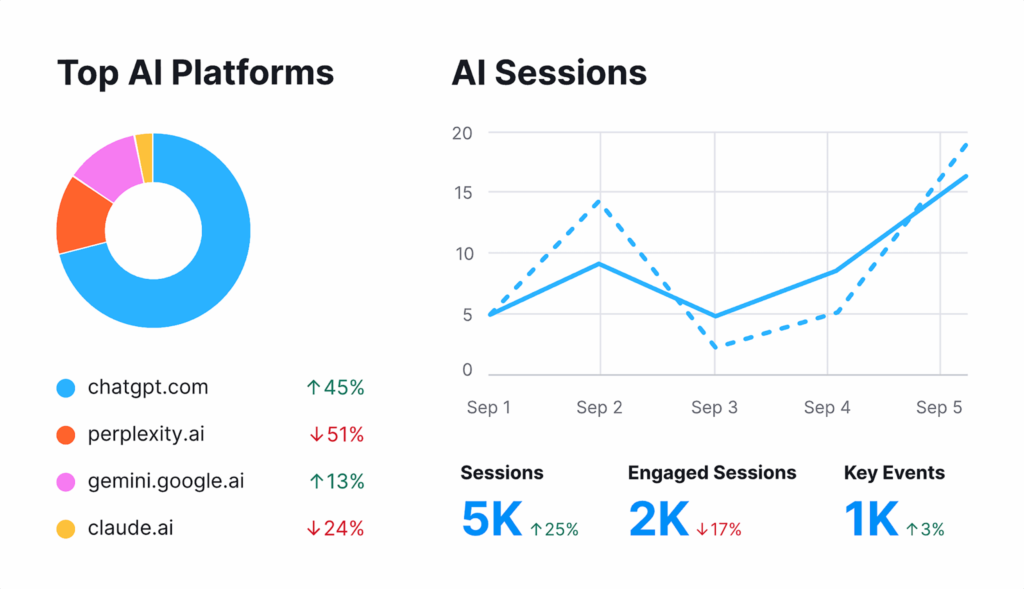
In early 2026, the data is screaming at us. AI-referred search sessions have seen a staggering 527% year-over-year increase. That isn’t just growth actually it’s a takeover.
Meanwhile, the dreaded “zero-click” reality has matured roughly 43% of searches now end without a single click because the AI Overview (AIO) gives the user exactly what they need right on the SERP.
The Real Cost of Being “Mono-Modal”
If you’re only optimizing for text, you’re missing out on the fastest-growing discovery paths. Google Lens has hit a massive milestone, processing roughly 20 billion monthly queries in 2026.
About 1 in 10 searches now starts with a camera lens rather than a keyboard. If your brand doesn’t have a visual “hook” that the AI can recognize and verify, you’re functionally invisible to millions of high-intent users every single day.
Here’s why shifting to a multimodal strategy isn’t just a “best practice” but it’s a survival requirement:
| Benefit | Impact on Visibility | Why It Works in 2026 |
| Maximized Discoverability | +65% YoY Lens Growth | Your images/video become “searchable” entry points. |
| Deep Engagement | +100% Dwell Time | Video and interactive tools keep users from bouncing back to the AIO. |
| Authority Signals | Higher Citation Velocity | AI rewards brands that provide “Information Gain” across formats. |
| Conversion Uplift | 4.4x to 5x Higher | AI-referred traffic arrives pre-qualified and ready to buy. |
The Risky Game of “Ignoring the Visuals”
The risk of staying “text-only” is extinction. I’ve watched competitors take a single, well-researched article and repurpose it into ten different formats like short-form video, data visualizations, audio summaries, and interactive calculators.
Because they have Multimodal Breadth, the AI sees them as a more comprehensive “expert” on the topic. When the AI Overview assembles an answer, it’s going to cite the brand that provides the most contextually rich “chunks” of information.
If you only provide the text, and your competitor provides the text plus the explanatory video, guess who gets the primary citation?
How Multimodal SEO Directly Feeds Google AI Overviews
Wait, let me explain the “under the hood” mechanics of why this works. In 2026, Google’s ranking systems are obsessed with three specific things:
- Citation Velocity: This isn’t just about backlinks anymore. It’s about how often your brand is mentioned across different mediums like social videos, podcasts, and blogs in a short period.
- Entity Alignment: When your video transcript matches your on-page text and your image alt-text, the AI’s “confidence score” in your brand entity skyrockets. It sees you as a consistent, reliable source of truth.
- Information Gain: Honestly, if your article says the exact same thing as the top 10 results, the AI has no reason to cite you. But if you include a unique data visualization or a proprietary video demonstration? You’ve just provided Information Gain, which is the single best way to secure an AIO citation in 2026.
The 2026 Multimodal SEO Strategy Roadmap: Your 7-Phase Execution Plan
You know what? Most strategies fail because they are just a list of “shoulds.” You should do video. You should fix your alt text. But in 2026, if you want to dominate the AI Overviews, you need a sequenced, military-grade execution plan. This isn’t a weekend project; it’s a total shift in how Zumeirah or any brand approaches the web.
I’ve broken this down into seven distinct phases. We’re moving from the “Foundation” to “Off-Page Dominance.” If you follow this timeline, by Q4, you won’t just be ranking; you’ll be the brand the AI can’t stop talking about.
Phase 1: Q1 2026 – Audit & Foundation (Weeks 1–6)
Before we build the future, we have to clean up the past. Honestly, most sites are sitting on a goldmine of content that is just… “stuck” in a 2022 format.
The Content Audit Checklist (Top 20 Assets)
We aren’t auditing your whole site yet and that’s a waste of time. Focus on your top 20 performing assets (by traffic or conversion). Ask these three questions:
- Is it “Extractable”? Can an AI pull a 50-word answer from this without getting confused?
- Is it “Visual”? Does it have a unique chart or image that Google Lens would find valuable?
- Is it “Authoritative”? Does it have a clear founder bio or expert citation linked to a verified entity?
Multimodal Readiness Scorecard
Rate your top pages on a scale of 1–5 across these five pillars:
- Text: High-quality, conversational, and “atomic.”
- Image: Original, high-res, and technically optimized.
- Video: Present, transcribed, and chaptered.
- Audio: Does it have a “Listen to this article” option or podcast tie-in?
- Schema: Is the JSON-LD rich with
VideoObjectandFAQPage?
Competitor Gap Analysis
Use Semrush or Ahrefs to see which of your competitors are winning “AI Citations.” Then, use Google Lens on their top images. If their images lead back to a product page and yours don’t, you have a gap.
Phase 2: Q1–Q2 – Build Core Content Pillars (Weeks 7–12)
Phase 2 is about picking your battles. You can’t be an expert in everything.
- Identify 3–5 Evergreen Pillars: For Zumeirah, this might be “SEO in Dubai,” “AI Search Optimization,” and “Web Design for Conversion.” These are your “Hills to Die On.”
- Create One “Hero” Asset Per Pillar: This is your definitive guide. It must be at least 2,500 words of “Answer-First” text, but it also needs a 5-minute “Executive Summary” video embedded at the top.
Phase 3: Q2 – Repurpose into a Full Multimodal Ecosystem
Here’s where we get efficient. You take that “Hero” asset from Phase 2 and explode it into ten different formats.
The 5-Step Repurposing System:
- Text to Video: Use the H2s as a script for a short-form video.
- Video to Audio: Extract the audio for a “Quick Tip” podcast segment.
- Data to Infographic: Turn your stats into a “Lens-Friendly” chart.
- Long-form to Social Clips: Use Opus Clip to find the “viral” moments in your video.
- Text to Atomic Answers: Create a TL;DR summary for every section.
The 2026 Toolkit:
- Descript: For editing video by editing the text transcript.
- Synthesia: For creating AI-avatar video updates for your blog posts.
- Canva AI: For generating high-intent diagrams in seconds.
Phase 4: Q2–Q3 – Modality-Specific Optimization
This is the “technical” heart of the roadmap. This is where we make the content “machine-readable.”
Text for AI: The Atomic Answer Framework
Under every single H2, you must have a 50-word “Atomic Answer.” Think of this as the “snippet bait.”
- Example: “Multimodal SEO is the process of…” * Use conversational tone and high semantic density (mentioning related entities naturally).
Images: Visual Intent Alignment
Stop using stock photos. Seriously.
- File Names:
multimodal-seo-strategy-roadmap-2026.webp(notIMG_123.jpg). - Captions: Google reads the text around the image to understand it.
- Structured Data: Use
ImageObjectschema to tell Google exactly what the image represents.
Video: The AI Extraction Layer
Google doesn’t “watch” your video actually it reads the metadata.
- Transcripts: Upload a clean SRT file.
- Chapters: Use timestamps in the description so the AI can “jump” to the relevant part.
- Schema:
VideoObjectis non-negotiable. It tells the AI the thumbnail, duration, and upload date.
Audio: The “Speakable” Layer
If you have a podcast, don’t just drop a link.
- Include full transcripts on the page.
- Use Speakable Schema to tell the AI which parts are best for voice-assistant playback.
Phase 5: Q3 – Technical & On-Page Signals for AI Overviews
Now we optimize the container that holds all this multimodal goodness.
- Entity Optimization: Link your content to your Knowledge Graph entry. If you don’t have one, this is the time to build your “About” page into a definitive entity source.
- Information Gain: Google’s 2026 algorithm prioritizes “new” info. Include original survey data or a proprietary case study. If your content is just a rewrite of Wikipedia, the AI won’t cite you.
- Cross-Format Internal Linking: Link your video page to your blog post and your infographic to your service page. Create a “Web of Authority.”
Phase 6: Q3–Q4 – Citation Velocity & Off-Page Multimodal
You can’t just talk about yourself like other people (and platforms) need to talk about you.
- Source Velocity Campaigns: Get mentioned on Reddit, LinkedIn, and niche podcasts. When the AI sees your “Multimodal Strategy” mentioned in a Reddit thread and then finds it on your site, its confidence in you doubles.
- Digital PR: Pitch your “Hero” assets to industry news sites. A mention in a “Top SEO Trends for 2026” article is worth its weight in gold.
- Brand Consistency: Ensure your “Brand Name” and “USP” are identical across YouTube, TikTok, and your website. Any “Entity Fragmentation” here will kill your AIO rankings.
Phase 7: Ongoing – Measure, Iterate, Scale (Q4 2026 Onward)
The job is never done. In 2026, the AI models update their “memory” almost weekly.
The Monthly Review Dashboard
Track these three metrics:
- AIO Citation Rate: How many of your target keywords trigger an AI Overview where you are cited?
- Visual Discovery Traffic: How many clicks are coming from Google Lens or Image Search?
- Engagement Depth: Are people staying longer because of the video/interactive elements?
Advanced Tactics to Dominate AI Overviews with Multimodal Content
You know what? Most people stop at the “basics” they fix their alt text, throw a video on the page, and think they’re done.
But if you really want to elbow your way past the giants like Neil Patel or Search Engine Land in 2026, you need to be playing the “Advanced” game. This is where we move from just being “discoverable” to being undeniable in the eyes of an LLM.
The “Atomic Answer + Follow-Up” Cluster
AI Overviews aren’t just answering a single question but they are predicting the next three questions the user is going to ask. If you want to dominate the AIO “real estate,” you need to structure your content in Clusters.
I call this the “Atomic Hook.” Every H2 should provide a 50-word direct answer, but immediately following that, you should include a small “Next Question” section that addresses the most likely follow-up.
- The Atomic Answer: High-density, direct facts.
- The Follow-up: A multimodal “proof” (like a 30-second video clip or a chart) that answers the logical next step.
When the AI “sees” that you’ve already predicted the user’s journey, it’s much more likely to pull your entire “cluster” into the summary rather than just a single sentence.
GEO (Generative Engine Optimization) – The 2026 Edge
Honestly, “SEO” is a bit of an old-school term now. In 2026, we’re doing Generative Engine Optimization. Studies from late 2025 showed that Generative Engines (like Gemini and Perplexity) prioritize “Expert Quotation” and “Statistical Evidence” over keyword density.
At Zumeirah, we use the “Multimodal Evidence” technique. Instead of just writing “Our strategy works,” we embed a screenshot of the data, an expert quote from a verified industry veteran, and a link to the original research.
This creates a “triangulation of trust” that the AI uses to verify your information as a “Source of Truth”.
E-E-A-T Beyond the Text
Wait, let me explain why your video “About” section is just as important as your blog’s “About” section. In 2026, Google’s E-E-A-T signals are multimodal.
- Author Bios on Videos: Don’t just upload a video. Ensure the speaker is identified with a text overlay and that the transcript mentions their credentials.
- Expert Quotes in Images: When you share a chart, include a “Verified by [Expert Name]” watermark in the metadata.
- Multimodal Citations: The AI is looking for consistency. If your video says one thing and your text says another, your “Trust Score” will tank.
Preparing for the Agentic Era
Lastly, we have to look at Agentic Search. We are moving into a world where AI Agents not just humans are the ones “browsing” your site to make decisions. An agent might be tasked with “Finding the best SEO agency in Dubai that offers multimodal strategies.”
To prepare for this, your site needs to be “Scrape-Perfect”. This means your pricing tables, service lists, and video chapters must be clearly defined in your JSON-LD Schema.
If an AI Agent can’t “understand” your offering in under 2 seconds of crawling, it will simply move on to a competitor who has their data organized for machines.
The 2026 Multimodal SEO Tool Stack
You know what? I’ve seen too many people try to manage a 2026 strategy using 2019 tools. It’s like trying to fix a Tesla with a hammer. If you want to dominate the multimodal landscape, you need a stack that actually “speaks” AI.
Here is the toolkit we’re using at Zumeirah to keep our clients ahead of the curve.
The “Core” Visibility Layer
- Google Search Console (Insights 2.0): This is still your “Source of Truth.” In 2026, the new “AI Overview Attribution” tab is where you track which of your images and videos are being pulled into generative summaries.
- GA4 + Looker Studio: We use custom Looker dashboards to track “Visual Intent” traffic. If you aren’t segmenting your Lens and Image search data, you’re flying blind.
- Passionfruit (or similar AI Tracker): This is a 2026 must-have. It tracks your “Share of Voice” specifically within LLMs like Gemini and ChatGPT Search, showing you exactly where you’re cited and where you’re losing to competitors.
The Multimodal Content Engine
- Semrush ContentShake AI: Honestly, this is the best way to ensure your text has the “Atomic Answer” structure the AI craves. It suggests semantic clusters and follow-up questions in real-time.
- Descript: For video, this is non-negotiable. It allows us to edit video by editing the text transcript, making it incredibly easy to “chunk” long-form content into AI-ready clips.
- ElevenLabs: We use this to turn our “Hero” articles into high-quality audio summaries. The AI-generated voice is so natural that it often triggers Google’s “Speakable” schema results.
The Technical Foundation
- Schema.org Generator (Advanced): Don’t just use basic plugins. You need a generator that handles complex
VideoObject,HowTo, andDatasetschemas to ensure your “Information Gain” is readable by machines.
Wait, here’s a pro tip: don’t try to buy everything at once. Start with Search Console and Descript. Once you’ve mastered the art of “chunking” your content, then move into the specialized AI visibility trackers.
Measuring Success: KPIs & ROI for Multimodal SEO 2026
You know what? I’ve seen so many brilliant strategies die in the boardroom because the team couldn’t prove they were actually moving the needle.
In 2026, if you’re still showing a client a “keyword ranking” report then you’re telling a story that’s three years out of date. To prove the ROI of a Multimodal SEO Strategy, you have to measure how much of the “AI Brain” you actually own.
The New Scoreboard: 2026 Primary KPIs
We aren’t just looking for clicks anymore; we are looking for Synthesis. When an AI Overview is generated, does it use your video, your chart, or your text to build that answer? That is the new “Position Zero.”
Here is the measurement framework we use at Zumeirah to track true multimodal impact:
| KPI | What It Actually Measures | 2026 Benchmark |
| AIO Citation Rate | The percentage of your target keywords that trigger an AI Overview where your brand is a cited source. | 25% – 40% for “Pillar” topics. |
| Visual Intent Impressions | Total reach across Google Lens, Image Search, and AI visual modules. | 20%+ YoY growth. |
| Share of Synthesis (SoS) | How much of the total “Real Estate” in a generative answer is occupied by your brand’s assets (Text + Video + Image). | > 15% of the AIO “chunk” space. |
| Multimodal Dwell Time | The average time spent on page when a user interacts with an embedded video or interactive tool. | > 3.5 minutes. |
| AIO Conversion Rate | The lead/sale conversion rate specifically from traffic tagged with AI-referral parameters. | 4x to 5x higher than generic search. |
Tools for Tracking Your “AI Footprint”
Honestly, you can’t track these metrics with standard tools alone. You need to look at AI Visibility Trackers.
- Passionfruit or Perplexity Insights: These are the new “rank trackers.” They don’t just tell you where you are on a page; they tell you your Share of Voice across different LLMs like ChatGPT Search and Gemini.
- Google Search Console (AIO Tab): This is where you see the “Search Appearance” filter for AI Overviews. It’s the only way to see exactly which of your “chunks” are getting clicked.
- Looker Studio (Multimodal Segment): We build custom segments to isolate traffic coming from Google Lens. If you see a spike in “Direct” traffic to your image-heavy pages, there’s a good chance it’s actually visual search traffic that isn’t being attributed correctly.
Wait, here’s the thing about ROI: in 2026, the cost of customer acquisition is skyrocketing everywhere except in the AI Overviews.
Once the AI trusts your multimodal entity then you get “free” authority that your competitors have to pay for with expensive ads. That is where the real profit is hidden.
Common Challenges & Solutions
You know what? I’ve been through enough algorithm updates to know that the “perfect” strategy always hits a few speed bumps when it actually meets the real world. In 2026, transitioning to a Multimodal SEO Strategy isn’t without its headaches.
Most agencies in Dubai are struggling with the same three things, and honestly, if you can solve these, you’re already miles ahead of the competition.
Challenge 1: The “Resource Drain” Reality
The biggest complaint I hear is: “How am I supposed to make videos, podcasts, and infographics for every single blog post?” It sounds exhausting.
The Solution: You don’t. You focus on your “Hero” assets actually the top 20% of your content that drives 80% of your revenue. Use the 5-step repurposing system we talked about in Phase 3 to let the AI do the heavy lifting. Tools like Descript and Synthesia can turn one hour of work into five different content formats.
Challenge 2: Quality Control in an AI-Driven World
With so many “modes” to manage, there’s a massive temptation to just let AI generate everything. But if your AI-generated video says something different than your human-written text, the Entity Alignment fails.
The Solution: Use AI for the format, not the facts. Always keep a human “Subject Matter Expert” (SME) at the center of the hub to verify the Information Gain. The AI handles the “chunking,” but you handle the truth.
Challenge 3: The Attribution Nightmare
How do you prove your worth when 43%+ of searches are zero-click? It’s hard to tell a client that a “citation” is as good as a “click.”
The Solution: You have to shift your reporting to Share of Synthesis and Brand Sentiment. Use tools like Passionfruit to show how your brand is being recommended by the models themselves.
When a user sees your brand mentioned as the “trusted authority” by Gemini, the eventual conversion might happen on social media or direct-to-site, but the SEO was the catalyst.
Future-Proofing Beyond 2026: What’s Next After Multimodal?
You know what? If you think the shift to multimodal is big, wait until you see what happens when the machines stop just “answering” and start “acting.” As we look past 2026, we’re moving into the era of Agentic Commerce.
We are moving away from a web where you search for a service and toward a world where your personal AI agent negotiates and books that service for you in the background.
In this world, your Entity Trust Score is your only currency. If an agent can’t verify your brand’s reputation across text, video, and live data feeds, it will simply skip you for a “safer” verified option.
We’re also seeing the rise of Live Multimodal interactions think Project Astra style where AI processes real-time video, voice, and even gestures simultaneously.
Honestly, the future of SEO isn’t just about being found; it’s about being executable. Your data must be so clean and your authority so well-established across every medium that an AI agent can confidently hire you on behalf of a human.
The “search bar” is fading and the “action engine” is arriving. Are you ready to be the brand it chooses?
Frequently Asked Questions
I’ve been answering these exact questions in boardroom meetings all across Dubai lately, so I figured I’d just lay them out here for you. If you’re trying to wrap your head around how 2026 search actually works, these are the “golden answers” you’re looking for to help you capture those “People Also Ask” spots.
What is a multimodal SEO strategy in 2026?
Honestly, it’s the shift from optimizing for “strings” to optimizing for “senses.” A multimodal SEO strategy is the process of aligning your text, images, videos, and structured data so that AI models like Gemini can synthesize them into a single, authoritative answer. In 2026, it’s not enough to have a good article; you need a cohesive ecosystem where every format reinforces the same “Entity” message for the AI.
How do I optimize images for Google AI Overviews?
Static alt text isn’t enough anymore. To land in an AI Overview, your images need Visual Intent Alignment. This means using descriptive, entity-rich file names, high-resolution original photography (no stock photos!), and ImageObject schema that tells the AI exactly how the visual relates to the text. Google Lens now processes 20 billion searches a month, so your images must be “shoppable” and “identifiable” by the machine.
Does video actually help with ranking in AI Overviews?
Absolutely, in fact, it’s often the “tie-breaker.” AI Overviews prioritize content that offers Information Gain, and a video demonstration provides proof that text alone cannot. To make it work, you must provide the AI with “extraction points”: clear transcripts, chapter timestamps, and a VideoObject schema. If the AI can “chunk” a 15-second clip from your video to answer a user’s question, you’ve won the most valuable real estate on the screen.
How can a small business compete with giants in AI recommendations?
Precision beats scale every single time in the multimodal era. While the “giants” are trying to be everything to everyone, a small brand can dominate by being the uniquely verified expert in a specific niche. By providing high-quality, original data and proprietary research (multimodal evidence), you create “Information Gain” that the AI has to cite because it can’t find that specific data anywhere else.
What is “Atomic Answer” structure and why does it matter?
Think of an “Atomic Answer” as a 50-word, high-density summary placed directly under your H2 headers. It’s designed to be “scraped” by AI agents and LLMs. When you provide a direct, unambiguous answer followed by a multimodal proof like a chart or a short clip you make it incredibly easy for the AI to cite you as the primary source.
How do I check if LLMs already trust my brand?
It’s easier than you think. Open up Gemini or ChatGPT Search in an incognito window and ask: “What is [Your Brand] known for and what evidence do you have?” If the AI pulls in your YouTube videos, cites your blog, or shows your Knowledge Panel data, your multimodal signals are working. If it’s vague, you have Entity Fragmentation, and it’s time to sync your data.
What is “GEO” and how is it different from SEO?
Generative Engine Optimization (GEO) is the practice of optimizing for LLMs and AI Assistants rather than traditional search algorithms. While SEO is about keywords and backlinks, GEO is about Consensus and Citations. It focuses on making your brand the “Source of Truth” that the AI relies on when it generates an answer from scratch.
Is voice search still relevant in the multimodal era?
More than ever. We’re seeing a massive convergence where people use Voice + Image search simultaneously pointing their camera at something and asking, “How do I fix this?”. Including Speakable Schema and ensuring your text is conversational (Flesch score ~80) ensures that your “Brand Voice” is the one the AI chooses to read aloud to the user.
Conclusion: Your Journey to Multimodal Dominance
In 2026, Multimodal SEO Strategy equals LLM Trust. If you want sustainable visibility, you have to stop thinking of your website as a collection of pages and start seeing it as a multi-dimensional authority hub.
By following our 7-Phase Roadmap, you’ve gone from auditing your foundation in Q1 to building a high-velocity citation engine by year’s end. You’ve learned how to “chunk” your content for AI, align your visual intent, and secure the kind of “Information Gain” that makes your brand the only logical choice for an AI Overview.
You know what? The brands that win this year aren’t the ones with the biggest budgets, but the ones that provide the most “extractable” value across text, image, and video. It’s about being the most helpful, most verified, and most present answer wherever the user or their agent is looking.
Don’t wait until your competitors have locked down the AI Overviews in your niche. Download the free 2026 Multimodal SEO Checklist + Roadmap Template today and s.