
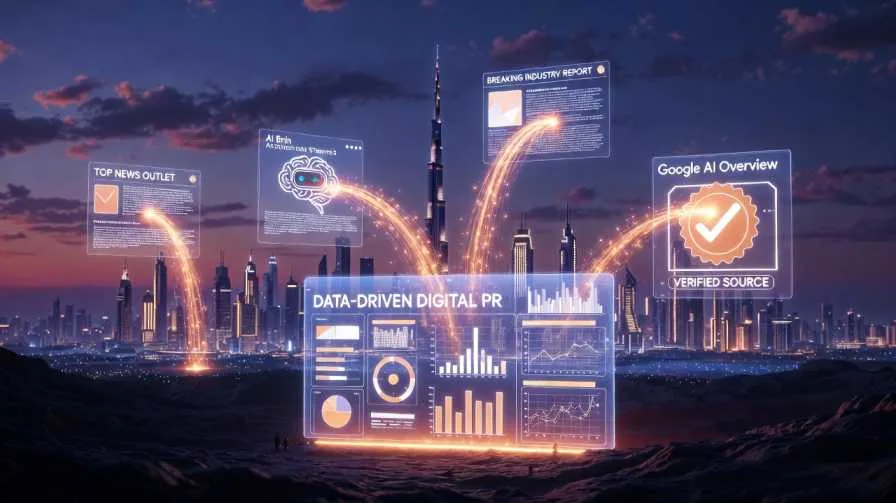
AI Overviews are changing the game. In fact, some recent industry data suggests that these summaries now appear for a massive chunk of informational queries.
It’s a bit wild, right? If you’re a brand trying to get noticed, you aren’t just fighting for a spot on page one anymore but you’re fighting to be the source that the AI actually trusts and cites.
Honestly, the old way of just “building links” is starting to feel a little dusty. If you want to stay relevant, you have to move toward Data-Driven Digital PR.
Now, I know that sounds like a mouthful of marketing jargon, but let’s break it down. At its core, this is just about creating original, undeniable facts think surveys, specialized studies, or deep-dives into industry trends and then getting that data in front of journalists and AI models alike.
It’s where PR meets hardcore SEO. When you provide the “source of truth” then search engines stop seeing you as just another blog and start seeing you as an authority.
AI search models are hungry for facts. They don’t want fluff or they want specific data points they can use to answer a user’s question.
By mastering Data-Driven Digital PR, you essentially feed the beast. You aren’t just hoping for a click but you’re becoming the foundation of the search result itself.
This isn’t just about a quick ranking boost and it’s about future-proofing your organic presence so that when the AI looks for an expert, it finds you first.
And you know what? Most people are still trying to figure this out like which is exactly why it’s the best time to start. If you can bridge the gap between creative storytelling and hard numbers, you’re going to see your organic visibility skyrocket in ways that Traditional SEO just can’t touch anymore.
What is Data-Driven Digital PR?

Honestly, if you ask ten different marketers what “Digital PR” means, you’ll probably get ten different answers. But at its core, Data-Driven Digital PR is the art of using hard numbers and cold, hard facts to steer your storytelling.
It’s moving away from the “I have a feeling this will go viral” approach and moving toward “I have the data that proves people care about this.”
Think of it as a massive upgrade from traditional PR. In the old days like you know, the “Mad Men” era or even just ten years ago PR was mostly about who you knew.
It was about having a thick Rolodex and hoping a journalist at a big paper liked your pitch. It was a bit of a guessing game. But things have changed.
With the digital transformation of search and social media, we don’t have to guess anymore. We can see exactly what people are searching for, what they’re sharing, and what’s actually moving the needle for a brand.
The Role in Modern Marketing
So, why are we even talking about this? Well, it’s about authority. When you use original data to back up your claims then you aren’t just another voice in the crowd but you’re the person everyone else is quoting.
This is how you land those high-authority backlinks and brand mentions that Google (and AI models) absolutely love. You’re providing the “why” and the “how” that everyone else is just talking about.
It’s the difference between saying “the Dubai real estate market is growing” and saying “our data shows a 22% spike in off-plan interest in Jumeirah Village Circle over the last quarter.”
See the difference? One is a guess and the other is a headline.
Why the Data Actually Matters
Data gives you a map of audience behavior that you just can’t get otherwise. You can track sentiment analysis to see how people feel about a specific topic or look at performance metrics to see which stories actually lead to conversions.
We’re talking about using real tools stuff like Google Analytics, social media insights, or even proprietary internal databases to find the “hooks” that journalists can’t resist.
It’s about being precise. Instead of casting a wide net and hoping for the best, you’re using data like a laser to target exactly what your audience needs to hear.
And when you integrate this with your overall SEO strategy then it becomes a powerhouse. You’re building a brand that isn’t just visible but it’s undeniable.
The Importance of Data-Driven Digital PR for AI Search Visibility
Honestly, the search landscape feels like it’s shifting under our feet every other week. Between Google’s AI Overviews and the rise of “answer engines” like Perplexity or ChatGPT, the way people find information is fundamentally different than it was even a year ago.
We’ve moved past the era where search engines just matched keywords to pages. Now, they are trying to understand the intent and the entities involved.
AI models are essentially looking for the “primary source.” When a generative AI pulls an answer then it’s scanning the web for high-quality, data-backed content that it can trust.
If your brand is just repeating what everyone else is saying then you’re invisible to the AI. But, if you’re the one who conducted the original study the one with the fresh metrics and unique insights then you become a “must-cite” entity.
This is how you win in a world of semantic search.
Building E-E-A-T That AI Actually Trusts
You’ve probably heard people talking about E-E-A-T until they’re blue in the face, but for AI search visibility, it’s the whole game. Google’s algorithms and LLMs (Large Language Models) are trained to look for signals of Experience, Expertise, Authoritativeness, and Trustworthiness.
When you execute a Data-Driven Digital PR campaign, you are essentially checking every one of those boxes.
- Expertise: You’re proving you know your stuff by analyzing raw data.
- Authoritativeness: You’re earning mentions from major news outlets who are citing your research.
- Trustworthiness: You’re providing transparent, verifiable facts instead of just opinions.
This doesn’t just help with traditional rankings and it drastically increases your chances of being featured in those coveted AI-generated summaries at the top of the page.
What the Numbers Say
If you’re wondering if this is actually worth the effort, the trends are pretty clear. Recent industry reports from places like SEMrush and Ahrefs have shown a massive correlation between “referring domains with high authority” and top-tier rankings in AI-driven search environments.
In fact, pages that serve as the original source for a data point are significantly more likely to be picked up by Google’s generative features.
It makes sense, right? AI wants to be right. It wants to provide the most accurate, up-to-date answer possible. By providing the data that fuels those answers, you’re making it easy for the algorithm to pick you.
You’re not just optimizing for a search engine actually you’re optimizing for the way the world currently consumes information.
Step-by-Step Guide to Mastering Data-Driven Digital PR
To really pull this off, you can’t just throw numbers at a wall and hope they stick. You need a process. It’s like following a recipe like if you skip the prep work, the final dish is going to be a mess.
Here is how you actually build a Data-Driven Digital PR machine from the ground up.
Step 1: The Research and Data Deep-Dive
Before you even think about writing a headline, you need to find the story the data is telling. This is where most people get lazy but it’s where you’re going to win.
- The Tools: You don’t need to reinvent the wheel. Standard heavy hitters like Ahrefs and SEMrush are great for seeing what your competitors are up to, while BuzzSumo is perfect for finding which data points are already trending in your niche. And don’t forget your own Google Analytics sometimes the best story is hidden in your own traffic patterns.
- The Method: Start with audience segmentation. Who are you actually talking to? Once you know that, look for “content gaps.” If everyone is talking about how to do SEO, but no one has the data on how much it costs in Dubai for 2026, there’s your opening.
Tip: Don’t just look for high volume but look for high curiosity. What is the one question your clients always ask that no one has a solid number for?
Step 2: Strategy Development & “AI-Proofing”
Now that you have your data, you need to package it so that both humans and AI models can’t ignore it.
- Aligning Goals: Use your data insights to build a content calendar that hits seasonal trends. If you know “budgeting” searches spike in January, that’s when your “Cost of Digital Marketing” report needs to go live.
- Targeting AI-Friendly Formats: Here is a little secret like AI models love structure. When you publish your research, use Schema markup (specifically Dataset schema) to tell Google exactly what your numbers represent.
Step 3: Execution and The “No-Fluff” Outreach
This is where the “PR” part of Data-Driven Digital PR happens. You have to get people to actually see your hard work.
- Data-Informed Pitches: Please, stop sending generic “Please share my blog” emails. Journalists are busy. Instead, lead with the stat. “Hey [Name], our latest study found that 65% of UAE SMEs are pivoting to AI search thought your readers would find this useful for your upcoming piece on tech trends.”
- Multimedia is Key: People (and AI) love visuals. Don’t just write a 2,000-word wall of text. Create an infographic or a simple data visualization. It makes your data “snackable” and much more likely to be shared on social media or cited in other blogs.
Step 4: Measuring What Actually Matters
If you aren’t measuring then you’re just guessing. But we’re moving past just looking at “likes.”
- The KPIs: Sure, Backlinks and Domain Authority are great, but for 2026, you need to look at Traffic from AI sources. Check your referral logs are you seeing hits from
chatgpt.comorgemini.google.com? That’s the real sign of success. - The Tools: Keep a close eye on Google Search Console. Look for those “AI Overview” impressions. If you’re appearing there, your data-driven strategy is working.
Potential Pitfall: Don’t get “Analysis Paralysis.” You don’t need a million data points. One strong, surprising statistic is worth more than a hundred boring ones. Honestly, simplicity usually wins the day in PR.
To really dominate the search results, you can’t treat PR and SEO like they’re living in different houses. They need to be roommates constantly talking and working together.
If you want to make sure your hard-earned data actually helps you rank, you need to follow a few “golden rules.”
Best Practices for Data-Driven Digital PR in AI Search
Honestly, the biggest mistake people make is thinking that a good press mention is the end of the road. It’s actually just the beginning.
To get the most out of your Data-Driven Digital PR, you have to bridge the gap between that media buzz and your technical SEO.
Seamless Integration with SEO
When you land a big mention for your data, make sure the page being cited is optimized for AI.
This means having your primary keyword Data-Driven Digital PR in your H1 and early in the text.
But more importantly, you want to use “entity-based” language. If your data is about the Dubai real estate market, make sure your page mentions related entities like “property prices,” “off-plan developments,” and “UAE investment trends.”
This helps AI models connect the dots between your data and the broader topic.
Writing for Humans and AI Alike

You aren’t just writing for an algorithm anymore. You’re writing for a person who is asking a question and an AI that is trying to summarize your answer.
- Use Natural Language: Avoid that stiff, corporate “marketing-speak.” Write like you talk.
- Provide Comprehensive Answers: If your data study asks a question then answer it clearly in the first paragraph. AI models love “answer-first” structures.
- Semantic Richness: Use varied vocabulary. Instead of just saying “results,” use words like “findings,” “outcomes,” or “metrics.”
Staying Ethical and Genuine
It’s tempting to “massage” the numbers to make a headline, but don’t do it. In the world of AI search, trust is everything. If you’re caught using manipulative tactics or “fake” data, your E-E-A-T will tank faster than a lead balloon.
Focus on providing genuine value. If your study found something boring, find a more interesting angle so don’t make up a new statistic.
Learning from the Giants
You don’t have to guess what works but just look at the brands already winning.
- HubSpot: They are the kings of this. They release massive “State of Marketing” reports every year. Because they provide the primary data, thousands of other blogs cite them, giving them incredible authority in Google’s eyes.
- Red Bull: They don’t just sell drinks but actually they sell data-backed stories about human performance and extreme sports. Their content is so authoritative that news outlets treat their “stunts” as actual scientific data points.
Future-Proofing for Multimodal AI
We’re moving beyond just text. With the rise of multimodal SEO strategies then your PR data needs to be ready for voice and visual search.
- Voice Search: Ensure your data summaries are punchy and easy for an AI to read aloud.
- Visuals: Use high-quality charts and infographics. As AI models get better at “reading” images, having a clear data visualization will become just as important as the text itself.
It’s a lot to keep track of, I know. But if you focus on being the most helpful, data-backed source in your niche, the AI models will have no choice but to put you front and center.
Look, I’m not going to sit here and tell you that building a Data-Driven Digital PR powerhouse is all sunshine and viral charts. It’s hard work, and there are plenty of spots where you can get tripped up.
Honestly, if it were easy, everyone would be doing it, and Neil Patel wouldn’t have much to talk about.
Here are the big hurdles you’re likely to face and more importantly, how you can jump over them without breaking a sweat.
Common Challenges and How to Overcome Them
1. Drowning in Data (The Overload Problem)
You know that feeling when you open a spreadsheet and it has 50 tabs and about a million rows? Yeah, that’s data overload. It’s easy to get so caught up in the “numbers” that you forget to find the “story.” You end up with a lot of noise and very little signal.
- The Fix: You have to prioritize. Pick three “North Star” metrics that actually matter for your specific campaign. Use automation tools think Zapier or even custom Python scripts to pull your data into a clean dashboard. If a data point doesn’t help you write a better headline or find a better journalist, ignore it.
2. “Is This Actually Working?” (The ROI Headache)
This is the classic PR struggle. Your boss or your client wants to know exactly how many Dirhams that mention in The National actually brought in. In a world of multimodal SEO, tracking that path from a news citation to a final sale can be a bit of a nightmare.
- The Fix: Move beyond basic “referral traffic” and start using advanced attribution models. Look at your “Assisted Conversions” in Google Analytics. Did someone see your data study, search your brand name two days later, and then buy? That’s a win you need to claim. Honestly, tracking brand search volume spikes after a campaign is one of the most honest ways to measure impact.
3. The “Moving Goalposts” (Keeping up with AI)
Just when you think you’ve figured out Google’s AI Overviews, they go and change the algorithm again. Keeping up with the pace of AI feels like trying to run a race while someone is actively moving the finish line. It’s exhausting.
- The Fix: You have to stay agile. This isn’t a “set it and forget it” strategy. Make continuous learning part of your weekly routine. Follow the engineers, not just the “gurus.” Build a strategy that focuses on E-E-A-T and high-quality research because while the way AI displays information changes, its hunger for authoritative, original data never does.
You’re going to hit these bumps like everyone does. But the difference between a brand that ranks and one that disappears is how you handle the friction. If you can stay focused on the “why” behind your data, the “how” usually falls into place.
Tools and Resources for Data-Driven Digital PR
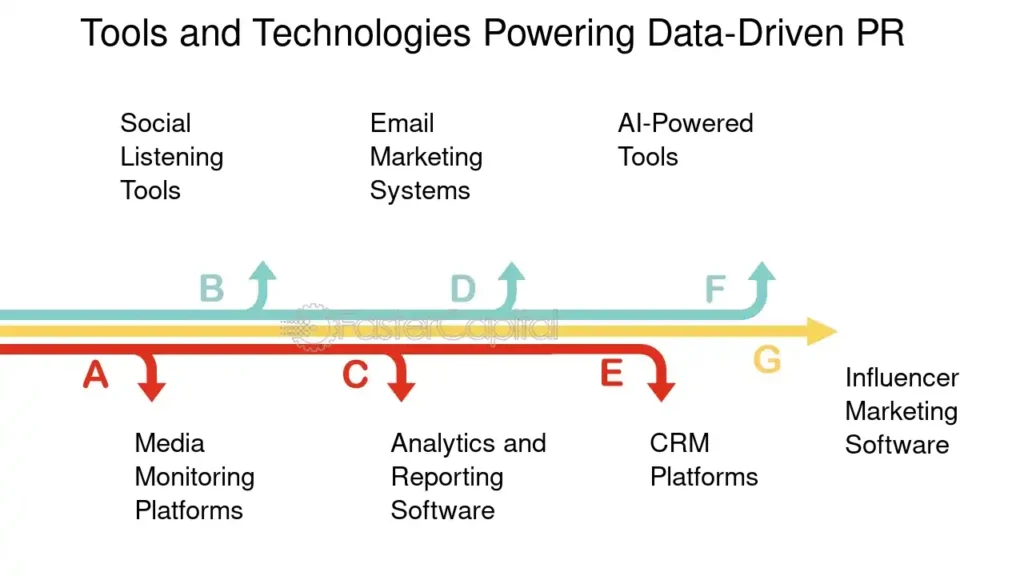
Honestly, you don’t need every tool under the sun. You just need a few that actually work for your specific workflow. Here’s a breakdown of what belongs in a modern, AI-ready PR toolkit.
Essential Tools for the Trade
- Ahrefs / SEMrush: These are the gold standard for “backlink gap analysis.” Use them to see which data-backed stories are earning links for your competitors so you can do it better.
- Meltwater: A powerhouse for PR monitoring. It helps you track brand mentions across the globe in real-time, which is essential for measuring your impact outside of just search engines.
- Looker Studio (formerly Google Data Studio): This is where your raw numbers become beautiful. It’s perfect for creating those data visualizations that journalists love to embed in their articles.
- BuzzSumo: The ultimate tool for “content discovery.” It shows you which data points are getting the most social shares, helping you validate your story idea before you write a single word.
- Hunter.io: Need to find the direct email of a tech journalist at Gulf News? This is your best friend for finding verified contact info in seconds.
- AnswerThePublic: Great for finding those “burning questions” people have. If you can answer a high-volume question with original data, you’ve got a winning PR hook.
Budget-Friendly vs. Powerhouse Options
You know what? You don’t need a massive budget to start seeing results. If you’re just starting out at Zumeirah, you can lean heavily on free tools like Google Search Console for data and Canva for simple infographics.
However, if you’re looking to scale and really take on the big players, investing in a “Pro” seat for Ahrefs or Meltwater is worth every penny. These tools provide the granular level of detail like “sentiment analysis” or “historical link growth” that AI models use to judge your authority.
Where to Keep Learning
The search landscape moves fast, so staying sharp is part of the job. Here are the blogs and resources I actually trust:
- Search Engine Journal: The go-to for daily news on how AI is changing the search landscape.
- Moz Blog: Excellent for deep dives into technical SEO and “Whiteboard Friday” sessions that break down complex PR concepts.
- Backlinko: Brian Dean is the master of “The Skyscraper Technique,” which is basically the grandfather of data-driven digital PR.
- Content Marketing Institute: Great for learning how to tell a story that people actually want to read, not just what an algorithm wants to see.
Pro Tip: Don’t just read these blogs just test their theories. The best way to learn Data-Driven Digital PR is to run a small-scale survey, package the data, and try to get a single local mention.
Once you see it work once, you’ll be hooked.
Conclusion: Your Blueprint for AI-Era Authority
We’ve covered a lot of ground today. From understanding why Data-Driven Digital PR is the secret sauce for E-E-A-T to the step-by-step process of turning raw numbers into headline-grabbing stories, the path is clear. You need to:
- Find the Story: Use tools like Ahrefs or your own analytics to find the “data gaps” in your industry.
- AI-Proof Your Content: Use schema and structured formats so AI models can easily “digest” and cite your findings.
- Build Real Relationships: Pivot from generic outreach to data-backed pitches that make a journalist’s life easier.
- Measure the Right Stuff: Track those brand mentions and AI referral hits to see the real impact of your work.
Your Immediate Next Step
You don’t need a 50-page industry report to start. Honestly, my best advice is to implement one strategy today.
Go to your Google Search Console, find a question people are asking that leads to your site, and see if you can find a unique data point to answer it more definitively than anyone else. That’s your first “hook.”
The Long Game
At the end of the day, mastering Data-Driven Digital PR isn’t just about a temporary spike in traffic. It’s about building a sustainable, “un-hackable” brand authority.
As AI search continues to evolve, it will always prioritize the sources that provide the most value. By becoming that source, you aren’t just ranking for today but you’re future-proofing your business for whatever Google (or anyone else) throws at us next.
If you’re ready to take your authority to the next level, you might want to check out our recent deep-dive on Multimodal SEO Strategies or see how we handle SEO Services in Dubai to help local brands dominate the global stage.
Frequently Asked Questions
To wrap things up, let’s tackle those burning questions that often pop up when people start shifting their strategy toward this new way of thinking.
What is the difference between traditional PR and data-driven digital PR?
Traditional PR usually leans on “the gut feeling” like it’s built on personal relationships and broad media coverage to boost brand awareness. Data-driven digital PR, on the other hand, is much more of a science. It uses analytics, search trends, and original research to craft stories that are designed to earn high-authority backlinks and satisfy specific search engine requirements. Honestly, it’s the difference between hoping for a headline and engineering one.
How does data-driven digital PR improve AI search visibility?
AI models like Google’s Gemini or ChatGPT are essentially “fact-hungry.” They prioritize primary sources that provide unique, verifiable data. By running a data-driven campaign, you become that primary source. When you provide the original metrics or insights, AI models are much more likely to cite your brand as the “authority” in their generated summaries.
What are the best tools for beginners in data-driven digital PR?
You don’t need a massive budget to start. For beginners, Google Search Console is gold for finding what people are already asking. AnswerThePublic is great for brainstorming “hook” ideas, and Canva is perfect for turning your findings into simple, shareable infographics. If you have a little bit of a budget, a “lite” subscription to Ahrefs or SEMrush will give you a massive edge in competitor research.
Can small businesses master data-driven digital PR?
Absolutely. In fact, small businesses often have an easier time because they can move faster and focus on hyper-local or “niche” data that the big guys ignore. You don’t need a survey of 10,000 people and sometimes a deep dive into your own local customer data can provide a story that a local journalist would love to cover.
How do I measure success in data-driven digital PR campaigns?
Success isn’t just about a single link anymore. You want to look at a mix of metrics like high-authority backlinks, improvements in your Domain Authority, and most importantly in 2026, traffic from AI referral sources. If people are finding you through an AI Overview or a chatbot citation, your strategy is hitting the bullseye.