
Think about the last time you actually scrolled past the first three results on a search page. Honestly, it probably hasn’t happened in a while. In 2026, the game has shifted so much that most of your potential clients in Dubai aren’t even looking at a list of links anymore.
They’re asking Perplexity about the most reliable web design agency in Jumeirah, or they’re reading a Google AI Overview that summarizes everything about your brand in two neat paragraphs.
The AI isn’t just a middleman, actually it’s becoming the final judge. It gathers everything people have ever said about you online, chews it up, and spits out a verdict before a user ever lands on your site.
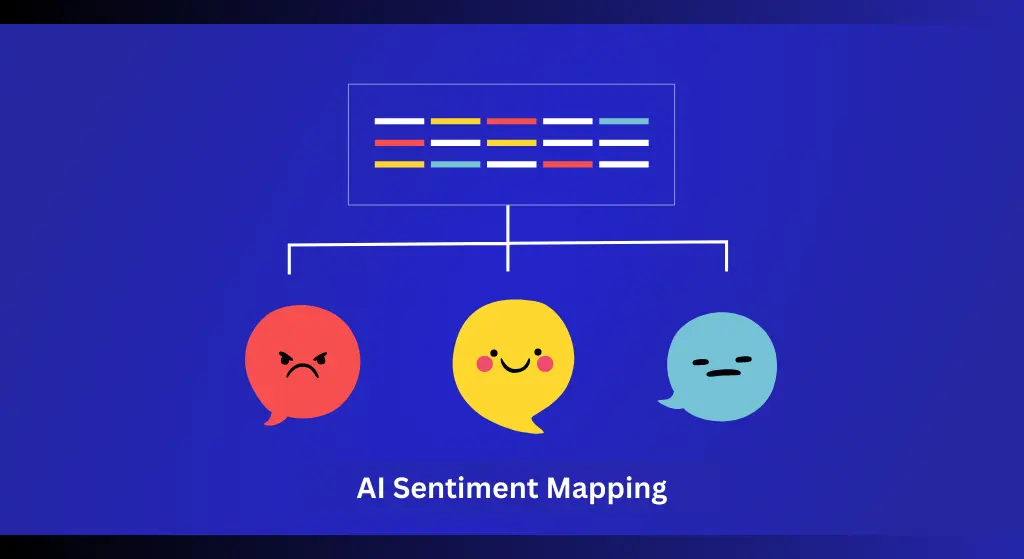
If the AI thinks your service is “average” or “prone to delays,” that is the reality the customer sees. This is exactly where AI Sentiment Mapping comes into play. It’s not just about keywords anymore. It’s about making sure the machine actually likes you.
Let me explain what we’re talking about here. AI Sentiment Mapping is the systematic process of tracking and visualizing how these generative models think like ChatGPT, Gemini, and Grok. Actually they describe your brand.
It’s about digging into the “brain” of the AI to see what sentiment score it’s giving your business. Are you being framed as a luxury leader in the UAE market, or just another budget option? By mapping these responses, we can see the exact words and frames the AI uses to define your reputation.
The urgency here is real, especially for Dubai brands where reputation is everything. AI models have a funny way of amplifying things. They take a few reviews, a couple of blog mentions, and some social media chatter, then they consolidate it into a single, powerful narrative.
If there’s a negative perception floating around, the AI doesn’t just find it and it highlights it for every potential lead. If you aren’t actively monitoring this, you’re basically leaving your brand’s front door wide open and hoping for the best.
You can’t just fix this with a few backlinks. You need a strategy that understands the nuances of how these models work. AI Sentiment Mapping gives us the data we need to change that narrative. It allows us to see the gaps between who you actually are and who the AI thinks you are.
Once you have that map, you can start feeding the right signals back into the digital ecosystem to tilt the scales in your favor.
I’ve put together this guide to walk you through the whole landscape of AI Sentiment Mapping. We’re going to look at why this matters for your bottom line in the UAE, the tools that actually work for tracking these citations, and a step-by-step way to implement this for your own business.
We will also look at some of the smarter ways to stay ahead of the curve as these models get even more complex. It’s a lot to take in, but staying ahead in 2026 means being the brand that the AI wants to recommend.
What Is AI Sentiment Mapping?
Most people hear “sentiment analysis” and they immediately think of those old-school tools that just crawl Twitter or Google Reviews to see if someone left a five-star rating or a nasty comment. But AI Sentiment Mapping is a different beast entirely.
It isn’t just about what people are saying to the world but it’s about how the world’s smartest machines are summarizing those voices and presenting them back to your customers as “the truth”.
It’s the intersection where AI-driven sentiment analysis meets the specific way generative models like the ones powering Google’s AI Overviews or ChatGPT that frame your brand.
While Traditional SEO Tools look at raw user content, this process focuses on the AI-synthesized view. In 2026, the AI acts like a high-speed researcher that reads every mention of your Dubai business and creates a personality profile for you.
Mapping that profile is the only way to see if the “robot version” of your brand actually matches the one you’ve worked so hard to build.
To get this right, you have to look at a few core elements that make the system tick:
- Query Prompting: This involves asking the AI specific questions that a customer in the UAE might ask, such as “Who is the most reliable SEO expert in Dubai?”.
- Response Collection: We gather those paragraphs of text from various models to see how they differ.
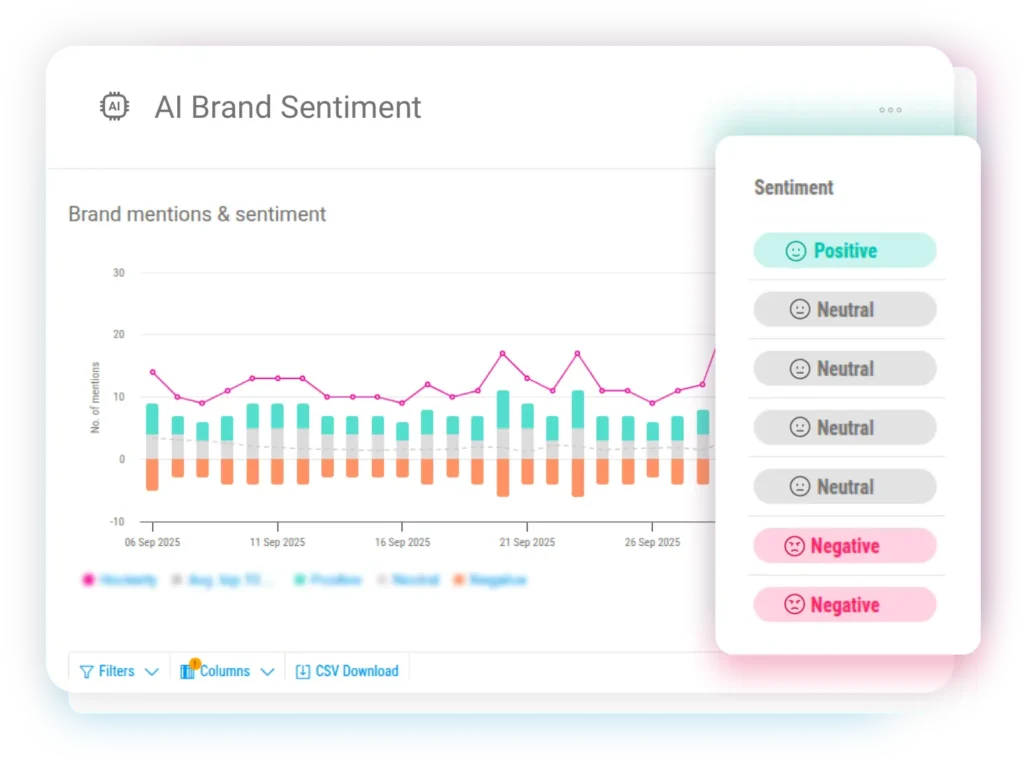
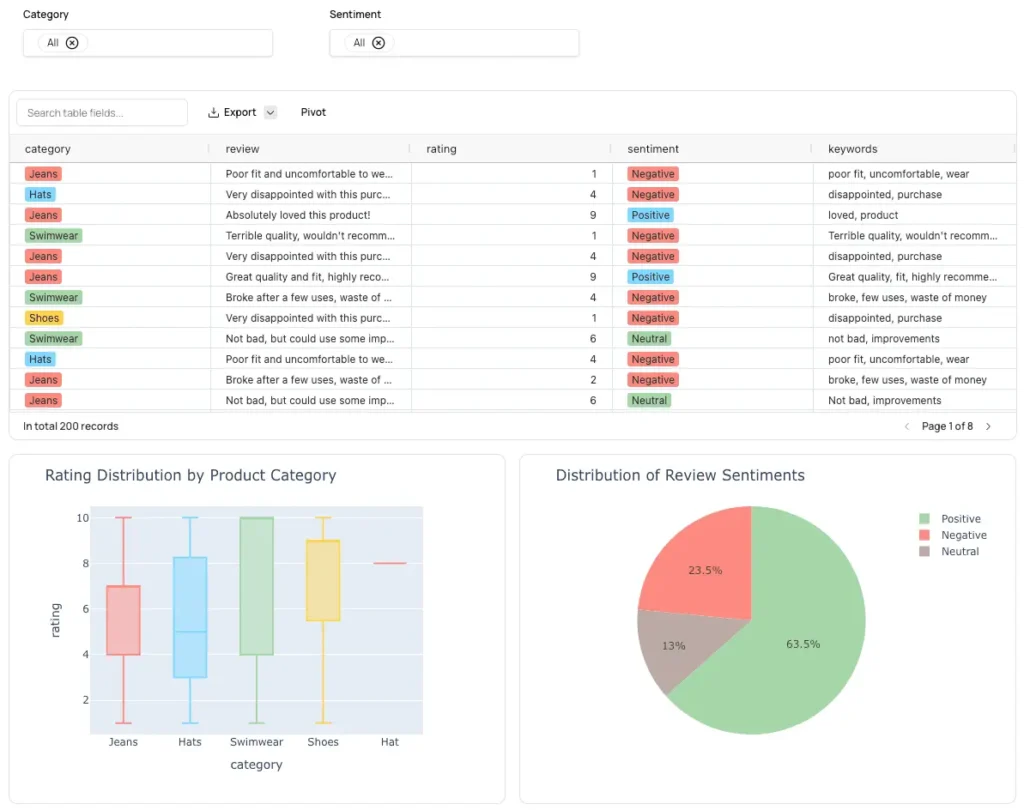
- Sentiment Scoring: This is where we categorize the AI’s tone as positive, neutral, or negative, usually on a scale from -1 to +1.
- Trend Mapping: By plotting these scores over time or across different prompts, you get a clear visual of whether your reputation is climbing or if there’s a specific “bug” in the AI’s logic that’s hurting your image.
Traditional sentiment analysis tells you what happened yesterday. AI Sentiment Mapping tells you what’s going to happen the next time a lead asks their phone for a recommendation. It’s the difference between reading old news and actually controlling the narrative.
Honestly, if you’re a business owner in a competitive spot like Downtown Dubai or the Marina, you can’t afford to guess how you’re being represented. You need to see the map.
Why AI Search Is Reshaping Brand Perception in 2026
In 2026, the search landscape has flipped. We’ve moved from a “list of options” to a “single, conversational answer”. Whether it’s someone asking their car for the best real estate lawyer in Downtown or a CEO using ChatGPT to vet a new partner, the AI is now the one doing the talking. It doesn’t just give you a website but it gives you a verdict.
Here’s the thing about how these machines influence perception like they aren’t just search engines anymore, they’re curators. When an AI model like Gemini or Perplexity answers a query, it summarizes dozens of sources, adds its own framing, and presents it as a factual summary.
This is the rise of the “zero-click” search. Your potential client might never even see your beautifully designed website because the AI told them everything it thought they needed to know right there in the chat. If that summary has a slight lean toward your competitor, you’ve lost the lead before the game even started.
This creates a massive double-edged sword for Dubai brands.
- The Risk: If there’s a negative narrative or a technical “entity gap” in how you’re indexed, the AI will amplify that negative sentiment across every response it gives.
- The Opportunity: If you’ve optimized for AI Sentiment Mapping, you can position your brand as the “trusted” or “best” option. You want the AI to use words like reliable, authority, or leader when it talks about you to a high-value prospect.
In this 2026 context, people aren’t just using one engine. We are seeing a huge surge in multi-engine usage switching between ChatGPT for research and Google’s AI Overviews for local intent. On top of that, deeper personalization means the AI knows the user’s history and preferences.
It’s not enough to rank so you have to be the brand that the AI prefers to recommend to that specific person. If you aren’t tracking how you’re perceived across these different brains, you’re basically flying blind in the most competitive market in the world.
The Importance of Tracking Brand Sentiment in AI Search
Honestly, why should you care if a chatbot gets your founding year wrong or misses a product launch? Well, because in the 2026 Dubai market, your digital reputation isn’t just about what’s on your site, it’s about the “single narrative” the AI creates for you. If you aren’t tracking this, you’re essentially letting a machine write your business plan.
The Real-World Business Impact
The commercial stakes are massive. If an AI model labels your consultancy as “expensive for the value” or “slow to respond,” that perception sticks.
Unlike a bad review on a forum that eventually gets buried, AI-generated characterizations are persistent; they compound over millions of queries until the model is retrained.
You know what? This leads to a massive “visibility gap”. Recent reports show that while you might rank in the top 3 on Google Maps, AI assistants might only recommend you 1% of the time if your sentiment signals are weak or inconsistent.
You’re basically losing 20–50% of your potential traffic before the customer even knows you exist.
When AI Goes Off-Script
We’ve all seen it happen like the dreaded AI hallucination. Imagine a high-net-worth lead asking ChatGPT about your boutique real estate firm, only for the AI to confidently “hallucinate” that you’re facing a legal dispute or that you’ve closed your Downtown office.
These models are trained to be helpful, so if they find a “data void” or conflicting information from old blog posts, they might just guess. About 27% of chatbot responses contain some level of fabricated information, which can spread like wildfire and ruin years of trust in five minutes.
The 2026 Metrics You Must Monitor
To stay ahead of the curve, you need to stop obsessing over keyword rankings and start looking at these four key metrics:
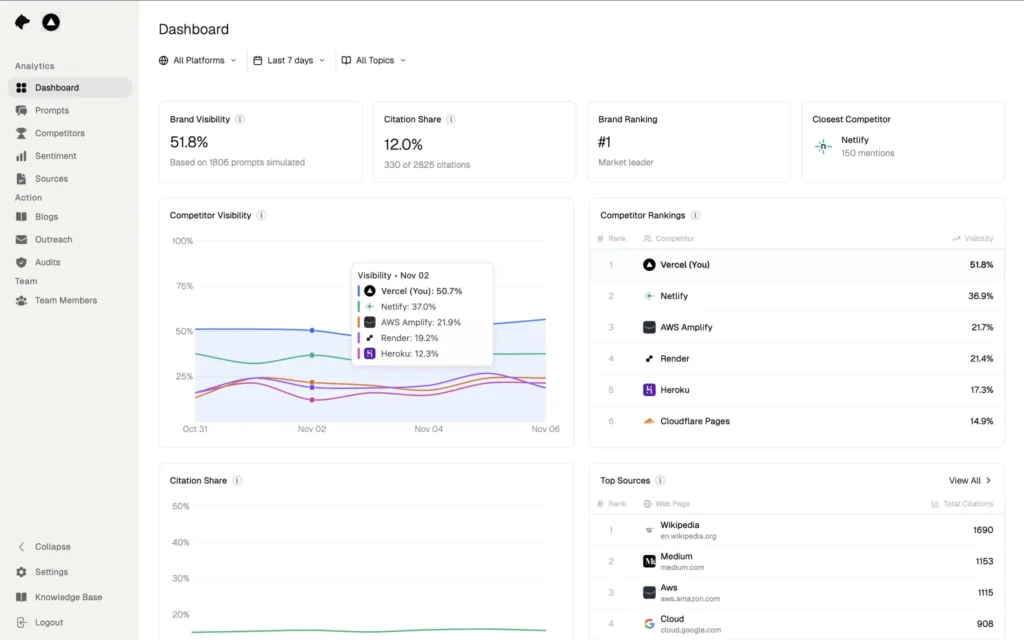
- Mention Share (SoV): How often is your brand included in the synthesized answer versus your top three rivals?
- Citation Sentiment Score: This isn’t just “positive or negative”. You need to weigh the sentiment based on where it appears like a positive mention in the first paragraph is 3x more valuable than a footnote.
- Source Trust Index: AI models favor credible sources. Are they citing your official LinkedIn and Khaleej Times features, or some random forum post from 2019?
- Entity Visibility %: This measures your “Share of Recommendation” across different models like Gemini, Perplexity, and ChatGPT.
Reputation in the AI era is a race to become the “default reference”. If you aren’t the brand the AI selects when a buyer asks a high-intent question, you’re effectively invisible.
How AI Sentiment Mapping Works: The Technical Breakdown
Most business owners think this is some kind of black box magic, but once you strip away the buzzwords, it’s actually a very logical, data-driven process. It’s basically a high-speed feedback loop between your prompts and the machine’s “brain”.
Manual vs. Automated Methods
Honestly, you can start doing this today with just a coffee and a couple of browser tabs.
- The Manual Route: This is great for a quick pulse check. You basically open ChatGPT or Gemini, ask it a few questions about your brand, and manually note down the tone. It’s slow and you can’t really see trends, but it’s a good way to see if you have an immediate “PR fire” to put out.
- The Automated Route: This is where the real power is. In 2026, we use Python scripts and APIs to “blast” thousands of queries across every major AI model simultaneously. This gives us a massive dataset that we can actually turn into a map. It’s consistent, it’s scalable, and it doesn’t get tired of reading 500 different variations of “Who is the best web designer in Dubai?”.
The Core Steps of the Mapping Process
To get a map that actually means something, you have to follow a strict technical sequence:
- Crafting Consistent Prompts: This is the most important part. We use Prompt Engineering techniques like Persona Prompting (“You are a skeptical customer in Dubai…”) or Chain-of-Thought to force the AI to explain its reasoning. This prevents the AI from just giving you a “canned” answer.
- Querying the AI Engines: We send these prompts to the major players, for example ChatGPT, Gemini, and Claude using their respective Inference APIs.
- Extracting & Scoring Sentiment: Once we have the text, we don’t just “guess” the tone. We use Natural Language Processing (NLP) to break the text into tokens and apply a sentiment score, usually from -1 (hating it) to +1 (loving it).
- Aggregating into Maps: This is where the data becomes “human-readable”. We aggregate those scores into time-series graphs to see if your reputation is improving month-over-month, or heatmaps that show which specific services are getting the most “love” from the AI.
Tools and Integration
In 2026, we aren’t rebuilding the wheel. We integrate existing high-power tools:
- APIs & Scrapers: We use the OpenAI API or Hugging Face Inference API to get direct access to the latest models without the web interface lag.
- Sentiment Models: We often use pre-trained models from the Hugging Face Transformers library (like BERT or RoBERTa) which are specifically “tuned” to understand nuances like sarcasm or professional jargon in the UAE market.
- Embeddings: For the really deep work, we use Vector Embeddings to see how “close” your brand is to certain keywords in the AI’s multidimensional memory.
You can have all the tools in the world, but if you don’t know how to ask the right questions, you’re just getting high-tech noise.
Top Tools for AI Sentiment Mapping in 2026
Finding the right tool for AI Sentiment Mapping feels a bit like trying to find the best shawarma in Dubai like everyone has a favorite, but the “best” really depends on what you’re hungry for. Also we have written complete another guide on Generative Engine Optimization and Best Tools For GEO so you can visit and read that.
In 2026, we’ve moved past simple social listening. The leaders now are the ones who can actually “talk” to the LLMs and report back on what they’re saying about your brand.
The 2026 AI Sentiment Toolscape
| Tool | Key Features | AI Engines Covered | Sentiment Capabilities | Pricing Tier | Best For |
| Search Party | Prompt-level analytics; source tracking; AEO strategy. | ChatGPT, Perplexity, Gemini, Claude | Citation-level sentiment; risk detection. | Premium / Managed | Strategy-heavy agencies & CMOs. |
| Siftly | GEO optimization; competitive intelligence; citation churn tracking. | GPT-4o, Google AI Overviews, Gemini, Perplexity | Automated sentiment & position analysis. | Mid-range ($200+) | Growth-focused Dubai brands. |
| Nightwatch | Real-time LLM monitoring; SEO agent for sentiment; historical trends. | Google AI Overviews, ChatGPT, Perplexity, Gemini, Claude | Full sentiment scoring + traditional SEO sync. | Professional ($99+) | SEO teams wanting a unified dashboard. |
| HubSpot AEO Grader | Share of Voice (SoV) score; archetypal branding; content gap tips. | GPT-4o, Perplexity, Gemini | Quick-scan polarity (Pos/Neg/Neu). | Free / Starter | SMBs needing a fast, “zero-cost” pulse check. |
| Brand24 | Real-time alerts; Brand Score; media monitoring; anomaly detection. | ChatGPT, Gemini, Claude, Perplexity (7+ models) | Advanced NLP emotion analysis (Admiration, Joy, etc.). | Startup ($149+) | Social-first brands & reputation managers. |
| Passionfruit | Instant alerts; multilingual support; revenue attribution mapping. | ChatGPT, Perplexity, Gemini, Claude | Contextual sentiment; intent-based scoring. | Tiered ($270+) | Global brands with diverse language needs. |
Top Recommendations for Your Dubai Strategy
A. Search Party: The “Deep Diver”
Search Party is currently the gold standard if you want to know why the AI is saying what it’s saying. It doesn’t just show you a mention; it maps it back to the specific prompt and source citation.
Honestly, if you’re trying to explain to a board of directors why your brand narrative has shifted, this is the data you want in your corner.
B. Siftly: The “Growth Accelerator”
Siftly is purpose-built for Generative Engine Optimization (GEO). It’s great for Dubai businesses because it tracks “citation churn” like how often you’re being dropped or added as a source. It’s proactive, not just reactive.
C. Nightwatch & Otterly AI: The “Daily Dashboards”
If you’re already an SEO pro, Nightwatch is a natural fit. It blends traditional rank tracking with AI visibility. It’s one of the few tools that shows you exactly where your content appears in “Answer Boxes” in real-time.
D. HubSpot AI Search Grader: The “Quick Win”
You know what? Sometimes you just need a score. HubSpot’s tool gives you a “Share of Voice” out of 20 and identifies your biggest gaps for free. It’s the perfect starting point before you invest in a heavier professional stack.
When to Use Free vs. Paid
- Free Tools (HubSpot, Trial Tiers): Use these for your monthly “health check.” They are great for seeing if your brand is being mentioned at all, but they won’t help you fix a deep-seated reputation issue.
- Paid Tools (Siftly, Search Party, Nightwatch): If you are in a high-competition market like Dubai real estate or tech, you need the paid versions. You need the Real-Time Alerts and the Competitor Benchmarking to ensure you aren’t being “out-sentimented” by a rival brand overnight.
Step-by-Step Guide: How to Perform AI Sentiment Mapping
Honestly, it’s one thing to know that AI models are talking about you, but it’s another thing entirely to actually put a number on it.
You can’t fix what you can’t measure, right? If you’re sitting in an office in Business Bay wondering why your lead flow has dipped, this step-by-step breakdown is your way to stop guessing and start seeing the data. It’s a bit of a process, but once you get the rhythm, it becomes second nature.
Step 1: Identify Your Core Brand Prompts
First things first: you need to know what to ask. You can’t just ask “Tell me about Zumeirah” and call it a day. You have to think like a skeptical customer. What would someone type into Perplexity or ChatGPT search?
- Category Prompts: “Who are the best web designers in Dubai for 2026?”
- Review Prompts: “Give me an honest review of Zumeirah’s SEO services” or “What are the common complaints about [Competitor Name]?”
- Comparison Prompts: “Zumeirah vs. [Competitor] ask like which one is better for a small business in the UAE?”
Step 2: Select Your AI Engines and Tools
Don’t try to be everywhere at once. Pick the heavy hitters that actually drive traffic in our region. You definitely want to query ChatGPT (GPT-4o), Google Gemini, and Perplexity. For the “how,” you can either do it manually or use a dedicated tracker like Siftly or Nightwatch if you’re looking to scale.
Step 3: Run Your Queries Consistently
AI models are “stochastic.” That’s just a fancy way of saying they might give you a slightly different answer every time. If you only check once, you’re just getting a snapshot.
To get a real map, you need to run these queries consistently ideally daily or weekly to see how the narrative shifts as the model’s training data updates or as new web sources are indexed.
Step 4: Collect and Clean the Responses
Once you have the text from the AI, you’ve got to strip away the “fluff”. AI models love to be polite and add introductory sentences like “Certainly! Here is some information…”.
We don’t need that. You want to extract the core descriptive sentences like the parts where the AI actually makes a claim about your brand’s quality, speed, or reliability.
Step 5: Apply Sentiment Analysis
Now comes the “mapping” part. You take that cleaned text and run it through a sentiment model. You can use a turn-key tool like MonkeyLearn or even a simple Python script using the Google Natural Language API.
The goal is to get a score between -1 and +1. If the AI says you are “a leading expert,” that’s a +0.9. If it says you are “average but expensive,” you’re looking at a -0.4.
Step 6: Map Your Results
This is where the magic happens for your stakeholders. Don’t just show them a spreadsheet of numbers like nobody has time for that. Turn that data into a time-series graph showing your sentiment score over the last 30 days.
Better yet, create a competitor comparison chart. Seeing your brand’s green line sitting comfortably above your rival’s red line is the best way to prove your SEO strategy is actually working.
Step 7: Report and Iterate
Finally, use the map to find the “why”. If the AI sentiment for “customer service” is dropping, go look at your recent reviews. Use the data to tweak your content strategy, then run the queries again in a week. It’s a loop.
You map, you fix, you map again. Honestly, in the 2026 search world, the brands that iterate the fastest are the ones that the AI will eventually fall in love with.
Best Practices and Tips to Improve Your AI Brand Sentiment
Honestly, knowing how to map your sentiment is only half the battle. The real question is how do you actually nudge that needle from a “neutral” shrug to a “definite recommendation”?
In 2026, you can’t just shout louder; you have to be more helpful to the machine. Here’s how we do it for Dubai brands that are serious about winning the AI recommendation game.
Consistent, High-Quality Prompting
If you ask a vague question, you’re going to get a vague, “hallucinated” answer.
When testing your brand sentiment, use Persona-Based Prompts. Instead of just asking “Tell me about Zumeirah,” try something like: “You are a Dubai-based CEO looking for a high-end web design agency that understands the local luxury market. How does Zumeirah compare to other boutique firms in Jumeirah?”
This forces the AI to dig into its specific “Dubai” knowledge rather than just giving you a generic response.
Monitor the Competition (Without Obsessing)
You aren’t just competing with other websites, actually you’re competing with other “Entities”. Use your mapping tools to see which rivals are being co-mentioned with you.
If a competitor is consistently described as “more affordable,” don’t just lower your prices. Instead, update your content to emphasize your “premium value” and “ROI for Dubai SMEs”. You want to change the attributes the AI associates with your name.
Fixing Negative Framing at the Source
If an AI model says something unflattering about you, it’s usually because it found that information somewhere else. AI models love to cite Reddit, Wikipedia, and high-authority news sites.
- Earn Better Sources: If a negative review from 2022 is still haunting your AI summaries, you need to “drown” it with new, high-authority mentions.
- Optimize for Clarity: AI favors “boring” specificity over vague marketing fluff. Use clear, factual statements like “Zumeirah is a Dubai-based Web Design and SEO agency specializing in Generative Engine Optimization”. It makes it much easier for the model to quote you accurately.
The “Bifurcated” Strategy: SEO + PR
In 2026, SEO and PR are basically the same thing.
- Traditional SEO: Keep your Organization Schema and Author E-E-A-T signals perfect so Google knows exactly who you are.
- Modern PR: Focus on getting mentioned in trusted UAE publications like Entrepreneur Middle East or Arabian Business. AI models treat these as “ground truth” sources. If they say you’re the best, the AI will eventually believe them.
Avoid These Common Pitfalls
- Over-Prompting Bias: Don’t “lead” the AI too much during your testing. If your prompt says “Tell me why Zumeirah is the best,” the AI might just agree to be polite, giving you a false sense of security. Keep your audit prompts neutral.
- Data Privacy: Be careful about feeding sensitive client data or internal business plans into public AI prompts during your sentiment research.
- PDF Gating: Honestly, stop hiding your best case studies inside PDFs. AI crawlers struggle with them. Put your success stories in clean, modular HTML “Answer-First” blocks so the machine can actually read and cite them.
Common Challenges in AI Sentiment Mapping and Solutions
Honestly, if this was easy, every brand would already be perfect in the eyes of the machine. The reality is that AI Sentiment Mapping in 2026 comes with its own set of technical “headaches”. Whether it’s a hallucination or a massive dataset that feels impossible to manage, you need a plan for when things get messy.
AI Hallucinations and Bias
The biggest challenge is that AI models are probabilistic, not deterministic. They are designed to sound confident even when they are making things up the classic hallucination. If a model “remembers” a negative review that doesn’t exist, it can skew your entire map.
- The Solution: You have to Cross-Verify Engines. Don’t trust a single sentiment score from one model. Run your prompts across ChatGPT, Gemini, and Claude simultaneously. If one is an outlier, it’s likely a hallucination. You know what? You can also use Retrieval-Augmented Generation (RAG) tools that force the AI to only cite verified, live web data rather than its training memory.
The Scale of the Data
Once your Dubai brand starts getting mentioned across news sites, social media, and forums, the sheer volume of AI responses you need to map can become overwhelming. Manually checking every prompt is a recipe for burnout.
- The Solution: You need to lean into Automation and Infrastructure. In 2026, we use tools like Siftly or custom Python scripts that use Batch APIs to process thousands of mentions at once. Instead of reading every line, use Sentiment Heatmaps to spot the “red zones” that actually need your attention.
The Cost of High-End Monitoring
Professional enterprise tools can be expensive. If you’re a startup in Al Quoz, spending AED 5,000 a month on reputation monitoring probably isn’t in the budget.
- The Solution: Start Small and Scale Smart. Use free or low-cost tools like HubSpot’s AI Search Grader or the Google Cloud Natural Language API (which has a generous free tier) for your basic scoring. You can also use a “Sampling” strategy for instead of mapping every single keyword, just map your top 5 “Money Keywords” to get 80% of the value for 20% of the cost.
Future Trends in AI Sentiment Mapping (2026 and Beyond)
If you think things are moving fast now, just wait until we hit the second half of 2026. We are moving away from “checking a dashboard” toward a world where AI agents are basically doing the reputation management for us in real-time.
If you’re planning your long-term Dubai business strategy, these are the four shifts that are going to separate the leaders from the laggards.
Deeper Integration with Real-Time AI APIs
Right now, most mapping is still a bit “reactive” you run a report, see the score, and then react. By late 2026, the “Agentic Enterprise” will be the norm. Your sentiment tools won’t just be standalone apps; they’ll be baked directly into your business’s core APIs.
Imagine an automated system that detects a sudden drop in sentiment on Perplexity and immediately triggers a “content refresh” on your site to fix the hallucination before a human even realizes there’s a problem. It’s about moving from manual audits to self-healing brand narratives.
The Rise of Multimodal Sentiment
AI isn’t just reading your blog posts anymore. In 2026, multimodal models are becoming standard, meaning they “see” your Instagram videos, “hear” your podcast interviews, and analyze the body language in your founder’s YouTube clips.
AI Sentiment Mapping is evolving to include these visual and auditory cues. If your CEO sounds frustrated in a leaked video or your brand colors are being used in a “mockery” meme, the AI will pick up on that emotional nuance and bake it into your overall sentiment score.
You can’t just write your way to a good reputation; you have to look and sound the part across every medium.
Predictive Mapping Using Agentic AI
This is where it gets really interesting for high-stakes markets like Dubai. We are starting to see Predictive Mapping, where AI agents don’t just tell you what the sentiment is, but what it will be if you take a certain action.
Before you launch that new real estate project in the Creek, you can run an “agentic simulation” to see how different AI engines will likely frame the announcement. It’s like having a crystal ball for your PR strategy, allowing you to pre-emptively fix “perception gaps” before they even exist.
Regulatory Impacts and Transparency
The “Wild West” era of AI is coming to an end. With the EU AI Act and similar frameworks in the works, there is a massive push for transparency.
By late 2026, we expect to see mandatory “AI Disclosure” labels on content. This is actually good news for honest brands. When search engines can verify that a piece of content was fact-checked by a human expert (like you), they’ll give it a “Trust Multiplier” in their sentiment calculations.
Brands that try to hide their AI usage or “game” the system with fake sentiment signals are going to get hit hard by these new transparency filters.
Why AI Sentiment Mapping Is Your 2026 Survival Kit
If you’ve made it this far, you probably realize that the old ways of “doing SEO” are officially in the rearview mirror. We aren’t just fighting for a spot on a list of links anymore.
We are fighting to be the brand that the AI like the new gatekeeper of the internet is actually trusts enough to recommend.
In 2026, your reputation isn’t just what you say about yourself; it’s the consensus that a machine reaches after reading every corner of the web. If you aren’t using AI Sentiment Mapping to see that consensus, you’re essentially leaving your brand’s future up to a roll of the digital dice.
Let’s look at the big picture one last time. We’ve seen how these models don’t just find information they synthesize it. They take your LinkedIn posts, your customer reviews on Google, and that one random mention in a Dubai tech forum, and they turn it into a single, powerful narrative.
If that narrative is slightly off, or worse, if it’s based on a “hallucination,” you lose the customer before they even click a button.
You know what? This is why mapping is so critical. It gives you the data to see where the machine is getting it wrong so you can step in and fix the source.
The shift we are seeing in 2026 is moving from “Search Volume” to “Share of Recommendation.” It doesn’t matter if 10,000 people search for “SEO Dubai” if the AI assistant they are using only recommends your competitor.
By tracking your sentiment scores and understanding which entities the AI associates with your brand, you can start to tilt the scales. You can move from being an “average” mention to being the “trusted leader” that ChatGPT or Gemini highlights in bold text.
You can’t wait until your leads dry up to start caring about this. The brands that are winning in the UAE right now are the ones that treated this as a priority back in January. They are the ones who have a clean “Entity footprint” and a content strategy that feeds the AI the exact facts it needs.
They aren’t just hoping for the best; they are engineering their visibility through consistent, technical sentiment audits.
So, where do you go from here? Honestly, the best time to start was yesterday, but the second-best time is right now. Pull up a tool like HubSpot’s grader or just spend twenty minutes asking ChatGPT some hard questions about your business.
See what it says. Look for the gaps. If you don’t like the “personality” the AI has given you, it’s time to change the narrative.
AI Sentiment Mapping isn’t just another task for your marketing team; it is the backbone of how you protect your business in a world where the search bar is being replaced by a conversation.
At the end of the day, your brand is your most valuable asset. Don’t let a machine misinterpret it. Start mapping, start optimizing, and make sure that when a customer asks for the best, the AI doesn’t hesitate to say your name.
FAQs For AI Sentiment Mapping
You’ve probably got a few lingering questions about how this actually works in the real world. Honestly, it’s a lot to take in at first, so let’s clear up some of the common things people ask me when we’re setting this up for Dubai brands.
What is AI Sentiment Mapping?
Think of it as a specialized “audit” for the AI era. It’s the process where we track how generative models—like ChatGPT, Gemini, or Perplexity—actually describe and feel about your brand. We don’t just look for mentions; we analyze the “tone” and “framing” the AI uses when it summarizes your business for a potential customer. It’s about seeing if the machine thinks you’re a premium leader or just a budget-filler.
How is it different from regular sentiment analysis?
The old-school version is basically a crawler that looks at raw social media posts or Google Reviews to see if people are happy or mad. It’s looking at “human-to-human” chatter. AI Sentiment Mapping is different because it looks at the “synthesized” version—how the AI has filtered and summarized all that chatter into its own opinion. You know what? Regular analysis tells you what people said; mapping tells you what the search engine believes.
Which tools are best for beginners in 2026?
If you’re just starting out and don’t want to break the bank, HubSpot’s AI Search Grader is probably your best bet for a quick “Share of Voice” score. For something a bit more technical but still user-friendly, Nightwatch or Brand24 are great because they have clean dashboards that don’t require you to be a data scientist. They give you solid alerts without making you write a single line of code.
Can I do AI Sentiment Mapping for free?
Technically, yes, but it’s a bit of a manual grind. You can “self-audit” by opening a few different AI engines—say, ChatGPT on your laptop and Gemini on your phone—and asking them specific questions about your brand. It’s free, but it won’t give you the “time-series” maps or the competitor comparisons that professional tools provide. It’s a good way to check for immediate reputation fires, but it’s hard to scale as your business grows.
How often should I track brand perception in AI search?
In a fast-moving market like Dubai, I usually recommend a weekly pulse check and a deep-dive monthly report. Here’s why: AI models are constantly being updated with new web data. A single viral social post or a new Khaleej Times feature can shift the AI’s “opinion” of you in just a few days. Honestly, if you only check once a year, you’re basically looking at a map of a city that’s already been rebuilt.