
Searching for something on Google isn’t what it used to be. Not even close. If you’ve spent any time online lately, you’ve probably noticed that the familiar list of links is getting pushed further and further down the page.
Instead, we’re greeted by these massive, helpful, and sometimes slightly eerie AI Overviews that basically do the reading for us. It’s a bit like having a personal assistant who’s already read every book in the library and just hands you the cliff notes before you even ask.
Now if you’re a business owner or a marketer, that “handy” summary is a double-edged sword. Sure, it’s great for the person searching, but if your website isn’t the one the AI is quoting, you’re basically invisible.
We’ve moved past the era where just “ranking #1” was the goal. In 2026, the real fight is for Generative Engine Optimization (GEO). It sounds technical, I know, but it’s really just about making sure tools like ChatGPT, Perplexity, and Gemini know who you are and, more importantly, trust you enough to mention you.
Honestly, it’s a little wild how fast this happened. We used to obsess over keyword density and meta tags and don’t get me wrong, those still matter but the new game is about becoming a “cited source.”
If you aren’t in the AI’s summary, you’re essentially fighting for the 20% of crumbs left over from people who actually bother to scroll. That’s why we need to talk about SEO tools for 2026.
The old toolkit? It’s starting to look a bit like a flip phone in a smartphone world. You need software that doesn’t just track where you sit on a page, but how often an LLM (Large Language Model) is recommending your brand to a potential customer.
I’ve been watching the big players you know, the Neil Patels and the Search Engine Lands of the world and they’re all pivoting.
But here at Zumeirah, we like to look at things a bit more practically. Whether you’re just starting out with our Beginner’s Guide to SEO in 2026 or you’re a seasoned pro trying to keep your traffic from falling off a cliff, you need to understand that 2026 is the year of the “Answer Engine.”
In this guide, I’m going to walk you through the heavy hitters. We’re going to look at the tools that actually help you dominate these AI Overviews. We aren’t just looking for “neat features”; we’re looking for the gear that will help you outmaneuver the giants and stay visible in a world where search is becoming a conversation rather than a list.
It’s going to be a long one probably the most in-depth thing you’ll read this year but that’s because the landscape is shifting under our feet every single day.
So if you keep using 2024 strategies in 2026, you’re going to get left behind. It’s time to update the strategy and see what’s actually moving the needle right now.
What Are AI Overviews and GEO?
Before we look at the specific tools, we have to talk about what we’re actually fighting for. If you’ve done a search lately, you’ve seen them: those clean, synthesized boxes at the top of Google that basically tell you everything you need to know without you ever having to click a single link. We call those AI Overviews.
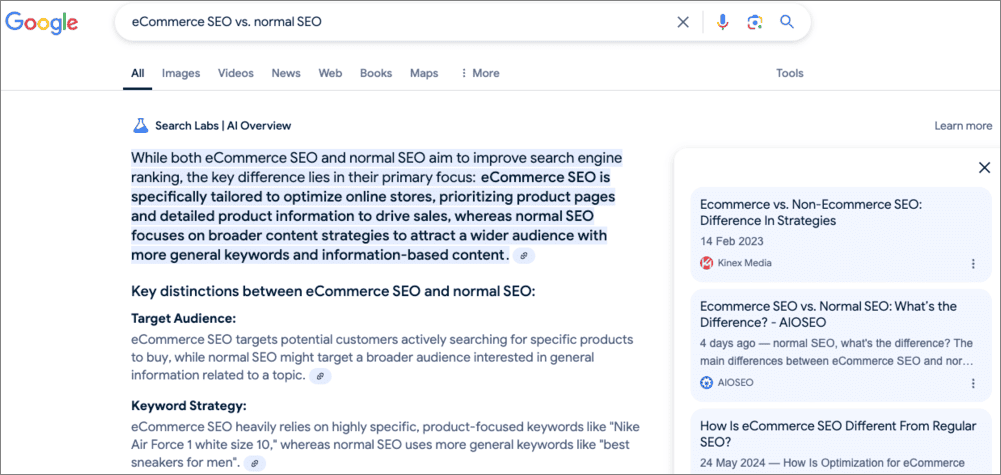
It’s a bit of a shock to the system, isn’t it? For twenty years, we’ve been trained to look for that number one spot, but now, Google is essentially “reading” the internet for us and giving us the answer on a silver platter.
Understanding AI Overviews
Think of AI Overviews as the “Final Boss” of the search results page. In 2026, they aren’t just a niche feature anymore; they’re appearing in about 13% to 21% of searches. That might not sound like much until you realize those are the high-value, informational searches that used to drive all your traffic.
Here’s the cold, hard truth: for the queries where these AI boxes show up, traditional organic traffic has taken a hit of up to 30%. It’s a bit like opening a restaurant on a busy street, only for the city to put up a free buffet right in front of your door. People just aren’t walking in as much because they’re already full.
But and this is a big “but” it’s not all doom and gloom. While the quantity of clicks might be down, the quality of the people who do click is through the roof. Honestly, the shift is making the web a more efficient place, even if it feels like the goalposts are moving every week.
- The Conversion Jackpot: Visitors coming from an AI citation are actually converting 4.4x better than old-school organic traffic. Why? Because the AI has already done the “selling” for you. By the time they click your link, they aren’t just browsing; they’re looking for a way to act.
- The Citation Paradox: Here’s a weird one for you. Only about 10% to 12% of the sources cited in an AI Overview actually rank in Google’s top 10 organic results. Let that sink in. You could be sitting on page two of the search results but still be the “star of the show” in the AI summary.
- Zero-Click is the New Normal: We’re seeing a massive surge in zero-click searches and now representing roughly 60% of all queries. Users get what they need and leave. Your goal has shifted from “get the click” to “get the brand mention.” Even if they don’t click today, they’ll remember that Zumeirah was the expert the AI trusted.
Introduction to Generative Engine Optimization (GEO)
This is where Generative Engine Optimization (GEO) comes in. If SEO was about talking to a search engine, GEO is about talking to an intelligence.
Honestly, the shift reminds me of when we transitioned from yellow pages to websites. It’s a whole new language. Traditional SEO is obsessed with where you sit in a list. GEO? It’s obsessed with whether or not you are available and authoritative enough for an AI like Gemini, ChatGPT, or Perplexity to quote you.
In 2026, if you aren’t optimizing for these generative engines, you’re basically invisible to the fastest-growing segment of web users. You aren’t just trying to rank on Google anymore; you’re trying to become part of the AI’s “brain.” It’s about being the source of truth that the model chooses to synthesize.
Differences Between SEO and GEO
I get asked this all the time: “Does this mean I can stop doing SEO?” Short answer: No. Long answer: They’re partners now. Think of SEO as the foundation of your house and GEO as the smart home system that makes it functional for the modern world.
| Feature | Traditional SEO | Generative Engine Optimization (GEO) |
| Main Goal | Keyword Rankings & Clicks | AI Citations & Brand Authority |
| Tactics | Backlinks, Meta Tags, Keywords | Content Extraction, Entity Density, Statistics |
| Platform | Google, Bing | Gemini, ChatGPT, Perplexity, Claude |
| Success Metric | Click-Through Rate (CTR) | Citation Share of Voice (SOV) |
Let me explain the difference with a quick analogy. SEO is like writing a great book and making sure it’s on the front shelf of the library. GEO is making sure that when someone asks the librarian a question, the librarian quotes your book as the definitive answer.
Expert Tip from the Zumeirah Team:
Treat AI as a branding channel, not just a traffic source. If you want to boost your citation rates, you need to stop writing “fluff.” Focus on narrative tone and include very specific, original statistics. AI models are suckers for hard data and they love to cite things that look like “facts” rather than just “opinions.” Honestly, a well-placed statistic can be worth more than ten backlinks in the 2026 landscape.
Why SEO Tools Matter in 2026
Honestly, if you’re still using a tool that only shows you a green light for keyword density, you’re essentially bringing a knife to a laser fight. The reason SEO tools for 2026 are such a big deal isn’t because they do the same old things faster & it’s because the “old things” don’t really work on their own anymore.
You know what? There’s a massive shift happening. Since AI is now handling a huge chunk of our daily questions, your toolkit has to do more than just track where you rank on a list.
It needs to tell you if you’re actually visible inside the “brain” of the search engine. We’re talking about tools that offer AI visibility tracking and citation analysis. If a tool can’t tell you whether Gemini is recommending your services to a user in Dubai, it’s not really giving you the full picture.
The Problem with the “Old Guard”
I respect the giants, I really do. But here’s the thing: most of the big blogs you’ve probably spent years reading are stuck in their own lanes.
- Yoast is great for WordPress, but they’re very plugin-focused.
- Search Engine Land is basically a news site & great for updates, but not always practical for your day-to-day strategy.
- Neil Patel? He’s the king of tutorials, but sometimes those “hacks” feel a bit 2022, don’t they?
At Zumeirah, we’re looking at this from a different angle. We care about the tools that actually bridge the gap between “I hope I rank” and “I know the AI is citing me.”
We need to focus on things like content freshness checks because AI models have a serious recency bias. If your guide to “Best SEO Tools” was last updated six months ago, the AI might just decide it’s too old to trust.
The Perks of Modern Tooling
Why bother upgrading? Well, besides the fact that you don’t want your traffic to drop off a cliff, there are some pretty cool benefits to using 2026-grade gear:
- Topic Clustering for AI: Instead of just finding keywords, these tools automate how you group topics. This helps the AI see you as an “entity” with authority, rather than just a page with some words on it.
- Citation Tracking: You can finally measure GEO success. It’s like having a leaderboard that shows exactly how many times ChatGPT or Perplexity mentioned your brand name this week.
- Multimedia & Voice Prep: AI loves videos and images. Modern tools help you optimize these so when someone asks their glasses or their car a question, your content is the one that gets read aloud.
SEO Evolution: 2025 vs. 2026
It’s wild to see how much things have changed in just a year. Let me break down exactly what the shift looks like so you can see why your old strategy might be feeling a bit “off.”
| Feature | 2025 Standard | 2026 Standard (The GEO Era) |
| Primary Goal | High CTR (Clicks) | High Citation Rate (Mentions) |
| Content Focus | Long-form “Everything” Guides | Concise, “Chunkable” Answer Blocks |
| Ranking Signal | Backlink Quantity/Quality | Brand Trust & Entity Authority |
| Key Metric | Average Position | Share of Voice in AI Overviews |
| Search Intent | Keyword Matching | Context & Predictive Reasoning |
2025 was about trying to figure out if AI was a threat. In 2026, we’ve realized it’s just the new reality. Using these tools is less about “cheating the system” and more about making sure your hard work actually gets seen by the systems that now gatekeep the internet.
Top SEO Tools for 2026: Categories and Recommendations
The “best” tool is the one you actually use, but in 2026, the criteria have changed. We aren’t just looking for keyword volume anymore. We’re looking for “LLM Footprint.”
When the Zumeirah team sat down to audit the current landscape, we looked at reviews from the heavy hitters like Backlinko and Surfer SEO, but we also ran our own tests. We wanted to see which tools actually helped a brand show up when someone asks ChatGPT, “Who’s the best web designer in Dubai?”
Here is our curated list of the gear you need to dominate the AI-first world.
1. All-in-One SEO Platforms (The Big Engines)
These are your command centers. If you’re serious about outranking the big blogs, you need a platform that connects the dots between traditional search and the new AI-driven reality.
Semrush: Best for Comprehensive GEO and AI Tracking
Semrush has been the gold standard for a while, but their 2026 AI Visibility Toolkit is what really sets them apart. It’s no longer just about tracking “Position 1”; it’s about tracking your “Citation Share.”
- Key Features: * AI Overview Tracker: See exactly which of your pages are being used as sources in Google’s AI boxes.
- Sentiment Score: It actually tells you if the AI is talking about your brand in a positive or negative way. (You know what? That’s a game-changer for brand reputation.)
- Keyword Magic 2.0: Groups keywords into “intent clusters” that AI models love to digest.
- Pricing: Starts at $139.95/month (The AI Toolkit is often a $99 add-on, but worth every penny if you’re scaling).
- Pros: Incredible, enterprise-grade data that you can actually trust.
- Cons: Honestly? It’s a lot. The learning curve is steep, and if you’re just a solo blogger, it might feel like flying a 747 to go buy groceries.
Ahrefs: The King of Competitive Intelligence
Ahrefs launched their Brand Radar tool this year, and it’s brilliant. While Semrush is great for tracking, Ahrefs is still the winner when you want to see what your competitors are doing behind the scenes.
- Key Features: * Brand Radar: Monitors your “Mention Velocity” across the web & basically a health check for how many other sites are talking about you.
- Content Explorer with AI Helpers: It identifies “Knowledge Gaps” in your articles that might be preventing an AI from citing you.
- Pricing: Starts at $99/month.
- Why it helps GEO: It helps you build the “Entity Authority” you need. If nobody else is linking to you or mentioning you, why should an AI trust you?
2. Content Optimization Tools (The AI Whispers)
You can have the best information in the world, but if it isn’t structured for a machine to read, it’s going to stay buried.
Surfer SEO: Top for AI-Friendly Content Creation
Surfer has evolved from a simple “keyword counter” to a fully autonomous optimization engine. Their GEO Score is now the metric we watch most closely at Zumeirah.
- Key Features: * Auto-Optimizer: It makes small, real-time adjustments to your headers and schema as the AI algorithms change.
- Topic Modeling: Tells you exactly which sub-topics to cover to be seen as the “Complete Answer” for a query.
- How it helps GEO: It scores your content for “Extractability.” Basically, it tells you if an AI can easily grab a 50-word snippet from your text.
- Pricing: Around $89/month for a solid pro plan.
Clearscope: The Semantic Heavyweight
Clearscope is for those who care about depth over volume. Their Entity Mapper is a thing of beauty.
- Key Features: * Entity Mapping: Shows you the relationship between your main topic and the secondary topics that “expert” content must include.
- AI Briefs: Generates outlines that are pre-optimized for both humans and LLMs.
3. GEO-Specific Tools (The New Frontiers)
These tools didn’t exist a few years ago. They are built specifically for the 2026 landscape where “Visibility” means more than just a link.
Goodie AI: The All-in-One GEO Specialist
If you want to know how you’re performing in ChatGPT, Gemini, and Perplexity all at once, this is your tool.
- Key Features: * Citation Monitoring: It alerts you every time your brand is mentioned (or dropped) by a major AI engine.
- LLM Crawlability Checker: Tells you if your site’s “robots.txt” or technical structure is blocking AI bots from reading your best stuff.
- Pricing: Starts at $29/month for basic tracking & super affordable for small businesses in Dubai.
- The Verdict: It’s fast, accurate, and does one thing very well: keeping you visible in the AI conversation.
Profound: For Narrative and Brand Perception
This is a bit more high-end. Profound is for brands that care about how they are being described.
- Key Features: * Tone Analysis: If ChatGPT is calling you a “budget option” when you’re trying to be a “luxury brand,” Profound will catch it.
- Answer Engine Insights: Shows you exactly which prompts lead to your brand being recommended.
- Rating: 4.7/5 (According to recent G2 benchmarks).
Top GEO Tools Comparison Table
| Tool | Best For | Pricing (Starts) | Key GEO Feature | Rating |
| Goodie AI | AI Visibility | $29/mo | Multi-platform citation tracking | 4.8/5 |
| Profound | Brand Monitoring | $49/mo | Tone and mention sentiment analysis | 4.7/5 |
| Semrush | Enterprise Integration | $139.95/mo | AI Overview Tracker & SOV | 4.9/5 |
| Otterly AI | Content Freshness | $19/mo | Automated update alerts | 4.6/5 |
| Peec AI | Competitive Workflows | $35/mo | Side-by-side AI visibility benchmarking | 4.5/5 |
4. Technical and Free Essentials (The Foundation)
Don’t forget the basics. You don’t always need a fancy subscription to win.
- Google Search Console (GSC): Honestly, this is still your best friend. Google’s 2026 update added an “AI Citations” tab. Use it! It’s the most accurate data you’ll get on what’s actually working.
- Expert Tip: Look for queries where you have high impressions but low clicks & that usually means you’re being cited in an AI Overview. Optimize those pages to make sure the AI mention is a glowing one.
- Screaming Frog: Still essential for site audits. Use it to check for schema errors. If your structured data is broken, the AI might get confused about who you are.
- ChatGPT & Claude: Use these as your personal “content testers.” Paste your draft into ChatGPT and ask: “Based on this text, would you recommend Zumeirah for SEO services?” If the answer is “maybe,” you need to tighten up your authority signals.
How to Use These Tools to Optimize for AI Overviews (GEO Strategies)
Honestly, having the tools is only half the battle. You could have a Ferrari in your garage, but if you don’t know how to shift gears, you’re just sitting in an expensive chair. In 2026, the “how-to” of SEO has shifted from chasing algorithms to feeding an intelligence.
If you want Zumeirah to show up in those coveted AI source cards, you need a workflow that treats every piece of content like a data source for a hungry LLM. Let me walk you through how to actually put these tools to work.
Step 1: Research and Planning (The Discovery Phase)
You know what? Most people start with a keyword list and call it a day. That’s a mistake. In the GEO era, we’re looking for decision-intent queries. These are the questions people ask when they are ready to hire someone or buy something.
- Use Semrush or Ahrefs: Instead of just looking for high-volume terms, look for the “AI Overview” icon in the SERP features column. If a query is already triggering an AI box, that’s your target.
- Focus on the “Why” and “How”: AI models love complex, multi-layered questions. Use the “Keyword Magic Tool” to filter for question-based keywords.
Here’s the thing: you aren’t just looking for “SEO Dubai.” You’re looking for “How does Zumeirah’s SEO strategy differ from traditional agencies for e-commerce brands?” That’s the kind of query where an AI will look for a specific source to cite.
Step 2: Content Creation (Building for Extraction)
Once you have your topics, it’s time to write. This is where tools like Surfer SEO and Clearscope earn their keep. But don’t just follow their keyword suggestions blindly.
- The Answer-First Rule: This is non-negotiable now. Every H2 or H3 that asks a question should be followed immediately by a 40 to 60-word answer. Why? Because that’s the exact length AI Overviews love to “clip” for their summaries.
- Structure with Purpose: Use short paragraphs & think 1 to 3 sentences. It makes your content “chunkable.” If an AI can easily digest a single paragraph as a standalone fact, it’s much more likely to quote you.
- Adding the “Secret Sauce” (Schema): Honestly, if you skip schema, you’re invisible to the machine. Use SEO PowerSuite or a similar technical tool to layer in FAQ and Article schema. It’s like giving the AI a map of your article so it doesn’t have to guess what’s important.
Step 3: Optimization and Monitoring (The Long Game)
You’ve hit publish. Now what? In 2025, we used to just wait and see. In 2026, we monitor the “citation footprint.”
- Track with Goodie AI or Profound: These tools will tell you if Gemini or ChatGPT has started mentioning your brand. If you see your visibility dropping, it’s usually a sign that your content is getting “stale.”
- The Quarterly Refresh: AI models have a massive bias toward what’s happening now. I recommend a content audit every three months. Update your stats, swap out old examples, and make sure your internal links are still pointing to relevant, high-authority pages. It’s a bit of a chore, but it’s what keeps the big guys like Neil Patel at the top.
Common Mistakes That Will Tank Your GEO
I see these all the time, and they’re painful to watch. If you want to stay ahead, avoid these traps:
- Over-optimizing for Keywords: If your text feels like it was written for a robot from 2010, the AI of 2026 will smell it a mile away. Focus on the topic, not the phrase.
- Ignoring Mobile UX: You’d be surprised how many “pro” sites still load like molasses on a phone. If a mobile user can’t read it, the AI might decide the “user experience” signal is too low to bother citing you.
- Being Too Generic: AI can generate “5 Tips for Better SEO” in two seconds. It doesn’t need to cite you for that. It needs to cite you for your original data and first-hand experience. Share your wins, your fails, and your specific Dubai market insights.
Expert Tip from the Trenches: Always test your draft before you go live. Copy your content and paste it into Perplexity or ChatGPT with the prompt: “Based on this text, what are the three most important takeaways for a business owner?” If the AI can’t find those takeaways easily, or if the relevancy score feels off, you need to go back and simplify your structure. Aim for an 85%+ relevancy match.
Expert Tips for Ranking on the First Page of Google in 2026
Honestly, ranking on the first page in 2026 feels a bit like trying to hit a moving target while riding a bike. But here’s the thing: it’s not impossible. It just requires a different kind of focus. You can’t just throw keywords at a wall anymore and hope they stick. You have to be more calculated almost like a chef balancing flavors.
If you want to see your brand at the top, you need to think beyond the search bar. You need to think about how your content lives across the entire web.
Tip 1: Build E-E-A-T Through Real-World Proof
You know what? Google is obsessed with trust right now. They’ve seen so much AI-generated fluff that they are starving for something real. That’s where E-E-A-T (Experience, Expertise, Authoritativeness, and Trustworthiness) comes in.
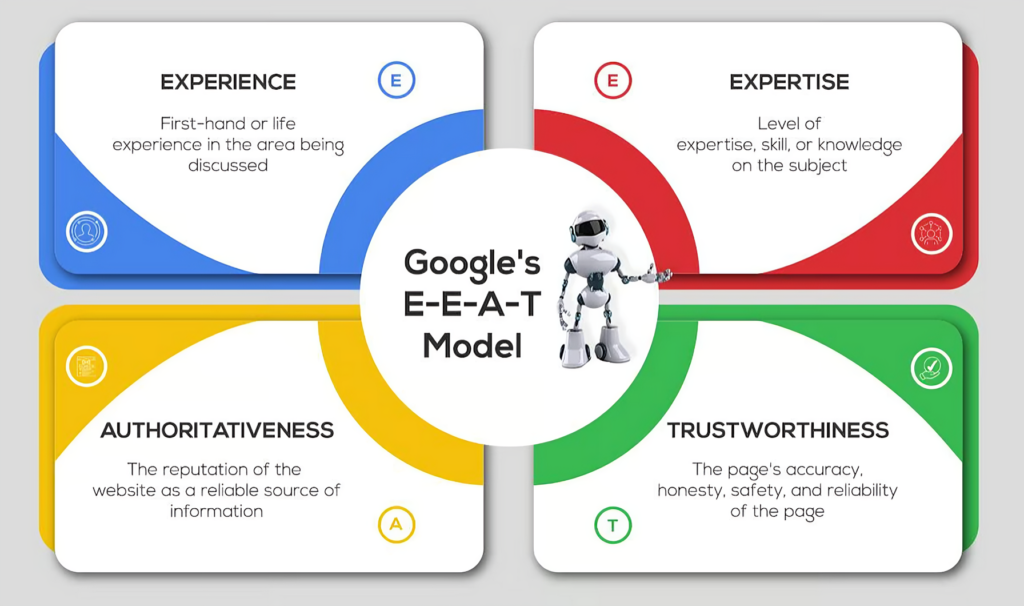
Don’t just say you’re an expert; prove it. I’m talking about including actual expert quotes from people in your industry. If you’re writing about SEO in Dubai, why not reach out to a local business owner and get their take? It adds a layer of “humanity” that a machine just can’t replicate.
Also, start leaning heavily into case studies. Show the receipts! If you helped a client grow their traffic by 50%, break down exactly how you did it. Include screenshots, data points, and maybe even a quick video testimonial.
High-authority backlinks are still the backbone of SEO, but in 2026, a link from a respected industry site is worth way more than a hundred low-quality guest posts.
Tip 2: Optimize for the Omnichannel Experience
Here’s a natural digression: have you noticed how often Reddit or YouTube videos show up in your search results lately? It’s not an accident. Google’s AI loves sources that have a “community” behind them.
If you want to dominate AI Overviews, your content needs to perform well on platforms like Reddit. Why? Because LLMs (the brains behind the AI) are constantly crawling these forums to see what real people are saying.
If your brand is being discussed in a positive way on a subreddit, there’s a much higher chance you’ll be cited as a “trusted recommendation” in an AI summary.
The same goes for YouTube. Make a 2-minute video summarizing your article and embed it at the top. It keeps people on your page longer, which is a massive signal to Google that your content is actually helpful.
Tip 3: Use Data-Driven Insights (The Secret Sauce)
Honestly, if you want to increase your chances of being cited by an AI by 2x, you need to use specific statistics. AI models are suckers for numbers. They love to say, “According to a study by Zumeirah, 60% of businesses are failing to optimize for GEO.”
Even if you aren’t conducting your own massive research projects, find reliable sources and cite them clearly. Use tables to compare data—machines find tables incredibly easy to parse. It’s like putting the information on a silver platter for them.
Tip 4: Focus on User Intent and the “First-Sentence Answer”
We’ve talked about this before, but it bears repeating: you have to answer the user’s question immediately. If someone searches for “best SEO tools for 2026,” don’t start with a three-paragraph history of the internet.
Give them the answer in the first sentence. Something like: “The best SEO tools for 2026 include Semrush for AI tracking, Goodie AI for GEO visibility, and Surfer SEO for content extraction.” By doing this, you’re basically handing Google the exact snippet it needs for its AI Overview. It’s about being helpful first and descriptive second.
Tip 5: Reverse-Engineer the Giants with Ahrefs
I like to keep an eye on what the “big guys” are doing. If you see Search Engine Land or Neil Patel ranking for a term you want, go into Ahrefs and look at their “GEO footprint.”
- Are they using a specific type of schema?
- Do they have a lot of mentions on social media?
- Is their content structured with specific question-based headers?
Once you see their blueprint, you can build something even better. Maybe they forgot to include a video, or maybe their stats are a year old. That’s your opening!
Quick Implementation Checklist for Zumeirah Readers
If you’re feeling a bit overwhelmed, just start here. These are the low-hanging fruit that can make a massive difference in your rankings:
- Implement FAQ Schema: It’s the easiest way to tell Google exactly what questions your page answers.
- Prioritize Multimedia: Every post should have at least one unique image or video with descriptive alt text. (AI needs to “see” what you’re talking about, too!)
- Aim for the 80+ Score: Use your optimization tools (like Surfer or Semrush) to get your content score into the 80s. It’s a good benchmark to ensure you’ve covered the topic in enough depth.
- Keep it Fresh: Set a calendar reminder to check your top-performing posts every 90 days. Update a few sentences, check the links, and keep that “freshness” signal strong.
Honestly, the goal isn’t just to rank & it’s to stay there. And in 2026, staying at the top means being the most useful, most trusted, and most “cite-able” source on the web.
Conclusion: The New Era of Search Visibility
Honestly, if there’s one thing you should take away from this guide, it’s that the “old ways” of SEO haven’t died but they’ve just grown up. In 2026, ranking on the first page of Google is no longer the final destination. It’s the starting line.

The real victory now is becoming the “source of truth” for the AI assistants that your customers are using every single day. Whether it’s a busy professional asking Gemini for a quick summary or a student diving deep into Perplexity, your brand needs to be the one providing the answers.
By blending the technical power of traditional SEO with the authority-building tactics of GEO, you aren’t just chasing traffic; you’re building a legacy of trust.
Here at Zumeirah, we’ve seen first-hand how these tools can turn a quiet website into an industry authority. The landscape is shifting fast, and it can feel a bit overwhelming, but the strategy is actually quite simple: be helpful, be accurate, and be easy to find both for humans and for the machines that serve them.
Final Takeaway for 2026
In this new world, visibility isn’t just a number on a dashboard. It’s about being the go-to source that the world’s most advanced AI models trust to represent the facts.
Don’t wait for your traffic to drop to start caring about GEO. Use the tools we’ve discussed, track your citations, and keep refining your content. The future of search is a conversation, and it’s time for Zumeirah to lead it.
Frequently Asked Questions (FAQ)
1. What are the best free SEO tools for 2026?
Honestly, you can do a lot without spending a dime. Google Search Console remains the most accurate way to see what Google’s AI is doing with your site. For keyword research, Google Keyword Planner is still a solid foundation. If you want to test your GEO potential, you can use the free versions of ChatGPT or Claude to see if they cite your brand when asked industry-specific questions. Also, the Detailed Chrome Extension is a lifesaver for quick on-page audits.
2. How does GEO differ from traditional SEO?
Think of SEO as the “plumbing” it’s about keywords, site speed, and backlinks to get you onto a list. GEO (Generative Engine Optimization) is the “reputation” & it’s about structuring your content so an AI model can easily extract facts and cite you as an authority. While SEO targets clicks, GEO targets mentions and citations within an AI-generated answer.
3. Is traditional SEO still relevant in 2026?
Absolutely. You know what? You can’t have good GEO without a foundation of good SEO. If your site is slow, poorly structured, or lacks authority, an AI bot won’t even bother crawling it. Traditional SEO is what gets you invited to the party; GEO is what makes you the person everyone wants to talk to.
4. How often should I update my content to stay visible in AI Overviews?
AI models have a massive bias toward “freshness.” At Zumeirah, we recommend a quarterly audit. You don’t necessarily need to rewrite everything, but updating your statistics, checking for broken links, and adding a few sentences about current trends can signal to the AI that your content is still the most relevant source available.
5. Do I need a specialized tool like Goodie AI to see my GEO rankings?
While you can manually test prompts in ChatGPT or Gemini, it’s not very scalable. Specialized tools like Goodie AI or LLMrefs automate this process, showing you your “Citation Share of Voice” across multiple platforms at once. If you’re a growing business or an agency, having that data in a dashboard is a massive time-saver.
6. Will AI Overviews kill my website traffic?
Here’s the thing: it might reduce your quantity of clicks for simple, factual questions. However, the clicks you do get will be much higher quality. If someone reads an AI summary and still clicks through to your site, they are usually much further down the sales funnel and ready to convert.