If you’re still obsessing over keyword density and checking your rankings every hour like it’s 2018, you’re playing a game that doesn’t really exist anymore.
It’s February 2026, and the search landscape in Dubai and everywhere else, frankly has shifted underneath our feet. Google’s AI Overviews and the rise of Answer Engine Optimization (AEO) have turned the old playbook into a dusty relic.
If your content isn’t rich with entities, you aren’t just losing but you’re becoming invisible to the very engines that summarize the web for your customers.
You know what? Most business owners I talk to here in the UAE are still being told the same old story by their agencies like “Just target these ten keywords and you’ll rank.”
But the actual thing is Google doesn’t just look for words anymore. It looks for meaning. It looks for relationships between concepts, people, and brands.
When a CEO in Downtown Dubai searches for a solution, Google’s AI doesn’t just pull up a page with the most keywords; it constructs an answer based on what it understands about the topic.
The Big Keyword Trap
The problem is that traditional keyword gap tools are fundamentally shallow. They tell you which words your competitors use that you don’t.
That’s like trying to build a skyscraper by just looking at the bricks. Entity-based competitor analysis is about looking at the blueprint like the semantic graph that Google uses to decide who is an actual authority and who is just making noise.
Think about it this way like your competitors might be ranking for “web design Dubai,” but an entity-based competitor analysis might reveal that Google actually associates their brand with broader entities like “User Experience Design,” “Conversion Rate Optimization,” and “E-commerce Architecture.”
If you’re only chasing the keyword, you’re missing the semantic signals that actually move the needle. You’re effectively shouting into a void while your competitors are having a structured conversation with the algorithm.
Why This is Your Secret Weapon
Trying to outspend giants like Yoast or Search Engine Land on backlinks is a losing battle for most of us. But you can outsmart them. By mastering entity-based competitor analysis, you can pinpoint the exact “knowledge gaps” in their content.
Maybe they’ve mentioned a topic a thousand times, but they haven’t connected it to the secondary entities that Google’s 2026 algorithm now expects to see.
When you fill those gaps, you aren’t just “writing an article.” You’re building a web of authority that makes it almost impossible for Google to ignore you.
You’ll start to see your brand cited in those coveted AI summaries, and your traditional rankings will follow suit and they’ll move much faster than they used to.
Honestly, it’s about future-proofing your business. We don’t know exactly what the next update will bring, but we know Google is getting better at understanding the world.
By focusing on entity-based competitor analysis, you’re aligning your strategy with how search actually works today. It’s the difference between guessing and having the answers before the test even starts.
What Is Entity-Based Competitor Analysis?
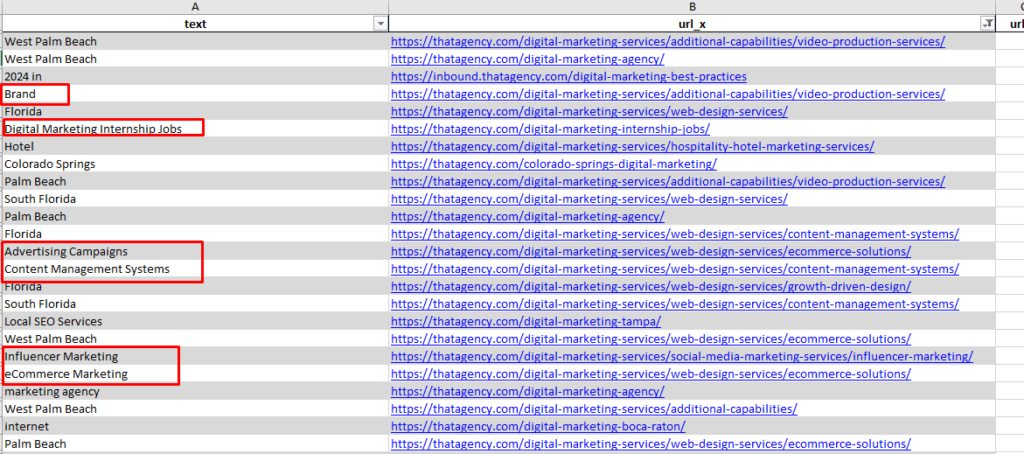
If you ask three different SEOs to define an “entity,” you’ll probably get four different answers and a headache.
But look, it’s actually simpler than the gurus make it sound. In the eyes of Google’s 2026 algorithm, an entity is just a “thing” or a “concept” that is unique, well-defined, and distinguishable.
It’s the difference between a random string of letters and a recognized object in the real world.
Think of it like this: “Burj Khalifa” isn’t just a keyword. It’s an entity. It has a location, a height, an owner (Emaar), and a relationship to other entities like “Dubai Mall” or “Adrian Smith.”
When you do an entity-based competitor analysis, you aren’t just looking at who is using the word “skyscraper” more often. You’re looking at who Google thinks is the ultimate authority on the concept of skyscrapers in the Middle East.
Keywords vs. Entities: The Semantic Shift
Traditional keyword analysis is basically counting. You see a competitor ranking for “best coffee in Jumeirah,” and you think, “Okay, I need to use that phrase six times.” That’s old-school. That’s building with bricks but forgetting the mortar.
Entities are the mortar. They connect topics semantically. While a keyword is just a label, an entity carries weight, relationship, and salience. Salience is a fancy word Google uses to describe how central a topic is to your page.
If you’re writing about coffee but never mention “Arabica,” “roasting profiles,” or “extraction times,” Google’s NLP (Natural Language Processing) looks at your content and goes, “This person doesn’t actually know coffee.”
Your competitor, who mentioned all those related entities, wins because even if they used the main keyword fewer times than you did.
Why This Matters Right Now (Welcome to 2026)
Why are we even talking about this? Because we’re living in the era of AI search. Whether it’s Google’s Search Generative Experience (SGE) or the various Answer Engines (AEO) that have popped up, the goal is the same like to provide a direct answer.
AI doesn’t “read” keywords; it extracts entities. Over 70% of searches now have a clear intent tied to specific entities. When someone asks their phone, “Where can I get a suit tailored near DIFC?”, the engine isn’t looking for a website that says “suit tailored near DIFC” a hundred times.
It’s looking for entities that represent “Tailors,” “DIFC,” “Premium Services,” and “Customer Reviews.” If your site hasn’t established those entity relationships, you aren’t just off the first page and you’re out of the conversation entirely.
The Real Benefits for Zumeirah
So, what do you actually get out of this? It’s not just about “ranking higher,” though that’s the end goal. Here’s what happens when you pivot to an entity-first strategy:
- Uncover Hidden Gaps: You’ll find things your competitors are missing like not just keywords, but entire sub-topics that Google expects an authority to cover.
- Supercharge Your E-E-A-T: By connecting your brand entity to other high-authority entities (like industry leaders or recognized organizations), you’re telling Google, “I belong in this circle.”
- Optimize for AI Citations: If you want to be the one the AI quotes in its summaries, you have to speak its language. That language is entities.
- Build Bulletproof Clusters: Instead of a bunch of random blog posts, you’ll have a semantic web of content that’s almost impossible for a “keyword-stuffed” site to beat.
Honestly, it’s about moving from being a “content creator” to being a “knowledge provider.” Your competitors might have bigger budgets, but they probably don’t have a better map. Entity-based competitor analysis is that map.
Why Entity-Based Competitor Analysis Beats Keyword Gaps Alone
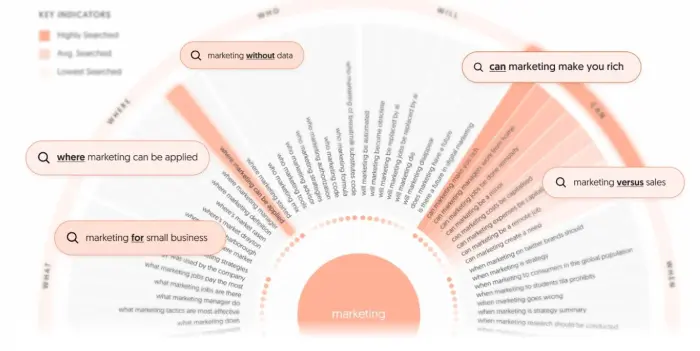
You know those fancy SEO Tools we all pay a small fortune for? The ones that show you a “Keyword Gap”? Don’t get me wrong, they’re useful for a quick look, but they’re also incredibly limited.
They treat language like a grocery list. They see “web design” and “Dubai” and think, “Great, match these strings of text.” But they completely miss the context.
Those tools are basically playing a game of “snap” with words. If your competitor has a word and you don’t, they flag it. But in 2026, Google has moved way beyond just matching strings. It’s now about matching things.
The Context Crisis in Traditional Tools
Traditional keyword tools struggle with something called disambiguation. That’s a fancy way of saying they get confused when one word has two meanings.
Take the word “Majlis,” for example. Depending on the context, it could mean a physical room, a social gathering, or even a specific government council in the UAE. An old-school keyword tool just sees the letters M-A-J-L-I-S. It doesn’t know if you’re talking about interior design or political science.
When you perform an entity-based competitor analysis, you’re looking at the “semantic neighborhood.” Google’s Knowledge Graph looks at the surrounding words to figure out exactly what you mean.
If your competitor is ranking for “Majlis” and their page is full of entities like “cushions,” “incense,” and “hospitality,” Google knows they’re talking about the room.
If you just sprinkle the keyword “Majlis” into a post about government meetings, you’ll never outrank them. You’re speaking two different languages even though you’re using the same word.
Winning with Salience and Relationships
The real advantage of an entity-first approach is understanding salience scores. This sounds technical, but honestly, it’s just a measure of how important a specific “thing” is to the overall topic of the page.
Most of our competitors are just filling pages with text. They think more is better. But by looking at their entity map, we can see exactly where they’re weak.
Maybe they have high topical depth in “real estate,” but they’ve completely ignored the connected entities like “mortgage rates in AED” or “Dubai Land Department regulations.”
When we spot those missing connections, we can build content that isn’t just longer because it’s smarter. We aren’t just adding words but we’re adding “nodes” to the map that Google is already trying to complete. It makes our content feel more “whole” to the algorithm.
Why the AI Overviews Love Entities
AI Overviews (formerly SGE). If you’ve searched for anything lately, you’ve seen that big box at the top that summarizes everything.
That AI isn’t picking sources based on who used the keyword the most. It’s looking for the most “entity-dense” and authoritative source.
The sites that are dominating these AI-driven results in 2026 are the ones that have mastered entity-based competitor analysis.
They know that the AI needs a clear structure to pull information from. By mapping out the entities your competitors are using, you can see the exact “knowledge gaps” that the AI is struggling to fill. If you fill those gaps, the AI will literally cite you as the answer.
The Numbers Don’t Lie
If you’re wondering if this is just theory, look at the data coming out of the industry this year. Recent studies show that entities now appear in over 87% of all rich results.
That means if you want a featured snippet or a spot in the knowledge panel, you have to be thinking in entities.
Even more impressive? Sites that have pivoted from keyword-only strategies to a focus on topical authority and entity mapping are seeing a ranking boost between 25% and 60%.
Honestly, in a market as competitive as Dubai, those kinds of gains are the difference between being a leader and being an also-ran.
You know what? Your competitors are probably still arguing over whether to use “SEO Dubai” or “Dubai SEO” in their H1 tags. Let them.
While they’re focused on the labels, we’re going to focus on the substance. We’re going to build a brand that Google recognizes as a literal entity of authority.
How Entities Work in Google Search (2026 Update)
If you could peer inside Google’s brain right now, you wouldn’t see a giant list of keywords. You’d see something much more like a massive, glowing map of interconnected dots.
This is the Knowledge Graph, and it’s essentially a machine-readable encyclopedia of everything Google “knows” to be true.
In this 2026 landscape, Google doesn’t just crawl your site; it performs entity linking. It takes the people, brands, and concepts you mention and tries to pin them to existing “nodes” in its graph.
When you mention “Zumeirah,” Google is checking its records to see if it recognizes us as a “Web Design Agency in Dubai” founded by “Mohammad Safwan.” If the dots connect, you’re an entity. If they don’t, you’re just another URL in a sea of billions.
The Triple Threat: Salience, Relationships, and Co-occurrence
You might be wondering, “How does Google decide if I’m actually talking about something important?” It comes down to three things that sound technical but are actually quite intuitive:
- Salience: This is a score from 0 to 1 that tells Google how central a topic is to your page. If you mention “SEO” once at the bottom of a 2,000-word post about gardening, your salience for SEO is near zero. But if your H1, subheadings, and opening sentences all reinforce it, your score climbs.
- Relationships: Google looks for the “is-a” or “part-of” connections. “Burj Khalifa” is-a “Skyscraper” located in “Dubai.” By mentioning these related entities, you’re helping Google validate your content’s accuracy.
- Co-occurrence: This is about who you hang out with. If your brand name consistently appears alongside terms like “high-end web design” or “expert SEO,” Google starts to associate your entity with those concepts through sheer proximity.
AI Overviews: The End of the “Blue Link” Era?
The traditional “10 blue links” are becoming a secondary feature. With AI Overviews (formerly SGE) dominating the top of the SERPs, Google is using its Gemini models to synthesize answers on the fly.
These AI models are obsessed with entities. When a user asks a complex question, the AI scans the web for the most “entity-dense” and authoritative sources to build its summary.
If your content is just a collection of keywords, the AI will likely skip you. But if you’ve mapped your entities clearly, you become the primary source for that zero-click answer.
It’s like being the only person in the room who actually knows the answer when the teacher asks a question.
The Bread and Butter of Entity Optimization
So, how do we actually “speak” to the Knowledge Graph? It’s not about magic; it’s about structure.
- Schema Markup (The Machine Handshake): Use JSON-LD to explicitly tell Google who you are. Don’t just use generic “Article” schema. Use
mainEntityOfPageto define your primary topic andsameAsto link to your Wikidata or social profiles. This removes all the guesswork for the algorithm. - Internal Linking (Building the Web): Stop linking with “click here.” Use entity-rich anchor text. If you’re linking to your service page, link from a phrase like “our Dubai-based SEO strategy.” You’re telling Google, “This node (article) is related to this other node (service).”
- Content Depth: Google’s NLP tools are looking for “topical completeness.” You know what? You can’t just scratch the surface anymore. You need to cover the secondary and tertiary entities that a real expert would naturally mention.
Honestly, it’s about making Google’s job easier. The less the algorithm has to “guess” what you’re talking about, the more it will trust you. And in 2026, trust is the only currency that matters.
Step-by-Step Guide to Entity-Based Competitor Analysis
Alright, let’s get our hands dirty. You know why this matters, and you know how the “brain” of the search engine works in 2026. Now, how do we actually do it?
If you want to outpace those massive authority sites, you can’t just work harder; you have to be more methodical.
Here is the exact blueprint I use at Zumeirah to dismantle a competitor’s search dominance.
1. Identify Your True Competitors
First thing’s first: your competitors in the real world might not be your competitors on the SERP. In 2026, we have two types of rivals: Organic Search Competitors and AI-Cited Authorities.
- The Tools: Use Ahrefs Site Explorer or SEMrush Organic Research to find sites with the highest “Organic Overlap.” Also, check Similarweb to see where your audience hangs out when they aren’t on your site.
- The AI Factor: Head over to Perplexity or Gemini and ask questions related to your niche. Note which brands keep getting cited in the footnotes. Those are your “Entity Competitors” like the sites Google and other LLMs already trust as primary sources.
2. Crawl and Collect Competitor Content
You can’t analyze what you haven’t seen. We need to “read” their site the way a bot does.
- The Process: Use Screaming Frog or Sitebulb to crawl your top 5 competitors.
- What to Grab: Focus on the top 200 pages (efficiency is key here). Export the H1s, Meta Titles, and most importantly the full body text. You’re looking for the “meat” of their topical authority.
3. Extract Entities and Salience
Now we move from words to meaning. We’re going to run that scraped text through a Natural Language Processing (NLP) engine to see what Google “sees.”
- Free/Manual Option: Use the Google Natural Language API demo. Paste a competitor’s article, and it will spit out a list of recognized entities (People, Organizations, Consumer Goods, etc.) along with their Salience Scores.
- Paid/Professional Option: Tools like InLinks, TextRazor, or Surfer SEO automate this. They’ll show you a cloud of entities and how “important” each one is to the page’s context.
- Advanced Tip: If you’re tech-savvy, a simple Python script using spaCy can do this at scale for thousands of pages in minutes.
4. Map Entity Relationships and Gaps
This is where the magic happens. You’re looking for the “Venn Diagram” of your industry.
- Shared Entities: These are the “table stakes.” If everyone is talking about them, you must too.
- Competitor Gaps: These are entities your rivals mention that you don’t.
- Unique Gaps: These are entities nobody is talking about yet, but Google’s Knowledge Graph expects to see.
Pro Tip: Use mind-mapping tools like MindMeister or the “Topical Map” feature in InLinks. You want to visualize the connections. If a competitor links “Real Estate Dubai” to “Golden Visa” but misses “Escrow Requirements,” that’s your opening.
5. Compare to Your Site
Run the exact same analysis on your own domain. Be honest like where is your “Semantic Gap”? If your salience scores for core industry terms are lower than your competitors’, Google won’t view you as the “Primary Entity” for that topic.
Honestly, it’s often a wake-up call. You might realize you’ve been writing about “Search Engine Optimization” but haven’t once mentioned “NLP,” “Schema Graph,” or “Entity Salience.” No wonder the authority sites are winning!
6. Turn Insights into Action
Data is useless without execution. Here’s how you close the loop:
- Fill the Gaps: Create “Hub and Spoke” content. Your “Hub” page targets the main entity, while your “Spokes” cover all those missing sub-entities you found in Step 4.
- The Technical Handshake: Update your Schema Markup. Use the
aboutandmentionsproperties to explicitly link your content to recognized entities in Wikidata or the Google Knowledge Graph. - Monitor AI Visibility: Traditional rank trackers aren’t enough anymore. Use tools like Waikay.io, LLM Pulse, or Otterly AI to track if your brand is being cited in AI Overviews.
Best Tools for Entity-Based Competitor Analysis in 2026
Look, you could try to do all of this manually with a notepad and a lot of caffeine, but why would you? In 2026, the tool stack for SEO has shifted from “keyword tracking” to “knowledge mapping.”
If you want to outrank the likes of Neil Patel or Search Engine Land, you need tools that can actually parse the semantic relationship between concepts.
Most people just stick to what they know. But if you’re serious about Zumeirah dominating the Dubai market, you need a mix of traditional powerhouses and specialized semantic engines.
2026 Entity Analysis Tool Comparison
| Tool | Key Features for Entity Analysis | Pricing (2026 est.) | Best For | Free Trial/Limited? |
| Ahrefs | Content Explorer, keyword gaps + entity hints | $129+/mo | Keyword + entity overlap | Limited free version |
| SEMrush | Topic Research, Organic Research, entity clusters | $139+/mo | Full competitor intel | Yes |
| InLinks | Entity extraction, topical maps, salience | $79+/mo | Semantic SEO focus | Yes |
| Surfer SEO | Entity optimization, content editor | $89+/mo | On-page entity gaps | Yes |
| Google NLP API | Free entity/salience extraction | Free (limited) | Custom scripts | Yes |
| TextRazor | High-accuracy entity extraction | API credits | Python/Colab workflows | Yes |
| Waikay.io | AI Brand Score, entity knowledge graphs | Varies | AEO/AI visibility | Limited |
Which One Should You Actually Use?
Honestly, you don’t need all of these. If you’re just starting to dip your toes into entity-based competitor analysis, I always recommend starting with the Google Natural Language API.
Why? Because it’s literally the same engine Google uses to understand your site. It’s free to a point, and it gives you a raw look at your “Salience Scores” without the marketing fluff.
However, if you’re managing multiple clients or building out a massive hub then you’ll want something more “plug-and-play.”
- InLinks is arguably the king of semantic SEO right now. It builds an actual “Knowledge Graph” for your site and tells you exactly which entities your competitors are using that you’ve ignored. It’s like having a cheat sheet for Google’s internal database.
- Surfer SEO is your best friend for the actual writing phase. It won’t just tell you to “use the keyword more.” It’ll tell you that you need to mention “User Interface” and “Mobile Responsiveness” because your top-ranking competitors are doing so with high salience.
- Waikay.io is the “new kid on the block” for 2026. Since we’re obsessed with AI Overviews and AEO (Answer Engine Optimization), Waikay helps you see how often your brand entity is being linked to authoritative topics in LLM responses.
A Pro’s Tip for the Dubai Market
You know what? Most agencies in this region are still just looking at Ahrefs or SEMrush. They see high search volume and they chase it.
By adding a semantic tool like InLinks or TextRazor to your workflow, you’re seeing the matrix. You’re finding the “thematic gaps” that they don’t even know exist.
Start with the free tools to get a feel for how entities are categorized, then scale to a paid platform once you’re ready to automate your content clusters. It’s the fastest way to turn a small site into a topical authority that the big dogs can’t touch.
Advanced Techniques to Accelerate Rankings
If you’ve made it this far, you’re already ahead of 90% of the digital marketing managers in Dubai. Most people just buy a subscription to a tool, run a report, and call it a day.
But you know how things work in this city like if you want to be the best, you have to do what others aren’t willing to do. You have to get technical.
To really separate Zumeirah from the pack, we need to move beyond basic definitions. We’re talking about “surgical” SEO. We want to manipulate how Google perceives our authority in real-time.
Here are the levers you need to pull to see results faster than a morning commute on the E11.
1. Entity Salience Optimization (The Power of Placement)
You know what? Where you put a word matters almost as much as the word itself. Google’s NLP models weigh the beginning of your content much more heavily.
If your core entity like let’s say “High-End Web Design” is buried in the fourth paragraph, its salience score is going to be weak.
- Front-Loading: Mention your primary entity in the first 50 words.
- Header Reinforcement: Don’t just use “Web Design” in your H1. Use your full entity string: “Boutique Web Design Agency in Dubai.”
- Contextual Density: Surround your main entity with “supporting” entities. If the topic is SEO, your primary entity should be flanked by terms like “Search Console,” “Backlink Profile,” and “Click-Through Rate.”
2. Semantic Internal Linking (Building the Map)
Stop using “read more” or “click here.” Those are wasted opportunities. In 2026, internal links are the “synapses” of your website’s brain. They tell Google how your ideas are connected.
- Entity-Rich Anchors: Instead of linking to your contact page with “Contact Us,” try “Get a custom SEO audit for your Dubai business.” You’re linking the entity of an audit to the entity of your brand.
- The Hub-and-Spoke Flow: Every “spoke” (smaller article) should link back to your “hub” (pillar page) using the exact entity name you want to rank for.
3. Schema Markup: The Machine Handshake
This is where we get into the “backend” of authority. Schema isn’t just for star ratings anymore. It’s about defining relationships.
Using JSON-LD, we can explicitly tell Google: “This article (entity A) is about ‘SEO’ (entity B) and was written by ‘Mohammad Safwan’ (entity C) who is the founder of ‘Zumeirah’ (entity D).” > Expert Tip: Use the mentions and about properties in your Article schema.
This is like highlighting the most important parts of your text for the algorithm so it doesn’t have to guess.
4. AEO Integration: Winning the AI Citations
The goal is to have Gemini or ChatGPT mention your brand by name. To do that, your content needs to be “bite-sized” for AI models.
- The “Answer First” Method: Start your sections with a direct, 40-60 word answer to a common question.
- Question-Based Headings: Use H2s like “How does entity-based competitor analysis improve rankings?” instead of just “Benefits.”
- Structured Lists: AI models love bullets and tables. They’re easy to scrape and display as a summary.
5. Using Python for the Heavy Lifting
Honestly, if you’re analyzing a competitor with 500 pages, you can’t do it by hand. This is where a tiny bit of code goes a long way. You don’t need to be a developer; you just need to know how to use a basic script.
A simple Python library called spaCy can scan an entire website and give you a list of every person, organization, and concept it finds.
Python
import spacy

# Load the English NLP model
nlp = spacy.load("en_core_web_sm")

text = "Zumeirah is a leading web design agency in Dubai founded by Mohammad Safwan."
doc = nlp(text)

# Extract and print entities
for ent in doc.ents:
    print(f"Entity: {ent.text} | Label: {ent.label_}")
Running a script like this on your competitor’s top pages reveals exactly what “concepts” they are claiming as their own. Once you know their map, you can build a better one.
The Reality Check
Look, none of this is magic. It’s just logic. Your competitors are likely still stuck in the “keyword era.” They’re trying to rank by repeating words.
We’re going to rank by building a Knowledge Graph that Google trusts implicitly. By the time they realize the game has changed, you’ll already own the first page.
Common Mistakes to Avoid
Look, I’ve seen enough SEO “experts” in this city burn through massive budgets only to end up on page five. Usually, it’s not because they didn’t work hard it’s because they were following a map from 2019.
When you’re playing the entity-based competitor analysis game, the mistakes are more subtle, but they’ll still tank your rankings just as fast.
If you want your brand to stay on top, you’ve got to avoid these common traps that trip up even the big agencies.
1. Mimicking Instead of Innovating
The biggest mistake people make is thinking they just need to copy their competitors. They run a report, see that Yoast mentioned “XML Sitemaps” ten times, and decide they need to mention it eleven times.
That’s not analysis; that’s just mimicking. Google already has a source for that entity. If you just parrot what’s already out there, why would the algorithm ever replace the original with you?
The goal of entity-based competitor analysis is to find the strategic gaps. You’re looking for the things they forgot to say, or the connections they failed to make.
Don’t just follow the leader, find where the leader is falling short and step into that space.
2. The “More is Better” Fallacy (Ignoring Salience)
We’ve all been there trying to hit a word count because a tool told us to. But in 2026, quality beats quantity every single time.
I’ve seen pages that mention a hundred different entities but have a salience score near zero for all of them. It’s like a “jack of all trades, master of none” situation.
If your content is too scattered, Google’s NLP gets confused. It can’t figure out what your page is actually about. Honestly, it’s better to have high salience for three core entities than to have a tiny bit of relevance for fifty.
Focus your “semantic weight” where it actually matters for your business.
3. Living in the Past (Skipping AI/AEO Updates)
It’s 2026, but some people are still acting like Google is just a list of links. If you aren’t optimizing for Answer Engine Optimization (AEO) and AI Overviews, you’re leaving money on the table.
I see it all the time: great articles that are completely unreadable for an LLM. No clear structure, no concise definitions, no schema markup.
If a machine can’t parse your content to give a quick answer, you aren’t going to show up in those coveted AI summary boxes. You might rank #1 in the “blue links,” but if the AI box takes up the whole screen, does it even matter?
4. Over-Optimizing (The “Uncanny Valley” of SEO)
You can actually be too perfect. If you force every single LSI keyword and entity relationship into a sentence, it starts to sound… well, like a robot wrote it.
Google’s 2026 helpful content updates are incredibly good at spotting “over-engineered” text. If your article feels like it was written for a machine instead of a human in Dubai looking for business advice, you’re going to get penalized.
Keep it natural. Use contractions. Use idioms. Let the text breathe. The goal is to hit the technical semantic markers while maintaining a Flesch score that a real person can actually enjoy.
The Bottom Line
Honestly, SEO is as much an art as it is a science. You need the technical foundation of entity mapping, but you also need the “human touch” to make it resonate. Avoid these pitfalls, stay focused on the user’s intent, and you’ll find that outranking the “giants” isn’t nearly as impossible as it looks.
How to Implement Findings and Rank #1 Faster
You’ve got the data, you’ve got the tools, and you’ve avoided the rookie mistakes. Now comes the part that separates the dreamers from the owners in Dubai: execution.
In this city, we don’t just “do SEO.” We build digital assets. If we want to take down the authority giants, we need a timeline that is aggressive but structured. You can’t fix your entire entity map in a weekend, but you can move the needle significantly in 30 days if you follow this sprint.
The 30-Day Entity Sprint
Most people fail because they try to do everything at once. We’re going to be more tactical.
Week 1: The Entity Audit and Mapping
This is your “reconnaissance” phase. Honestly, don’t write a single word of new content yet.
- The Workflow: Run your top 5 competitors through an NLP extractor (like the Google NLP API or InLinks).
- The Deliverable: A “Semantic Gap Map.” You need to identify the top 10 entities your competitors own that you are currently ignoring.
- Zumeirah Tip: Look for “Entity Clusters” that overlap with your highest-margin services. If you’re a web designer, don’t just look for “design” entities; look for the “conversion architecture” and “user psychology” nodes that your competitors are using to signal authority.
Weeks 2–4: The Build and Optimize Phase
Now we start the heavy lifting. This isn’t just about “blogging.” It’s about building a web of authority.
- Content Chunking: Revamp your existing high-traffic pages first. Add those 40-60 word “Answer Boxes” at the top of key sections to catch those AI citations.
- The Hub & Spoke Sprint: Pick one major entity gap and build a “mini-hub.” Write one pillar page and 4-5 supporting “spoke” articles that link back with entity-rich anchor text.
- Schema Injection: Don’t leave it to chance. Update your JSON-LD to include
aboutandmentionstags for the entities you’re targeting. Tell Google exactly what you’ve built.
Month 2 and Beyond: The Monitoring Phase
SEO in 2026 isn’t “set it and forget it.” It’s an ongoing conversation with the algorithm.
- Monthly Refresh: AI engines prioritize fresh data. Every 90 days, revisit your top-performing entity pages and update the stats or examples.
- The AI Pulse Check: Use tools like Waikay.io to see if your brand is starting to pop up in Gemini or Perplexity responses.
Measuring What Matters: Your 2026 KPIs
Forget “keyword rankings” for a second. If you’re ranking for a keyword but nobody clicks because the AI gave the answer, did you really win? We need to track the metrics that actually show topical dominance.
| KPI | What it Tells You | How to Track It |
| AI Citation Share | Your “Share of Voice” in AI Overviews and LLMs. | (Your Mentions / Total Mentions) in 20 test queries. |
| Topical Authority Score | How much Google trusts you on a specific niche. | Count of top-10 rankings within a specific cluster (aim for 20% growth). |
| Semantic Gap Closure | How many of those “missing” entities you’ve successfully mapped. | Re-run NLP audits monthly to check your salience scores. |
| Branded Search Lift | The ultimate proof of authority—people are looking for YOU by name. | Google Search Console “Branded Queries” filter. |
Honestly, if you see your Branded Search go up alongside your AI Citations, you’ve won. That means you aren’t just a “search result” anymore; you’ve become a recognized entity in your industry’s knowledge graph.
While Yoast and Neil Patel are busy updating their 2,000-page back catalogs, you can be more nimble. Focus on the high-intent, high-value entities that actually drive revenue in the Dubai market.
Don’t try to be everything to everyone. Be the absolute, undeniable authority on “Entity-Based Strategy for Luxury Brands” or “Technical SEO for UAE Real Estate.” When you own a niche entity-graph, even the biggest giants can’t push you out.
You know what? We’ve just laid out a roadmap that most agencies would charge five figures for. But the roadmap is just paper (or pixels) until you start the crawl.
Conclusion: Claiming Your Seat at the Top
The days of “tricking” Google are long gone. In 2026, the algorithm isn’t just a gatekeeper; it’s an audience member that’s grown incredibly sophisticated.
If you want to rank #1 faster than your competitors, you can’t just talk at the search engine. You have to speak its language.
By mastering entity-based competitor analysis, you’ve moved beyond the surface level of keywords and entered the “engine room” of modern SEO.
You’re no longer just guessing which words might work; you’re strategically mapping out the knowledge gaps that your competitors like even the massive ones like Yoast or Search Engine Land have left wide open.
This semantic depth is what gives your site the gravity to pull in those top rankings and, more importantly, stay there.
The 2026 Competitive Advantage
You know what? The biggest takeaway here isn’t just about a tool or a script. It’s a mindset shift. Entities are the core of search today and will be for the foreseeable future.
As AI continues to integrate deeper into how we find information, the “nodes” of your brand like your founder, your services, your location in Dubai, and your unique expertise will be the only things that matter in a zero-click world.
Think about the benefits we’ve covered:
- Speed: You’re ranking faster because you’re giving Google exactly what its NLP models are looking for.
- Authority: You’re building a brand that the Knowledge Graph recognizes as a legitimate, trustworthy entity.
- Future-Proofing: While others scramble with every algorithm update, your entity-rich strategy remains stable because it’s built on the fundamental way AI understands the world.
Your Move
Honestly, the only thing standing between Zumeirah and the top of the SERPs is the first crawl. You have the blueprint.
You have the 30-day timeline. You have the list of tools from the free Google NLP API to the advanced mapping of InLinks.
Don’t wait for your competitors to catch on. In a city like Dubai, being first is everything. Start your analysis today. Identify those semantic gaps, build your content clusters, and show Google that when it comes to your niche, you aren’t just a result, you are the answer.
FAQs: Everything You Need to Know
Look, I get it. This is a lot to take in, especially if you’ve been doing SEO the same way for the last five years. But if you want to keep your brand ahead of the curve, you need to be clear on the fundamentals. Here are the most common questions I get from business owners and marketers in Dubai about this shift.
What is entity-based competitor analysis?
Honestly, it’s just the “grown-up” version of SEO. Instead of looking for words, you’re looking for things and concepts. It’s a method where you analyze your competitors to see what entities (people, places, brands, topics) Google associates with them. By doing this, you find the “knowledge gaps” that traditional keyword tools miss.
How does it differ from keyword competitor analysis?
Think of keyword analysis like counting how many times someone says “car.” It’s shallow. Entity-based analysis is understanding that “car” is related to “engine,” “wheels,” “fuel,” and “transportation.” Keyword tools look for exact matches; entity analysis looks for semantic relationships and topical authority. It’s the difference between reading a list of ingredients and understanding the whole recipe.
What are the best free tools for entity extraction in 2026?
You don’t need a massive budget to start. The Google Natural Language API is still the gold standard for seeing exactly what Google “sees” in your text. You can also use the Wikipedia/Wikidata search to see if your core topics are recognized as official entities. For a more user-friendly experience, some tools like WordLift or InLinks offer limited free versions or trials that are great for a quick audit.
How long does it take to see results?
SEO is never an overnight win, but entity-based strategies move faster in 2026 because they align with Google’s core algorithm. Usually, you’ll start seeing a shift in topical authority and long-tail rankings within 4 to 8 weeks. If you’re targeting specific AI Overviews, you might even see changes in days if you’ve correctly mapped a gap that the AI was struggling to fill.
Can entity-based SEO help with AI Overviews?
100%. In fact, it’s arguably the only way to consistently show up there. AI models like Gemini and Search Generative Experience (SGE) are built on Large Language Models that process information as entities. If your content is structured around clear, salient entities, the AI is much more likely to pull your site as a primary source for its summary.
Is schema markup necessary for entity optimization?
Is it “necessary”? Technically, no but Google is smart enough to figure a lot of it out. But is it a “boss move”? Absolutely. Schema markup (specifically JSON-LD) is like a direct handshake with the search engine. It removes the guesswork. By using about and mentions properties, you are explicitly telling the algorithm which entities your page owns. It’s the fastest way to build trust in 2026.