

If you had told me a few years back that we’d be spending our mornings optimizing for “answer engines” instead of search engines, I probably would’ve laughed and gone back to tweaking meta descriptions.
But here we are in mid-January 2026, and the ground isn’t just shifting but it’s basically been replaced by a digital architect that redraws the map every time you ask it a question.
Honestly, have you looked at a Google results page lately? It’s wild. Depending on what you’re searching for, those familiar blue links are being pushed so far down by AI Overviews that you almost need a flashlight to find them.
We’re seeing these generative summaries pop up in nearly 50% of all searches now. And for the “how-to” or “best of” queries? That number is even higher.
Whether it’s ChatGPT handling billions of prompts a month or Perplexity acting like the research assistant we all wish we had in college, the reality is clear: the click is no longer the only currency that matters.
The Great Migration: From Links to Citations
We’ve moved past the era where being #1 on Google was the end-all-be-all. Don’t get me wrong, I still love a good organic ranking and it’s great for the ego and the analytics but the real battleground now is the “Citation.”
You know what I mean? It’s that little footnote or the bolded link inside a Gemini response that says, “According to Zumeirah…” That is where the high-intent, high-trust traffic is living these days. When an AI looks at the entire web and decides that your content is the most reliable source to summarize for a user, you’ve won something much bigger than a click. You’ve won authority.
For those of us working with luxury brands, travel agencies, or high-end services here at Zumeirah, this shift is actually a massive opportunity. Think about it like if someone is looking for “exclusive desert resorts in Dubai” or “bespoke SEO for UAE startups,” they aren’t looking to scroll through twenty different tabs.
They want a recommendation they can trust. If the AI serves up your brand as the definitive answer, the trust is already halfway built before they even land on your site.
Why This Matters for Zumeirah (And You)
I’ll be the first to admit that change is annoying. Re-learning how to talk to machines so they talk better to humans feels like a full-time job in itself. But here’s the thing: if you keep playing by the 2023 rulebook, you’re basically trying to win a Formula 1 race with a bicycle.
At Zumeirah, we’ve spent the last few months dissecting exactly how these Large Language Models (LLMs) choose their favorites. We’ve looked at the data, analyzed the citation patterns, and honestly failed a few times until we found what actually sticks in 2026.
The result? A set of strategies that don’t just “chase the algorithm” but actually align with how AI thinks, retrieves, and summarizes. We’re talking about moving from keyword stuffing to entity-building. From “content for bots” to “information for agents.”
In this article, I’m going to walk you through 7 battle-tested LLM SEO strategies that are working right now. These aren’t just theories I pulled out of a hat; they are based on real-world 2026 data. By the time we’re done, you’ll have a winning SEO roadmap to ensure your brand isn’t just a ghost in the machine, but the voice the machine actually listens to.
Ready to see what the future of search actually looks like?
What Is LLM SEO in 2026? (And Why Traditional SEO Isn’t Enough)
You know what? For the longest time, the “S” in SEO stood for Search. But if we’re being honest with ourselves in early 2026, it’s starting to feel like it stands for Synthesis.

When people ask me what LLM SEO actually is, I usually tell them to stop thinking about a “list of results” and start thinking about a “conversation.”
Traditional SEO was a game of matching and you have the keyword, I have the keyword, let’s get married. LLM SEO (or Generative Engine Optimization, as the researchers like to call it) is more like an interview. The AI models are the interviewers, and they aren’t just looking for the right words; they’re looking for a source they can trust enough to repeat to millions of people.
Honestly, it’s about making sure your site doesn’t just rank, but that it actually gets invited to the party. We’re optimizing content so it’s understood, trusted, and most importantly cited by Large Language Models. If a bot reads your page but doesn’t mention you in its answer, did you even exist?
Let’s break down the jargon because the industry loves a good acronym, and it’s getting a bit crowded:
- LLM SEO / LLMO: This is the big umbrella. It’s about making sure Large Language Models (the “brains” behind the bots like GPT-5 or Gemini 3) understand who you are and what you do.
- GEO (Generative Engine Optimization): This is specifically about the output. How do you get your brand cited in that shiny new AI Overview at the top of the search page?
- AEO (Answer Engine Optimization): This has been around for a while with voice search, but it’s evolved. It’s the art of being the “one true answer” to a specific question.
The Breakdown: Old School vs. The New Guard
I’m a visual person, so I find it’s easier to see the shift side-by-side. If you’re still trying to use 2023 tactics to solve 2026 problems, you’re going to notice a massive gap in your performance. It’s like trying to pay for a coffee in Downtown Dubai with a handful of sea shells and the value just isn’t recognized anymore.
| Feature | Traditional SEO (The Foundation) | LLM SEO (The Evolution) |
| Primary Goal | Ranking in the Top 10 | Being cited as a trusted source |
| Success Metric | Clicks and Organic Traffic | Brand Mentions & “Share of Answer” |
| User Intent | Keywords & Search Volume | Conversational Prompts & Logic |
| Content Focus | Long-form, Keyword-dense | Answer-first, Semantically clear |
| Authority | Backlinks & Domain Rating | Entity Relationships & E-E-A-T |
Here’s the Twist: You Still Need the “Boring” Stuff
Now, here is a bit of a contradiction for you. I’ve just told you how much everything has changed, but let me be very clear: Traditional SEO is not dead. In fact, it’s the prerequisite.
Think of it like building a villa in Jumeirah. Traditional SEO is the foundation, the plumbing, and the electrical wiring. You can’t have a high-tech smart home (LLM SEO) if the foundation is cracked and the roof is leaking.
If your site is slow, has 404 errors everywhere, or if search bots can’t crawl your pages because of some messy JavaScript, an LLM isn’t going to touch you with a ten-foot pole. Why would it? While there is some techniques to rank you by fixing your all JavaScript with SEO.
So, These models are trained on data. If they can’t access your data or if it’s presented in a way that’s hard to parse, they will simply move on to a competitor who has their technical house in order.
At Zumeirah, we’ve seen sites jump in AI citations simply by fixing their site structure and cleaning up their Schema markup. It’s not always about the “new shiny thing” and sometimes it’s about doing the basics so well that the AI has no choice but to notice you.
So, before we move into the actual strategies, just know that “being understood” is the first step to “being cited.” If an AI can’t read you, it can’t recommend you.
The State of LLM SEO in January 2026: Key Trends Driving Change
If you feel like you’re constantly playing catch-up, you’re not alone. I was looking at the latest data for early 2026 the other day, and the pace of change is staggering. We aren’t just “using AI” anymore; it has become the default interface for how people discover everything from new tech stacks to the best brunch spots in Dubai.
The Numbers Don’t Lie: AI Is the New Front Door
Here is a stat that should make every marketer pause: AI-driven discovery now handles between 25% and 30% of all initial search queries. That’s not just “early adopters” playing with a new toy. It’s a massive chunk of the population who have realized that asking an AI for a summary is often faster than digging through a list of links.
And it’s not just text anymore. We’ve seen the rise of multi-modal search which is just a fancy way of saying people are searching with whatever is in their hand.
They might snap a photo of a luxury watch, record a quick voice note asking about its history, and then follow up with a text query about where to find it in the UAE.
To an LLM, these are all just different inputs for the same intent. If your SEO strategy is only thinking about “words on a page,” you’re missing the other two-thirds of the conversation.
The Rise of “Perception Drift”
One of the weirdest things we’ve noticed at Zumeirah lately is something called Perception Drift. It sounds like a sci-fi term, but it’s actually a very real business problem.
You see, LLMs aren’t static. They are constantly learning from new data. This means that how an AI describes your brand today might be different from how it describes you next month.
If a few outdated reviews or an old press release start gaining traction, the AI’s “perception” of you can drift away from the reality of your business. Keeping your brand’s AI identity stable has become a full-time job. Honestly, it’s the 2026 version of “reputation management,” but with much higher stakes.
Google’s AI Overviews: A Double-Edged Sword
We can’t talk about the current state of search without mentioning Google’s AI Mode and its pervasive Overviews. Depending on the niche, these summaries are appearing in nearly half of all searches.
Here is the “good news/bad news” situation:
- The Bad News: The “Zero-Click” risk is real. If the AI answers the user’s question perfectly right there on the search page, they have no reason to visit your site. This has hit informational “how-to” blogs particularly hard.
- The Good News: When you are the cited source in that Overview, the quality of the click is through the roof. These users aren’t just “browsing” and they’ve already been sold on your expertise by the AI. They arrive on your site ready to convert.
Why Zumeirah.com Is the Ultimate Citation Magnet
For a niche site like ours, this environment is actually a playground. Big blogs like Neil Patel or Search Engine Land are great, but they often lack the “boots on the ground” nuance of a specific market.
By focusing on high-end luxury insights and ultra-specific Dubai data, we’re creating what I call “Unique Citation Magnets.” AI models are hungry for original, primary-source data that they can’t find anywhere else.
When we publish a deep dive on the specific web design trends dominating the UAE luxury sector, the LLMs don’t just see a blog post but they see a factual reference point they can use to build their answers.
It’s about being the “big fish” in a very specific, high-value pond. And in 2026, the AI engines are looking for the experts, not just the generalists.
7 Proven LLM SEO Strategies for 2026
If you’re waiting for a “magic hack” to trick an AI into recommending you, I have some bad news: those days are over. The models are too smart now. In 2026, the only way to consistently stay at the top of an AI Overview or a Perplexity response is to provide something that the model literally cannot find anywhere else.
Let’s break down the seven strategies that are actually moving the needle for us at Zumeirah.
1. Publish Original Data & Proprietary Insights (The #1 Citation Booster)
You know what? LLMs are essentially massive parrots. They’ve read the entire internet, which means they’ve read the same generic “10 Tips for SEO” articles a million times. When a user asks a question, the AI doesn’t want to repeat the same tired fluff; it wants to cite a source that brings something new to the table.

This is where original, first-party data becomes your secret weapon. Research from early 2026 suggests that LLMs are now favoring unique data points 3 to 5 times more than generic commentary.
Honestly, it makes sense. If you provide a specific statistic like “72% of luxury travelers in Dubai now prefer AI-curated itineraries” and you’ve given the LLM a “fact” it can anchor its entire response around.
How to make this work for you:
- Conduct Local Surveys: Don’t just guess what’s happening in your market. We’ve found that even small-scale surveys of the Dubai luxury or travel sectors provide enough “information gain” to trigger a massive spike in citation rates.
- The Annual Report Strategy: Create something like a “Dubai Luxury Web Trends 2026” report. When you bundle your insights into a structured document, you’re essentially handing the AI a textbook to study.
- Think in Visuals: Use charts and infographics. But and this is the key like make sure the data within those visuals is also written out in the text or via clear Alt-Text. AI models love extracting numbers from well-labeled tables.
Expert Tip: The Attribution Test Here’s a little trick we’ve been testing: when you state a fact or a stat, embed it with a very clear, bolded attribution.
Something like: “According to Zumeirah’s 2026 Visitor Study…” We’ve seen that this “proactive attribution” actually increases the likelihood of the LLM including your brand name in its footnote. It’s like giving the bot a polite nudge to say, “Hey, don’t forget to credit me for this.”
A Quick Win: If you’re running a business, you’re sitting on a goldmine of data right now. Look at your internal booking patterns or your visitor demographics. Can you turn those into an “Industry Snapshot”? Even a simple blog post titled “What We Learned from 500 Luxury Consultations in Dubai This Year” can turn your site into a citation magnet overnight.
Honestly, in a world full of AI-generated noise, being the person who actually knows things is the ultimate competitive advantage.
2. Master Conversational & Question-Led Keyword Research
Remember when keyword research was just a game of finding the highest search volume and stuffing that exact phrase into a title tag? In 2026, that strategy feels as outdated as a dial-up modem.

Today, we aren’t just targeting words; we are targeting conversations. When someone uses an LLM, they don’t type “Dubai luxury.” They ask, “What are the most exclusive, under-the-radar luxury experiences in Dubai for 2026?”
See the difference? One is a fragment; the other is a narrative. If your content is still optimized for the fragment, the AI will have a hard time “stitching” your site into its conversational response.
Target Natural Language: The Shift to “Human Speak”
You know what? The secret to winning in 2026 is writing like people actually talk. We’ve seen a massive shift toward natural language processing (NLP).
At Zumeirah, we’ve stopped focusing on the short-tail “trophy” keywords and started obsessing over how people frame their desires. If you’re targeting “best luxury experiences,” you’re competing with every travel blog on the planet.
But if you optimize for “best luxury experiences in Dubai 2026 with private access,” you’re speaking the exact language an LLM uses to filter its recommendations.
Tools & Methods for the AI Era
How do you find these conversational gems? You can’t just rely on the same old tools from three years ago. You need a 2026-ready toolkit:
- Simulate Queries in the Engines Themselves: Honestly, the best way to do keyword research now is to go straight to the source. Spend an hour a week feeding prompts into ChatGPT, Gemini, and Perplexity. See what terms they use in their answers. If the AI keeps using the phrase “bespoke hospitality,” that’s a signal you should probably be using it too.
- Use Google Trends + Semrush for Projections: Don’t just look at what happened last month. Use the projection tools to see what people will be looking for. For example, we’re already seeing a massive spike in “sustainable luxury travel in the UAE.” By the time 2027 hits, that will be a crowded market. If you start building that content hub now, you’ll be the legacy authority the AI trusts.
- Focus on Long-Tail Questions: Use tools like “Answer the Public” but filter them through an AI lens. Look for the “Why” and “How” questions. These are the building blocks of an LLM’s knowledge graph.
Building Content Hubs Around Intent Clusters
Individual blog posts are great, but Intent Clusters are better. Instead of one article about “Dubai hotels,” you build a hub. You have a pillar page about “Luxury Living in the UAE,” surrounded by 15 smaller pieces answering specific questions like “How do I book a private desert dinner?” or “What is the most secure neighborhood in Dubai for expats?”
When you group your content this way, you’re telling the AI: “I’m not just a guy with a blog post; I’m a comprehensive resource on this entire topic.” It makes it much easier for the LLM to pull from your “knowledge base” because you’ve already done the work of organizing the information for it.
Expert Tip: The “People Also Ask” Goldmine Don’t ignore the “People Also Ask” section on Google. In 2026, those questions are essentially a direct transcript of what people are asking their AI assistants. If you can answer those questions better and more naturally than your competitors, you’re basically guaranteed a spot in the AI’s citation list.
3. Structure Content for AI Chunking & Easy Extraction
Have you ever tried to find a specific receipt in a drawer full of loose papers? It’s frustrating, right? That is exactly how an AI model feels when it lands on a webpage that is just one giant “wall of text.”
In the SEO world of 2026, we’ve moved away from writing “articles” and started thinking more about “data chunks.” You see, when an AI like Gemini or Perplexity “reads” your site, it isn’t necessarily looking at the whole thing at once.
It’s looking for the specific piece of information that answers a user’s prompt. If that information is buried in the middle of a 2,000-word essay without any clear signposts, the AI is likely to just skip over you and cite someone who made their answer easier to find.
The Art of the “Self-Contained” Section
Here’s a rule of thumb we use at Zumeirah: keep your sections between 300 and 500 words. Think of each H2 or H3 as a mini-article in itself.
Why? Because of how Retrieval-Augmented Generation (RAG) works. The “retrieval” part of that process is essentially the AI grabbing a “chunk” of text from the web to use as its evidence. If your sections are focused and self-contained, you’re making it incredibly easy for the bot to “lift” your content and drop it straight into an AI Overview.
How to structure for maximum “extractability”:
- The 40-60 Word Rule: Start every section with a direct answer. Honestly, just get straight to the point in the first two sentences. If your heading is “What is the best time to visit Dubai?”, your first sentence shouldn’t be about the history of the UAE. It should be: “The best time to visit Dubai is between November and March when temperatures average 25°C.” * Clear Intents in Headings: Don’t be clever with your H2s. Use headings that mirror exactly what people are asking. Instead of “A Sunny Outlook,” use “Current Weather Trends in Dubai for 2026.”
- Embrace the “Scannables”: Bullets, numbered lists, and tables aren’t just for humans anymore. They are like a specialized language for LLMs. They show the machine exactly how different pieces of information relate to each other without the bot having to guess.
AI-Friendly vs. Traditional Content Formatting
If you’re still formatting your blog like it’s 2019, you’re probably leaving money on the table. Let’s look at how the “old way” stacks up against what’s working now.
| Feature | Traditional Formatting | AI-Friendly Formatting (2026) |
| Intro Structure | Long, narrative build-up | Answer-first “Micro-Summary” |
| Paragraph Length | 5-10 sentences | 2-4 sentences (The “Chunk” Method) |
| Heading Style | Creative/Witty | Question-based/Intent-focused |
| Data Presentation | Narrative descriptions | Tables, Lists, and Fact Boxes |
| Context | Relies on previous sections | Each section is standalone |
Why This Wins the Citation War
Let me explain. When an LLM summarizes a topic, it looks for the “highest signal” text. A table that compares three different services is a massive signal. A bulleted list of “5 Steps to [Goal]” is a massive signal.
Honestly, I’ve seen pages with lower “Domain Authority” outrank massive competitors in AI results simply because their content was structured better for extraction. It’s not about who has the most backlinks anymore; it’s about who is the easiest to quote.
At Zumeirah, we tell our clients that structure is the new link building in 2026. If you make the AI’s job easy, it will reward you with that coveted citation link.
4. Implement Advanced Schema & Entity Optimization
If you think of your website as a story you’re telling the world, Schema Markup is the index and the glossary that helps the AI understand who the characters are and where the plot is going. In 2026, we’ve moved way beyond just “adding some code” for the sake of it. We are now in the era of Entity-Based SEO.
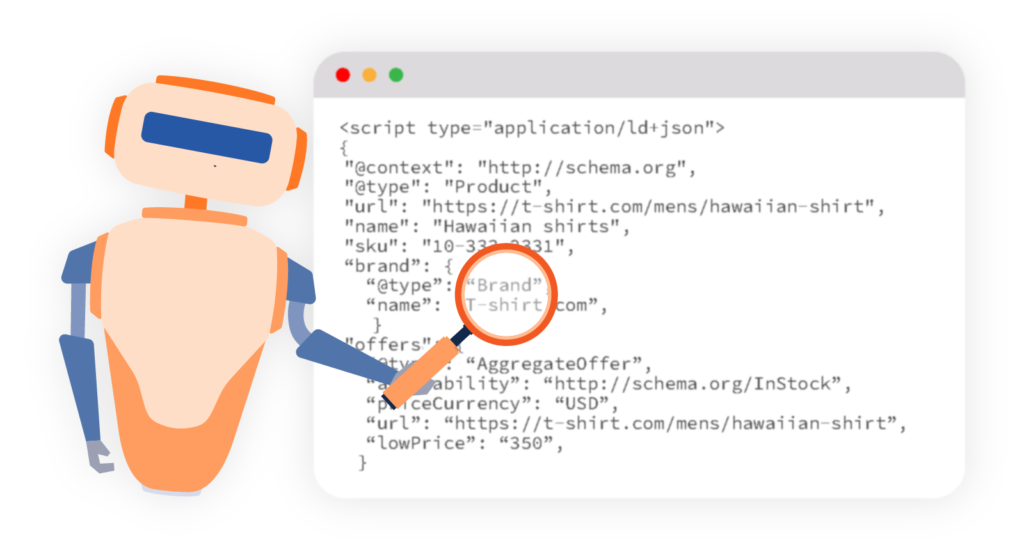
LLMs don’t just read your words; they try to map them to “Entities” or real-world things, places, or people that they already know about.
If you mention “Dubai luxury,” the AI is mentally connecting that to the city of Dubai, the concept of high-end travel, and maybe even specific landmarks like the Burj Al Arab. Your job is to make those connections so obvious that the machine doesn’t have to guess.
The Power of JSON-LD (The AI’s Native Language)
Honestly, if you aren’t using JSON-LD by now, you’re basically speaking a dead language to the bots. It’s clean, it’s organized, and it’s the format that Google and every major LLM prefers. At Zumeirah, we focus on four specific types of markup that act as “citation fuel”:
- Article & Blog Posting: This tells the AI, “This is a piece of expert knowledge written by a specific human on a specific date.” It’s essential for establishing the “freshness” of your data.
- FAQ Schema: This is a huge win for Answer Engine Optimization (AEO). By structuring your content as a Question and an Answer, you’re essentially pre-digesting the information for the AI to “lift” and use in a summary.
- LocalBusiness: For an agency like ours in Dubai, this is non-negotiable. It connects Zumeirah.com to a physical location, a phone number, and a service area.
- Review Schema: Social proof isn’t just for humans. When an AI sees structured data showing a 4.9-star rating, it factors that “trust signal” into its recommendation engine.
Strengthening the “Entity” Web
Here is a “pro move” we use for our high-end clients: don’t just define your business; link it to other known entities.
By using the sameAs attribute in your JSON-LD, you can tell the AI, “Our founder is this specific person on LinkedIn,” or “This article is about the entity ‘Luxury Travel’ as defined by Wikipedia.” This “cross-referencing” helps the LLM place you inside its Knowledge Graph. The more connected you are to other trusted entities, the more the AI trusts you.
The About Page: Your E-E-A-T Headquarters
Let me explain something that many people overlook. Your “About” page is no longer just a place to put a team photo and a mission statement. In 2026, it’s a technical asset.
AI models are incredibly picky about E-E-A-T (Experience, Expertise, Authoritativeness, and Trustworthiness). They want to know who is behind the content.
We’ve found that adding detailed author bios complete with links to their professional credentials, awards, and other published works acts like a “verified” badge for your site.
Honestly, if the AI can verify that the person writing the article actually knows what they’re talking about, the chances of being cited go through the roof.
Expert Tip: The Validation Loop Don’t just set it and forget it. Use Google’s Rich Results Test to make sure your code is flawless. But also, keep an eye on your Search Console. If you see “Unparsed Data” or errors in your structured data, it’s like having a broken link in the AI’s brain. Clean it up, monitor it, and keep those entity connections strong.
After all, in the world of LLM SEO, clarity isn’t just a virtue but it’s a Google Ranking Factor.
5. Build Unbreakable E-E-A-T + Brand Authority
If you’ve been in the SEO world for more than a minute, you know that E-E-A-T (Experience, Expertise, Authoritativeness, and Trustworthiness) has always been a thing. But in 2026? It’s not just a “nice-to-have” checklist. It’s the very soul of how an AI decides whether you’re a thought leader or just another site generating noise.
Here’s the thing that most people get wrong: they think authority is just about having a lot of backlinks. Honestly, that’s such a 2022 way of looking at things.
In the age of LLMs, authority is about your digital footprint across the entire web. If an AI sees your brand mentioned in a specialized Reddit thread, quoted in a Dubai news outlet, and linked from a high-end luxury forum, it starts to build a “trust profile” for you that is nearly impossible to break.
Showcase Real-World “Battle Scars”
LLMs are actually getting really good at spotting “AI-generated fluff.” If your content sounds like a generic encyclopedia entry, the model will treat it like one. To stand out, you need to show your work.
At Zumeirah, we’ve found that including micro-case studies right inside our articles is a massive citation booster. Instead of saying “SEO is important,” we say “When we helped a luxury boutique in Jumeirah Mall restructure their site, their AI citations grew by 40% in three months.” That is specific. That is real. That is experience.
Also, don’t hide behind a “Team” or “Admin” byline. LLMs want to know exactly who is talking. Each of your writers should have a robust author bio that lists their actual credentials, years in the industry, specific projects they’ve led, and links to their other work. It’s about building a human connection in a world that’s becoming increasingly automated.
The Reddit and Quora Factor
Let me tell you something that might surprise you: some of your most important “SEO” work in 2026 happens on sites you don’t even own.
Recent search data shows that LLMs are heavily prioritizing community-driven platforms like Reddit and Quora. Why? Because that’s where the “real” human conversations are happening.
If people are talking about your business in a thread about the “best web design agency in the UAE,” the AI notices. It sees that third-party validation as a high-signal trust factor.
Honestly, I spend a good chunk of my week just answering questions in niche communities. I’m not there to drop links that’s just spam. I’m there to provide value. When the AI crawls those conversations, it associates our brand with helpful, expert advice. That is how you build a “Brand Authority” that lasts.
Fighting the “Perception Drift”
Here is a bit of a contradiction: you want to be everywhere, but if you’re “everywhere” with different messages, you’re actually hurting yourself.
We talked earlier about Perception Drift and the risk of an AI getting your brand story wrong. This happens when your LinkedIn says you do “Digital Marketing,” your website says “Luxury Web Design,” and a random press release from three years ago says you’re an “E-commerce consultant.”
The AI gets confused. It starts to “drift” and might categorize you in a niche where you don’t belong. To fight this, you need to maintain a rock-solid, consistent narrative across every platform. Use the same brand bio, the same core service descriptions, and the same factual details everywhere. In 2026, consistency is the new “accuracy.”
The “Dubai Advantage” for Zumeirah.com
If you’re a local business, use that to your advantage. For us at Zumeirah, our location in Dubai isn’t just an address but it’s a powerful Local Entity signal.
When we talk about specific neighborhoods like DIFC or Downtown, or mention local events and luxury trends unique to the UAE, we are anchoring ourselves to a very specific, high-value geographic entity. LLMs love this. It makes it incredibly easy for them to recommend us when someone asks for an “expert in Dubai.”
Pro Tip: Make sure your Google Business Profile is updated weekly. The data you put there is a direct feed into the “brain” of Gemini and Google’s AI Overviews. If your profile is active and full of fresh photos and reviews, the AI sees you as a living, breathing, trustworthy business.
6. Go Multi-Format & Multi-Platform (Earned Media Wins)
If you’re still putting all your eggs in the “on-page blog” basket, I’ve got a bit of a reality check for you. In early 2026, your own website is actually one of the least likely places an AI will look to verify your authority.
I know, it sounds backwards. You spend all this time making your site perfect, and then Perplexity goes and cites a three-month-old Reddit thread or a Forbes article instead. But here’s the logic: LLMs are designed to find “consensus.”
If you say you’re the best web designer in Dubai on your own site, that’s just marketing. If Forbes says it, or if a hundred people on Reddit are debating your latest case study, that’s a fact the AI can bank on.
The “5x Citation” Rule
Honestly, the data we’re seeing right now is wild. Brands are roughly 5 to 6 times more likely to be cited through third-party sources than through their own domains. Think about that for a second.
If you want to show up in a Gemini “Best of” summary, a feature in a trusted publication like TechCrunch or even a well-regarded niche site like Skift is worth more than ten perfectly optimized blog posts.
This is what we call Earned Media as Citation Fuel. When an AI synthesizes an answer, it looks for “high-editorial standards.” It knows that a journalist at a major publication had to fact-check the story. That gives the AI the confidence to repeat that information to a user without looking like a fool.
How to play the multi-platform game:
- Don’t Just Write—Record: YouTube is currently being cited in over 23% of AI search queries. If you have a great guide on “LLM SEO,” make a video version of it. Transcribe it, upload it, and use clear, descriptive titles. The AI can “read” that transcript and cite your video as a source.
- The “Barnacle SEO” Approach: In 2026, we’re doing a lot of what I call “Community Seeding.” We don’t just wait for people to talk about us on Reddit or Quora; we actively participate. If there’s a discussion about UAE business trends, we’re in there providing real value. When the LLM crawls that “human” conversation, it associates the Zumeirah brand with that expertise.
- Visual Extraction: Infographics aren’t just for Pinterest. If you create a complex chart about “Dubai Luxury Market Shifts,” and that chart gets picked up by a news site, the AI will often cite the source of the image.
Why Niche Wins Over General
You don’t always need to chase the massive, household-name publications. For a brand like Zumeirah, being featured in a high-end Dubai lifestyle magazine or a specialized UAE tech blog is often more powerful for our specific “Entity” authority.
LLMs are getting much better at recognizing Topical Clusters. If an AI sees you being mentioned consistently across a specific group of industry-specific sites, it marks you as a “subject matter expert” in that exact niche.
It’s like being the most popular person in a very exclusive club and the AI is much more likely to point users toward you when they ask a “members-only” kind of question.
The Strategy: Secure the Feature
Let me be blunt: in 2026, Digital PR is SEO. If you want to move the needle, you need a strategy to get mentioned in places that the AI already trusts.
At Zumeirah, we’ve shifted a huge chunk of our energy into securing these external features. We look for publications that have high “Citation Frequency” like places like Wikipedia, Reddit, and Forbes. One single quote in a Tier-1 publication can do more for your AI visibility than six months of keyword tweaking. It’s about building a web of trust that surrounds your site, making it impossible for the machine to ignore you.
Honestly, it’s a lot of work. But seeing your brand name as the primary citation in a Perplexity answer? That’s the kind of ROI that makes the whole grind worth it.
7. Track, Measure & Iterate LLM Visibility
You know what they say like you can’t manage what you don’t measure. But in 2026, measuring your success isn’t about looking at a single “rank” on a spreadsheet.
Since AI responses are dynamic and sometimes change based on the time of day or the specific model being used, tracking your visibility feels more like weather forecasting than traditional accounting. You’re looking for patterns, not just absolute numbers.
Honestly, if you aren’t checking how the “Big Four” means ChatGPT, Gemini, Claude, and Perplexity are talking about you at least once a month, you’re flying blind.
You might think your SEO is killing it because your organic traffic is steady, but if your brand is being left out of the AI summaries that 30% of your audience is using, you’re losing a massive chunk of future demand without even knowing it.
The 2026 Toolkit: Beyond the Search Console
How do we actually see what the bots are saying? You need a mix of automated tools and good old-fashioned manual sampling.
- Semrush AI Visibility Toolkit: This has become a staple for us at Zumeirah. It doesn’t just show you “keywords”; it shows you your Share of Voice in AI Overviews. It tracks where your domain is cited and critically which of your competitors are getting the mentions you want.
- Glimpse: We use this to supercharge our trend spotting. It helps us see which conversational topics are exploding before they hit the mainstream. If a new luxury trend is bubbling up in Dubai, Glimpse lets us know so we can create the “Citation Magnet” content before anyone else.
- Manual Sampling: Honestly, don’t underestimate the power of just asking the AI. Once a week, we run a set of “Category Prompts” (like “Who are the top experts in UAE web design?”) across different models. It’s the only way to get a feel for the “tone” and “placement” the AI is giving you.
The Metrics That Actually Move the Needle
Forget about “impressions” for a second. In the world of LLM SEO, we obsess over three specific metrics:
- Citation Frequency: How often does a model actually provide a link back to your site? This is the gold standard. It’s the “referral” of the AI era.
- Brand Mention Quality: Is the AI just listing your name, or is it describing you as a leader? There’s a huge difference between being “one of several options” and being “the recommended choice for luxury brands.” We look at the sentiment and the context of every mention.
- Perception Stability: This is about fighting that “Perception Drift” we talked about earlier. We track whether the AI’s description of Zumeirah stays consistent over time. If the bot starts getting our service list wrong or using outdated info, we know we need to update our Schema or our third-party mentions.
Quarterly Audits & The A/B Test Habit
Let me explain our process. Every three months, we do a deep-dive audit. We don’t just look at what happened; we run experiments.
For example, we might take two similar service pages. On one, we’ll use a very structured “Direct Answer” format. On the other, we’ll keep a more traditional narrative style. Then, we track which one gets picked up more often by Google’s AI Mode.
This kind of A/B testing is the only way to stay ahead of the models as they evolve. They are constantly changing their “preferences,” so our structure has to be just as flexible.
Expert Tip: The Zumeirah Visibility Dashboard I always recommend creating a simple, one-page dashboard that tracks your “AI Share of Voice.” For us, it’s a living document where we log our manual spot-checks alongside our Semrush data.
When we see a dip in mentions for a specific service and say, “PPC Ads in Dubai” then we immediately look at our recent content and our digital PR efforts to see where the signal might be weakening.
It’s not about being perfect every single day. It’s about noticing the shifts before they become trends. In 2026, the brands that iterate the fastest are the ones that the AI will trust the most.
Common LLM SEO Mistakes to Avoid in 2026
Even with the best intentions, it’s incredibly easy to trip up in this new landscape. I’ve seen some brilliant marketers people who dominated the “blue link” era completely lose their footing because they’re still trying to use old maps to navigate a new city.
In 2026, the stakes are higher. If you make these mistakes, you don’t just “drop a few ranks”; you potentially disappear from the AI’s entire worldview. Honestly, let’s look at the pitfalls that are currently sinking sites in the UAE market and beyond.
1. Over-Relying on AI-Generated Content
This is the most common trap. People think, “Hey, if I’m optimizing for an AI, I should use an AI to write the content, right?” Wrong. Here’s the thing: LLMs are trained to recognize patterns. If you feed them content that is essentially a slightly reworded version of what they already know, they won’t see any “Information Gain.”
To a bot like GPT-5 or Gemini, your AI-generated blog post is just white noise. Why would it cite you when it can just generate that same generic advice itself?
At Zumeirah, we’ve found that the “human-in-the-loop” model is the only thing that works. Use AI for research or outlining, sure. But if the final words don’t have that “human soul” the personal anecdotes, the specific Dubai-market nuance, and the slightly imperfect but relatable tone—you’re basically invisible to the citation engines.
2. Ignoring the Technical Foundations
I see this all the time with “visionary” founders. They want to talk about AI-readiness and futuristic strategies, but their website takes four seconds to load and has a mess of unoptimized JavaScript.
Let me be blunt: LLMs are lazy. They are looking for the path of least resistance. If your technical SEO is a mess, the “retrieval” part of the RAG process becomes a chore. If an AI agent has to fight through broken links or non-responsive design to find your data, it will simply move on to a site that is technically “clean.”
Honestly, your Schema markup and your Core Web Vitals are more important now than they were three years ago. They are the “handshake” that lets the AI know your site is professional enough to be trusted.
3. Thin, Generic Content (The “Fluff” Factor)
Remember when you could rank with a 500-word “What is SEO?” article? Those days are long gone.
In 2026, the AI engines have already mastered the basics. If your content is just “thin” summaries of things everyone already knows, you will never earn a citation. We call this the “Wikipedia Problem.” If the AI can get a basic fact from a high-authority source like Wikipedia or a major news outlet, it has zero reason to look at your blog.
You need to go deep. You need to be the person who talks about the why and the how, not just the what. If you aren’t adding a unique perspective or proprietary data, you’re just wasting your server space.
4. Neglecting Freshness and Updates
I was talking to a client the other day who was upset that their “2024 Trends” post wasn’t getting cited anymore. Well, it’s 2026!
AI models are obsessed with Temporal Relevance. They want to give users the most current information possible. If your content mentions “upcoming events” that happened eighteen months ago, or quotes “current prices” from three years back, the AI marks your content as “stale.”
Once you get that “stale” tag in the AI’s knowledge graph, it’s very hard to shake it. You have to be proactive about updating your cornerstone content.
At Zumeirah, we have a “Freshness Audit” every quarter where we go back and refresh the dates, stats, and local references in our top-performing articles. It’s not just about writing new stuff; it’s about making sure your “old” stuff still feels like it was written this morning.
Honestly, avoiding these mistakes isn’t about being perfect. It’s about being better than the 90% of people who are still trying to “hack” the system. If you stay human, stay technical, stay deep, and stay fresh, the AI will naturally find you.
Frequently Asked Questions
1. What exactly is LLM SEO and how is it different from the “old” SEO?
Think of traditional SEO as trying to win a popularity contest with a list of links. LLM SEO (or Generative Engine Optimization) is more about winning a conversation. While the old way focused on keywords and backlinks to rank on page one, the new way is about making sure AI models like ChatGPT, Gemini, or Claude are actually understand your brand well enough to cite you as a trusted source. You’re not just trying to be a link; you’re trying to be the answer.
2. Does this mean I can stop worrying about keywords?
Not quite. But you should definitely stop worrying about single keywords. In 2026, it’s all about “conversational intent.” People don’t just type fragments anymore; they ask full questions. Your research should focus on how your audience actually talks. If you can answer the “Why” and “How” better than anyone else, the AI will naturally pick you as its primary reference point.
3. How do I get my business cited in Google’s AI Overviews?
The short answer? Make the AI’s job easy. Use clear headings (H2s and H3s) that mirror real questions, and follow them immediately with a direct, 50-word answer. Beyond that, you need to prove you’re a real authority. This means having a rock-solid “About” page with real human credentials and getting mentioned on third-party sites that the AI already trusts, like industry news outlets or active community forums.
4. Can I just use AI to write my LLM SEO content?
Honestly, that’s a bit like trying to sell a robot a picture of itself. LLMs are trained to find “Information Gain” like they want to see something new. If you just churn out generic, AI-written fluff, the search engines will see it as a duplicate of what they already know. To rank in 2026, you need human-first data: case studies, original surveys, or unique local insights from the Dubai market that a bot couldn’t possibly “guess.”
5. What is the biggest mistake people make with AI search optimization?
Ignoring the technical side. People get so caught up in the “AI” hype that they forget their website still needs to be fast and crawlable. If your site has messy code or a confusing structure, an AI model isn’t going to waste its processing power trying to figure you out. Clean, simple HTML and proper Schema markup are still the “handshake” that lets the bots into your digital home.
6. How long does it usually take to see results from these strategies?
In our experience at Zumeirah, you can see “Citation Lifts” in as little as 4 to 8 weeks if you’re targeting a very specific niche. However, building that massive, unbreakable brand authority across the entire web usually takes closer to six months of consistent effort. It’s a marathon, not a sprint but the people who start running now are the ones who will own the “Share of Answer” by the end of the year.
Conclusion
If you’ve made it this far, you’re already ahead of about 90% of the businesses currently panicking about their “dropping traffic.”
Here is the honest truth about January 2026: LLM SEO isn’t some dark art reserved for Silicon Valley giants. It’s actually a return to what search was always supposed to be about original value, clear structure, and earned authority. The only difference is that now, we have to make sure a machine can verify our expertise just as easily as a human can feel it.
At Zumeirah, we’ve seen that the brands that thrive in this environment aren’t the ones trying to “trick” the AI. They are the ones that lean into their niche whether that’s luxury travel in the UAE, high-end web design, or bespoke consultancy and provide the kind of proprietary data and human insight that an LLM literally cannot find elsewhere.
Your 2026 Action Plan
You don’t have to overhaul your entire digital presence tonight. Honestly, that’s a recipe for burnout. Instead, I want you to focus on the “high-leverage” moves that will signal to Gemini, ChatGPT, and Perplexity that you are the expert they’ve been looking for.
- Step 1: The Content Audit. Don’t just look at your traffic. Look at your “Extractability.” Ask yourself: if an AI read this page, could it give a direct answer in 40 words? If not, it’s time to restructure.
- Step 2: Pick Your First Battle. I recommend starting with either Strategy #1 (publishing one piece of original data) or Strategy #3 (reformatting your top three service pages for “chunking”). These are the fastest ways to see a “Citation Lift.”
- Step 3: Strengthen Your Local Entity. If you’re in the Dubai or UAE market, make sure your Schema and your third-party mentions (like your Google Business Profile) are telling the same, consistent story.
The Future-Proof Promise
The landscape is going to keep shifting. We’ll see more multimodal search, more “zero-click” summaries, and probably a few more acronyms before the year is out. But here is the thing: brands that act now to build their “AI Visibility” are the ones that will dominate the luxury and high-intent niches for years to come.
When a user asks their AI assistant for the “best web design partner in Dubai,” you don’t want to be a name on a list. You want to be the cited authority that the AI recommends with confidence.
Ready to turn your website into a citation magnet? At Zumeirah, this is exactly what we do. Whether you need a full technical audit or a content strategy built for the LLM era, we’re here to help you navigate the future of search.
Let’s build something that the machines—and your customers—will actually listen to.