
Honestly, if I had a nickel for every time someone told me SEO was dead over the last decade, I’d probably be retired on a quiet beach somewhere, sipping a cold drink out of a coconut and completely forgetting what a keyword even is.
But here we are, staring down the barrel of 2026, and the conversation feels different this time. It isn’t just the usual “SEO is dead” chatter we hear every time Google tweaks an algorithm. It’s about this weird, slightly heavy tension between the “Old Guard” of traditional search and the “New Frontier” of Artificial Intelligence.
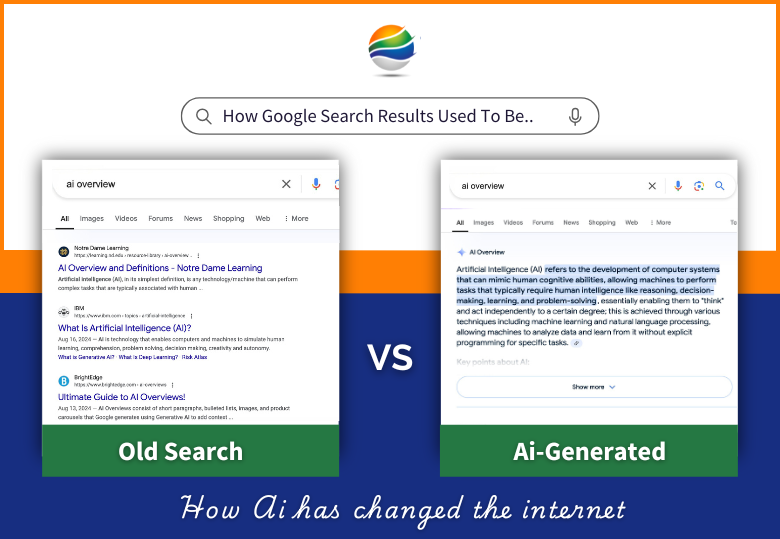
You’ve noticed it, haven’t you? You type a question into that familiar white box, and instead of those blue links we’ve trusted for years, you get a big, colorful window which is an AI Overview that basically summarizes the whole internet for you before you even have a chance to scroll.
It makes you wonder: why should we even bother with meta tags and backlinks if a machine is just going to scrape our hard work and give the answer away for free?
Here’s the thing and I really want you to hear this: Traditional SEO isn’t just surviving; it’s actually the only thing keeping the AI from making things up about your brand.
We are moving into an era where the fundamentals aren’t just a “plus” they are the only things that actually carry weight. If you don’t have the basics right, the AI won’t even know you exist, let alone cite you as a source.
Is the “Old Way” Actually a Goner?
Let’s talk about the “skeleton.” If you’re building a house, you don’t start by picking out the smart-home gadgets and the fancy mood lighting. You start with the dirt, the foundation, and the wooden framing. In 2026, Traditional SEO is that framing.
Traditional SEO is the stuff we’ve been grinding away at since the early 2010s and it is really just about making a website that both humans and bots can understand. It’s about clarity. It’s about being a reliable source. You know what? It’s basically just being a really organized librarian.
When we talk about the four pillars for example Technical, On-Page, Off-Page, and Content so we aren’t clinging to some dusty, outdated playbook. We’re talking about the signals that tell a Large Language Model, “Hey, this person actually knows their stuff.” Without these pillars, your site is just a ghost in the machine.
The Technical Stuff (The Engine Under the Hood)
Think of your website like a car. You can have a stunning paint job, but if the engine doesn’t turn over, you’re just sitting in a shiny piece of metal. In the 2026 landscape, technical SEO is more vital than ever because AI crawlers are incredibly hungry. They want to consume data fast.
If your site takes four seconds to load on a mobile device, Google’s Generative Engine isn’t going to hang around. It’ll move on to your competitor who has their site speed sorted out. Honestly, it’s just common courtesy at this point, so don’t make your visitors wait.
- Speed is Everything: Using things like compressed images and clean code is the bare minimum now. If you’re still using giant, unoptimized photos, you’re basically asking to be ignored.
- Mobile-First is Just “First”: We don’t even need the “mobile” qualifier anymore. If it doesn’t work on a phone, it doesn’t exist.
- Crawlability: If your
robots.txtfile is a tangled mess, the AI can’t “read” you. And if it can’t read you, it can’t cite you.
I’ve seen so many people spend thousands on fancy graphics while their site’s “engine” is leaking oil. Don’t be that person. Fix the pipes before you paint the walls.
On-Page and the Art of Being Clear
I remember back in the day when people thought keyword stuffing was some kind of magic trick. You’d see sentences like “We sell the best blue shoes because our blue shoes are the blue shoes you need for your blue shoe collection.” It was painful, right?
Nowadays, on-page optimization is about context. It’s about using your headers and tags to create a map. If I’m a search engine, and I see a clear hierarchy, I can easily pull that info into a featured snippet. It’s about helping the machine help you.
Have you ever tried to read a manual that had no chapters or headings? You’d probably throw it across the room. That’s how a search engine feels when your page is just a giant wall of text. Use your H2s. Use your H3s. Make it easy for the bot to see what’s important.
The Rise of the Machines: Welcome to the GEO Era
Okay, let’s shift gears for a second. Have you heard of GEO? It stands for Generative Engine Optimization.
I know, I know it is another acronym to keep track of. Just what we needed, right? But honestly, it’s just a fancy way of saying “SEO for AI.” While traditional SEO is obsessed with where you rank in a list of links, GEO is obsessed with how often you get mentioned in the AI’s actual answer.
In 2026, the #1 spot isn’t always a blue link. Sometimes, it’s a small citation at the bottom of a Gemini or ChatGPT response. It’s a different kind of fame, but it’s just as powerful.
Why AI Overviews Changed the Game
You know those moments when you just need a quick answer? Maybe you’re wondering “how to fix a leaky faucet” while your kitchen floor is turning into a lake. In the past, you’d click a link, scroll through five paragraphs of someone’s life story about their grandfather’s favorite wrench, and finally find the steps.
Now, Google gives you those steps right there on the search page. This is what we call the “Zero-Click Search.”
It feels like a bit of a low blow for our traffic stats, doesn’t it? But here’s the funny thing: the people who do actually click through from an AI summary are usually much more serious.
They’ve already gotten the basic facts; now they want the deep expertise. They want the person who wrote the book, not just the person who summarized it. That’s where your traditional content wins.
The Hybrid Strategy: How to Win in 2026
So, how do we actually pull this off? How do we keep the best parts of the old way while making room for the new? It’s about a hybrid approach. We need to be “human-friendly” while staying “machine-readable.” It sounds like a bit of a balancing act, but it’s actually quite natural when you get the hang of it.
The “Answer-First” Framework
Here is a little secret that most “experts” won’t tell you: stop burying the lead.
Humans are impatient. AI is even more impatient. If your article is about “Traditional SEO,” the first sentence shouldn’t be “Since the dawn of the internet, marketing has changed.” Honestly, nobody cares about the history of the world when they have a problem to solve. Let me explain why this matters.
Try this instead: “Traditional SEO is the practice of making your site clear enough for search engines to rank you.”
See that? It’s direct. It’s punchy. The AI can grab that definition, put it in a box, and link back to you as the source. I like to call this “snackable authority.” You give them a little taste of the answer so they come to your site for the full meal.
E-E-A-T: The Only Thing Robots Can’t Fake
Let’s be real for a minute. AI can write a two-thousand-word article in about ten seconds. It’s getting pretty good at it, too. But you know what it can’t do? It can’t go to a local networking event, trip over a rug, and tell you a funny story about it. It doesn’t have Experience.
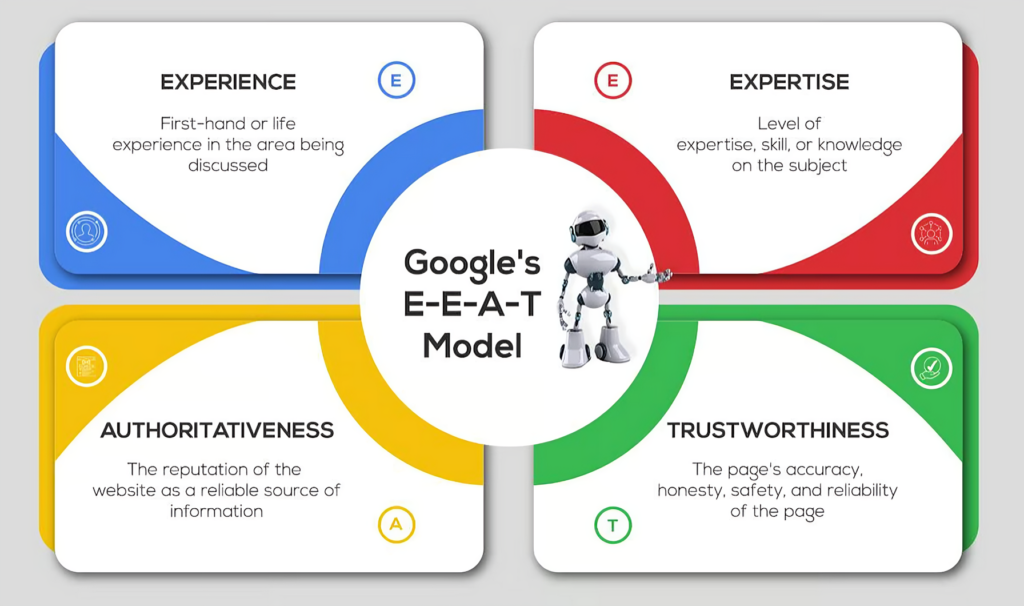
Google’s E-E-A-T (Experience, Expertise, Authoritativeness, Trustworthiness) is your secret weapon. In 2026, search engines are desperately looking for “Human Signals.”
- Real Case Studies: “Here is exactly how I fixed my traffic” beats “How to fix traffic” every time.
- Original Photos: Please, stop using those cheesy stock photos of people in suits shaking hands. Use a real photo of your office, your team, or your coffee-stained desk. It proves you’re a real person.
- First-Person Voice: Use “I” and “We.” Tell us what you think.
Honestly, I think we’ve spent way too much time trying to sound like professional robots. In 2026, the best way to rank is to sound like a real, living, breathing human being. People trust people. And, surprisingly, so do search engines.
Technical SEO 2.0: Talking to the Machines
I mentioned the engine earlier, but let’s look closer at the nitty-gritty. By 2026, we’ve moved past just having a fast site. Now, we’re dealing with Machine-Readability.
The Rise of llms.txt
Have you heard of this? Honestly, it’s one of those things that sounds like a tech headache but is actually a godsend. It’s a simple text file, much like the robots.txt we’ve all been using since forever. But instead of telling Google which folders to stay out of, llms.txt tells Large Language Models (LLMs) like Gemini, ChatGPT, and Claude exactly what your site is about.
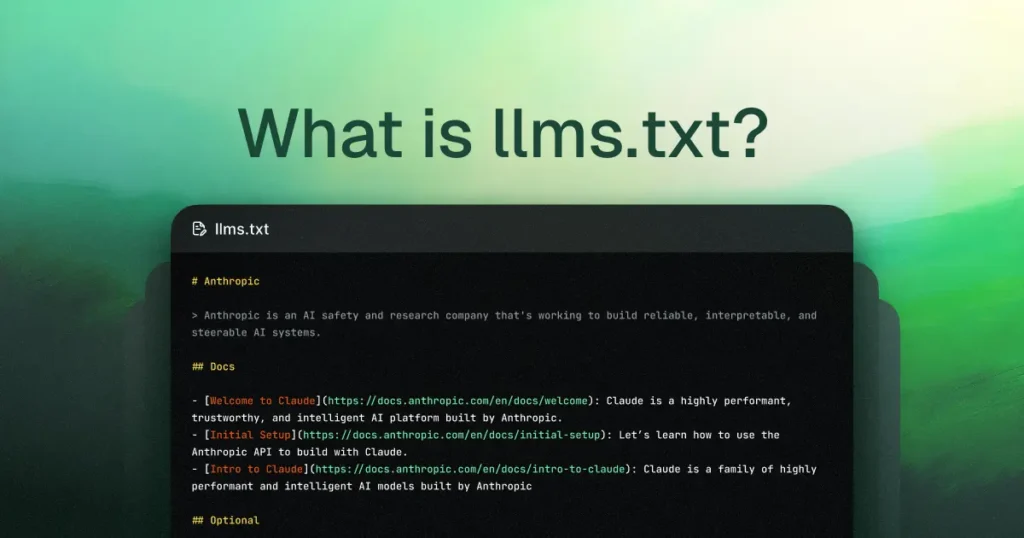
Think of it as an executive summary for a very busy CEO. You’re saying, “Hey, don’t worry about my privacy policy or my terms of service. Here are the five most important articles on my site that you should use to answer user questions.”
If you make it easy for the bots to find your best data, they are far more likely to cite you as the source of truth in an AI Overview. And in 2026, a citation is basically the new #1 ranking.
Schema: The “Eyeglasses” for Search Engines
I’ve said it before, and I’ll say it again: if you aren’t using Schema Markup, you’re basically invisible to the modern web.
Schema is like giving the search engine a pair of glasses. It helps them see that “this string of numbers is a price,” and “this name is the author,” and “this date is when the event starts.” Without it, the AI is just guessing. And when AI guesses, it gets things wrong. You don’t want to be the victim of a robot’s bad guess, do you?
In 2026, you specifically want to focus on:
- Organization Schema: Telling Google exactly who your brand is.
- Person Schema: Connecting your content to a real human with a real history.
- FAQ Schema: Directly feeding the questions and answers that AI Overviews love to grab.
Traditional vs. AI SEO: The 2026 Comparison
I thought it might be helpful to put these two head-to-head. It’s not that one is better than the other; it’s that they serve different masters. One is for the person scrolling with their thumb; the other is for the machine trying to summarize the world.
| Feature | Traditional SEO (The Old Guard) | AI SEO / GEO (The New Frontier) |
| Primary Goal | Ranking #1 in the blue links. | Earning a citation in an AI response. |
| Success Metric | Click-Through Rate (CTR). | Share of Voice & Brand Mentions. |
| Content Style | Long-form, detailed pillar pages. | Direct, “Answer-First” modular text. |
| Technical Focus | Speed & Core Web Vitals. | LLM-ready files & Schema Markup. |
| Trust Signal | Backlinks from high-authority sites. | E-E-A-T and real-world experience. |
5 Steps to Stay Relevant (and Ranked) in 2026
If you’re feeling a bit overwhelmed, take a breath. I’ve been there. The goal isn’t to change everything overnight. It’s about making small, smart moves that keep you ahead of the curve. Let’s look at five things you can actually do this week.
1. Claim Your “Entity”
In the eyes of Google, you are either an “entity” which recognized person or brand or just some random text on a screen. You want to be an entity.
How? Make sure your “About” page is actually helpful. Link to your social media profiles. Try to get mentioned in local news or industry blogs. The goal is for Google to connect the dots: “Okay, this person is a real authority on Traditional SEO.”
2. Move to Conversational Keywords
People don’t search for “SEO strategy 2026” as much as they ask their phone, “Hey, how do I rank my website next year?”
Start targeting these “Question” keywords. Use them in your H2 subheadings. It’s a total game-changer for capturing voice search and AI snippets. Honestly, if you aren’t answering questions, you aren’t doing Search Engine Optimization in 2026.
3. Build “Author Authority”
Stop publishing articles under “Admin.” That’s so 2005.
Every post should have a clear author bio. Who are you? Why should I trust you? If you’ve been doing this for ten years, say it! Mention your certifications or the big projects you’ve worked on. The “Who” is becoming just as important as the “What.” I’d much rather read a slightly messy article by a real human expert than a “perfect” one by a nameless machine.
4. Content Refreshing (The “Freshness” Factor)
The internet moves fast. An article from two years ago might as well be from the Stone Age.
Set a calendar to revisit your top-performing posts every six months. Update the stats. Add a new paragraph about a recent update. It shows the bots that your “Traditional SEO” knowledge is up to date. In 2026, “freshness” is a huge signal for AI.
5. Multimodal Content
You know what’s better than a great article? A great article with a helpful video and a chart.
AI models are becoming “multimodal,” meaning they can see and hear. If you have a video explaining a complex topic, it’s another way to show up in the results. Plus, it keeps people on your page longer, which you guessed it is a huge ranking signal.
Measuring Success: The New Scoreboard
How do we know if we’re winning?
In the old days, we just looked at a chart. “Are we #1 for ‘Blue Shoes’?”
In 2026, that’s only half the story. You need to look at:
- Brand Mentions: Are people talking about you on Reddit or industry forums?
- AI Referral Traffic: Check your analytics. Are people coming from ChatGPT or Perplexity?
- Share of Voice: When someone asks an AI about your niche, how often are you the answer?
It’s a bit more abstract, sure, but it’s a much more accurate picture of how powerful your brand actually is.
2026 SEO FAQ: Your Burning Questions Answered
Honestly, I get a lot of questions about where the line is drawn these days. Let’s clear the air with the most common things I hear in the halls of digital marketing.
Q: Is traditional SEO officially dead because of AI? Honestly, no. If anything, it’s more important. AI engines like Gemini and ChatGPT don’t just pull answers from thin air so they pull them from authoritative, well-structured websites.
If your “Traditional SEO” (the site structure, the clear headings, the quality content) is a mess, the AI won’t trust you enough to quote you. It’s like saying the engine is dead because we invented self-driving cars. You still need the engine to move.
Q: How do I get my website cited in a Google AI Overview? Here’s the thing: you need to be an “Answer Leader.” Use the “Answer-First” framework. If a user asks a question, answer it in the first paragraph of your section. Use clear H2 headers that phrase the question exactly how a human would speak it. Then, back it up with a bulleted list of facts. AI loves lists; they’re easy to scrape and display.
Q: Should I block AI crawlers from my site? You know what? This is a tough one. Some people say “Yes” to protect their intellectual property. But if you block them, you’re basically opting out of the future of search.
If ChatGPT can’t see you, it can’t recommend you. I recommend using an llms.txt file to guide them to your best content instead of shutting the door completely.
Q: Does Google penalize AI-generated content in 2026? Not for being AI-generated, but for being unhelpful. Google doesn’t care who (or what) wrote the words; it cares if the words solve the user’s problem.
However, if you just pump out thousands of generic AI pages with no “Experience” or “Expertise,” you will get hit by a Helpful Content update. The secret is the “Hybrid” approach use AI to outline, but use your own brain to add the “human” stories.
Q: What is the most important ranking factor for 2026? Among all the Google Ranking Factors I’d bet my last dollar on E-E-A-T. Specifically the first “E” is Experience. AI can simulate knowledge, but it can’t simulate a personal case study or a photo of a real-world project. Proving that you are a real person with a real brand is the only way to stand out when everyone else is using a “Generate” button.
Q: What on earth is GEO? It stands for Generative Engine Optimization. Think of it as the “new” SEO. While SEO helps you rank in a list of links, GEO helps you become the “source” for an AI’s answer. It involves things like brand mentions, structured data, and making sure your facts are cited in places like Reddit and Quora, where AI likes to hang out.
The LLM-Ready Protocol: 10 Fixes to Make Your Site AI-Friendly
Honestly, I know technical SEO can feel like trying to learn a secret language while someone is shouting at you in a different secret language. It’s a lot. But here’s the thing: you don’t need to be a coding genius to get your site ready for the AI era.
If you’ve got a spare Saturday and a big cup of coffee, you can knock out these 10 fixes. These are the things that tell the bots and the humans that your site is the place to be in 2026.
1. The “Need for Speed” Audit (Core Web Vitals)
You know when you click a link and the page just… hangs there? It’s the worst. By 2026, Google doesn’t just look at how fast your page loads; it looks at how it feels to use it.
- The Goal: Get your Largest Contentful Paint (LCP) under 2.5 seconds.
- The Fix: Use a tool like PageSpeed Insights. If your images are giant “megabyte monsters,” shrink them. If your “Interaction to Next Paint” (INP) is slow, it means your site is laggy when people click things. Clean up that messy JavaScript!
2. Set Up Your llms.txt File
We talked about this earlier, but let’s make it official. This is your “Welcome Mat” for AI.
- The Goal: Give AI agents a clean map of your most important content.
- The Fix: Create a simple text file at
yoursite.com/llms.txt. Use Markdown to list your top 5-10 pillar articles. It’s like handing a cheat sheet to a student before a big test.
3. The Schema “Triple Threat”
Don’t just use one type of schema. You need a stack.
- The Goal: Define your brand, your people, and your answers.
- The Fix: Ensure every page has Organization, Person, and FAQ schema. It connects the dots for the AI so it knows exactly who wrote the content and why they should be trusted.
4. Fix Your “Dead Ends” (404 Errors)
Ever tried to follow a map only to find out the road is blocked? That’s what a broken link feels like to a bot.
- The Goal: Zero broken internal links.
- The Fix: Use a free tool like Screaming Frog to crawl your site. If you find a 404, redirect it to a live, relevant page. It’s just good housekeeping.
5. Check Your “Mobile-First” Reality
Honestly, I see so many sites that look great on a 27-inch monitor but are a total nightmare on an iPhone.
- The Goal: A seamless experience for “thumb-scrollers.”
- The Fix: Open your site on your phone. Can you click the buttons without zooming? Is the text big enough? If not, talk to your dev about “responsive design.”
6. The “Answer-First” Structure Review
Go through your top 10 articles. Do you give the answer in the first 100 words?
- The Goal: Become the “snippet king.”
- The Fix: Use the “BLUF” method Bottom Line Up Front. If someone asks “What is Traditional SEO?”, define it immediately. Don’t make the AI (or the reader) work for it.
7. Claim Your “SameAs” Links
This is a hidden gem in your Schema code.
- The Goal: Prove you are the same person/brand across the whole web.
- The Fix: In your Organization Schema, use the
sameAsfield to link to your LinkedIn, Twitter, and Facebook. It’s like showing your ID to a bouncer; it proves you are who you say you are.
8. Optimize Your Image “Alt-Text”
AI doesn’t just read text anymore; it “looks” at images.
- The Goal: Descriptive, human-sounding alt-text.
- The Fix: Instead of naming a photo
IMG_567.jpg, name itman-explaining-traditional-seo-strategy.jpg. And for the alt-text, describe it like you’re talking to a friend who can’t see the screen.
9. Secure the Perimeter (HTTPS)
If your site still says “Not Secure” in the browser bar, you’re in trouble.
- The Goal: 100% secure browsing.
- The Fix: Check your SSL certificate. If it’s expired or missing, get it fixed today. In 2026, security is a “table stakes” ranking factor that you can’t even get in the game without it.
10. Audit Your “Internal Linking” Clusters
Do your articles talk to each other?
- The Goal: A “web” of content that keeps people on your site.
- The Fix: Make sure your “Traditional SEO” pillar page links to your “AI SEO” sub-pages, and vice versa. It helps the bots understand your “Topical Authority.”
The Survival of the Fundamentals
I’ve seen a lot of trends come and go. I remember when everyone thought Google+ was going to change the world. (Spoiler: it didn’t). Through all of it, one thing has stayed the same: Quality wins.
Traditional SEO is just the modern name for “making a website that isn’t a mess.” If you focus on your users, keep your tech clean, and write with a bit of heart and soul, you’re going to be fine. 2026 isn’t the year the machines take over; it’s the year the machines finally start rewarding the people who do things right.
So, don’t throw away your SEO checklist just yet. Just add a few more rows for the robots, and keep telling your story. Honestly, the world needs your unique perspective more than it needs another AI-generated summary.