
You’ve probably been there like staring at a screen, wondering why your competitors are getting all the attention while your website sits on page ten like a ghost town. It’s frustrating, right? You build something great, but nobody finds it because a giant AI summary or a big-name blog is hogging the spotlight.
Right now, with AI basically rewriting how we find information, the stakes have changed. But here’s the reality: What is SEO if not the art of making sure you’re the one being found?
At its core, Search Engine Optimization is just the process of making your website better for both people and the machines that rank them.
It’s not about “tricking” a system anymore. It’s about being relevant enough that Google (and its AI Overviews) can’t ignore you.
Why should you care? Well, even with all the new gadgets and chatbots, about 68% of online experiences still start with a search engine. That’s a massive chunk of the internet. If you aren’t visible there, you’re basically invisible everywhere.
This guide is going to strip away the jargon. We’ll look at how SEO actually works in 2026, how to handle the new AI-driven landscape, and how you can start showing up where your customers are looking.
Honestly, it’s simpler than the “gurus” make it sound, but it does require a bit of a shift in how you think about your content.
What Is SEO and What Does SEO Stand For?
If you’ve ever searched for anything online, you’ve interacted with SEO. It stands for Search Engine Optimization. Honestly, it’s a bit of a mouthful, but the concept is simple means it’s the process of making your website “clean” and “smart” enough so that when someone asks Google a question, Google points at you and says, “Here’s your answer.”
Think of the internet like a giant, messy library with billions of books but no librarian. SEO is the system of organizing your book, writing a clear title, and making sure the pages aren’t stuck together so that when someone walks in looking for “the best web design agency in Dubai,” your book is the first one they see on the shelf.
SEO vs. SEM: Is There a Difference?
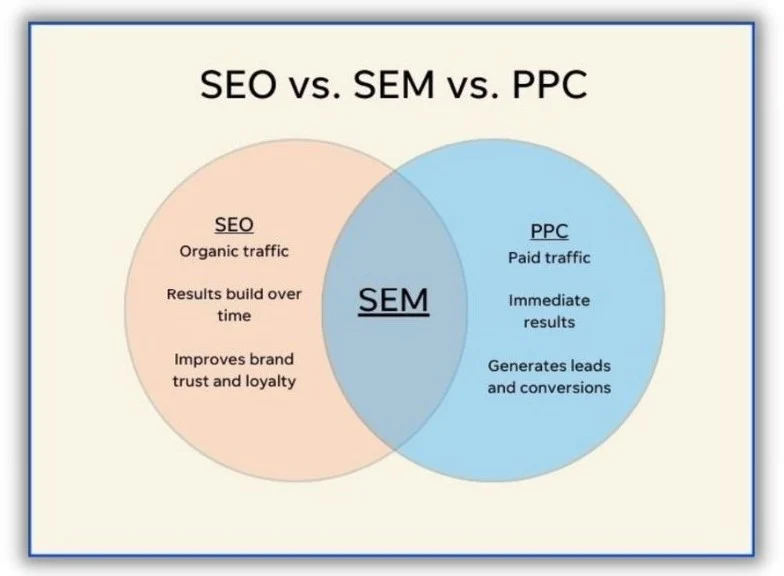
You’ll often hear people toss around the term SEM (Search Engine Marketing). And you know what? It’s not the same thing.
- SEO is about earning your spot. It’s “organic.” You don’t pay Google for the click means you earn it by being the most relevant.
- SEM is usually just a fancy way of saying “I’m paying for ads.” When you see those results at the top labeled “Sponsored,” that’s SEM which is also called Google PPC Ads (specifically PPC).
While ads get you results today, they stop the moment you stop paying. SEO is the long game. It’s like planting a tree and it takes a bit of time to grow, but once it does, it provides shade for years without you having to pump money into it every day.
Why SEO Matters in 2026
You might be thinking, “Do I really need this with all the AI tools out there?” The short answer is: more than ever.
Current data from BrightEdge shows that organic search still drives 53% of all website traffic. That’s more than social media and paid ads combined. In 2026, Google has shifted heavily toward what they call “Helpful Content” and “AI Overviews.”
Learn: 21 Best Content Writing Tips in 2026 to Rank #1 in Google
Basically, Google’s AI now reads your site to see if you actually know what you’re talking about. If you aren’t optimized, the AI simply won’t cite you as a source.
| Feature | Organic SEO | Paid Ads (PPC) |
| Cost | “Free” (Time/Effort) | Pay per click |
| Sustainability | Long-term growth | Stops when budget ends |
| Trust | High (Users trust organic) | Medium (Users know it’s an ad) |
| Speed | Slow & Steady | Instant |
Common Myths We Need to Stop Believing
There’s a lot of noise out there. Let’s clear some of it up:
- “SEO is dead because of AI.” Honestly, I hear this every year. SEO isn’t dead; it’s just evolving. Instead of just “ranking,” we’re now focused on being “referenced” by AI.
- “Just repeat the keyword 50 times.” Please, don’t. Keyword stuffing will get you penalized faster than you can say “algorithm update.” Google is way too smart for that now.
- “SEO is a one-time thing.” I wish. But search engines change their rules constantly. It’s a marathon, not a sprint.
A Brief History of SEO and Its Evolution
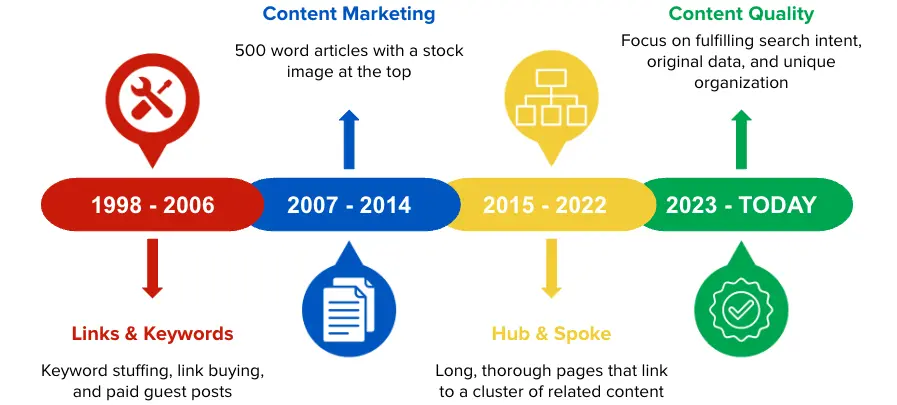
If you could travel back to 1997, SEO would look like a totally different planet. Back then, it was basically the Wild West. You could literally just repeat the word “pizza” 500 times in white text on a white background, and Google (or Yahoo, at the time) would think, “Wow, this is the most relevant pizza page in existence!”
Obviously, things have changed. We’ve moved from “tricking” machines to actually having to provide value. Let’s look at how we got here.
learn: Create a Winning SEO Roadmap in 2026 With Expert’s Way
From the 1990s to 2010s: Keyword Era to Mobile-First
In the early days, SEO was all about keywords. If you had the exact phrase on your page, you ranked. Then, Google arrived in 1998 with PageRank, which started looking at who was linking to you. It was a game-changer.
But then people started cheating. They bought thousands of spammy links to fake their authority. That’s why, in 2011 and 2012, Google dropped the hammer with the Panda and Penguin updates.
These were designed to crush low-quality content and manipulative link-building. Honestly, it was a bloodbath for a lot of businesses, but it made the internet a much better place.
Then came 2015 the year of Mobilegeddon. Google basically said, “If your site doesn’t work on a phone, we aren’t showing it to anyone.” This was the moment the web finally grew up and realized we weren’t just sitting at desks anymore.
2020s Shifts: Core Web Vitals, E-A-T, and AI Integration
By 2020, Google stopped just looking at what you said and started looking at how your site felt. They introduced Core Web Vitals, which is just a fancy work term for “Is your site fast and does it stop jumping around while it loads?”
We also saw the rise of BERT in 2019, which helped Google understand the nuance of human language. It wasn’t just matching words; it was understanding intent.
Then, E-E-A-T (Experience, Expertise, Authoritativeness, and Trustworthiness) became the golden rule. You couldn’t just write about medical advice if you weren’t a doctor. Google started checking your “ID” at the door.
What’s New in SEO for 2026?
Now that we’re in 2026, the game has shifted again. We aren’t just optimizing for a search bar; we’re optimizing for multimodal search. You know what? People are just as likely to take a photo of something or use their voice to find an answer as they are to type it.
Here are the big shifts we’re seeing right now:
- AI Overviews as the Primary Filter: Google’s AI now summarizes the web. If you aren’t one of the three sources the AI cites, you’re missing out on a huge chunk of visibility.
- Sustainability in SEO: This is a cool one. Believe it or not, search engines are starting to favor “green” websites. Sites using eco-friendly hosting and efficient code (which uses less server energy) are getting a slight edge. It’s good for the planet and your rankings.
- Zero-Party Data: With privacy laws getting tighter, we’re moving away from tracking people and moving toward “asking” them. SEO in 2026 is much more about building a direct relationship.
Quick Tip: If you want to see a full, deep-dive timeline of every single change since the 90s, check out Moz’s history of SEO guide. It’s the gold standard for seeing how much the rules have moved.
How Does SEO Work? Understanding Search Engines
Have you ever wondered what happens in those few milliseconds after you hit “enter” on a search bar? It feels like magic, but honestly, it’s just a very fast, very complex conversation between your computer and a massive network of servers.
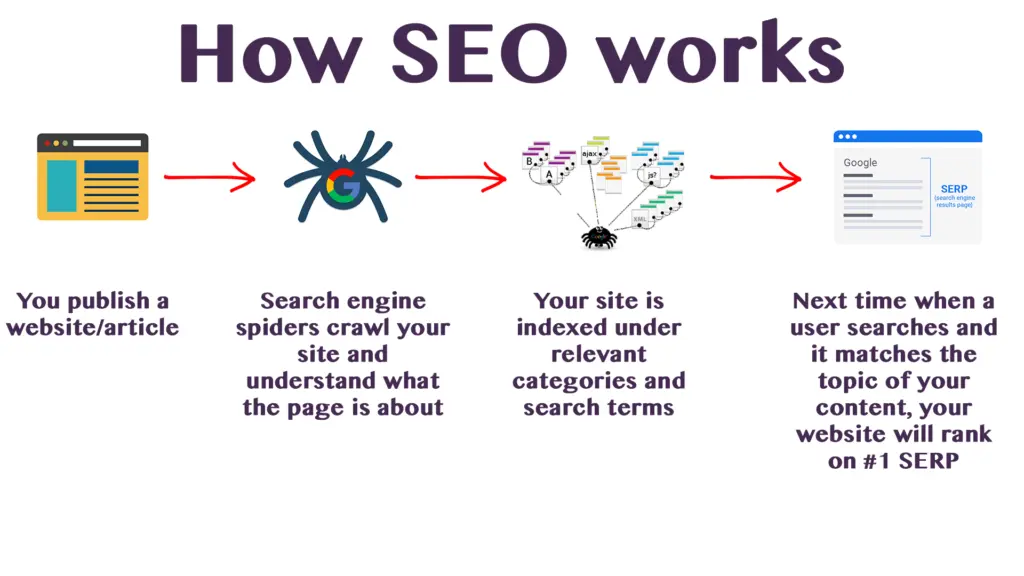
Understanding this process is the first step toward actually winning at the SEO game.
The Role of Search Engines (Google, Bing, etc.)
Think of a search engine as a tireless digital assistant whose only job is to find the perfect answer for you. To do that, it follows a three-step pipeline: Crawling, Indexing, and Ranking.
1. Crawling: The Discovery Phase First, search engines send out “spiders” (little pieces of code) to scour the web. They jump from link to link, finding new pages, updated content, or even broken links.
If your site isn’t linked to anything else, the spiders might never find you. That’s why we talk so much about “crawlability” and it’s essentially making sure the doors to your house aren’t locked when the librarian comes to visit.
2. Indexing: The Filing Cabinet Once a page is discovered, the search engine tries to understand what it’s about. It looks at your text, your images, and even the “vibes” of your layout. If it likes what it sees, it saves a copy in its “Index” like a gargantuan database. If your page isn’t indexed, it simply doesn’t exist to the public.
3. Ranking: The Popularity Contest This is where the magic happens. When someone types a query, Google searches its index for the most relevant matches. It sifts through hundreds of signals to decide which page deserves that #1 spot.
In 2026, this isn’t just about who has the most keywords; it’s about who provides the most satisfying answer.
Key Ranking Factors in 2026
Google uses over 200 signals to rank your site. You know what? Nobody actually knows all of them except the engineers in California. But we do know the ones that move the needle the most right now.
- Content Quality (E-E-A-T): This is huge. Google wants to see that you have Experience and Expertise. They aren’t looking for generic fluff anymore. They want the “real deal.”
- Page Speed & Core Web Vitals: If your site takes more than two seconds to load, people are going to leave. It’s that simple. Google sees that “pogo-sticking” (when a user hits back immediately) and assumes your site is a bad result.
- Mobile-First Everything: Since most people are browsing on their phones while standing in line at a coffee shop, your mobile experience is your primary experience.
- AI Content Nuance: Google doesn’t hate AI, but it does hate “lazy” AI. In 2026, their detection systems are looking for that robotic, repetitive tone. If your content feels synthetic and adds zero value, it’s going to sink.
- User Behavior Signals: Dwell time matters. If people stay on your page for five minutes, it tells the algorithm, “Hey, this is actually good.”
On-Page SEO vs. Off-Page SEO vs. Technical SEO
To make things easier to manage, we usually break SEO into three buckets.
- Technical SEO is the foundation – the pipes and wires of your house. It’s making sure your site is fast, secure, and easy for bots to read.
- On-Page SEO is what you see – the furniture and wallpaper. It’s your titles, your headers, and the actual words on the page.
- Off-Page SEO is your reputation – what the neighbors say about you. This is mostly about getting high-quality backlinks from other trusted sites.
Let’s be real: you need all three to rank well. You can have the most beautiful content in the world, but if your site takes 10 seconds to load (technical), nobody will ever see it.
Expert Tip: Don’t forget about Schema Markup. It’s a bit of code you add to your site that helps Google show “Rich Snippets” like those cool star ratings or FAQ boxes you see in the search results. It makes your listing look way more professional and boosts your click-through rate.
Types of SEO: Breaking It Down
When you start digging into this stuff, it’s easy to feel like you’re trying to learn a new language. Honestly, the industry doesn’t help by making everything sound so clinical.
But if we pull back the curtain, SEO is really just a few different “buckets” of work that all need to happen at the same time.
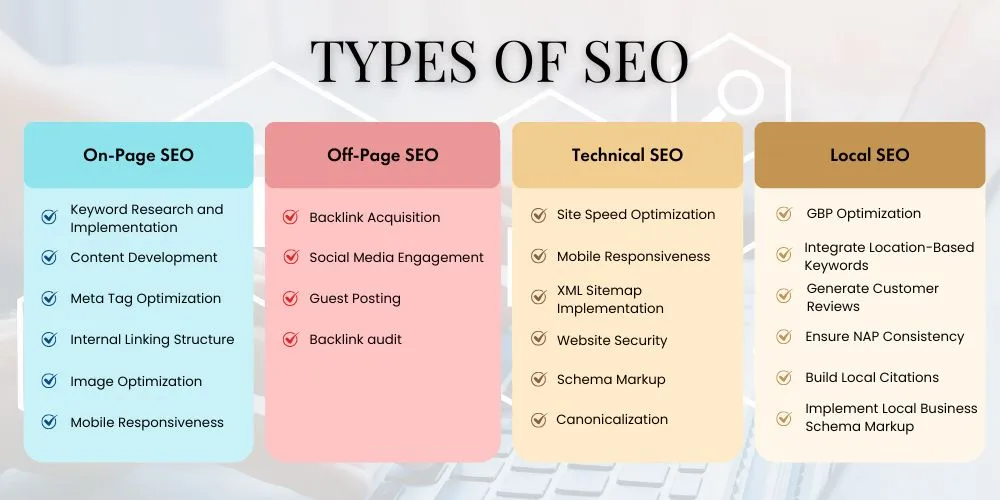
Think of it like running a restaurant. You need a clean kitchen (Technical), a great menu (On-Page), and people in town talking about how good the food is (Off-Page). If one of those is missing, the whole thing falls apart.
On-Page SEO: Optimizing Your Content
This is the part you have the most control over. It’s everything you do on your website to tell search engines (and humans) exactly what a page is about.
In 2026, we’ve moved way beyond just putting a keyword in a title. We’re now dealing with Semantic SEO. Google doesn’t just look for the word “SEO” anymore. Its AI looks for “entities” like related concepts like algorithms, crawling, or ranking factors. If those aren’t there, the AI thinks your content is thin.
The Essentials:
- Title Tags & Meta Descriptions: These are your digital billboard. Pro tip: in 2026, including first-person phrasing like “I tested” or “Our team found” helps prove you’re a human and not just a generic AI bot.
- Headers (H1-H4): Use these to chunk your content. It makes it easier for people to scan and for LLMs (Large Language Models) to summarize your work.
- Alt Text: Don’t just name an image “image1.jpg.” Describe it. It’s for accessibility, but it also helps you show up in visual searches.
- Internal Linking: This is like the hallway in your house. It connects your “What is SEO” guide to your “SEO Tools” page, helping Google understand your site’s structure.
Learn: What is Generative Engine Optimization? Best 10 GEO Tools
Off-Page SEO: Building Authority
If On-Page is what you say about yourself, Off-Page is what everyone else says about you. This is all about reputation.
For a long time, people thought this was just about getting as many links as possible.
But today? Quality beats quantity every single time. One link from an authoritative site like Search Engine Land is worth more than a thousand links from random, shady blogs.
Learn: Increase Your Domain Authority in 2026: 10 Proven Strategies
How we build authority now:
- Digital PR & Guest Posting: Sharing your expertise on other platforms.
- Brand Mentions: Even if a site doesn’t link to you, just having your brand name “Zumeirah” mentioned in a positive context on a site like Reddit or a major news outlet counts as a trust signal.
- Social Signals: While a “Like” on LinkedIn doesn’t directly raise your rank, the traffic and attention it brings definitely do.
Whatever you do, stay away from “Black-Hat” tactics. Buying links or using link farms is a fast track to getting banned. It’s just not worth the risk.
Technical SEO: The Foundation
This is the “nerdy” side of things, but it’s the most important. If your technical foundation is weak, your beautiful content won’t rank. Period.
In 2026, we’re obsessed with Interaction to Next Paint (INP). It’s a work term that basically means “how fast does the site react when I click something?” If there’s a lag, users get annoyed and leave.
The Technical Checklist:
- Site Structure: Is your site easy to navigate, or is it a maze?
- HTTPS: If your site isn’t secure, Google will literally warn users not to enter.
- JavaScript Rendering: Many modern sites are built with heavy JavaScript. If you aren’t using “Server-Side Rendering,” search bots might see a blank page.
- XML Sitemaps: This is a literal map you give to Google to make sure it doesn’t miss any of your pages.
Local SEO and Ecommerce SEO: Specialized Strategies
Depending on what you do, you might need a specific flavor of SEO.
Learn: Why is Local SEO important for Businesses
- Local SEO: If you have a physical office in Dubai, you need this. It’s about winning the “Map Pack.” Make sure your Google Business Profile is updated, your address is consistent everywhere, and you’re actually getting (and replying to) reviews.
- Ecommerce SEO: If you’re selling products, you need “Product Schema.” This is what allows those price tags and “In Stock” labels to show up directly in the search results. It’s a huge boost for clicks.
The 2026 On-Page SEO Checklist
| Element | 2026 Best Practice | Recommended Tool |
| Title Tag | Under 60 chars; use “human” cues (e.g., “Our Guide”). | Google Search Console |
| Meta Description | 120-160 chars; focus on the “Value Proposition.” | Yoast / RankMath |
| URL Slug | Short, descriptive, and no numbers (e.g., /what-is-seo/). | WordPress Editor |
| Semantic Entities | Include at least 5-10 related sub-topics. | InLinks / Surfer SEO |
| Internal Links | Link to 2-3 relevant “Silo” pages. | Link Whisper |
| Image Alt Text | Describe the image contextually for humans. | Native CMS |
SEO Best Practices and Strategies for 2026
If you’ve made it this far, you’re already ahead of most people who think SEO is just a set of “tricks” you perform once and forget.
Learn: Best SEO Strategy 2026: Mastering AI & Local Search
Honestly, that approach doesn’t work anymore. In 2026, winning at search is about being the most helpful person in the room. It’s about strategy, not just luck.
Content Creation Tips
You know what? Writing a 2,000-word article just for the sake of length is a waste of your time. Google’s AI models are now incredibly good at spotting “fluff.” Instead, focus on Search Intent. Ask yourself: Why is the person typing this?
- Informational: They want to learn. Give them a clear, fast answer.
- Navigational: They are looking for a specific site. Don’t get in their way.
- Transactional: They are ready to buy. Make the “Buy” button easy to find.
Have you heard of the Skyscraper Technique? It’s a classic for a reason. You find the best article on a topic, see where it falls short or maybe the data is old or it’s hard to read and you create something significantly better. Don’t just copy it. Add a new perspective, a fresh case study, or a better diagram.
Keyword Research and Optimization
Keywords are the bridge between what your customer is thinking and what you’ve written. But in 2026, we’ve moved past simple “short-tail” words. Everyone is fighting for the word “SEO.” But almost nobody is fighting for “how to fix SEO drop for UAE real estate site 2026.”
That’s a long-tail keyword. It has less traffic, but the people searching for it are much more likely to hire you. You can use tools like Google Keyword Planner, Ahrefs, or SEMrush to find these gems. Just remember: search for “concepts,” not just strings of letters.
Measuring Success (And Why Rankings Aren’t Everything)
Getting to #1 in google search results is great for the ego, but does it pay the bills? Probably not on its own. You need to track the metrics that actually impact your business.
Use Google Analytics 4 (GA4) to see how long people stay on your page. If they land and leave in five seconds, your content isn’t matching their intent.
Google Search Console is your best friend for seeing which specific queries are bringing people in. If your impressions are high but your clicks are low, your title probably needs more “soul.”
Learn: How to do Keyword Research with Google Search Console
Avoiding Penalties and Staying Compliant
Google’s guidelines are simple: be a human, for humans. They’ve doubled down on E-E-A-T. If you’re using AI to generate 100 posts a day with no human oversight, you’re basically asking for a penalty.
Stay away from buying links from “link farms” or trying to hide keywords in the background of your site. It’s 2026 the algorithm sees everything. If you focus on being a trusted authority, you won’t have to worry about the next update.
Learn: Link Building in 2026: The Proven Roadmap to #1 Rankings
Your 2026 Action Plan
- Audit Your Content: Look for pages that haven’t been touched in a year. Update the stats.
- Fix Your Speed: Use Google’s PageSpeed Insights. If you’re over 2 seconds, you’re losing money.
- Check Your Intent: Ensure your “How-To” guides aren’t accidentally trying to sell products too early.
- Get an Expert Opinion: Sometimes you’re too close to your own business to see the gaps. If you’re feeling stuck, our team at Zumeirah offers a full SEO Service to rank your business number one in google results.
Essential SEO Tools for 2026
You don’t need to spend a fortune to start ranking, but you do need the right gear. In 2026, the gap between the “pros” and the “amateurs” is usually just the data they’re looking at.
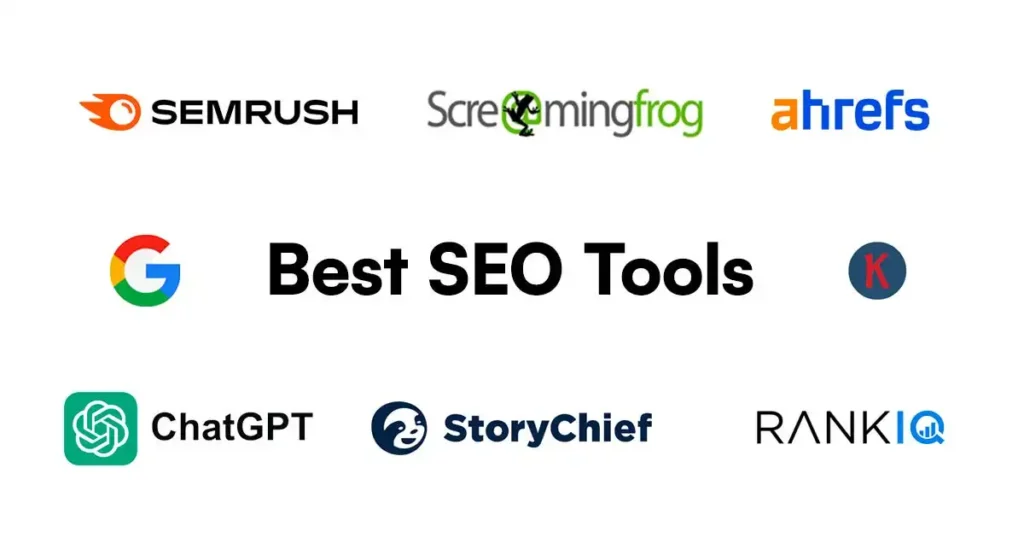
Honestly, trying to do SEO without tools is like trying to build a house with your bare hands. You might get somewhere eventually, but it’s going to hurt.
The “Must-Have” Free Tools
If you’re just starting out, Google gives you the best data for free. Google Search Console is non-negotiable; it tells you exactly how Google sees your site.
GA4 helps you track what people do once they arrive.
For keyword ideas on a budget, Ubersuggest still offers a solid free tier that’s perfect for beginners.
Professional Paid Tools
When you’re ready to get serious, you’ll likely need more horsepower. Ahrefs and SEMrush are the industry standards for a reason and their backlink databases are massive.
If you’re a technical nerd, Screaming Frog is a desktop app that “crawls” your site just like a search engine does, highlighting every broken link and missing tag in seconds.
AI-Powered Tools
This is where 2026 gets interesting. We aren’t just using AI to write; we’re using it to think. Tools like ChatGPT are great for brainstorming outlines, while Jasper or Surfer SEO help you optimize your content so it hits all the right semantic notes that search engines look for.
SEO Tool Comparison: 2026 Edition
| Tool | Best For | Level | Pros | Cons |
| Google Search Console | Performance Tracking | Beginner | Direct data from Google | Steep learning curve |
| Ahrefs | Backlinks & Keywords | Professional | Industry-leading data | Can be expensive |
| Surfer SEO | Content Optimization | Intermediate | Perfect for Semantic SEO | Subscription based |
| Screaming Frog | Technical Audits | Advanced | Catch every technical error | Not very user-friendly |
Expert Tip: If you’re feeling overwhelmed by all these subscriptions, don’t worry. You can start with the free versions and scale up as your traffic grows. If you want a professional team to handle the “heavy lifting” with these pro-level tools, feel free to contact us at Zumeirah.
Future of SEO: Trends to Watch in 2026 and Beyond
If you think the last few years were a rollercoaster for search, buckle up. We are moving into an era where “searching” and “talking” are becoming the same thing.
In 2026, SEO isn’t just about being a result on a page; it’s about being part of a larger, AI-driven conversation. And the way we interact with our screens is changing so fast that the old playbooks are practically historical documents at this point.
AI and Machine Learning in Search
By now, you’ve seen Search Generative Experience (SGE) in action. Google’s AI doesn’t just find links; it synthesizes the entire web to give you a single, cohesive answer.
But the real shift is Predictive Search. Based on Gartner’s recent forecasts, search engines are getting spookily good at knowing what you want before you finish typing.
They are using machine learning to look at your past behavior, your current location, and even the time of day to serve up “proactive” results.
For us as creators, this means we have to stop optimizing for keywords and start optimizing for user context.
Privacy and Data Changes: The Cookieless Reality
The “Cookie Apocalypse” finally happened. We are officially in a cookieless world, and that has massive implications for how we track SEO success.
Without third-party cookies to follow people around the web, first-party data (information your customers give you directly) is gold.
In 2026, SEO and email marketing are basically best friends. You use SEO to get them to your site, and you use incredible value to get them to stay and share their info. It’s a much more honest way of doing business, don’t you think?
Sustainable and Ethical SEO
This is a trend that I’m personally really excited about. Inclusive content and “Digital Sustainability” are no longer just buzzwords.
- Inclusive Content: Google is now actively rewarding sites that are accessible to everyone like including those using screen readers or voice-only devices.
- Carbon Footprint Reduction: Believe it or not, every byte of data transferred has a carbon cost. Experts are seeing a trend where search engines favor “lightweight” sites. If your code is bloated and slow, it’s not just bad for users; it’s bad for the planet, and Google is starting to take note.
Speculative Insights: What’s Next?
If I had to look into a crystal ball for the late 2020s, I’d bet on Quantum Search. As quantum computing becomes more integrated into Google’s data centers, the speed and complexity of the algorithm will jump by a factor of a thousand.
My advice? Stay human. AI can mimic patterns, but it can’t mimic true, lived experience. The more “you” you put into your content, the safer you’ll be from any future algorithm shifts.
Conclusion: Getting Started with SEO in 2026
We’ve covered a lot of ground, but if you take away just one thing, let it be this: in 2026, What is SEO if not the ultimate tool for human connection? It’s no longer about chasing algorithms or trying to “win” against a machine. It’s about ensuring that when a person has a problem, you are the trusted voice that provides the solution.
The landscape is shifting toward AI-driven answers and ethical, sustainable web practices, but the core principle remains the same.
You need a fast, accessible foundation (Technical), content that reflects genuine expertise (On-Page), and a reputation that speaks for itself (Off-Page). If you balance those three, the “big competitors” don’t seem quite so intimidating.
Honestly, the best time to start was yesterday. The second best time is right now. The web isn’t getting any smaller, and the businesses that prioritize their search visibility today are the ones that will be “future-proof” tomorrow.
Ready to stop guessing and start ranking? At Zumeirah, we don’t just follow trends but we stay ahead of them. Whether you need a complete strategy overhaul or just a bit of guidance on where to begin, our team is here to help. Contact Zumeirah for a free SEO consultation and let’s make sure your business is the one the world finds first.
Master SEO today. Future-proof your online presence. You’ve got this.
Frequently Asked Questions About SEO
Even with the best guides, SEO can feel like a moving target. Here are the most common questions our team at Zumeirah gets asked by business owners looking to make sense of the search landscape in 2026.
What is SEO in simple terms?
SEO is the process of making your website easy for search engines like Google to understand and rank. Honestly, think of it as “digital storytelling.” You are telling a search engine exactly what your business does, who it’s for, and why you are the most trustworthy person to provide an answer.
By optimizing your site’s code, content, and reputation, you ensure that you show up when potential customers ask a question. It’s the difference between being a hidden gem and a local landmark.
Is SEO still relevant in 2026?
Absolutely. While some “gurus” claim SEO is dead because of AI, the reality is quite the opposite. In 2026, SEO has simply evolved. Instead of just ranking for “blue links,” we are now optimizing to be the cited source in AI Overviews and voice search results.
As long as people are looking for information, products, or services online, search engine optimization will remain the most cost-effective way to grow a brand.
If anything, the rise of AI makes high-quality, human-led SEO more valuable than ever because it cuts through the synthetic noise.
How long does SEO take to work?
I’ll be straight with you: SEO is not an overnight fix. Generally, you can expect to see initial movement and “indexing” within 4 to 12 weeks. However, for competitive keywords, it often takes 6 to 12 months of consistent effort to see a significant return on investment.
You know what? This is actually a good thing. Because it takes time to build that authority, it also makes it much harder for a competitor to knock you off the top spot once you’ve earned it. It’s a long-term asset, not a temporary ad campaign.
What’s the difference between SEO and SEM?
The easiest way to remember this is: SEO is earned, and SEM is bought.
- SEO (Search Engine Optimization) focuses on “organic” results. You don’t pay Google when someone clicks your link; you win the spot by being the best result.
- SEM (Search Engine Marketing) usually refers to paid advertising, like Google Ads. You pay a fee every time someone clicks your “Sponsored” listing. While SEM is great for instant traffic, SEO provides the long-term sustainability that keeps your business running without a daily ad budget.
How can I learn SEO for free?
You don’t need a fancy degree to master the basics. There are incredible free resources available right now. We recommend starting with Google’s Search Central Documentation because it’s the literal rulebook from the creators of the algorithm.
Other great places to start are the Zumeirah Blog, Moz’s Beginner’s Guide, and HubSpot Academy. Honestly, the best way to learn is to “do.” Start a small website, write some content, and use free tools like Google Search Console to see how the search engine reacts to your changes.